Choosing a Car as a Senior Citizen
The car that suits you now is often not the car you drove at forty, and the difference shows up in both safety and your premium.
Free to compare
Choose for visibility, ease of entry, and safety features, in that order
A car that's easy to see out of, easy to get in and out of, and equipped with modern safety features will serve an older driver better than one chosen for speed, style, or cargo room. Higher ride height, large windows, and a dashboard that isn't cluttered with small controls all make a real difference in how confidently someone drives.
This matters because reaction time and flexibility change with age for most people, even those in excellent health. A car that reduces the physical and mental effort of driving, through good sightlines, simple controls, and features like automatic emergency braking, lowers the chance of the kind of incident that raises a premium or ends a driving record.
Safety features change both the risk and the rate
Features like automatic emergency braking, blind spot warning, and backup cameras exist because they catch the mistakes that become more common with age, like misjudging a gap or not seeing a car in the next lane. Choosing a car with these features built in, rather than relying on habit or mirrors alone, reduces the chances of a claim.
Many insurers price these features into the policy itself, separate from any discount tied to the driver. A car with a strong safety record and modern driver aids can cost less to insure than an older model with none of that, even if the older model is cheaper to buy.
Not every feature helps equally. Blind spot warning and automatic emergency braking have the clearest safety record. Parking sensors and lane-keep assist are useful but matter less for the kinds of crashes that become more common with age, mainly at intersections and during lane changes.
Before buying, ask the dealer or check the manufacturer's site for which safety features come standard versus as part of an optional package. Some are easy to assume are included when they're not.
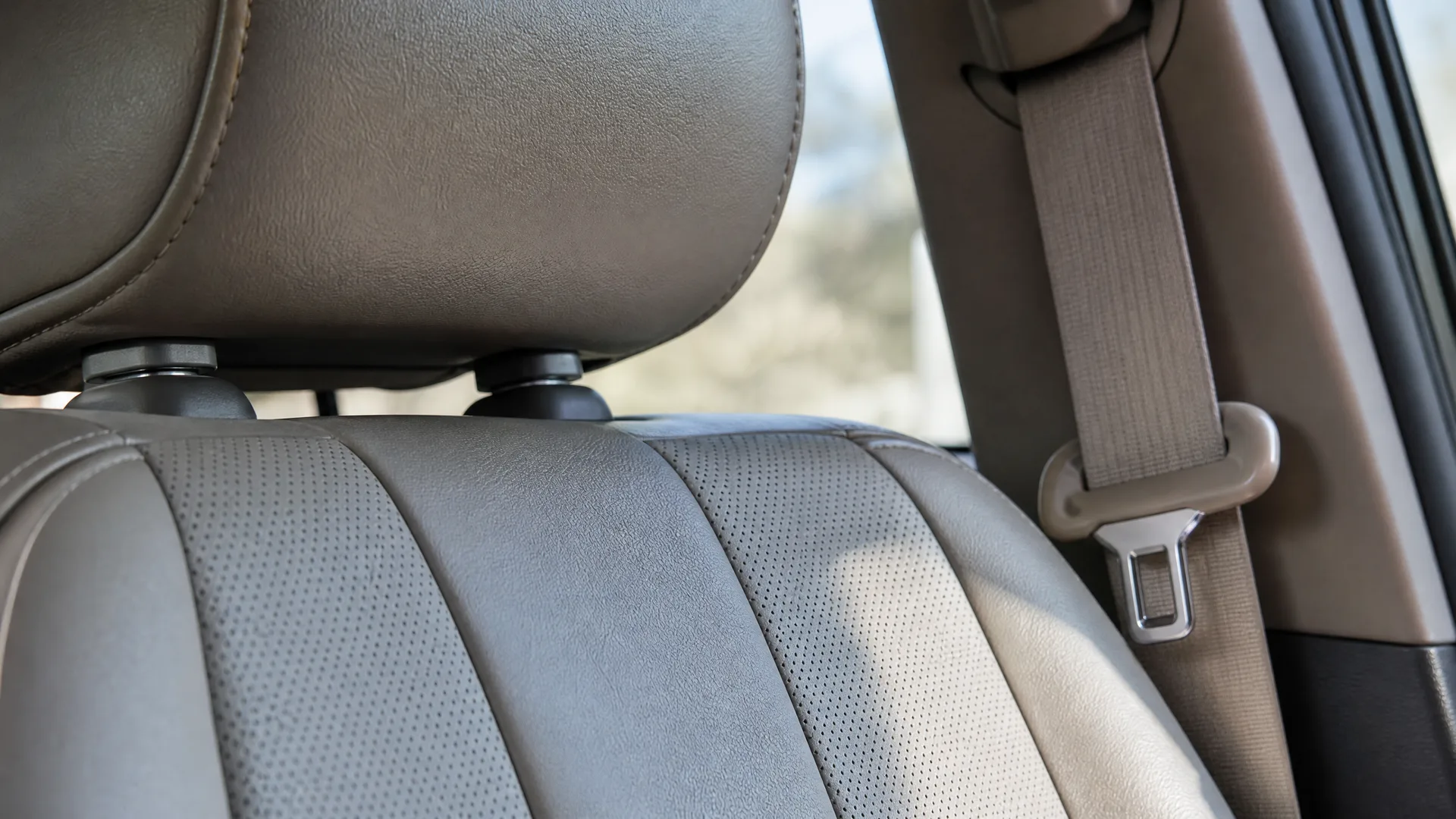
What drivers get wrong: size and visibility aren't the same thing
A larger vehicle doesn't automatically mean better visibility. Some SUVs and trucks have high beltlines and thick rear pillars that create bigger blind spots than a well-designed sedan. The test isn't the size of the car, it's how much of the road you can actually see from the driver's seat without turning.
Sitting in the car before buying, not just reading the specs, is the only reliable way to judge this. Adjust the seat and mirrors the way you actually would, then check what you can see to the sides and behind.
A car that's harder to see out of also tends to be harder to judge distances in, which affects parking and merging, two situations that commonly lead to minor claims for older drivers. A minor claim can affect a premium for several years, so the visibility question is worth taking seriously at the point of purchase, not after.
Questions people ask about this
Does the type of car affect my insurance rate as a senior driver?
Yes, the type of car affects the rate for drivers of any age, not just seniors. Insurers price a vehicle based on its safety record, repair cost, and how often that model is involved in claims. A car with a strong safety rating and lower repair costs usually costs less to insure, regardless of the driver's age.
Should I switch from a manual to an automatic transmission as I get older?
Many older drivers find automatic transmissions easier to manage, since there's one less physical task to coordinate while driving. Whether this matters for you depends on comfort and any physical changes you've noticed, like reduced flexibility or reaction time. It's a personal decision rather than one insurers factor into pricing directly.
Is a smaller car safer for an older driver than a larger one?
Not necessarily. Safety depends more on the vehicle's crash test rating, visibility, and safety features than on its overall size. Some smaller cars score very well on safety tests, while some larger vehicles have poor visibility or higher rollover risk. Check a vehicle's safety ratings directly rather than assuming based on size.
Will my insurer charge more if I drive an older car with fewer safety features?
It depends on the insurer and the specific car. Some older vehicles cost less to insure simply because they're worth less, even without modern safety features. Others may cost more to repair or have a worse crash history, which raises the rate. Ask your insurer how a specific car you're considering would be rated before you buy it.
Do I need to tell my insurer when I buy a new car?
Yes, your insurer needs to know when you change vehicles, since your policy and premium are tied to the specific car on file. Contact your insurer before or right after the purchase to update the policy, and ask how the new vehicle will affect your rate.
See how the car you're considering compares on insurance cost before you decide.
Before you buy, sit in the car and check what you can actually see from the driver's seat with the mirrors and seat adjusted normally. Ask the dealer which safety features are standard and which require an optional package. Look up the car's safety ratings from an independent source rather than relying on the sales sheet. Once you've narrowed it down to a model or two, ask your insurer or get quotes on each one, since the difference in premium between two similar cars can be significant. Keep the window sticker or safety feature list, since you may need it when you call for a quote.