How to Stay Safe Driving Alone at Night
The biggest risks at night are fatigue, glare, and being somewhere unfamiliar with no one knowing where you are, and each one has a specific fix.
Free to compare
Plan the stop before you plan the drive
Staying safe driving alone at night comes down to reducing the chances you have to make a quick decision in the dark, in an unfamiliar place, without backup. That means choosing your route and your stops ahead of time, not when you're already tired or already lost.
For an older driver this matters more because night vision changes with age even when daytime vision is fine. Glare takes longer to clear, and judging distance in low light gets harder. None of that means you shouldn't drive at night. It means the preparation does more of the work that your eyes used to do on their own.
Your eyes do less work at night than you think
Pupils react slower with age, so headlights and streetlights take longer to stop blinding you after they pass. If you notice a few extra seconds of haze after an oncoming car, that's normal and it's also the reason to leave more following distance than you would in daylight.
Clean headlights and a clean windshield make a real difference. A film of dust or a light haze on the glass scatters light and makes glare worse than it needs to be. It costs nothing to wipe both down before a night drive.
If you wear glasses, ask your eye doctor specifically about night driving at your next exam. Some lens coatings reduce glare and some don't, and your current pair may be due for an update even if your daytime vision still tests fine.
Know your own limit. If a particular stretch of highway or a particular kind of weather consistently makes you uneasy after dark, that's useful information, not a failure. Planning around it is the safe choice, not the cautious one.
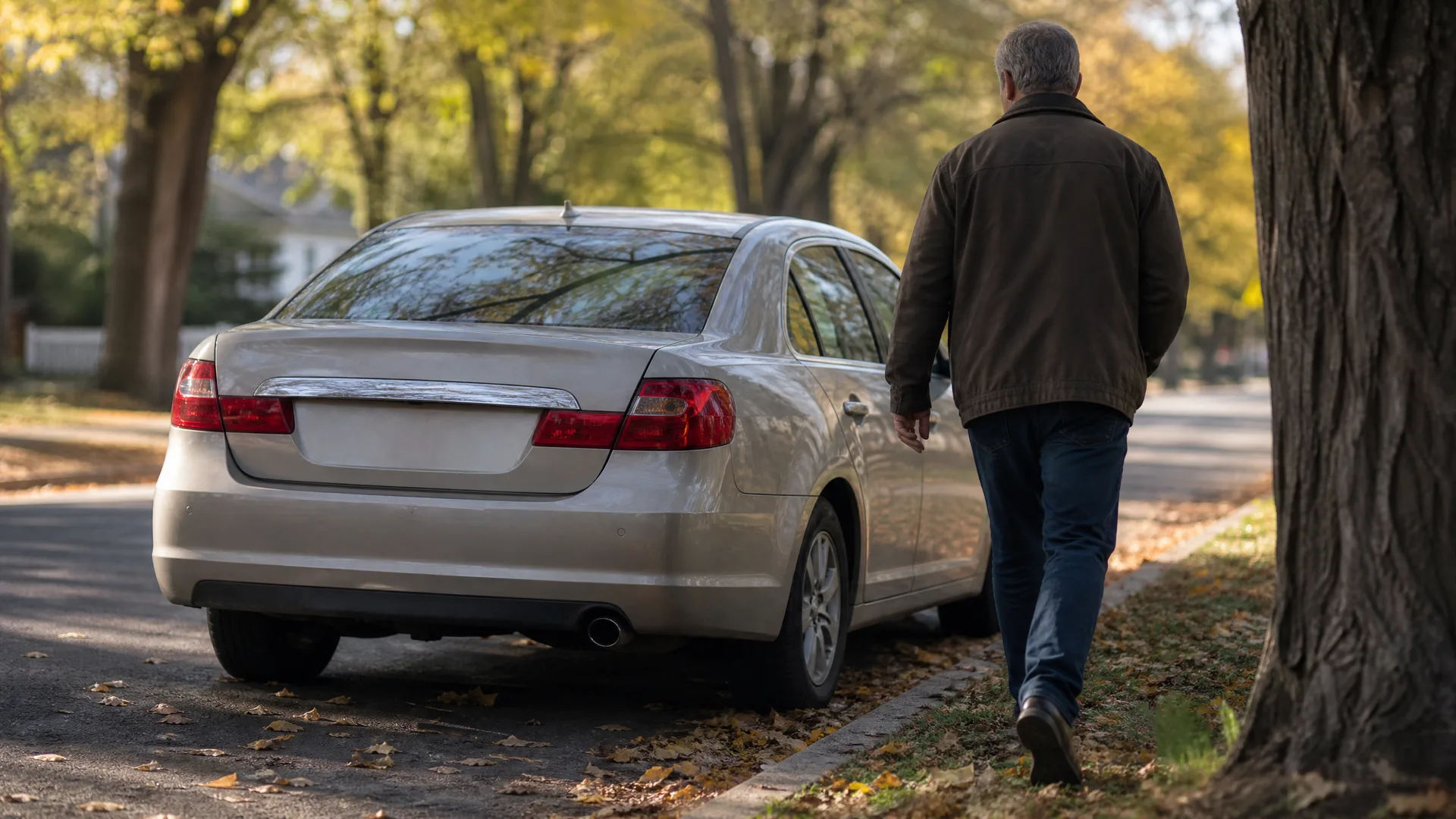
Being alone changes what you need to carry
When someone else is in the car, there's a second set of eyes and a second phone if something goes wrong. Driving alone, you're covering both jobs, so the preparation has to happen before you leave.
Tell someone your route and when you expect to arrive. It takes a minute and it means someone starts looking for you if you don't check in, instead of hours later.
Keep your phone charged and somewhere you can reach it without taking your eyes off the road for long. If you need to look at a map or send a message, pull over first.
Pick well-lit routes and well-lit places to stop, even if they add a few minutes. A gas station or rest area with other people around is a better choice than an empty one, especially if you need to deal with a flat tire or a dead battery alone.
Questions people ask about this
Is it harder to see pedestrians and cyclists at night as you get older?
Yes, contrast sensitivity tends to decline with age, which makes it harder to spot something dark colored against a dark background. Slowing down in areas with foot traffic and using high beams when there's no oncoming traffic both help. If you notice this is a consistent problem for you, mention it at your next eye exam.
Should I avoid highway driving at night entirely?
Not necessarily, and for many older drivers highways are actually easier at night than city streets because there's less cross traffic and fewer sudden turns to judge. The harder driving tends to be unlit rural roads and busy intersections with a lot of headlight glare. Choose your route based on what kind of road gives you trouble, not blanket avoidance of night driving.
What should I do if my headlights don't seem bright enough anymore?
Have them checked, since dimmed or yellowed headlights are often a fixable problem rather than a sign you need to stop driving at night. Headlight lenses cloud over time and can usually be restored or replaced for less than a full repair. A mechanic can also check the aim, since headlights pointed slightly off can blind oncoming drivers without actually lighting your own path any better.
Does my car insurance cost more if I mostly drive at night?
This depends on the insurer, since some ask about typical driving conditions and some don't factor it in directly. If you're shopping for a policy, ask the insurer directly whether night driving habits affect their rating, since the answer varies by company.
What's the first thing to do if I feel unsafe driving at night now?
Stop driving for the night if you can, and talk to your doctor or eye doctor before your next long night drive. Sudden new difficulty seeing at night, more than a gradual change, can sometimes point to a vision issue worth checking rather than something to push through.
If a renewal notice is what brought you here, it's worth seeing what other insurers would charge for the same coverage.
Before your next night drive, clean your headlights and windshield inside and out, since this alone fixes a lot of glare complaints. Tell someone where you're going and when you expect to get there. If you haven't had an eye exam in the past year, schedule one and ask specifically about night vision and glare, not just general vision. Pull together your current policy details so you know what you're paying and what's covered, since that's useful whether you're calling your insurer with a question or comparing other options.