Is It Safe to Drive at Night With Poor Vision
It depends more on your own vision and reaction time than on your age alone.
Free to compare
It can be, but your eyes decide, not your birthday
Aging eyes let in less light, take longer to adjust between bright and dark, and pick up more glare from headlights. That makes night driving harder for a lot of older drivers, but it affects people differently depending on their actual vision, not just how many years they've been driving.
The honest answer is that you're the only one who can tell whether it's safe for you specifically. An eye doctor can measure how your night vision and glare recovery compare to what they used to be. If you're noticing glare, halos, or trouble reading signs at night, that's worth checking before you decide how much night driving to keep doing.
Your vision, and how it's actually changed
Not every vision problem that comes with age affects night driving the same way. Cataracts scatter light and make oncoming headlights much harder to deal with. Reduced pupil response means your eyes take longer to adjust when you go from a lit street into a dark one. Some conditions affect daytime vision very little but make night driving noticeably harder.
An eye exam that specifically checks contrast sensitivity and glare recovery will tell you more than a standard vision test does. If you haven't had one of these, it's worth asking for one, especially if you've started avoiding night drives without quite knowing why.
Glasses prescriptions written for daytime use sometimes don't correct for the way lenses handle glare at night. If your current glasses were prescribed a while ago, ask your eye doctor whether an updated prescription or a different coating would help with headlight glare specifically.
Some of this can be addressed. Cataract surgery often restores night vision that gradual clouding had taken away. A glare coating on your lenses can cut down on starburst and halo effects around lights. These are questions for your eye doctor, not something to guess about on your own.
The driving itself, not just the seeing
Night driving asks more of you than just seeing clearly. You're judging distance and speed with less visual information, and you're often more tired than you'd be during the day, which slows reaction time further.
Familiar routes are easier to drive safely at night than new ones, because you already know where the turns and hazards are even when visibility is reduced. If most of your night driving is on roads you know well, that works in your favor.
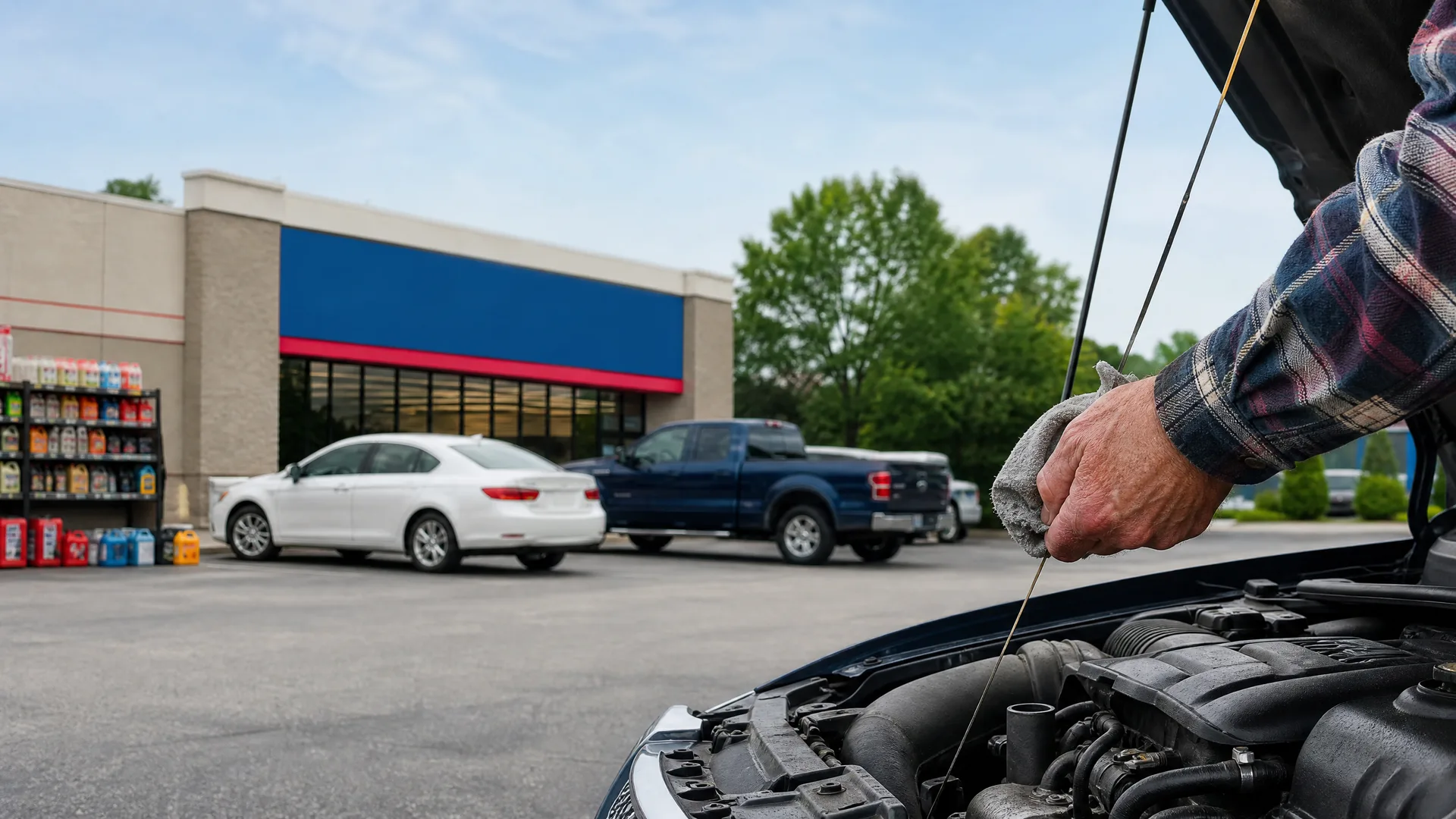
The condition of your windshield and headlights matters more at night than people expect. A windshield with small chips or a haze of fine scratches scatters oncoming light in a way that's hard to notice during the day but makes a real difference after dark. Headlights also dim with age and dirt, so having them checked is worth doing before assuming the problem is your eyes.
If you're finding that you arrive at your destination more worn out after a night drive than you used to, that's useful information. It usually means your eyes and your attention are working harder than they used to, even if you can't point to a specific moment where it felt unsafe.
Questions people ask about this
Should I stop driving at night if I have cataracts?
Not necessarily, but it's worth discussing with your eye doctor before you decide either way. Cataracts affect night vision by scattering light, and the severity varies a lot from person to person. Some people manage fine with glare coatings or by sticking to familiar routes, while others find night driving has become genuinely difficult. Your eye doctor can tell you how advanced your cataracts are and whether surgery is worth considering.
Can I get my license restricted to daytime driving only?
This is handled by your state's licensing agency, and the rules vary by state. Some states allow a vision-based restriction that limits a license to daylight hours, usually based on results from an eye exam. Check with your state's DMV or equivalent agency to find out whether this option exists where you live and what's required to get it added to your license.
Will my car insurance go up if I report vision problems?
This depends on your insurer and your state, so it's worth asking your agent directly rather than assuming. Insurers look at your driving record and any restrictions on your license, not simply the fact that you mentioned a vision issue. If a restriction limits you to daytime driving, ask your insurer how that's factored into your policy specifically.
What headlight bulbs help the most with night driving as you get older?
This is a question for your mechanic or an eye doctor familiar with age-related vision changes, since the right answer depends on your specific vision issues and your car. Some bulb types produce whiter or brighter light, but brighter isn't always better if glare sensitivity is your main problem. Have your current headlights checked first, since dimming or misalignment is often the actual issue rather than the bulb type.
Does a vision test for license renewal catch night vision problems?
Usually not. Standard vision tests at the DMV typically measure visual acuity in normal lighting, not night vision, glare recovery, or contrast sensitivity. Passing that test doesn't mean your night vision is fine. If you have concerns about driving after dark, ask your eye doctor for a separate exam that looks at those specifically.
If vision changes are affecting how you drive, it's worth seeing how that fits into your coverage.
Book an eye exam that specifically tests contrast sensitivity and glare recovery, not just a standard acuity check. Ask your eye doctor directly whether your current night vision supports driving after dark, and under what conditions. Have your headlights and windshield checked by a mechanic, since cloudy glass or dim bulbs can make a vision problem worse than it needs to be. If you're considering a daytime-only license restriction, contact your state's DMV to find out what that requires. Keep a note of any new eye exam results or prescription changes, since your insurer may ask about them if your license picks up any restrictions.