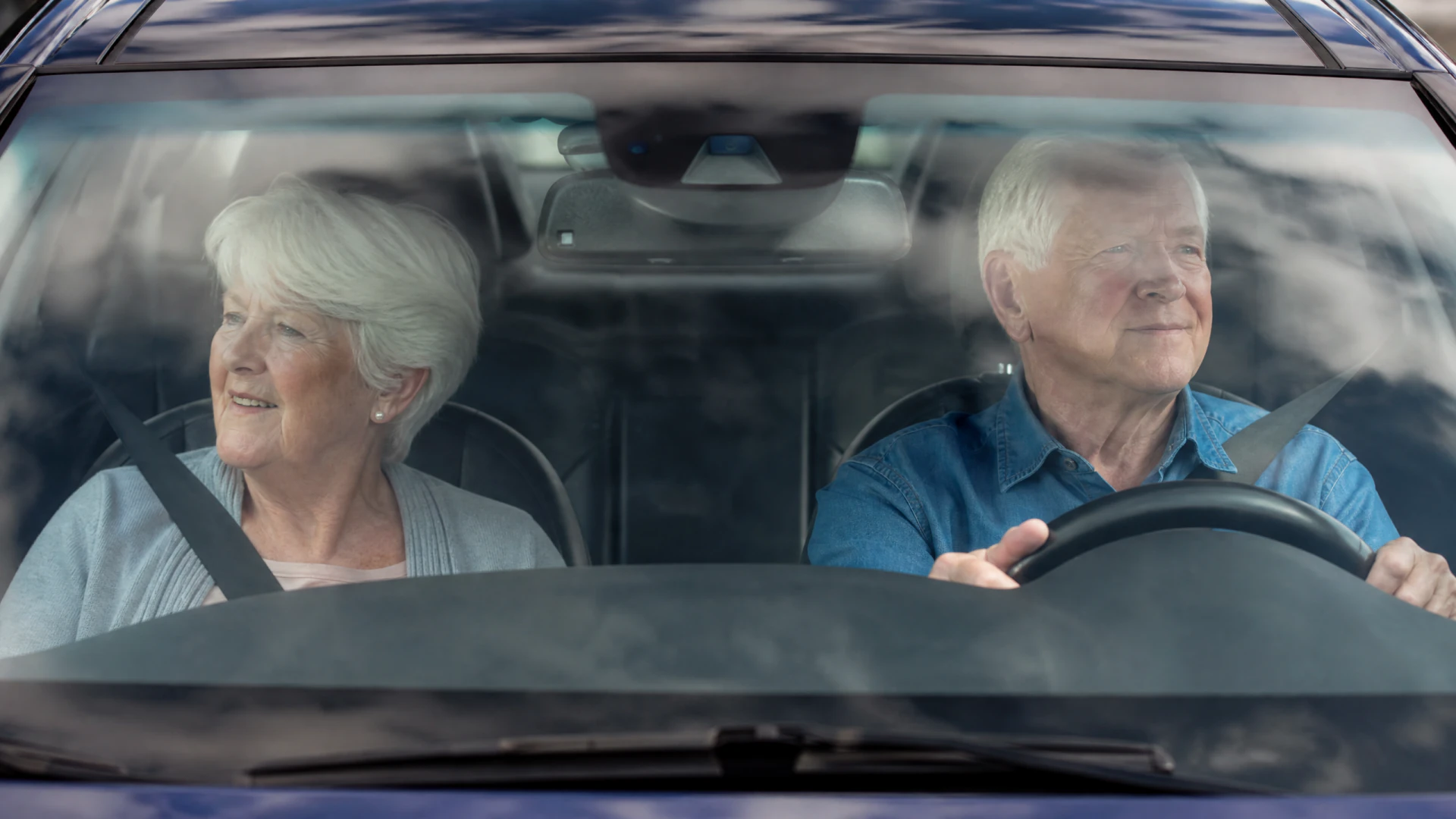
What Is a Driving Assessment for Older Drivers
It's a checkup for the skills driving actually uses, not a test you pass or fail outright.
Free to compare
It's an evaluation of the skills driving depends on
A driving assessment for older drivers looks at the specific abilities that tend to change with age: reaction time, vision, neck and shoulder flexibility, and judgment in traffic. Some of it happens in an office, with simple tests of sight and movement. Some of it happens in the car, with an instructor or occupational therapist watching how the driver actually handles turns, merges, and intersections.
It gets recommended for a few different reasons. A doctor might suggest one after a medical change. An adult child might ask a parent to take one after a close call or a new diagnosis. Some states require one at a certain point, and some insurers ask for one before they'll apply a mature driver discount. The assessment itself works the same way regardless of why it started.

Who asks for it changes what happens with the results
If a doctor or therapist requests the assessment, the results usually go into the driver's medical record and get used to plan what driving looks like going forward. That might mean no change at all, or it might mean a recommendation to avoid night driving or highways, or in some cases a recommendation to stop driving.
If the state licensing agency requires the assessment, the results go to that agency, and they decide what happens to the license. That can mean the license stays as is, gets restricted to certain conditions, or gets reviewed further.
If an insurer is involved, the assessment is usually tied to a discount application rather than the license itself. The insurer sees a certificate or a summary, not the clinical detail.
It's worth asking upfront, before the assessment happens, exactly who receives the results and what they're allowed to do with them. That answer depends on who required the assessment in the first place.
What the driver does with a difficult result matters as much as the result itself
A driving assessment doesn't automatically take away a license. Even when it flags a real problem, like slowed reaction time or a blind spot from reduced neck mobility, there's often a step between the finding and any restriction. That step is usually a conversation with a doctor, a specialist, or the licensing agency about whether the problem can be managed.
Some things that show up in an assessment can be addressed directly. Vision problems sometimes just need a new glasses prescription. Limited range of motion sometimes gets better with physical therapy. A driver who treats the assessment as a one-time verdict misses the chance to fix what's fixable and reassess.
What doesn't help is avoiding the assessment altogether once it's been recommended. A skipped assessment doesn't erase the underlying concern. It just means nobody has looked at it carefully, which tends to matter more, not less, if something happens on the road later.
Questions people ask about this
Can I refuse a driving assessment if my doctor suggests one?
You can decline, but the doctor's concern doesn't go away because the assessment didn't happen. If the concern is serious enough, it may still get reported to the state licensing agency depending on the state's rules on physician reporting. Ask the doctor directly what happens to their note if you don't follow up.
Does a driving assessment affect my car insurance rate?
Not by itself. An assessment only affects your premium if you submit the results to your insurer, usually to qualify for a mature driver discount. If you're taking the assessment for a medical or licensing reason, it has no direct effect on your policy unless you choose to share it.
Who pays for a driving assessment?
This depends on why it's being done and who is requiring it. Some are covered through a doctor's referral and billed like any other medical visit. Others, especially ones requested voluntarily for a discount or peace of mind, are paid out of pocket. Ask the provider conducting the assessment how it will be billed before scheduling it.
What happens if I fail the in-car part of the assessment?
There usually isn't a simple pass or fail. The person conducting the assessment typically gives a range of outcomes, from no concerns to specific recommendations like avoiding highway driving. Ask the evaluator ahead of time what the possible outcomes are and how they'll be communicated to you.
Is a driving assessment the same as the test required to renew my license?
Not usually. License renewal requirements are set by the state and may include a vision test or a road test depending on age and other factors. A driving assessment is typically a separate, more detailed evaluation requested by a doctor, family member, or insurer. Check with your state's licensing agency to see what your renewal actually requires.
If a discount depends on this assessment, it helps to know what your insurer will accept before you schedule one.

Start by finding out who is asking for the assessment and what they plan to do with the results. If it's a doctor, ask what happens to their recommendation if it isn't followed up. If it's your state, contact the licensing agency directly to confirm what's required and by when. If you're hoping it leads to a discount, call your insurer first and ask what documentation they need, since not every insurer accepts the same assessment or certificate. Bring your glasses prescription, a list of current medications, and any related medical notes to the assessment itself. Afterward, ask for a copy of the results in writing, even if you don't end up needing to share them with anyone.