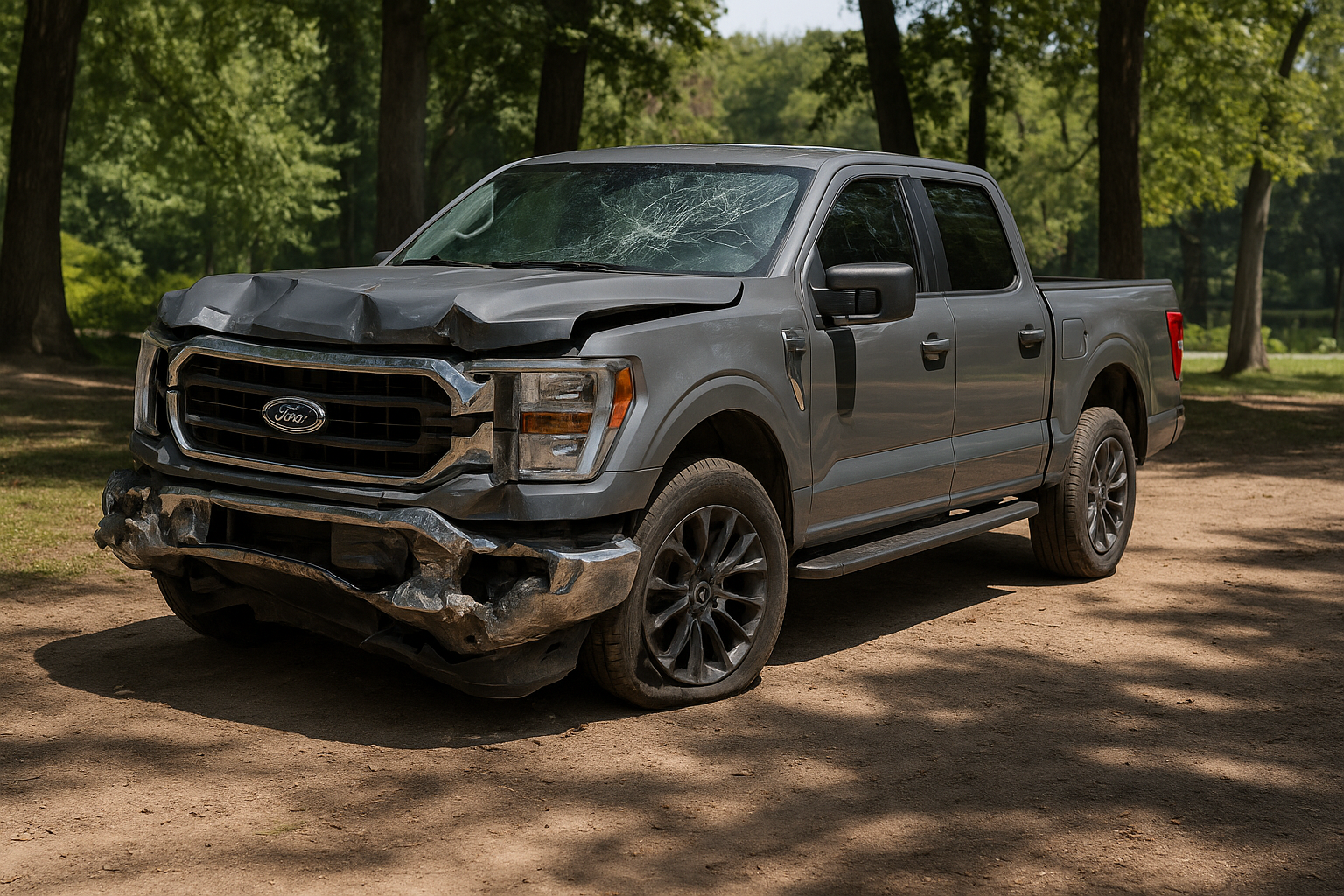
You've paid off your car, your premiums keep rising, and collision coverage now costs as much annually as your vehicle loses in value. Here's the math that actually determines when dropping collision makes financial sense.
The 10% Rule Gets It Wrong for Senior Drivers
Most insurance advice tells you to drop collision when your vehicle's value falls below some arbitrary threshold — often "ten times your annual premium." That formula ignores the realities facing drivers over 65: premiums that climb regardless of your driving record, vehicles you've owned for a decade that still serve you perfectly, and retirement income that makes every recurring expense worth scrutinizing.
The actual calculation requires three numbers: your collision premium, your deductible, and your vehicle's current market value. If your annual collision premium plus your deductible exceeds 30% of your car's value, you're approaching the point where self-insuring makes mathematical sense. For a vehicle worth $8,000 with a $500 deductible and $600 annual collision premium, you're paying $1,100 to protect $8,000 — that's 13.75%, well within reasonable range. But if that same coverage costs $900 annually (common after age 70 in many markets), you've crossed 17.5% and the math shifts.
What changes this calculation for senior drivers specifically is premium trajectory. Collision premiums typically increase 8–15% between ages 65 and 75 even with no claims, while your vehicle simultaneously depreciates. A 2015 sedan worth $12,000 today will be worth roughly $8,500 in two years, while your collision premium is likely to rise by 15–25% in that same period. You're paying more to protect less — the break-even point arrives faster than it does for younger drivers with stable or declining premiums. California Texas
State Requirements Don't Mandate Collision Coverage
No state requires collision coverage, period. What states do require is liability coverage — bodily injury and property damage liability that pays for harm you cause to others. Collision pays for damage to your own vehicle regardless of fault. Once your vehicle is paid off, the decision to keep or drop collision is entirely yours.
This matters because many senior drivers conflate "full coverage" with legal compliance. If you own your 2012 Honda Civic outright and it's worth $6,500, you can legally drive with liability-only coverage in all 50 states. The question isn't what's required — it's what's financially prudent given your specific situation.
State programs and discounts do affect the calculation, however. Mature driver course discounts (mandated in at least 34 states) typically reduce premiums by 5–10% across all coverage types, including collision. A $700 annual collision premium drops to $630–665 after completing an approved course. California mandates this discount, while states like Florida and Texas require insurers to offer it but leave the discount amount to individual carriers. Checking your state's specific requirements can reveal savings that postpone the need to drop collision entirely.
When the Math Clearly Favors Dropping Collision
Collision becomes financially unjustifiable under three specific scenarios. First, when your annual premium plus deductible exceeds 40% of vehicle value. If your car is worth $5,000, you carry a $1,000 deductible, and your collision premium is $650 annually, you're paying $1,650 to protect $5,000 — that's 33%, approaching the threshold. At 40% or above, you're better off banking the premium savings.
Second, when your vehicle's value falls below $4,000–$5,000 regardless of premium percentage. At this value point, even a total loss claim nets you minimal recovery after the deductible. A $4,000 vehicle with a $500 deductible yields $3,500 maximum — minus any depreciation adjustment the insurer applies. If you're paying $400–$500 annually for collision, you'd need to file a total loss claim every 7–9 years just to break even, and most drivers over 65 with clean records go decades without such claims.
Third, when you have sufficient liquid savings to replace the vehicle without financial hardship. If you maintain $15,000–$20,000 in accessible savings and your vehicle is worth $6,000, self-insuring becomes viable. The critical factor isn't just having the money — it's whether spending $6,000 to replace your vehicle would disrupt your budget, emergency fund, or planned expenses. For many retirees on fixed income, even a $5,000 unplanned expense creates genuine hardship; for others with healthy retirement accounts and modest fixed expenses, it's manageable.
When You Should Keep Collision Past 65
Keep collision coverage if your vehicle is worth more than $10,000 and you drive more than 7,500 miles annually. Higher mileage increases collision probability — not because of age-related factors, but simple exposure mathematics. A driver covering 12,000 miles annually faces roughly 60% more collision risk than one driving 7,500 miles, all else equal. If you still drive regularly for work, caregiving, or active lifestyle, collision coverage remains cost-justified on vehicles worth protecting.
Maintain collision if you live in a state with high uninsured motorist rates and don't carry uninsured motorist property damage (UMPD) coverage. In states where 15–25% of drivers lack insurance — including Florida (20.4%), Mississippi (23.7%), and New Mexico (21.8%) according to 2022 Insurance Research Council data — the odds of being hit by an uninsured driver are substantial. While UMPD covers this scenario in most states, it's not available everywhere, and collision coverage serves as backup protection for damage another driver causes but cannot pay for.
Keep collision if dropping it saves less than $300–$400 annually. Some senior drivers with excellent records, low-mileage discounts, and mature driver course completion pay $250–$350 annually for collision on vehicles worth $8,000–$10,000. At that premium level, the coverage provides meaningful protection for minimal cost. The decision to drop collision makes sense when the savings are substantial enough to offset the self-insurance risk — typically $500+ annually for most drivers over 65.
The Comprehensive Coverage Decision Follows Different Logic
Comprehensive coverage (for theft, vandalism, weather damage, and animal strikes) costs significantly less than collision — typically 35–50% of collision premium — and protects against risks that don't correlate with driving frequency. A vehicle parked in your driveway faces hail damage risk whether you drive 3,000 or 15,000 miles annually. For most senior drivers, comprehensive remains cost-justified longer than collision.
The break-even threshold for comprehensive sits closer to 25% of vehicle value (premium plus deductible). A $9,000 vehicle with $300 annual comprehensive premium and $500 deductible means you're paying $800 to protect $9,000 — just under 9%, well within reasonable range. Comprehensive becomes questionable when vehicle value drops below $3,000–$4,000, or when you garage your vehicle in a low-risk area with minimal theft, weather, or animal strike exposure.
Many senior drivers logically drop collision while maintaining comprehensive, creating a "comprehensive-plus-liability" coverage structure. This approach makes particular sense for vehicles worth $6,000–$9,000 driven fewer than 6,000 miles annually. You eliminate the highest-cost coverage (collision) while retaining protection against non-driving risks that remain constant regardless of mileage.
Adjusting Your Deductible Before Dropping Coverage Entirely
Raising your collision deductible from $500 to $1,000 typically reduces premiums by 25–35%, and increasing to $1,500 or $2,000 can cut costs by 40–50%. For a senior driver paying $750 annually for collision with a $500 deductible, moving to a $1,500 deductible might reduce the premium to $400–450. If you have $2,000–$3,000 in accessible savings, this approach maintains coverage while achieving most of the savings you'd gain by dropping collision entirely.
This strategy works particularly well for vehicles worth $10,000–$15,000 where full elimination of collision feels premature, but current premiums strain your budget. The higher deductible effectively converts collision coverage into catastrophic-loss-only protection — you self-insure minor damage while maintaining coverage for total losses and major repairs.
The deductible approach also buys time for better decision-making. If you raise your deductible at age 67 and your vehicle continues depreciating while premiums continue rising, you can drop collision entirely at 70 or 72 when the math becomes unambiguous. You're not locked into a permanent decision at the first moment collision coverage becomes questionable.
How Dropping Collision Affects Your Overall Insurance Profile
Eliminating collision coverage doesn't change your liability limits, medical payments coverage, or comprehensive coverage — it only removes coverage for damage to your own vehicle from collisions. Your insurance remains legally compliant and continues protecting you from liability claims, which represent the most significant financial risk most senior drivers face. A single serious at-fault accident can generate $100,000–$300,000 in injury claims; collision damage to your own vehicle caps at the vehicle's value.
Some insurers offer small multi-coverage discounts (3–7%) for maintaining both collision and comprehensive. Dropping collision may reduce or eliminate this discount, slightly increasing your comprehensive and liability premiums. The collision savings nearly always outweigh this effect, but request a complete quote showing all coverages before finalizing the change. A $600 annual collision premium might yield only $540 in actual savings if removing it increases other coverage costs by $60.
If you drop collision and later want to reinstate it, insurers typically allow this without penalty as long as you haven't filed any at-fault claims in the interim. Some carriers require a vehicle inspection if you're adding collision to a vehicle that hasn't carried it recently, but this rarely presents obstacles for senior drivers maintaining well-kept vehicles. The decision to drop collision isn't irreversible — if your financial situation changes or you acquire a newer vehicle, you can adjust coverage accordingly.