Who Is at Fault When Two Drivers Back Into Each Other
Most of the time, both drivers share the blame, and the split depends on who had more time or room to stop.
Free to compare
Both drivers are usually found at fault
When two cars are both backing up and collide, it's rare for one driver to be cleared entirely. Backing up safely is the responsibility of anyone doing it, so both drivers typically carry some share of the blame.
How that share gets divided depends on the specifics: who was moving faster, who had a clearer view, who had already come to a stop before the impact. An insurance adjuster or a police report will weigh these details, not just the fact that both cars were in reverse.
The police report and witness accounts carry the most weight
If anyone called the police, the report they filed will matter more than what either driver remembers after the fact. Officers note vehicle positions, damage locations, and sometimes statements from witnesses who saw the moment of impact.
Damage location tells its own story. A hit to the rear corner of one car and the side of another suggests different speeds and angles than a straight rear-to-rear collision, and that can shift how fault gets divided.
If there's no police report, it comes down to the two drivers' statements and whatever a parking lot or dashcam camera caught. Ask the other driver, and anyone nearby, if they're willing to share contact information before you leave the scene. Without that, your insurer has less to work with.
Some states assign fault on a percentage basis and let both insurers pay out according to that split. Others work differently depending on comparative or contributory negligence rules. Check with your insurer or your state's insurance department for how it handles a case like this.
What most people get wrong about shared fault
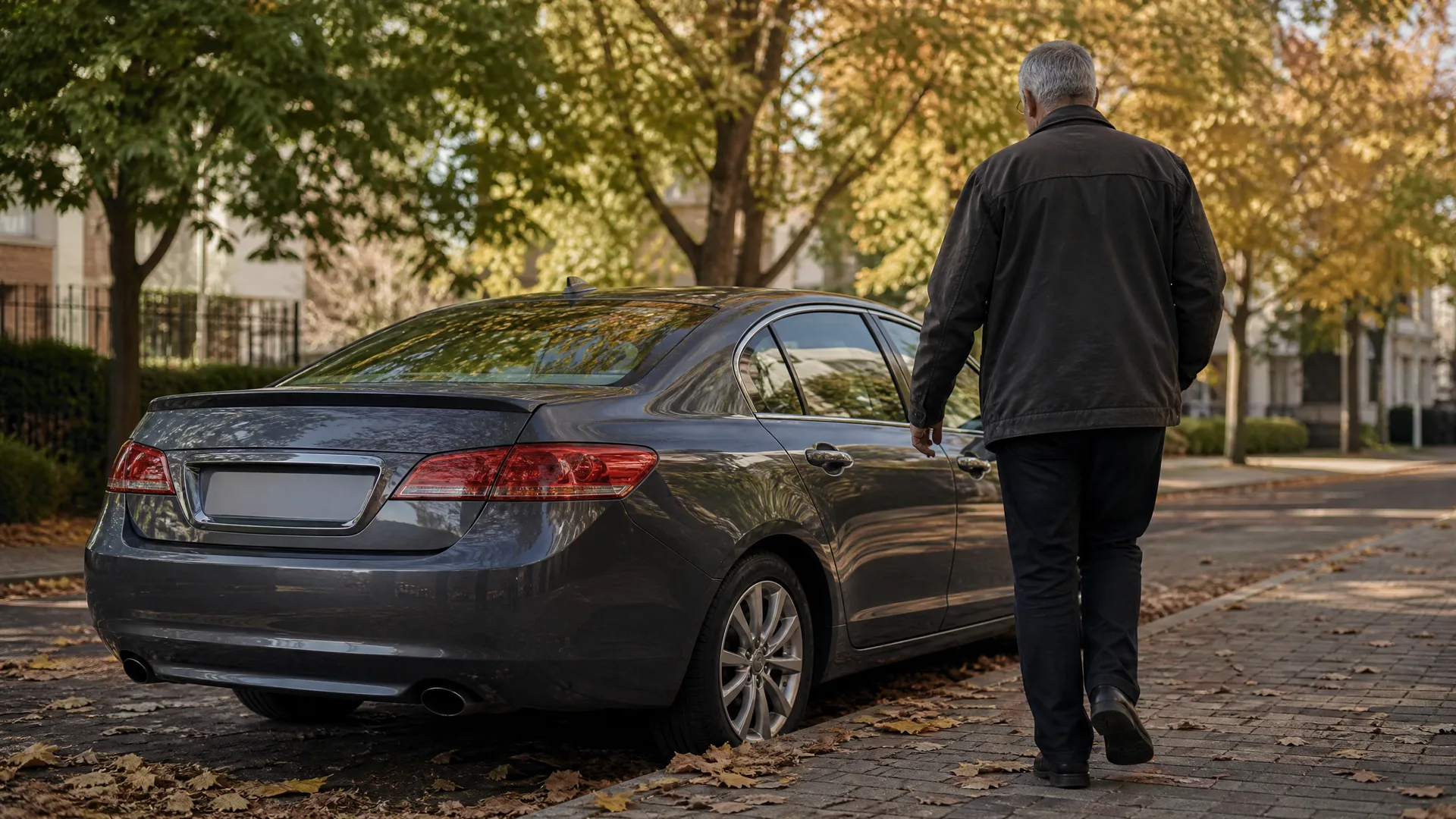
A lot of drivers assume that if the other car was also backing up, they're automatically only half to blame, or not at fault at all. That's not how it usually works. Fault is assigned based on what each driver could have seen and done to avoid the crash, not on a simple fifty-fifty split because both cars were moving.
Another common mistake is assuming that being hit while stopped clears you completely. If you back into a spot and stop, then get hit by a car still backing up, you may share less fault, but you're not automatically in the clear if you back out at an odd angle or into a position you shouldn't have been in.
Some drivers also think that reporting the accident to their insurer right away commits them to a fault percentage. It doesn't. The insurer investigates and assigns fault based on the evidence, not based on who reports first.
Questions people ask about this
Will my insurance go up if I'm found partly at fault for backing into another car?
It can, depending on your insurer and your state. Even a partial fault finding is often enough to affect your renewal, since insurers look at whether you were involved in a preventable collision, not just whether you were fully to blame. Ask your insurer how they treat a shared-fault claim before you assume it won't move your rate.
Does it matter if the accident happened in a parking lot versus a street?
The setting can affect who's considered to have the right of way, since parking lots often don't have the same traffic rules as a street. Many parking lot collisions are treated as shared fault by default because both drivers are expected to watch for moving vehicles. Check with your insurer on how they typically handle parking lot claims in your state.
What if there were no witnesses and no police report?
Without a report or witnesses, your insurer will rely on your account, the other driver's account, and physical evidence like damage patterns or any available camera footage. This can make it harder to get a clean determination, so it helps to take photos of both vehicles' final positions and damage before anything is moved.
Can I dispute a fault determination from my insurer?
Yes, most insurers have a process for appealing or reconsidering a fault decision if you have new evidence, like a witness statement or footage that wasn't available before. Ask your insurer directly what their appeals process looks like and what kind of evidence they'll reconsider.
Does backing into a parked, empty car get treated differently?
Hitting a parked car with no driver in it is usually treated as the moving driver being at fault, since there's no second driver to share responsibility with. This is a different situation from two cars backing into each other, where both were in motion and both had a chance to avoid the collision.
See how shared fault on a claim like this could affect what you pay for coverage.
Write down what happened while it's fresh, including where each car was parked and which direction you were both moving. If there's any damage, photograph it from several angles before either car is moved, and get contact information from the other driver and anyone who saw it happen. Call your insurer to start the claim and ask directly how they determine fault in a two-car backing collision in your state. If a police report was filed, request a copy for your records. Ask your insurer, too, how a shared-fault finding on this claim could affect your renewal, so you know what to expect before the bill arrives.