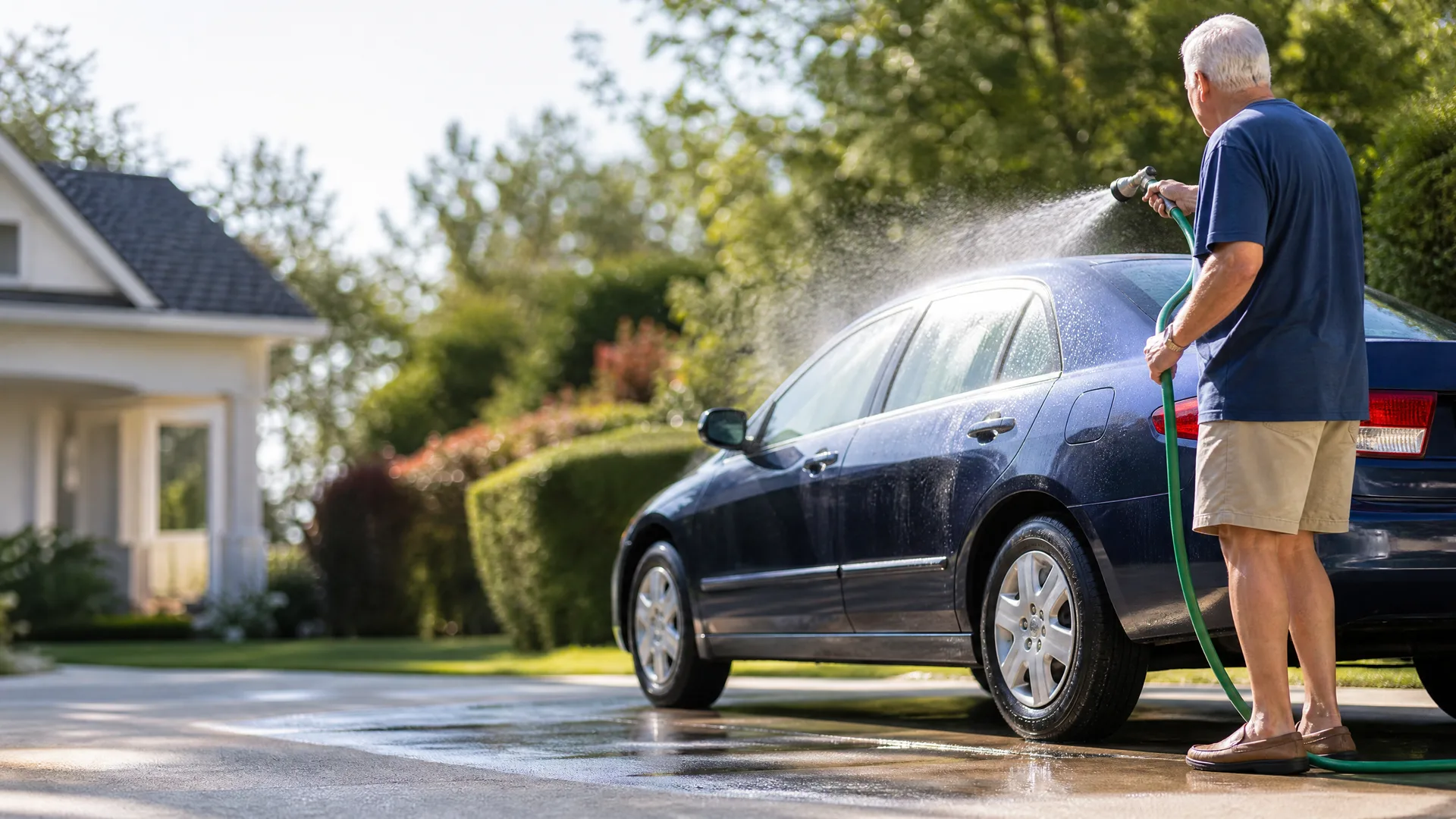
Best Car Insurance Discounts for Seniors in San Jose
Free to compare
Why San Jose Seniors Miss Discounts They Already Qualify For
You've maintained a clean driving record for decades, completed a defensive driving course last year, and now drive under 7,000 miles annually since retiring. Your premium still went up 12% at your last renewal. The disconnect isn't your driving — it's that California doesn't mandate automatic discount application for most senior-specific programs, and many carriers require you to request enrollment even after you've met the qualification criteria.
In San Jose specifically, where the average auto insurance premium for drivers 65–74 runs $1,680–$2,040 annually according to California Department of Insurance rate filings, unclaimed discounts represent real money. A mature driver course discount (typically 5–15% in California) combined with a low-mileage adjustment (10–25% depending on annual miles) can reduce that annual cost by $300–$500. But these don't appear automatically on your renewal notice — you need to contact your carrier, provide course completion certificates, submit odometer readings, or enroll in usage-based programs.
The pattern is consistent across major carriers operating in Santa Clara County: State Farm, Farmers, CSAA, Mercury, and AAA all offer senior-specific discounts, but application policies vary. Some apply mature driver discounts automatically if you're over 55 and complete an approved course, but most require you to submit the certificate within 30–60 days of completion. Low-mileage and telematics discounts almost universally require proactive enrollment — your carrier won't call you to suggest switching from standard to low-mileage rating just because your annual miles dropped when you stopped commuting to work.

California-Approved Mature Driver Courses and What They're Actually Worth
California requires insurers to offer mature driver discounts to policyholders who complete state-approved courses, but doesn't mandate a specific discount percentage — meaning the actual savings varies by carrier. AARP Smart Driver (the most widely recognized program) typically yields 5–10% discounts with most major carriers in California, while AAA's Senior Driving course and the National Safety Council's Defensive Driving Course for Mature Operators produce similar results. The courses cost $20–$35, take 4–8 hours (available online or in-person), and the discount applies for three years before you need to recertify.
For a San Jose senior paying $1,800 annually, a 10% mature driver discount saves $180 per year or $540 over the three-year certification period — a roughly 15-to-1 return on a $35 course fee. But here's what the course providers don't emphasize: you must notify your insurance carrier within 30–60 days of completion and provide your certificate number. Missing that window doesn't invalidate your completion, but many carriers won't backdate the discount beyond 30 days from notification, meaning delayed reporting costs you actual premium dollars.
San Jose-area seniors have multiple local completion options. AARP offers monthly in-person sessions at the Bascom Community Center and online courses with immediate certificate delivery. AAA Northern California runs quarterly classes at their San Jose Blossom Hill office. If you prefer online completion, all three major providers (AARP, AAA, NSC) offer state-approved courses that satisfy California requirements, with certificates emailed within 24–48 hours. Whichever you choose, photograph or scan your certificate before mailing it to your carrier — replacement certificate requests add 2–3 weeks to the discount application process.

Low-Mileage Programs for Retired and Semi-Retired San Jose Drivers
If you're no longer commuting daily on Highway 101 or Interstate 280, your annual mileage has likely dropped from 12,000–15,000 miles to under 7,000–8,000. That mileage reduction represents genuine decreased risk — fewer miles means fewer opportunities for accidents — but most California carriers won't adjust your rate until you affirmatively enroll in a low-mileage program and verify your reduced usage. The savings are significant: drivers who qualify for low-mileage programs (typically defined as under 7,500 annual miles) see discounts ranging from 10% to 25% depending on carrier and exact annual mileage.
Metromile, which operates in California on a pay-per-mile model, can deliver the deepest savings for San Jose seniors driving under 5,000 miles annually — but requires installation of a mileage tracking device. Traditional carriers like State Farm (Drive Safe & Save), Progressive (Snapshot), and Nationwide (SmartMiles) offer hybrid programs that combine low-mileage discounts with optional telematics monitoring. If you're uncomfortable with device-based tracking, carriers including Mercury, CSAA, and Farmers offer low-mileage discounts based on annual odometer verification — you submit a photo of your odometer reading at policy inception and renewal, and they adjust your rate accordingly.
The verification requirement is where many seniors lose the discount. If your carrier requests an odometer photo and you miss the 30-day submission window, most will default you back to standard mileage rating until the next renewal period. Set a calendar reminder for 15 days before your renewal date, take the photo in good lighting showing both the odometer and your VIN plate (visible through the windshield), and submit via your carrier's mobile app or email. For San Jose drivers with multiple vehicles, remember that each vehicle qualifies separately — your paid-off 2015 Camry that you drive 4,000 miles annually qualifies even if your spouse's newer vehicle doesn't.
Telematics Programs: What San Jose Seniors Should Know Before Enrolling
Usage-based insurance programs monitor your actual driving behavior — braking patterns, acceleration, speed, time of day, and total miles — and adjust your premium based on measured risk rather than demographic assumptions. For seniors with smooth driving habits, no rush-hour commuting, and limited night driving, these programs often produce meaningful discounts (10–30% in the first policy term). But they require comfort with smartphone apps or plug-in devices, and they do penalize hard braking even when it's defensive driving to avoid an accident initiated by another driver.
Progressive's Snapshot and State Farm's Drive Safe & Save are the most established programs available to San Jose drivers. Both offer participation discounts (small immediate discount just for enrolling) plus performance-based adjustments after the initial monitoring period (typically 90–180 days). Drivers over 65 who no longer drive during peak traffic hours (avoiding the 7–9 AM and 4–7 PM windows when accident frequency peaks) and who drive under 25 miles per day typically see above-average discounts because the programs reward exactly the driving patterns common among retired adults.
Before enrolling, understand the data access trade-off. These programs collect GPS location data, time stamps, and driving behavior metrics that carriers use for underwriting. California law requires insurers to disclose what data they collect and how they use it, but once you've opted in, that data can inform your renewal pricing even after the initial discount period ends. If your driving patterns change — you start a part-time job requiring freeway commuting, or you begin regular early-morning drives to help with grandchildren — the program may increase your rate rather than decrease it. Most programs allow you to opt out after the initial period, but rate increases based on monitored behavior typically don't revert when you cancel monitoring.
See What Drivers Over 65 Are Paying Now
See If You Qualify for Discounts
Multi-Policy Bundling and Other Underutilized Discounts
If you own your San Jose home outright or carry a mortgage with substantial equity, bundling your auto and homeowners policies with the same carrier typically produces 15–25% discounts on your auto premium — one of the largest available discounts outside of claims-free history. But the bundling discount only makes financial sense if the combined premium (home + auto) is competitive with unbundled quotes from separate carriers. Many seniors bundle automatically without comparing the total cost, assuming the stated discount percentage guarantees savings.
Run the comparison every 2–3 years. Request standalone auto quotes from three carriers, then request bundled quotes (home + auto) from three carriers. In California's competitive San Jose market, a 20% bundling discount might still leave you paying more total premium than unbundled policies from carriers specializing in each line. CSAA and AAA often deliver competitive bundled pricing for seniors with clean records and paid-off homes. Mercury and Nationwide frequently win on unbundled auto-only quotes for low-mileage senior drivers.
Other frequently missed discounts: paid-in-full discounts (3–5% for paying the six-month or annual premium upfront rather than monthly installments), paperless/auto-pay discounts (2–5%), and affiliation discounts through AARP, Costco, or professional associations. These stack with mature driver and low-mileage discounts, but again, most require you to provide membership numbers and opt into paperless delivery — they don't appear automatically. If you're paying monthly with paper bill delivery, you're likely leaving 5–8% on the table for no reason beyond not updating your billing preferences.

When to Request Coverage Adjustments on Paid-Off Vehicles
If your 2014 Honda Accord is paid off, garaged in San Jose, and worth $8,500 according to current Kelley Blue Book values, you're facing a decision about whether comprehensive and collision coverage still make financial sense. The math is straightforward: if your combined comprehensive and collision premiums exceed 10% of the vehicle's value annually, you're approaching the point where self-insuring those risks costs less than paying for coverage.
For that $8,500 Accord, if your comprehensive and collision premiums total $950 per year ($79/month), you're paying 11% of the vehicle's value for coverage that — after your $500 or $1,000 deductible — would pay a maximum of $7,500–$8,000 for a total loss. Over two years, you'll pay $1,900 in premiums to insure an asset that's depreciating to perhaps $7,000. Many financial advisors suggest dropping collision and comprehensive once annual premiums exceed 10% of vehicle value, maintaining only the state-required liability coverage.
Before making that change, consider two San Jose-specific factors. First, California requires minimum liability limits of $15,000 per person/$30,000 per accident for bodily injury and $5,000 for property damage — but those minimums are dangerously low given Bay Area asset values and medical costs. If you drop comprehensive and collision on your older vehicle, maintain liability limits of at least $100,000/$300,000/$100,000 or higher to protect your retirement assets from lawsuit exposure. Second, comprehensive coverage (which covers theft, vandalism, and weather damage) costs significantly less than collision — often $150–$300 annually. In San Jose, where vehicle break-ins and catalytic converter theft remain elevated, some seniors keep comprehensive coverage while dropping collision, accepting the risk of at-fault accident repair costs while maintaining protection against theft and vandalism.
How to Actually Claim These Discounts: The 30-Day Action Plan
Identifying discounts you qualify for means nothing if you don't follow through with enrollment and documentation. Most carriers impose 30–60 day notification windows for discount application, and missing those windows typically means waiting until your next renewal period to capture the savings — costing you six months of reduced premiums.
Start with your current policy declarations page (the summary document showing your coverages, vehicles, and premiums). Review the listed discounts — if you don't see mature driver, low-mileage, or bundling discounts but believe you qualify, that's unclaimed money. Contact your agent or carrier's customer service within the week. Ask specifically: "I'm 68, completed an AARP driving course last month, and drive under 6,000 miles per year — what discounts am I eligible for that aren't currently applied to my policy?" Request the list of required documentation and submission deadlines.
For mature driver discounts, complete your approved course within 10 days, submit your certificate within 7 days of receiving it, and follow up 15 days later to confirm the discount appears on your policy. For low-mileage programs, take required odometer photos immediately and ask whether your carrier requires annual reverification or only at renewal. For bundling, request quotes for combined home and auto coverage within 15 days and compare the total premium against your current unbundled cost — if bundling saves money, most carriers can process the policy combination within 2–3 weeks.
Document everything. When you call to request discounts, note the representative's name, date, and confirmation number. When you submit certificates or odometer photos, request email confirmation of receipt. If promised discounts don't appear on your next billing statement, you'll have the documentation needed to follow up effectively. California insurance regulations require carriers to apply approved discounts within one billing cycle of receiving required documentation, but enforcement depends on you noticing the omission and raising it with the carrier or the California Department of Insurance if necessary.
Frequently Asked Questions
Do I need to retake the mature driver course every year to keep my discount?
No — California-approved mature driver courses provide discounts valid for three years from completion date. You'll need to recertify by taking a refresher course before the three-year anniversary to maintain the discount, but annual recertification isn't required.
Can I get a low-mileage discount if I'm retired but still drive regularly around San Jose?
Yes, as long as your total annual mileage falls below your carrier's threshold (typically 7,500 miles). Driving frequency matters less than total miles — you could drive daily for errands and appointments but still qualify if your total annual distance is low.
Will my insurance company automatically apply discounts when I turn 65?
No — age alone doesn't trigger discounts. You must complete an approved mature driver course and submit your certificate to qualify for mature driver discounts. Low-mileage and telematics discounts require separate enrollment regardless of age.
If I drop collision coverage on my older car, can I add it back later if I change my mind?
Yes, you can request to add collision coverage back at any time by contacting your carrier. Coverage typically becomes effective within 1–3 business days of your request, though some carriers may require a vehicle inspection if significant time has passed since you dropped the coverage.
How do I know if my mature driver course is approved by California?
California accepts courses from AARP, AAA, and the National Safety Council, among others. Before enrolling, verify the course explicitly states it's approved for California insurance discount purposes — your course completion certificate should include language confirming state approval for insurance discounts.
Related Articles

Convert Joint Auto Insurance After Spouse Dies | Wisconsin
4/29/2026

Oregon License Renewal at 85: Testing & Insurance Impact
4/29/2026

MO License Renewal at 75: Tests, Restrictions & Rates
4/29/2026

Surviving Spouse Auto Insurance in Colorado: Transfer Rules
4/29/2026
Car Insurance After 70: Lower Rates Despite Increases
4/1/2026

Spouse Died in Hawaii: Convert Joint Auto Policy
4/29/2026