
Car Insurance Shopping Guide for Senior Drivers in Santa Ana
Free to compare
Why Your Santa Ana Premium Increased After 65 — And What You Can Do About It
California law prohibits using age alone as a rating factor, but insurers can adjust rates based on actuarial data showing claim frequency patterns. Between ages 65 and 75, Santa Ana drivers typically see rate increases of 8-18% as carriers recalibrate risk models, with steeper jumps after age 70. These increases happen even if you haven't filed a claim in decades, because they reflect population-level statistics rather than your individual record.
The good news: California mandates that all auto insurers offer mature driver course discounts to drivers who complete state-approved defensive driving programs. This discount ranges from 5% to 15% depending on your carrier, and it applies for three years from course completion. AARP and AAA both offer California-approved courses that cost $15-$25 and can be completed online in 4-6 hours, meaning a driver paying $1,200 annually could recover $60-$180 per year — far more than the course fee.
Santa Ana's dense urban layout and high traffic volume on corridors like Bristol Street and 17th Street also affect your base rate. If you've retired and no longer commute during peak hours, switching to a low-mileage or usage-based program can offset age-related increases. Drivers who reduce annual mileage from 12,000 to 6,000 miles often see reductions of 10-25%, which can completely neutralize actuarial age adjustments for drivers in their late 60s.

California's Mature Driver Course Discount: How It Works and Where to Enroll
California Vehicle Code Section 1676.1 requires all auto insurers doing business in the state to offer premium reductions to drivers 55 and older who complete an approved mature driver improvement course. The discount applies to both liability and collision coverage, and it renews every three years as long as you retake the course before your certification expires. Most carriers apply the discount within one billing cycle after you submit your completion certificate.
In Santa Ana, the most accessible options are AARP's Smart Driver course (available online and in-person at the Santa Ana Senior Center on Civic Center Drive) and AAA's online program. Both courses cover California-specific traffic laws, defensive driving techniques, and how physical changes can affect reaction time — without being condescatory about age. Completion certificates are issued immediately upon passing the final assessment, and you can upload them directly to your insurer's portal or email them to your agent.
The critical detail most seniors miss: you must request the discount explicitly. Carriers do not scan your age and automatically enroll you. Even after you submit your certificate, verify the discount appears on your next declaration page. If you completed a course more than three years ago, your discount has likely expired, and your carrier will not notify you — they'll simply stop applying it at your next renewal.

Low-Mileage and Usage-Based Programs for Retired Santa Ana Drivers
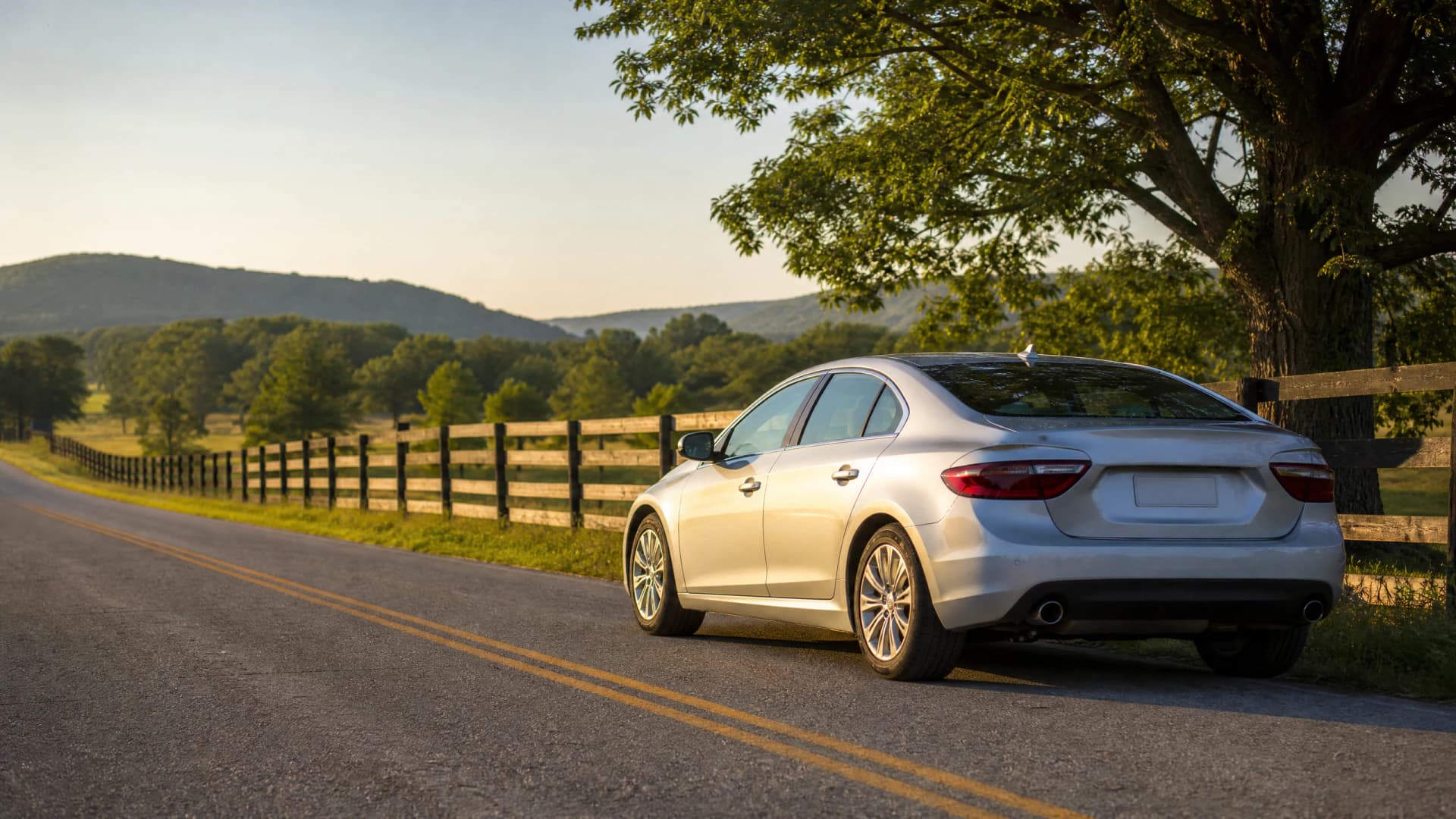
If you've retired or semi-retired and no longer drive to an office five days a week, you're likely overpaying based on outdated mileage assumptions. Most California carriers still rate policies using annual mileage brackets (0-5,000 / 5,001-10,000 / 10,001-15,000), and many seniors remain in the 10,001-15,000 bracket because that's what they reported when they were working — even though their current actual mileage is under 7,000.
Calling your carrier to update your annual mileage estimate is the fastest rate reduction available. Dropping from the 10,001-15,000 bracket to the 5,001-10,000 bracket typically reduces premiums by 8-15%. For even larger savings, consider usage-based programs like Allstate's Drivewise, State Farm's Drive Safe & Save, or Progressive's Snapshot. These programs use a smartphone app or plug-in device to track actual miles driven and often reward low-mileage drivers with discounts of 15-30%.
Some senior drivers avoid telematics programs because they assume the technology will penalize cautious driving habits like driving under the speed limit or braking early. In practice, most programs reward smooth braking, consistent speeds, and avoiding late-night driving — behaviors experienced drivers already exhibit. If you drive fewer than 7,500 miles per year and rarely drive between 11 p.m. and 4 a.m., telematics programs almost always produce net savings for drivers 65 and older.
When to Drop Collision Coverage on Your Paid-Off Vehicle in Santa Ana
Once your vehicle is paid off and has depreciated below a certain threshold, collision and comprehensive coverage may cost more over two to three years than the maximum payout you'd receive after a total loss. The standard rule: if your vehicle's current market value is less than ten times your annual collision and comprehensive premium, it's time to consider dropping those coverages and keeping only liability.
For example, if your 2012 Honda Accord is worth $6,500 and your combined collision and comprehensive premium is $720 per year, you'd recover your premium cost in full only if you totaled the vehicle within the next nine years — unlikely for most drivers. Dropping to liability-only would free up $60 per month, which many retirees prefer to self-insure by setting aside in an emergency fund. This strategy works best for drivers with sufficient savings to replace their vehicle out-of-pocket if necessary.
Before making this change, confirm you maintain adequate liability limits. California's minimum liability requirement is 15/30/5 ($15,000 per person for injury, $30,000 per accident, $5,000 for property damage), but those limits are dangerously low in Santa Ana, where the median home price exceeds $700,000 and a serious multi-vehicle accident can easily produce six-figure claims. Most financial advisors recommend 100/300/100 liability limits for retired drivers with assets to protect, and umbrella policies offering $1 million in additional coverage typically cost only $150-$250 annually.
See What Drivers Over 65 Are Paying Now
See If You Qualify for Discounts
Medical Payments Coverage and Medicare: What Senior Drivers Need to Know
Medicare covers accident-related injuries, but it functions as secondary coverage when auto insurance medical payments (MedPay) or personal injury protection (PIP) is available. California does not require PIP, but it does require all carriers to offer MedPay as an optional coverage. Many senior drivers drop MedPay assuming Medicare makes it redundant — but this creates a gap in immediate accident expense coverage.
MedPay pays out immediately after an accident without requiring you to establish fault, and it covers expenses Medicare doesn't — ambulance co-pays, emergency room deductibles, and treatment from providers who don't accept Medicare assignment. A typical MedPay policy with $5,000 in coverage costs $35-$60 per year in Santa Ana, and it pays before Medicare processes any claims, meaning you avoid out-of-pocket expenses while waiting for Medicare reimbursement.
If you're on a Medicare Advantage plan rather than Original Medicare, check whether your plan includes accident-related coverage and what your maximum out-of-pocket exposure is. Some Advantage plans have $3,000-$7,000 annual out-of-pocket maximums, and a serious accident could hit that limit quickly. In those cases, carrying $5,000-$10,000 in MedPay provides a financial buffer and ensures you can access immediate care without waiting for plan approvals.

How to Compare Quotes Effectively as a Senior Driver in Santa Ana
Senior drivers often stay with the same carrier for decades out of loyalty, assuming long tenure earns them preferential rates. In reality, California's competitive insurance market means carriers frequently undercut each other for new business, and the insurer offering you the best rate at age 50 is rarely the same one offering the best rate at age 70. Comparing quotes every two to three years is the single most effective way to control costs.
When requesting quotes, provide identical coverage limits and deductibles to each carrier so you're comparing equivalent policies. Specify that you've completed a mature driver course (if applicable), provide your actual current annual mileage, and ask explicitly about low-mileage program eligibility. Many Santa Ana seniors qualify for additional discounts they don't know to request — homeowner bundling (if you own property), paid-in-full discounts (if you can pay the six-month premium upfront), and paperless billing discounts ($10-$30 annually).
Avoid quoting only online — many carriers reserve their most competitive senior rates for agents who can manually apply mature driver course discounts and adjust mileage assumptions. Calling a local independent agent who represents multiple carriers allows you to compare five or six options in a single conversation, and agents often know which carriers are currently prioritizing senior driver business in Orange County.
What to Do If Your Rate Increases Sharply After Age 75
Rate increases accelerate for many drivers after age 75, particularly if you've had a recent at-fault accident or moving violation. Some carriers impose surcharges of 20-40% for drivers over 75 with any claims in the prior three years, even if those claims were minor. If you receive a renewal notice with a sharp increase and you haven't changed your driving behavior, request a detailed explanation from your carrier identifying which rating factors changed.
California law requires insurers to justify rate increases based on documented risk factors, and if your increase is based solely on age-related actuarial adjustments, you have leverage to negotiate or shop aggressively. Some carriers — notably USAA (if you're military-affiliated), The Hartford (which partners with AARP), and Auto Club (AAA's insurance arm) — specialize in senior driver policies and often offer more stable rates for drivers over 75 with clean records.
If you're facing non-renewal due to age-related concerns, California's Automobile Assigned Risk Plan (CAARP) serves as the insurer of last resort, but rates are typically 50-80% higher than the voluntary market. Before resorting to assigned risk coverage, exhaust all voluntary market options and consider whether reducing coverage on an older paid-off vehicle makes financial sense. Many drivers over 75 find that switching to liability-only coverage and self-insuring collision risk produces lower total cost of ownership than maintaining full coverage at drastically increased premiums.
Frequently Asked Questions
Does AARP offer car insurance discounts for seniors in California?
AARP does not underwrite insurance directly, but it partners with The Hartford to offer auto insurance with features designed for drivers 50 and older, including accident forgiveness and new car replacement. California seniors can also take AARP's Smart Driver course to qualify for the state-mandated mature driver discount (5-15%) with any carrier, not just The Hartford.
Will my car insurance drop me when I turn 80 in California?
California law prohibits insurers from non-renewing policies based solely on age. Carriers can non-renew based on claims history, moving violations, or failure to pay premiums, but not because you reached a specific age. If you maintain a clean driving record, your policy will renew regardless of age.
How much does the California mature driver course discount save?
California's mandatory mature driver course discount ranges from 5% to 15% depending on your carrier, and it applies for three years after course completion. For a senior driver paying $1,200 annually, that translates to $60-$180 per year in savings, or $180-$540 over the three-year certification period.
Should I keep collision coverage on a 10-year-old paid-off car?
If your vehicle's current market value is less than ten times your annual collision premium, most financial advisors recommend dropping collision and self-insuring. For example, if your car is worth $5,000 and collision costs $500/year, you'd pay $5,000 in premiums over ten years — potentially more than the vehicle's total value.
Does Medicare cover car accident injuries or do I need medical payments coverage?
Medicare covers accident injuries, but it processes as secondary coverage when auto insurance medical payments (MedPay) is available. MedPay pays immediately without establishing fault and covers Medicare gaps like ambulance co-pays and ER deductibles, making it valuable supplemental coverage for senior drivers even when enrolled in Medicare.
Related Articles

Convert Joint Auto Insurance After Spouse Dies | Wisconsin
4/29/2026

Oregon License Renewal at 85: Testing & Insurance Impact
4/29/2026
MO License Renewal at 75: Tests, Restrictions & Rates
4/29/2026
Surviving Spouse Auto Insurance in Colorado: Transfer Rules
4/29/2026
Car Insurance After 70: Lower Rates Despite Increases
4/1/2026

Spouse Died in Hawaii: Convert Joint Auto Policy
4/29/2026