
California License Renewal at 70: Vision Tests and Insurance Impact
Free to compare
What Changes at Age 70 for California Driver's License Renewal
California requires all drivers aged 70 and older to renew their license in person at a DMV office — online and mail renewals are no longer available after your 70th birthday. The in-person requirement exists specifically to administer a vision test at every renewal cycle, which moves from eight years (for drivers under 70) to five years once you turn 70.
The vision test measures visual acuity and peripheral vision. You must achieve 20/40 vision with or without corrective lenses in at least one eye, and your peripheral vision must meet minimum field standards. If you wear glasses or contacts, bring them — the DMV tests your corrected vision, not your uncorrected eyesight.
If you fail the standard vision screening, the DMV refers you to a vision specialist for a comprehensive examination. The specialist completes a Driver Medical Evaluation form (DL 62) documenting whether corrective measures (new prescription, cataract surgery, restriction codes) can bring you into compliance. Until the DMV receives and approves that form, your renewal is suspended.
Vision Test Failure and License Restrictions That Affect Insurance
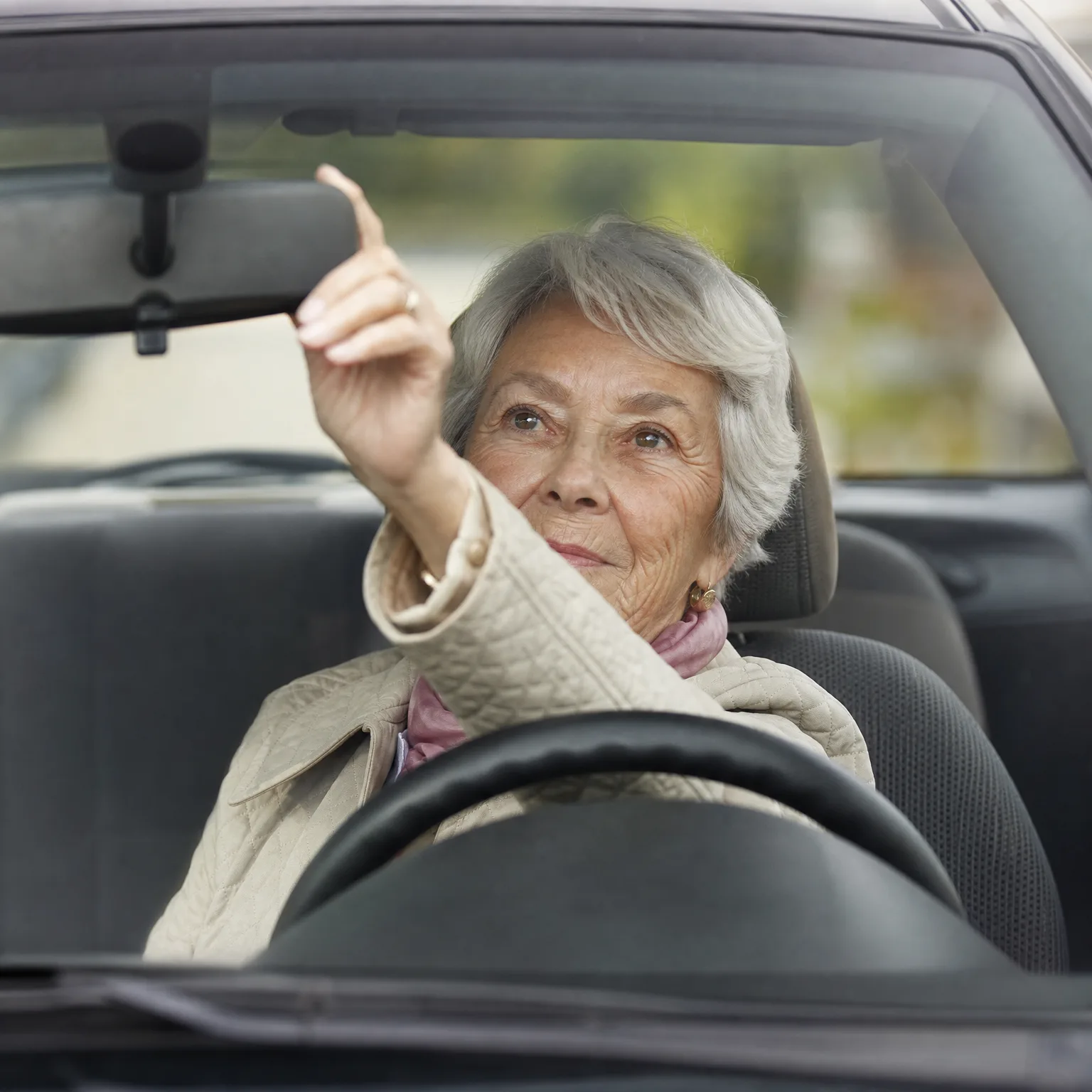
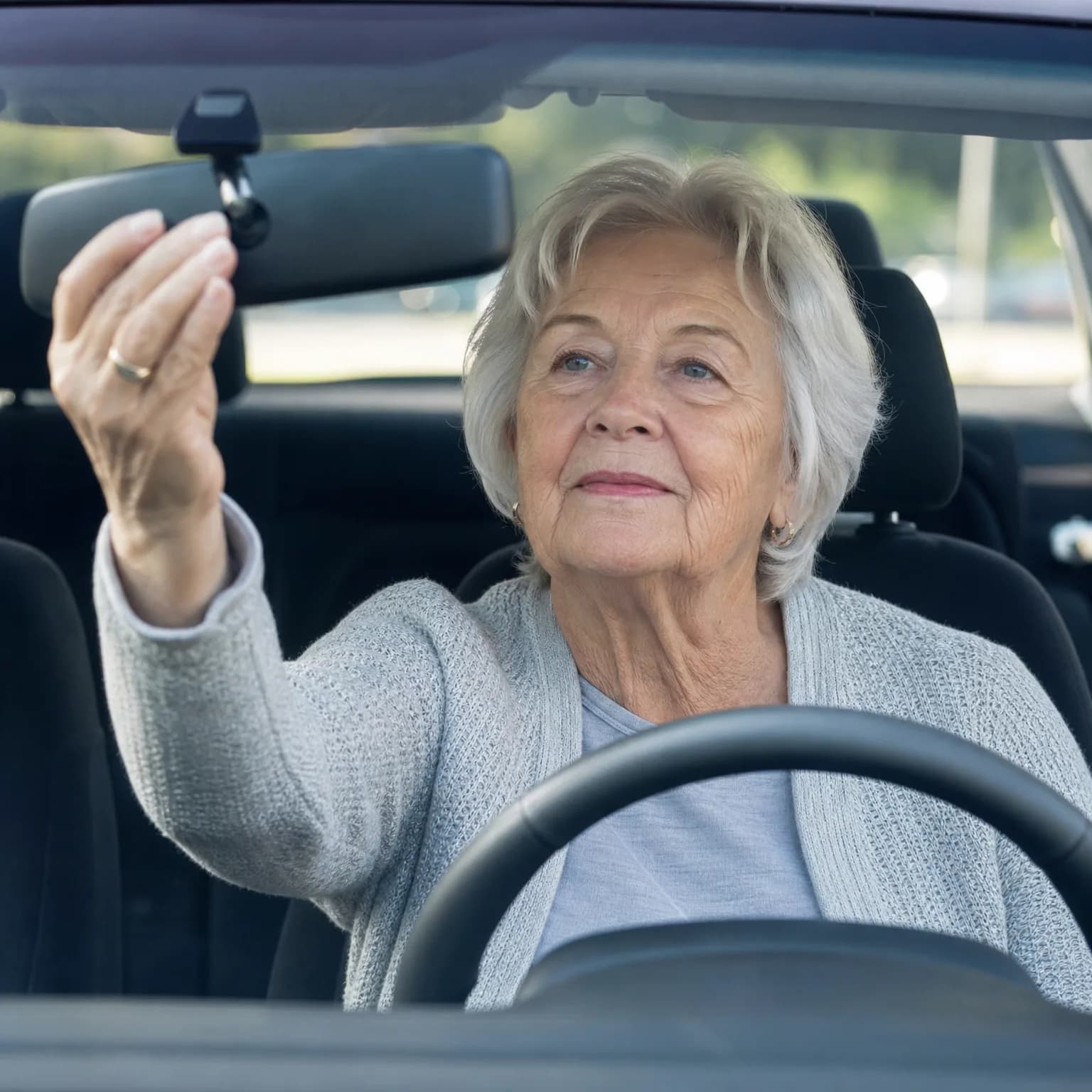
Failing the initial DMV vision test does not automatically disqualify you from renewing. The vision specialist evaluation often results in restriction codes added to your license — limitations like "corrective lenses required," "daylight driving only," "no freeway driving," or "outside mirror required."
These restriction codes are permanent additions to your driving record and appear on every insurance quote or renewal you request. Carriers use restriction codes as underwriting factors. A "daylight only" restriction, for example, signals reduced visual capability in low-light conditions, and some carriers apply surcharges ranging from 5% to 15% on top of age-related rate adjustments. The restriction itself — not just your age — becomes a pricing variable.
Most seniors are unaware that restriction codes added after age 70 trigger mandatory reporting to their current insurer under California law. Your carrier receives notification from the DMV within 30 days of the restriction being added. If the restriction is severe enough ("essential needs only" or geographic radius limitations), some carriers non-renew the policy at the next term rather than offering renewal with a surcharge.
How California Carriers Adjust Rates After Age 70 Renewals
Auto insurance premiums in California typically increase 8% to 18% between age 70 and 75, with steeper increases after 75. Under current state requirements, carriers cannot use age as the sole factor for rate increases — they must justify rate adjustments using a combination of age, claims frequency data for the age cohort, and individual driving record factors.
Restriction codes amplify age-based increases. A driver aged 72 with a clean record but a new "corrective lenses" restriction may see a smaller increase (2%–5%) than a driver with a "daylight only" restriction (10%–15%). The restriction type matters more than the restriction's existence.
Carriers also re-evaluate mileage reporting more aggressively after age 70. If you reported 12,000 annual miles at age 68 but now drive fewer than 6,000 miles per year, you may qualify for low-mileage discounts (typically 10%–20% savings) that offset age-related increases. Most carriers require odometer verification or telematics enrollment to validate reduced mileage, and many seniors don't realize they need to proactively request mileage re-evaluation at renewal — carriers don't automatically adjust your mileage tier downward.
See What Drivers Over 65 Are Paying Now
See If You Qualify for DiscountsMature Driver Course Discounts and California Requirements
California does not mandate that carriers offer mature driver course discounts, but most major carriers provide them voluntarily. Completion of an approved traffic safety course (typically 4 to 8 hours, available online or in-person through AAA, AARP, and other providers) qualifies drivers aged 55 and older for premium reductions ranging from 5% to 15% depending on the carrier.
The discount applies for three years from course completion. You must provide the carrier with your completion certificate — they do not track course completion automatically. If you completed a mature driver course at age 68 and are now renewing your license at 70, check whether your discount period has expired and whether re-enrollment makes financial sense.
For a driver paying $1,200 annually, a 10% mature driver discount saves $120 per year or $360 over three years. Course fees range from $20 to $40, making the net savings $340 to $380 over the discount period. Drivers with recent restriction code additions often see the mature driver discount partially offset restriction-based surcharges, though the discount does not remove the restriction itself from underwriting consideration.

Coverage Adjustments Worth Considering After 70
Many senior drivers own paid-off vehicles aged 8 to 12 years with actual cash values below $5,000. Comprehensive and collision coverage on a vehicle worth $4,000 may cost $600 to $900 annually, and a total-loss claim pays only the depreciated value minus your deductible — often $3,200 to $3,500 after a $500 deductible.
If your vehicle's value has dropped below the threshold where collision and comprehensive premiums equal 10% or more of the car's worth annually, dropping physical damage coverage and retaining liability, medical payments, and uninsured motorist coverage often makes financial sense. California requires minimum liability limits of 15/30/5, but if you own a home or have retirement assets, higher liability limits (100/300/100 or an umbrella policy) provide better protection against lawsuit judgments that exceed minimum coverage.
Medical payments coverage (MedPay) becomes more valuable after 70 because it pays immediately after an accident regardless of fault, covering deductibles and co-pays that Medicare doesn't. MedPay limits of $5,000 to $10,000 cost $40 to $80 annually and coordinate with Medicare to cover out-of-pocket costs for accident-related injuries, including ambulance transport and emergency room visits.
What Happens If You Don't Pass the Vision Specialist Evaluation
If the vision specialist determines your vision cannot be corrected to meet California's minimum standards even with restrictions, the DMV denies your renewal. You receive a formal denial letter and must surrender your license. At that point, your auto insurance policy lapses — you cannot maintain personal auto coverage without a valid driver's license.
Some carriers allow a grace period (typically 30 days) if you notify them immediately and provide documentation that you're appealing the DMV decision or seeking corrective treatment (cataract surgery, for example). If corrective treatment restores your vision to compliant levels and the DMV reinstates your license, your carrier can reinstate coverage, though you may face a lapse surcharge (5%–10%) for the period without a valid license.
If your license is permanently revoked due to vision failure, you have two options: stop driving and cancel your auto insurance, or if you still own a vehicle that other household members drive, convert your policy to a named-driver exclusion format where you are explicitly excluded from coverage. That allows your spouse or adult child living with you to maintain insurance on the household vehicle while you remain a vehicle owner but not an insured driver.
Frequently Asked Questions
Does California automatically notify my insurance company when I renew my license at 70?
California DMV notifies your insurer only if restriction codes are added to your license during the renewal process. A standard renewal without new restrictions does not trigger automatic carrier notification. If you fail the vision test and receive restrictions like "daylight only" or "corrective lenses required," the DMV reports those codes to your current carrier within 30 days.
Can I renew my California license online after turning 70 if I recently had an eye exam?
No. California requires all drivers aged 70 and older to renew in person at a DMV office regardless of recent eye exams or vision test results from private optometrists. The in-person requirement exists specifically to administer the DMV's standardized vision screening at every renewal cycle, which shortens from eight years to five years after age 70.
Will my insurance rate increase just because I turned 70 and renewed my license?
Your rate may increase due to age-related actuarial factors, but California law prohibits carriers from using age as the sole rate variable. Typical increases range from 8% to 18% between ages 70 and 75, depending on your driving record, claims history, and whether restriction codes were added during renewal. Mature driver course discounts (5%–15%) and low-mileage adjustments can offset age-based increases if you request them proactively.
What happens to my car insurance if I fail the DMV vision test and lose my license?
Your personal auto insurance policy lapses when your license is revoked because you no longer qualify as an insured driver. If you own a vehicle that other household members drive, you can convert to a named-driver exclusion policy that explicitly excludes you from coverage while maintaining insurance for other licensed drivers. If no one else drives the vehicle, you must cancel the policy and surrender the registration or place the vehicle in non-operational status.
Related Articles
License Renewal at 85 in CA: Testing and Insurance
4/29/2026

CA License Renewal at 75: Medical Tests & Insurance Impact
4/29/2026

CA License Renewal at 80: Test Triggers & Requirements
4/29/2026
Vision Deterioration & CA License Renewal for Seniors
4/29/2026
Colorado License Renewal at 70: Vision & Insurance
4/29/2026

VA License Renewal at 70: Vision Test & Insurance
4/29/2026