
Kentucky License Renewal at 75: Medical Tests & Insurance Impact
Free to compare
Does Kentucky Require Medical Evaluation at Age 75 License Renewal?
Kentucky does not require medical evaluation, vision testing, or cognitive screening when you renew your driver's license at age 75. The renewal process at 75 is identical to renewal at any other age: standard vision screening conducted at the circuit court clerk's office, no physician sign-off, no additional documentation beyond your current license and proof of identity.
This distinguishes Kentucky from states like Illinois (road test at 75) or California (in-person renewal required at 70+). Kentucky allows online renewal through the state's online portal if you renewed in person last cycle, regardless of age. Most seniors eligible for online renewal complete the transaction in under 10 minutes.
The renewal cycle remains four years for all Kentucky drivers. Your license expiration date falls on your birthday in the renewal year. If you're 75 now, your next renewal occurs at 79, then 83, with no change in process or requirements based solely on age.

What Happens to Your Auto Insurance Rate When You Turn 75 in Kentucky?
Auto insurance rates in Kentucky typically increase 12–18% between age 70 and 75, with another 15–22% increase between 75 and 80, even if your driving record remains clean. Carriers treat age 75 as a statistical inflection point — actuarial tables show increased claim frequency after 75 regardless of individual driver history, and your premium reflects that population-level risk assessment.
The rate adjustment happens at your policy renewal following your 75th birthday, not on your birthday itself. If your policy renews two months after you turn 75, expect the increase on that renewal notice. If your policy renewed one month before your birthday, you have nearly a full policy term before the age-based adjustment appears.
This timing creates a brief comparison window. Carriers price your age as of the policy effective date. If you're comparing rates three months before your 75th birthday, quotes reflect your current age bracket. Once you cross 75, every quote you receive prices you in the older bracket. The month before your birthday is the last opportunity to lock a rate in your current age tier.

Restricted License Options in Kentucky for Senior Drivers
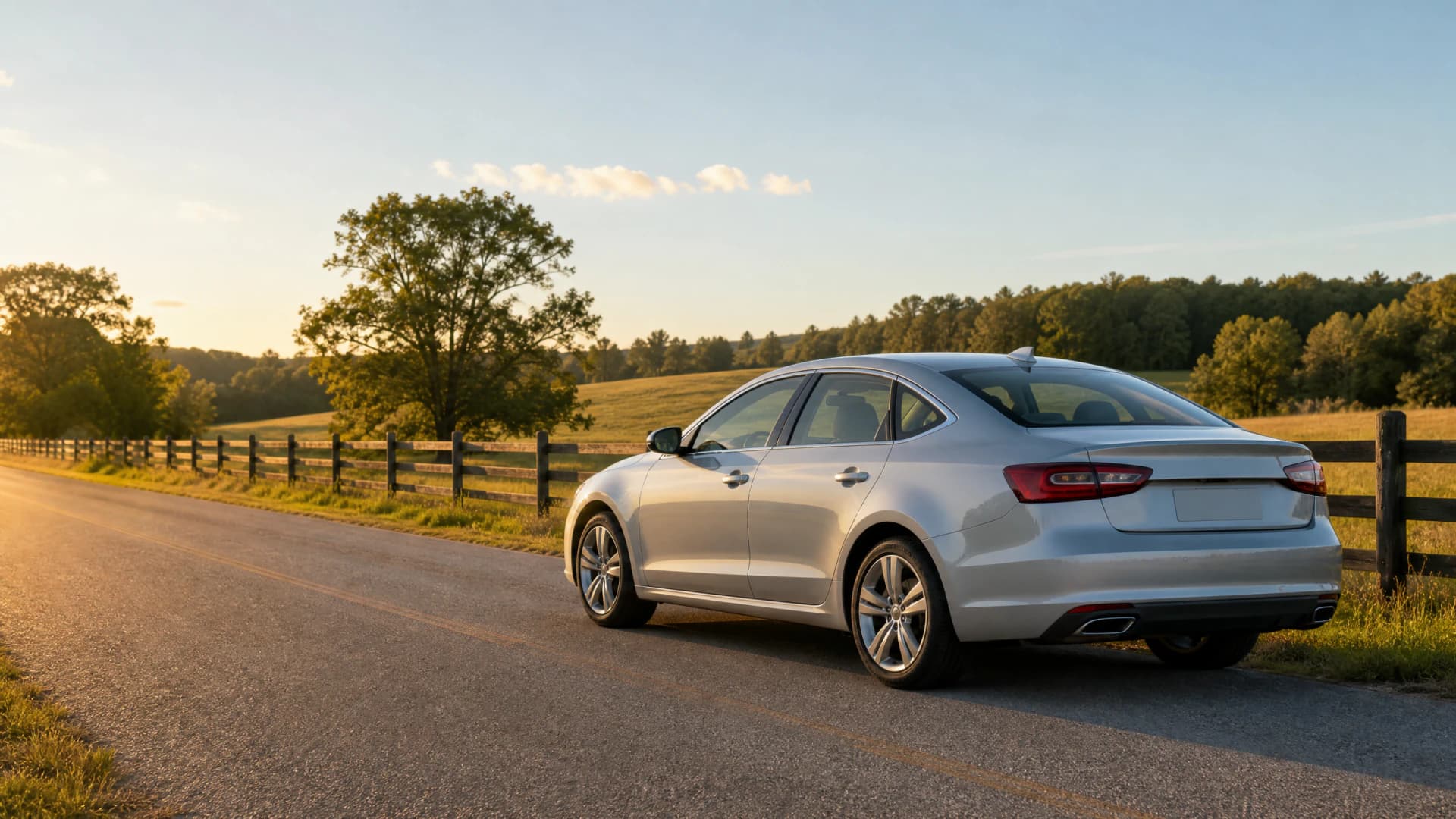
Kentucky does not offer a formal restricted or limited driving privilege license for seniors who choose to self-limit their driving. You hold either a full unrestricted operator's license or you don't drive. The state offers no intermediate license category for daylight-only driving, limited-radius driving, or no-highway driving.
Some seniors misunderstand Kentucky's medical review program as a restricted license pathway. The Transportation Cabinet's Medical Review Board evaluates drivers referred due to medical conditions affecting safe operation — typically by physicians, law enforcement, or family members. The board can impose restrictions (daylight only, speed-limited roads, specific geographic radius), but this results from medical necessity determination, not voluntary senior driver choice.
If you want to reduce your driving exposure voluntarily, document the change with your carrier through a low-mileage program or usage-based insurance rather than pursuing a restricted license. Kentucky law does not recognize self-imposed driving limits as a licensure category.
How Reduced Mileage After Retirement Affects Your Kentucky Rate
Dropping from 12,000 annual miles to 6,000 miles after retirement typically reduces your Kentucky premium 8–15% if you enroll in a low-mileage discount program, but most carriers require you to request the adjustment — they don't automatically apply it when you turn 65 or notify them of retirement. State Farm's Steer Clear program, GEIC's Low Mileage discount, and Progressive's Snapshot all offer mileage-based rate reductions, but qualification methods differ.
Traditional low-mileage discounts rely on annual mileage self-reporting at renewal. You state your estimated annual mileage; the carrier applies a corresponding discount tier. Most programs threshold at 7,500 miles annually for maximum discount. Accuracy matters — if you report 5,000 miles but a claim investigation reveals 14,000 miles driven in the policy term, the carrier can adjust your premium retroactively or non-renew your policy.
Usage-based programs like Snapshot or Allstate's Milewise measure actual mileage via telematics device or mobile app. These programs often deliver larger discounts for truly low-mileage drivers — 20–30% if you're driving under 5,000 miles annually — but require comfort with monitoring technology. The device tracks miles driven, time of day, and braking patterns. For seniors driving only local errands three days per week, telematics programs frequently outperform traditional low-mileage discounts by 10–12 percentage points.

See What Drivers Over 65 Are Paying Now
See If You Qualify for Discounts
Should You Drop Collision and Comprehensive on a Paid-Off Vehicle at 75?
Drop collision and comprehensive coverage on a paid-off vehicle when your annual premium for those coverages exceeds 10–15% of the vehicle's actual cash value, typically reached when the vehicle is worth less than $4,000–$5,000. For a 2012 sedan worth $3,800, paying $520 annually for collision and comprehensive makes no financial sense — a total loss claim nets you $3,800 minus your deductible, often $500–$1,000, leaving $2,800–$3,300 recovered after paying $520 per year in premium.
Kentucky requires liability coverage only: $25,000 per person / $50,000 per accident for bodily injury, $25,000 property damage, and $10,000 personal injury protection. Collision and comprehensive are optional unless required by a lienholder. On a paid-off vehicle, you control that decision entirely.
The calculation changes if you cannot afford to replace the vehicle out-of-pocket after a total loss. If losing your $4,200 vehicle creates a financial hardship and you have no emergency fund to replace it, keeping comprehensive at $180–$240 annually may be justified even though it fails the 10% threshold test. The math says drop it; your financial cushion determines whether you can absorb that risk. Most seniors with paid-off vehicles over 10 years old and replacement savings available should drop full coverage and bank the $400–$600 annual savings.

Mature Driver Course Discounts in Kentucky: How Much You Actually Save
Kentucky mandates that carriers offer a mature driver discount to policyholders 55+ who complete an approved defensive driving course, but the statute does not specify the discount percentage — carriers set their own rates, typically 5–10% off your total premium for three years following course completion. For a senior paying $1,080 annually, a 7% mature driver discount saves $226 over three years, minus the $25–$35 course fee, netting roughly $190–$200.
Approved courses include AARP Smart Driver (online or in-person, $25 for AARP members), AAA Roadwise Driver, and National Safety Council Defensive Driving. All meet Kentucky Transportation Cabinet approval standards. The online AARP course takes approximately 4 hours, self-paced, with no final exam requirement — you cannot fail, only complete the modules.
You must request the discount explicitly after course completion. Mail your certificate of completion to your carrier or upload it through your online account portal. The discount applies from the next renewal date following certificate submission, not retroactively. If you complete the course two months before renewal, submit immediately to ensure processing before renewal prints. Missing the renewal cutoff delays your discount six months to a year depending on your policy term. Requalification requires repeating an approved course every three years to maintain the discount.
How Medicare and Kentucky PIP Coverage Interact After an Accident at 75
Kentucky requires $10,000 personal injury protection (PIP) coverage on every auto policy, and PIP pays before Medicare for injuries sustained in an auto accident — this is primary coverage, meaning your auto insurance PIP exhausts fully before Medicare begins processing related claims. If you incur $18,000 in medical bills from an accident, your PIP pays the first $10,000, then Medicare pays the remaining $8,000 subject to Medicare deductibles and copays.
Many seniors assume Medicare eliminates the need for medical payments coverage or higher PIP limits, but Medicare does not cover all accident-related costs PIP addresses. PIP in Kentucky covers medical expenses, lost wages (if you're still working part-time), and funeral expenses up to the policy limit without requiring proof of fault. Medicare covers medical treatment only, requires you to meet deductibles, and does not coordinate lost income replacement.
Increasing your PIP limit from the $10,000 minimum to $25,000 or $50,000 typically costs $40–$80 annually. For seniors with substantial retirement savings or assets, higher PIP limits protect against Medicare gap exposure and eliminate out-of-pocket costs for initial accident treatment. For seniors on fixed income with minimal assets, the $10,000 state minimum combined with Medicare may provide adequate coverage without the added premium cost.
Frequently Asked Questions
Can I renew my Kentucky license online at age 75?
Yes, if you renewed in person during your last renewal cycle. Kentucky allows online renewal for drivers of any age who renewed in person previously, with no special age restrictions. You'll complete standard vision certification questions and pay the renewal fee through the state portal.
Do I need a doctor's approval to renew my license at 75 in Kentucky?
No. Kentucky does not require medical evaluation, physician sign-off, or cognitive testing at age 75 or any age for standard license renewal. The only medical involvement occurs if you're referred to the Medical Review Board due to a specific medical condition affecting driving ability.
Will my insurance company know I turned 75 even if I don't tell them?
Yes. Your carrier has your date of birth on file from your policy application and reprices your policy automatically at renewal based on your age as of the renewal effective date. The rate adjustment happens whether or not you notify them of your birthday.
How long does the mature driver discount last in Kentucky?
Three years from course completion, then you must retake an approved course to requalify. The discount percentage (typically 5–10%) remains constant during the three-year period as long as your policy stays active with the same carrier.
Does Kentucky offer a senior citizen discount on auto insurance?
Kentucky mandates mature driver course discounts for drivers 55+ who complete approved training, but does not require carriers to offer discounts based solely on age. Some carriers voluntarily offer retiree, low-mileage, or affinity discounts that benefit seniors, but these are carrier-specific and not state-mandated.
Related Articles
KY License Renewal at 70: Vision Test & Insurance
4/29/2026
License Renewal at 85 in Kentucky: Testing & Insurance
4/29/2026

Kentucky License Renewal at 80: Tests & Requirements
4/29/2026

Kansas License Renewal at 75: Tests, Rates, Restrictions
4/29/2026
Indiana License Renewal at 75: Tests and Rate Impact
4/29/2026

Colorado License Renewal at 75: Rules and Rate Impact
4/29/2026