
License Renewal at 80 in New Mexico: What Tests to Expect
Free to compare
New Mexico's Age-Based Renewal Requirements for Drivers 80 and Older
New Mexico does not require vision tests, road tests, or medical certifications based solely on reaching age 80. Unlike neighboring states that impose stricter screening at 75 or 79, New Mexico treats an 80-year-old driver the same as a 40-year-old for standard renewal purposes: you renew every four or eight years depending on your license type, and in-person renewal is required only if your previous renewal was online or by mail.
The standard renewal cycle allows one remote renewal (online or mail) followed by one in-person renewal. If you renewed online at 76, you'll need to renew in person at 80 or 84, but the in-person requirement has nothing to do with your age. It's purely a function of the alternating cycle the state uses to verify identity and update photos.
This absence of age-triggered testing makes New Mexico one of the most senior-friendly renewal states in the region. There are no mandatory physician statements, no vision acuity minimums enforced at specific ages, and no automatic road test scheduling. The renewal process at 80 is functionally identical to renewal at any other age unless specific flags appear in your driving or medical record.

What Triggers Enhanced Screening for Senior Drivers in New Mexico
While New Mexico doesn't mandate testing at 80, the Motor Vehicle Division can require a driver of any age to complete vision screening, written knowledge tests, or a behind-the-wheel road test if specific conditions appear. For senior drivers, the most common triggers are medical notifications submitted by physicians under mandatory reporting requirements, accident reports involving at-fault determinations where cognitive or physical impairment is noted by responding officers, and lapses in continuous licensure that exceed one renewal cycle.
Medical notifications are the most frequent trigger. New Mexico statute requires physicians to report patients with conditions that may impair safe driving, including seizure disorders, advanced dementia, uncontrolled diabetes with hypoglycemic episodes, and severe vision impairment not correctable to the state's minimum standard of 20/40 in at least one eye. If your doctor submits a notification, you'll receive a letter from MVD requesting medical clearance or scheduling an in-person evaluation before your next renewal is processed.
Accident history is the second common flag. If you're involved in two or more at-fault accidents within a 12-month period, or a single accident where the police report notes possible cognitive delay, MVD may require you to pass a road test before renewing. Senior drivers are disproportionately flagged in low-speed backing accidents and failure-to-yield incidents, which generate reports that trigger manual review even when no citation is issued.
How Medical Notifications Affect Your License Renewal Timeline
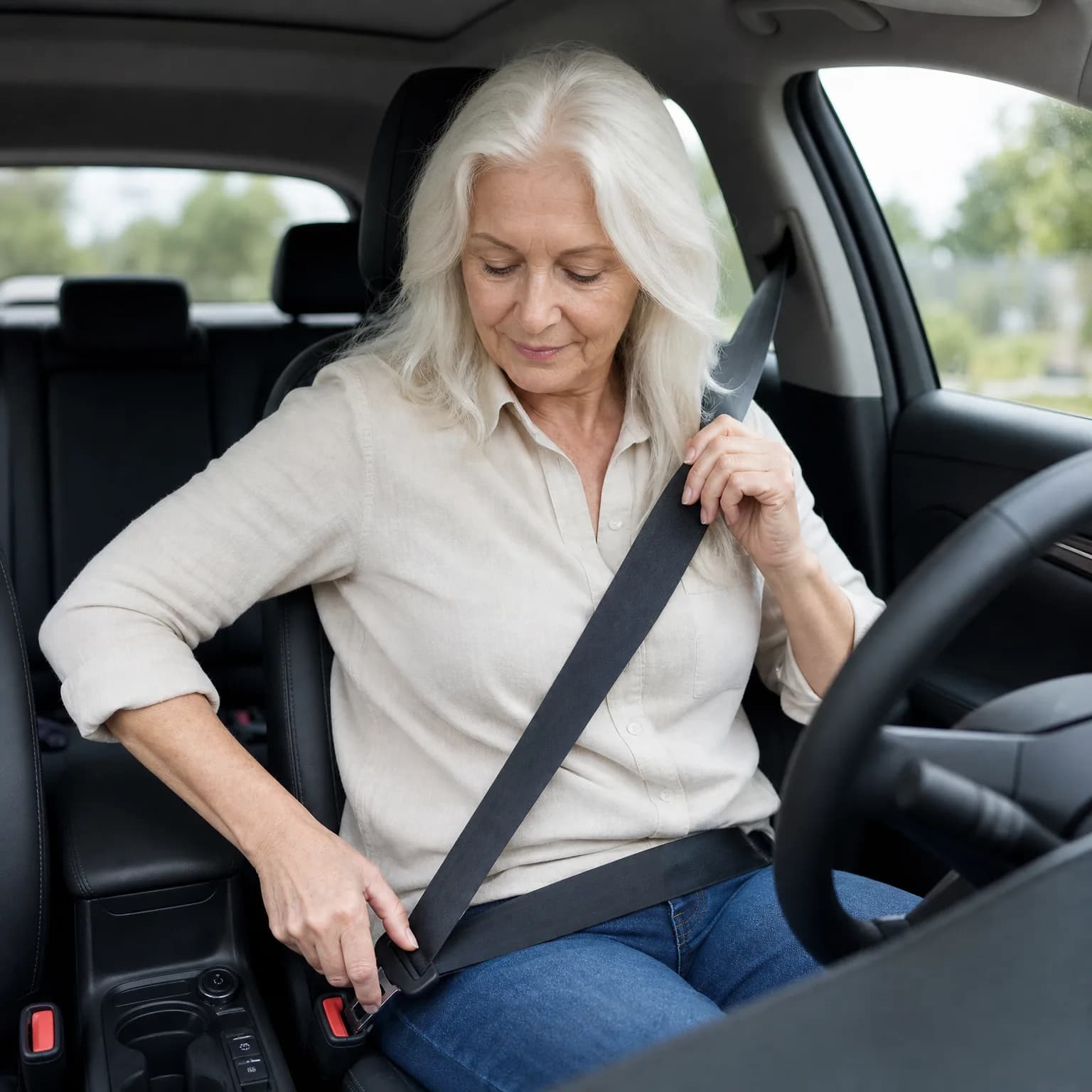
When MVD receives a medical notification about a driver 80 or older, the department sends a Medical Review Notice to your address on file, typically 60 to 90 days before your renewal date if the timing aligns with your cycle. The notice specifies what MVD needs: either a physician's clearance letter on practice letterhead stating you are medically fit to drive, or completion of a state-administered driving evaluation that includes vision, reaction time, and on-road assessment.
The clearance letter must come from the physician currently treating the condition flagged in the original notification. It cannot be a general statement from an unrelated provider. If your cardiologist reported arrhythmia concerns, your optometrist cannot provide clearance. The letter must explicitly address the condition noted and confirm that it is controlled, treated, or does not impair your ability to operate a vehicle safely.
If you cannot obtain clearance, or if the condition is progressive and your physician cannot certify safe driving ability, MVD will schedule you for a Driver Improvement interview and behind-the-wheel test. This is not punitive. The state is required to verify functional ability when a medical professional has raised a clinical concern. Passing the road test at this stage reinstates normal renewal eligibility. Failing it results in license suspension until the medical condition improves or you complete remedial driver training and retest.
Behind-the-Wheel Road Tests: What New Mexico Evaluates and How to Prepare
New Mexico's road test for renewal-triggered evaluations is shorter than the initial licensing test but covers the same core competencies: safe lane changes, proper mirror and signal use, appropriate speed management, smooth braking, and situational awareness at intersections. The test lasts approximately 20 minutes and takes place on public roads near the MVD office, not on a closed course. You'll drive in mixed traffic, execute at least one left turn across oncoming lanes, one right turn, and one parallel or reverse parking maneuver.
Evaluators focus heavily on decision-making speed and hazard recognition for senior drivers flagged by medical or accident history. Slow reaction to a pedestrian entering a crosswalk, delayed braking response to a vehicle ahead, or failure to check blind spots before merging will result in automatic failure regardless of whether a collision occurs. The state's concern is functional impairment, not driving experience.
If you know a road test is likely because of a recent accident or medical condition, schedule practice drives on routes similar to MVD test areas. Focus on full-stop compliance at stop signs, consistent use of turn signals at least 100 feet before turns, and exaggerated head checks at intersections to demonstrate active scanning. Many senior drivers fail not because of diminished skill but because decades of habit have made their scanning and signaling less visible to evaluators trained to score explicit behaviors.

See What Drivers Over 65 Are Paying Now
See If You Qualify for Discounts
Vision Standards and Corrective Lens Restrictions for Drivers 80+
New Mexico requires all drivers to meet a minimum vision standard of 20/40 acuity in at least one eye, with or without corrective lenses, and a horizontal field of vision of at least 120 degrees. If you wear glasses or contact lenses to meet this standard, your license will carry a Corrective Lenses restriction, legally requiring you to wear them whenever driving.
Vision testing at renewal is not automatic at age 80 unless you're renewing in person and the MVD clerk notices difficulty reading the renewal form or identifying information on your current license. If a clerk suspects impairment, they can require an immediate vision screening using the office's standard acuity chart. Failing this screening does not suspend your license on the spot, but it does pause renewal processing until you provide a vision report from an optometrist or ophthalmologist confirming you meet state minimums.
Drivers with progressive conditions like macular degeneration or glaucoma should bring updated vision reports to in-person renewals even if not requested. If your acuity has declined below 20/40 in both eyes, your eye care provider may certify you for daytime-only driving or restricted radius driving, both of which allow license retention with explicit limitations printed on the credential. These restrictions are enforceable, and violating them converts any traffic stop into a driving-without-valid-license charge.

How Auto Insurance Rates Respond to Renewal Flags and Restrictions
Carriers in New Mexico do not receive automatic notification when MVD flags your renewal for medical review or enhanced screening, but they do receive updates when restrictions are added to your license or when a road test failure results in temporary suspension. A Corrective Lenses restriction has no impact on your premium. Daytime-only or radius restrictions can trigger rate increases of 10 to 25 percent at the next renewal, as carriers interpret medical restrictions as proxies for elevated risk.
If you fail a road test and lose your license temporarily, most carriers will non-renew your policy within 30 days under New Mexico's permissible cancellation rules. Reinstatement after passing a retest does not automatically restore your prior rate. You'll re-enter the market as a driver with a lapse in continuous coverage, which typically costs senior drivers $300 to $600 more annually even with a clean driving record before the interruption.
Some carriers offer mature driver course discounts that remain available even after medical flags or restrictions are added. Completing an AARP Smart Driver or AAA Mature Driving course yields a 5 to 10 percent discount for three years in New Mexico, and the course can demonstrate proactive risk management when discussing your situation with underwriters after a flag. The discount doesn't offset restriction-based increases entirely, but it closes part of the gap without requiring you to switch carriers during a vulnerable period.
Policy Adjustments to Consider After Enhanced Screening or Restrictions
If your renewal involves medical clearance or new restrictions, review your liability limits before your next policy term begins. New Mexico's minimum liability requirement is $25,000 per person and $50,000 per accident for bodily injury, but senior drivers with retirement assets should carry at least $100,000/$300,000 to protect savings and home equity in at-fault scenarios. Medical flags increase the likelihood of plaintiff attorneys arguing diminished capacity in injury lawsuits, making higher limits a financial necessity rather than an optional upgrade.
Drivers with daytime-only restrictions should consider removing collision and comprehensive coverage on vehicles driven fewer than 3,000 miles annually, particularly if the vehicle is paid off and worth less than $5,000. The restriction itself signals reduced exposure, and paying $600 to $900 annually for full coverage on a low-value vehicle you drive only in daylight rarely makes financial sense. Liability-only coverage costs $300 to $500 annually for the same profile and satisfies New Mexico's legal requirements.
Medical payments coverage becomes more valuable after age 80, especially if you're on Medicare. New Mexico allows medical payments coverage to pay accident-related costs before Medicare processes claims, eliminating out-of-pocket expenses during the coordination-of-benefits period. A $5,000 medical payments limit adds $40 to $70 annually to most policies and covers ambulance transport, emergency room co-pays, and imaging costs that Medicare may initially deny if fault is disputed.
Frequently Asked Questions
Does New Mexico require a road test at age 80 for license renewal?
No. New Mexico does not mandate road tests based on age alone. However, MVD can require a road test at any age if you're involved in multiple at-fault accidents, receive a medical notification from a physician, or if a renewal clerk observes signs of impairment during in-person processing.
What happens if my doctor reports a medical condition to the New Mexico MVD?
You'll receive a Medical Review Notice requiring either a clearance letter from the treating physician stating you're medically fit to drive, or completion of a state-administered driving evaluation. Your renewal is paused until you provide the required documentation or pass the evaluation.
Can I renew my New Mexico driver's license online at age 80?
Yes, if your previous renewal was in-person. New Mexico alternates between remote and in-person renewals regardless of age. If you renewed in person at 76, you can renew online at 80 or 84, assuming no medical flags or accident history triggers manual review.
Will my car insurance rates increase if MVD adds a restriction to my license?
Corrective lens restrictions don't affect rates. Daytime-only or geographic radius restrictions typically increase premiums 10 to 25 percent, as carriers interpret medical restrictions as elevated risk indicators. Road test failures that result in temporary suspension often lead to non-renewal.
How long does a mature driver course discount last in New Mexico?
Three years. Completing an approved course like AARP Smart Driver or AAA Mature Driving yields a 5 to 10 percent discount that applies for three policy years, and you can retake the course to renew the discount indefinitely.
Related Articles
NM License Renewal at 85: Testing & Insurance Guide
4/29/2026

NM License Renewal at 75: Medical Exams & Rate Impact
4/29/2026

NM License Renewal at 70: Vision Test & Insurance Impact
4/29/2026

NH License Renewal at 80: Tests, Vision, and Insurance
4/29/2026

NJ License Renewal at 80: Road Test Triggers Explained
4/29/2026

MN License Renewal at 80: Road Test Triggers Explained
4/29/2026