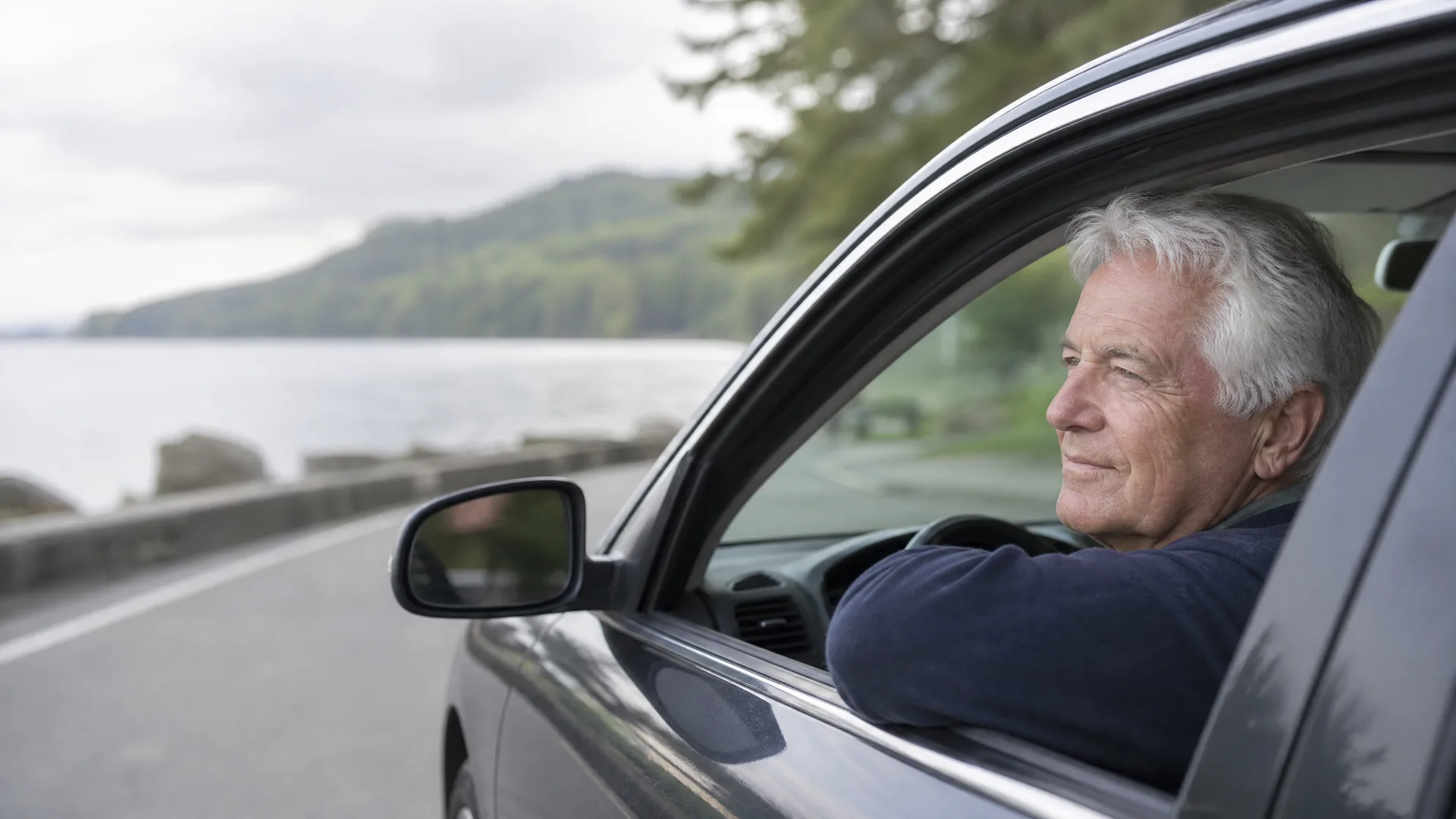
License Renewal at 80 in New York: What Actually Changes
Free to compare
What Changes at Your 80th Birthday Renewal in New York
New York requires all drivers age 80 and older to renew their license in person at a DMV office—no online or mail renewal permitted. The in-person requirement exists because the state mandates an enhanced vision screening at this renewal and every subsequent renewal. Your current license is valid until expiration even after you turn 80, but the renewal after your 80th birthday triggers the new protocol.
The vision test uses the standard DMV equipment but applies stricter evaluation for older drivers. You must demonstrate 20/40 vision or better in at least one eye, with or without corrective lenses. If you wear glasses or contacts, bring them. If you fail the initial screening, the examiner will refer you to a vision specialist for evaluation before proceeding with renewal.
The road test is not automatic at 80. New York uses a flag-based system—specific triggers in your record, your vision screening result, or information from a medical professional can prompt the DMV to require a road test before issuing your renewed license. Most 80-year-old drivers with clean records and passing vision screenings renew without a road test.
What Triggers a Road Test Requirement at Renewal
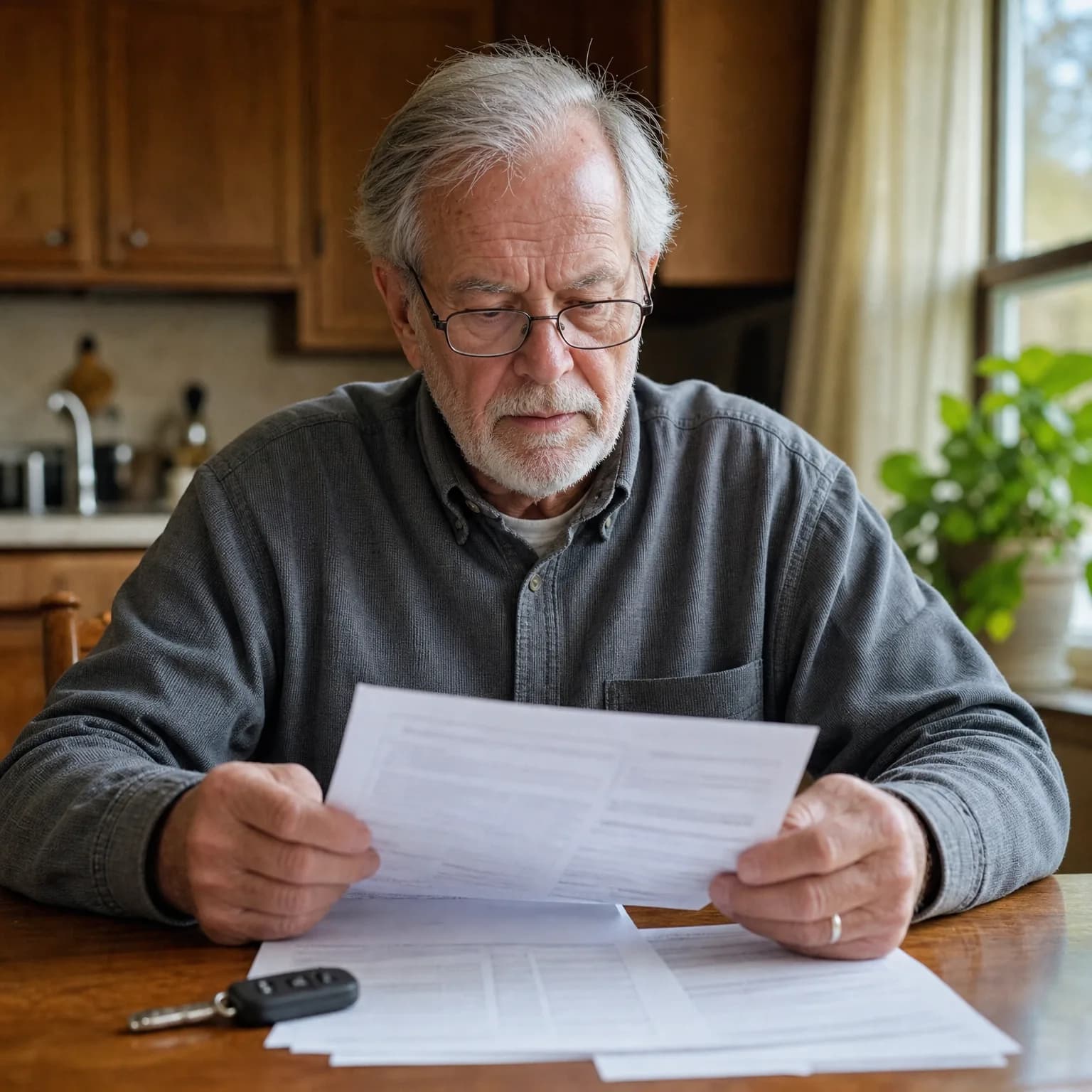
Three primary flags trigger road test requirements for drivers renewing at 80 or older in New York. First, any moving violation within the past 36 months—even a minor speeding ticket—can trigger examiner discretion to require a road test. The threshold isn't published, but DMV examiners have authority to mandate testing based on violation type and recency.
Second, a failed or marginal vision screening result almost always triggers a road test requirement, even if you later pass an ophthalmologist evaluation and return with clearance. The DMV considers reduced vision a safety concern that warrants functional driving assessment. Third, a medical report submitted by a physician, family member, or law enforcement questioning your fitness to drive will trigger both a medical review and likely a road test.
Some DMV offices also use examiner observation during the vision screening and document review process. If the examiner observes confusion, delayed response, or difficulty following instructions during the routine renewal process, they have discretion to require a road test on the spot. This subjective trigger is the least predictable and most frustrating for senior drivers who arrive prepared.
How the In-Person Renewal Process Works Step by Step
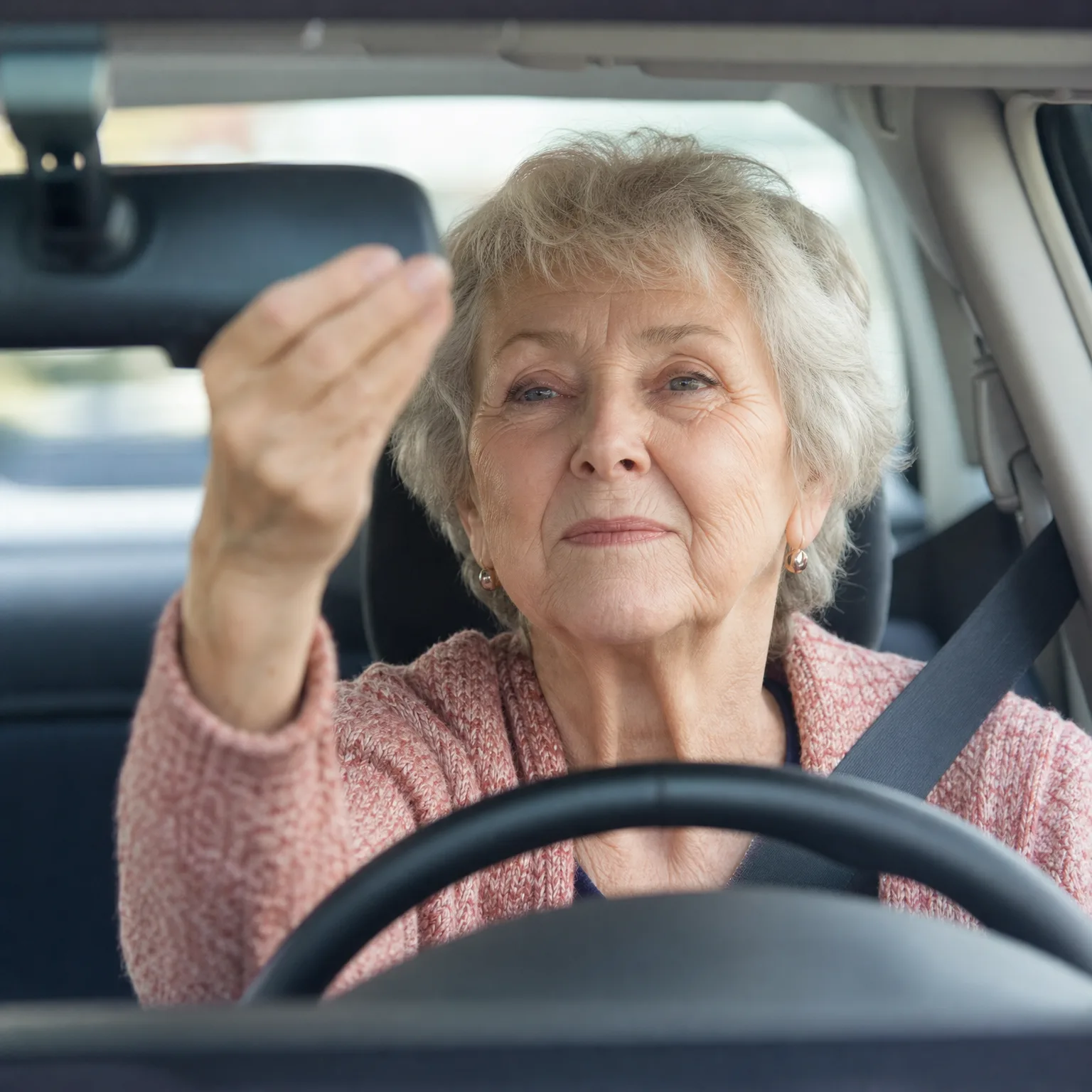
Schedule your renewal appointment 30 to 60 days before your license expiration date. New York DMV offices book renewal appointments online or by phone, and availability varies significantly by region—downstate offices often require 4 to 6 weeks advance booking. If you miss your expiration date, you're driving without a valid license, and your auto insurance policy may not cover claims during that period.
Arrive with your current license, proof of identity (passport or birth certificate if your license shows a different legal name), and proof of Social Security number. If you wear corrective lenses, bring them. The examiner will process your documents, conduct the vision screening, and review your driving record. If no flags appear and you pass vision screening, you'll pay the renewal fee and receive a temporary license valid for 45 days while your permanent license arrives by mail.
If the examiner flags your renewal for a road test, you'll schedule the test at that appointment or receive instructions to schedule within a specific window, typically 30 days. You cannot complete renewal without passing the road test if one is required. Some drivers facing unexpected road test requirements choose to withdraw the renewal application and consult a driving rehabilitation specialist before rescheduling.
What the Road Test Evaluates and How to Prepare
New York's road test for senior drivers uses the same route and evaluation criteria as the standard road test, but examiners focus heavily on reaction time, lane positioning, and complex intersection navigation. The test typically runs 15 to 20 minutes and includes residential streets, a commercial area with traffic signals, and at least one multi-lane maneuver.
Examiners specifically evaluate your ability to check blind spots before lane changes, your following distance in traffic, and whether you yield appropriately at uncontrolled intersections. Many senior drivers lose points for following too closely—decades of driving experience often produce habits that don't match current testing standards. The examiner also notes whether you self-correct errors and whether corrections are smooth or abrupt.
If you know a road test is likely based on your record or vision status, consider a professional driving evaluation before your renewal appointment. AARP offers a Smart Driver course that doesn't replace the road test but helps identify habits that may cost points. Some occupational therapy practices offer behind-the-wheel assessments specifically for older drivers preparing for DMV testing. The assessment typically costs $200 to $400 but provides specific feedback on correctable issues before your official test.
See What Drivers Over 65 Are Paying Now
See If You Qualify for Discounts
How License Restrictions and Medical Reviews Affect Coverage
If you pass your road test but the examiner identifies concerns—reduced peripheral vision, slow reaction time, or difficulty with complex maneuvers—the DMV may issue your renewed license with restrictions. Common restrictions for drivers 80 and older include daylight-only driving, no highway driving, or a geographic radius limit from your home address. These restrictions appear on your physical license and are enforceable by law enforcement.
Restrictions directly affect your auto insurance policy. Most carriers require you to report license restrictions within 30 days of issuance. If you're involved in an accident while violating your restriction—driving at night on a daylight-only license, for example—your carrier may deny the claim and cancel your policy for material misrepresentation. Some carriers increase premiums for restricted licenses because the restriction signals elevated risk.
If a medical review is triggered during your renewal, the DMV may issue a conditional license valid for 6 to 12 months pending medical clearance or re-evaluation. During this conditional period, your insurance premium may increase or your carrier may non-renew your policy at the next term. New York allows carriers to non-renew based on license status changes, and conditional licenses qualify as a status change under most policy terms.

What Happens If You Don't Pass the Road Test
If you fail the road test at your renewal appointment, the DMV will not renew your license. You'll receive documentation of the failure and instructions for retesting. New York allows one free retest within 60 days of the initial failure. If you fail the retest, you must wait an additional 60 days before testing again, and subsequent tests incur a retest fee.
Between your expiration date and successful retest, you cannot legally drive in New York. This creates immediate logistical and insurance complications. Your auto insurance policy remains in force on your vehicle, but most policies exclude coverage for unlicensed drivers. If someone else drives your vehicle during this period, confirm with your carrier that the policy covers licensed household members or permitted drivers—some carriers restrict coverage when the named policyholder's license is expired.
Many senior drivers who fail the initial road test choose not to retest and instead transition to non-driver status. If you decide not to pursue retesting, notify your insurance carrier immediately. You can cancel your auto policy or convert to a storage or parked-vehicle policy if you're keeping the vehicle for future use or for another household driver. Some carriers offer premium credits for returned license plates or formal non-driver declarations.
How Insurance Premiums Change Around Age 80 Renewal
Auto insurance premiums for drivers 80 and older in New York typically increase 15% to 30% compared to rates at age 75, even with a clean driving record and no license restrictions. Carriers treat age 80 as a significant actuarial threshold because claim frequency and severity both rise for drivers in this age bracket. The increase is separate from any change triggered by your renewal outcome.
If your renewal results in license restrictions, expect an additional premium increase of 10% to 20% depending on the restriction type. Daylight-only restrictions produce smaller increases than geographic or speed restrictions. If you're required to complete a road test and pass without restrictions, most carriers do not apply a surcharge for the test requirement itself—the age-based increase is the primary factor.
Some carriers offer mature driver discounts that partially offset age-based increases. New York does not mandate these discounts, so availability and discount amount vary by carrier. AARP's Smart Driver course qualifies for discounts with most major carriers—typically 5% to 10% for three years after course completion. The course costs $25 for AARP members and $29 for non-members, and it's available online or in-person. If your premium increased significantly at your last renewal, completing the course before your age-80 renewal can reduce the net increase.
Frequently Asked Questions
Can I renew my New York license online at age 80?
No. New York requires all drivers age 80 and older to renew in person at a DMV office because the state mandates an enhanced vision screening at this renewal and every renewal thereafter. Online and mail renewal are not permitted once you turn 80.
Does New York automatically require a road test at 80?
No. New York uses a flag-based system—road tests are triggered by specific factors including moving violations in the past 36 months, failed or marginal vision screening, medical reports questioning fitness to drive, or examiner observation during the renewal appointment. Most drivers with clean records and passing vision screenings renew without a road test.
What happens to my car insurance if I fail the road test?
Your auto insurance policy remains active on your vehicle, but most policies exclude coverage for unlicensed drivers. If you cannot legally drive between your expiration date and a successful retest, confirm with your carrier whether the policy covers other licensed household members. If you decide not to retest, notify your carrier immediately to cancel or convert your policy.
Will license restrictions increase my insurance premium?
Yes. Most carriers increase premiums 10% to 20% for restricted licenses because restrictions signal elevated risk. You're required to report restrictions to your carrier within 30 days of issuance, and driving in violation of your restriction can result in claim denial and policy cancellation.
Does completing a mature driver course help with DMV renewal?
A mature driver course does not replace a required road test, but AARP's Smart Driver course qualifies for insurance discounts with most carriers—typically 5% to 10% for three years. The course also helps identify driving habits that may cost points during a road test if one is required.
Related Articles

NY License Renewal at 85: Testing, Insurance & Family
4/29/2026
NY License Renewal at 70: Vision Test & Insurance Impact
4/29/2026
NJ License Renewal at 80: Road Test Triggers Explained
4/29/2026
NY License Renewal at 75: Medical Exam Requirements
4/29/2026
NY Vision Test at Renewal: Senior Driver Guide
4/29/2026

Florida License Renewal at 80: Tests and Requirements
4/29/2026