
License Renewal at 85 in Kansas: Testing, Family Talks, Insurance
Free to compare
What Kansas Requires at Age 85: In-Person Renewal and Vision Testing
Kansas requires drivers aged 65 and older to renew their license in person every four years, and that includes an acuity vision test each time. At 85, you cannot renew online or by mail — you visit a Kansas Department of Revenue driver's license office, pass a vision screening showing at least 20/40 acuity in at least one eye, and walk out with a renewed license valid for another four years. Kansas does not require a knowledge test or road test at 85 unless the examiner observes a specific concern during your visit.
The vision standard is straightforward: 20/40 or better in one eye, with or without corrective lenses. If you wear glasses or contacts for driving, bring them. If you don't meet the standard, the examiner may issue a daylight-only restriction or refer you to an eye care professional for an updated prescription and a vision report before issuing the renewal.
If you pass the vision test and have no medical flags on file, you renew for a full four-year term. The next renewal comes at 89, under the same rules. Kansas does not impose annual renewals or shorter terms based solely on age — the four-year cycle continues as long as you meet the vision requirement and the examiner does not identify a safety concern.

Why Your Insurance Rate Increased Even Though You Passed Renewal
Passing your Kansas license renewal does not stop your auto insurance premium from climbing. Carriers raise rates for drivers over 80 based on age-cohort actuarial data, not your individual driving record. Between age 80 and 85, premiums typically rise 15–25% across major carriers, and another 10–20% between 85 and 90, even if you have a clean record and no claims.
This is not a penalty for poor driving. It reflects statistical claims data showing that drivers over 80 file more frequent claims per mile driven, primarily due to slower reaction times and higher injury severity in accidents. Your clean record matters — it keeps you out of high-risk tiers — but it does not override the age factor in the pricing algorithm.
The mature driver course discount offsets part of this increase. Kansas does not mandate the discount, but most major carriers offer it: typically 5–10% off your premium if you complete an approved defensive driving course. If you took the course at 70 to earn the discount, you can take it again now. Most courses require renewal every three years to maintain the discount, and many senior drivers assume they're already getting the best rate without checking whether their discount lapsed or whether a refresher course would restore it.
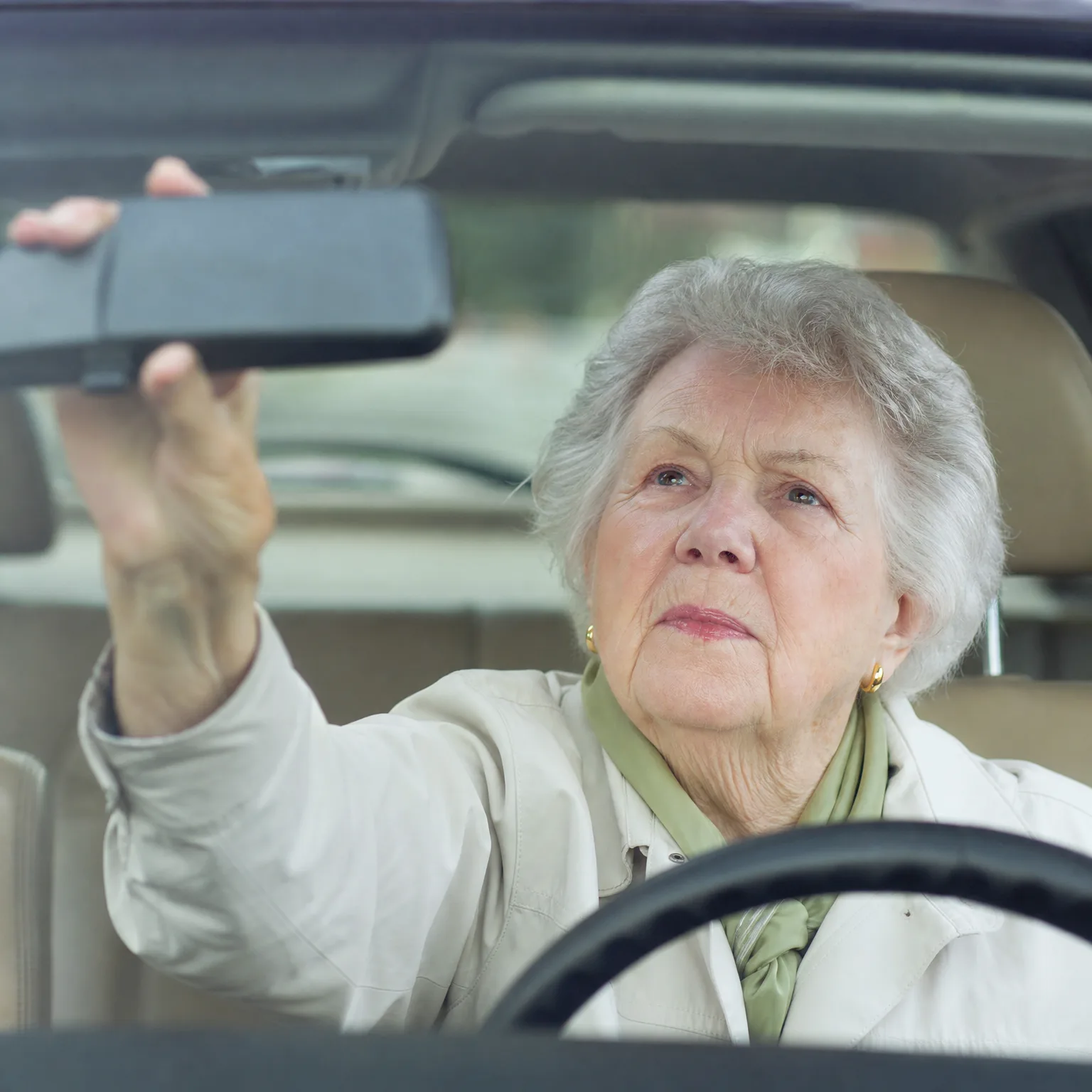
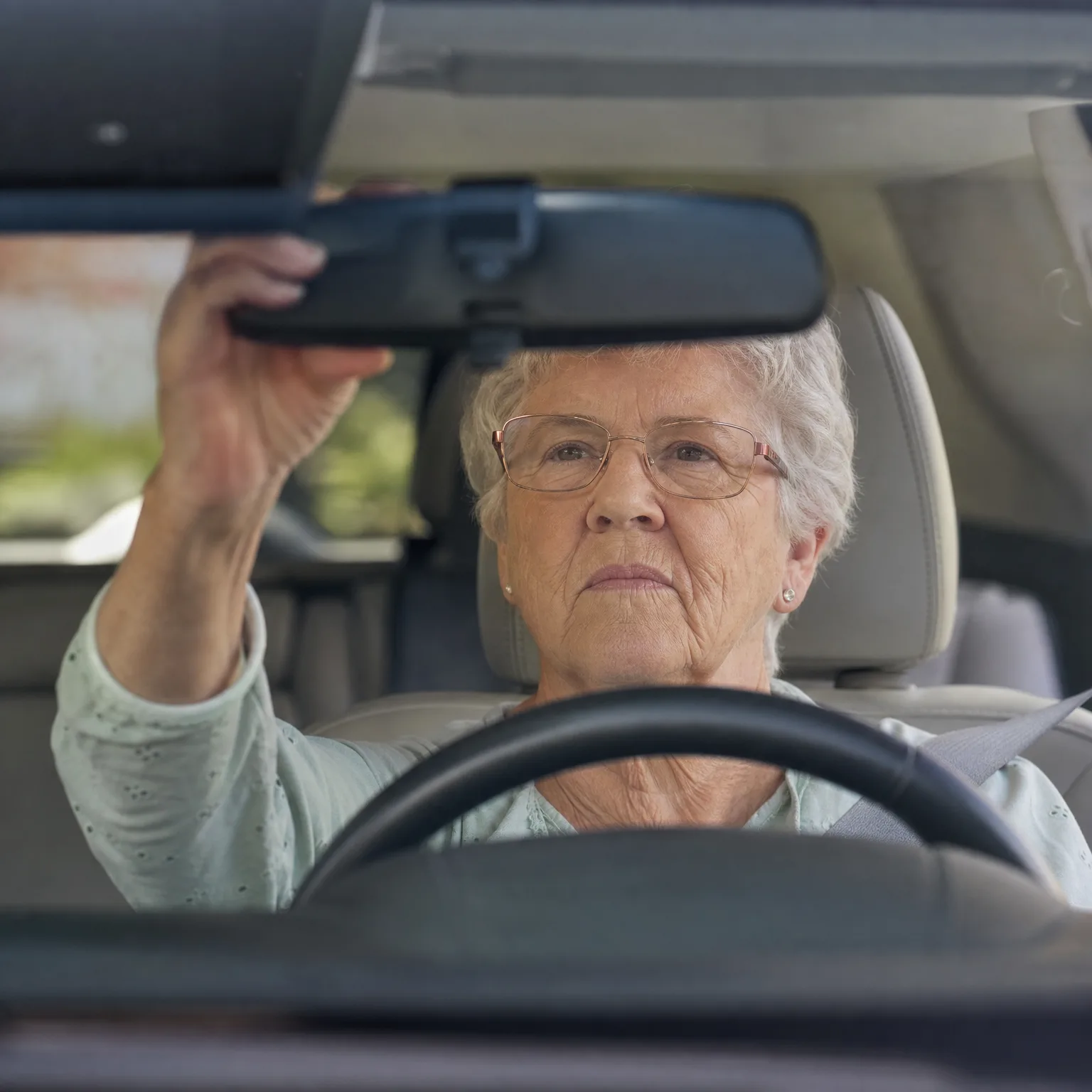
How to Talk to Your Family About Driving Without Losing the Conversation
If your adult children are asking about your driving, they are reacting to something specific — a near-miss story you told them, a scratch on the car they noticed, or their own anxiety about your safety. The conversation will go better if you acknowledge the question directly instead of treating it as an accusation. They are not saying you cannot drive. They are asking whether you have noticed anything changing and whether you have a plan.
Start by stating what you already know about your own driving. If you have stopped driving at night because headlight glare bothers you, say so. If you avoid highway merges during rush hour because the speed differentials feel unsafe, say so. Naming the adjustments you have already made shows you are monitoring yourself, which is what they want to hear. If you have not made adjustments and genuinely believe your driving is unchanged, say that too — but be prepared to agree on an objective check, such as a driving evaluation with a certified occupational therapist.
Propose a shared fact base. Offer to take a mature driver refresher course and ask them to review the results with you. Suggest a vision exam beyond the DMV screening if your last full eye exam was more than a year ago. Agree to a six-month check-in where you both assess whether your driving patterns have changed. Framing the conversation as a collaborative monitoring plan rather than a referendum on your competence keeps the door open for future discussions without forcing a crisis decision now.

See What Drivers Over 65 Are Paying Now
See If You Qualify for DiscountsWhen Full Coverage Stops Making Financial Sense on a Paid-Off Vehicle
If your vehicle is paid off and worth less than $5,000, you are likely spending more on collision and comprehensive coverage over two years than you would recover in a total-loss claim. A vehicle worth $4,000 with a $500 deductible pays a maximum of $3,500 in a total loss. If collision and comprehensive premiums total $600 per year, you break even in six years only if you total the car — and you have been paying that premium every year regardless.
Drop collision and comprehensive if the vehicle's actual cash value is less than ten times your annual premium for those coverages. Check your most recent renewal declaration page: collision and comprehensive are listed separately from liability. If you are paying $50 per month for full coverage and $18 of that is collision and comprehensive, you are spending $216 per year to insure a depreciating asset. A $3,000 car does not justify that cost.
Keep liability, medical payments, and uninsured motorist coverage at the levels you currently carry. Those coverages protect you and others in an accident regardless of your vehicle's value. Liability limits of 100/300/100 are common for senior drivers with assets to protect, and dropping them to state minimums to save $15 per month exposes your retirement savings to a judgment if you cause a serious accident. Medical payments coverage also matters more as you age — it pays your out-of-pocket costs after an accident before Medicare processes claims, covering deductibles and copays that Medicare does not.
How Medicare and Auto Insurance Medical Payments Work Together After an Accident
Medical payments coverage on your auto policy pays first after an accident, before Medicare. If you carry $5,000 in medical payments coverage and sustain $8,000 in injuries, your auto insurer pays the first $5,000 directly to providers, and Medicare covers the remaining $3,000 subject to your Medicare deductibles and coinsurance. This coordination matters because medical payments coverage has no deductible — it pays from the first dollar.
Medicare has a right of recovery if your auto insurance should have paid first. If Medicare pays your accident-related medical bills and later discovers you had medical payments coverage on your auto policy, Medicare will demand reimbursement from your insurer. This creates no financial penalty for you, but it does mean you cannot double-collect. The coverage exists to reduce your out-of-pocket costs, not to generate a windfall.
Medical payments coverage typically costs $3–$8 per month for $5,000 in coverage. For senior drivers on Medicare, this is one of the most cost-effective coverages on the policy. It covers copays, deductibles, and Medicare Part B coinsurance immediately, without waiting for Medicare to process the claim. If you dropped this coverage years ago to save money, adding it back costs less now than it did when you were younger — and your likelihood of needing it has increased.

What Happens If You Decide to Stop Driving: Insurance and Vehicle Considerations
If you stop driving but keep your vehicle for occasional use by family members, you must maintain liability coverage as long as the vehicle is registered and operable. Kansas does not allow you to register a vehicle without proof of insurance, and letting your policy lapse triggers an automatic registration suspension and a reinstatement fee of $100 plus a new SR-22 filing requirement for one year.
You can reduce your premium significantly by listing yourself as an excluded driver on a policy where another household member is the primary driver. If your adult child or spouse drives the vehicle and you do not, excluding yourself from the policy drops your premium by 30–50% in most cases. The exclusion must be explicit and signed — simply telling your agent you no longer drive is not sufficient. Once excluded, you cannot legally drive that vehicle even in an emergency.
If you sell the vehicle and stop driving entirely, you can cancel your auto policy, but do not let it lapse without replacement coverage if you plan to drive again in the future. A lapse in coverage longer than 30 days raises your premiums by 20–40% when you reinstate, even at age 85. If you are unsure whether you will drive again, consider a non-owner liability policy — it costs $20–$40 per month, maintains continuous coverage, and allows you to drive a rental or borrowed vehicle legally while keeping your insurance history intact.
Frequently Asked Questions
Does Kansas require a road test at age 85 for license renewal?
No, Kansas does not require a road test at 85. You must renew in person and pass a vision test showing at least 20/40 acuity in one eye, but no knowledge test or road test is required unless the examiner identifies a specific concern during your visit.
Can I renew my Kansas driver's license online at age 85?
No, Kansas requires all drivers aged 65 and older to renew in person every four years. Online and mail renewals are not available once you reach 65, regardless of your driving record or vision test history.
Will my car insurance rate go down after I pass my license renewal?
No, passing your license renewal does not lower your insurance rate. Carriers raise premiums for drivers over 80 based on age-cohort data, not individual test results. Most drivers see a 15–25% increase between age 80 and 85 even with a clean driving record.
Should I keep collision coverage on my paid-off car at age 85?
Drop collision and comprehensive coverage if your vehicle is worth less than ten times your annual premium for those coverages. A car worth $3,000 does not justify paying $300 per year to insure it against physical damage. Keep liability, medical payments, and uninsured motorist coverage.
What happens to my insurance if I stop driving but keep my car?
You must maintain liability coverage as long as the vehicle is registered, even if you stop driving. You can exclude yourself as a driver if another household member uses the vehicle, which reduces your premium by 30–50%. Canceling coverage without selling the vehicle triggers registration suspension and reinstatement fees.
Related Articles

Kansas License Renewal at 80: Tests and Requirements
4/29/2026

Kansas License Renewal at 70: Vision Tests & Insurance
4/29/2026

Vision Restrictions & Kansas License Renewal (Age 65+)
4/29/2026

Kansas License Renewal at 75: Tests, Rates, Restrictions
4/29/2026
License Renewal at 85 in Kentucky: Testing & Insurance
4/29/2026
License Renewal at 85 in South Dakota: Testing Rules
4/29/2026