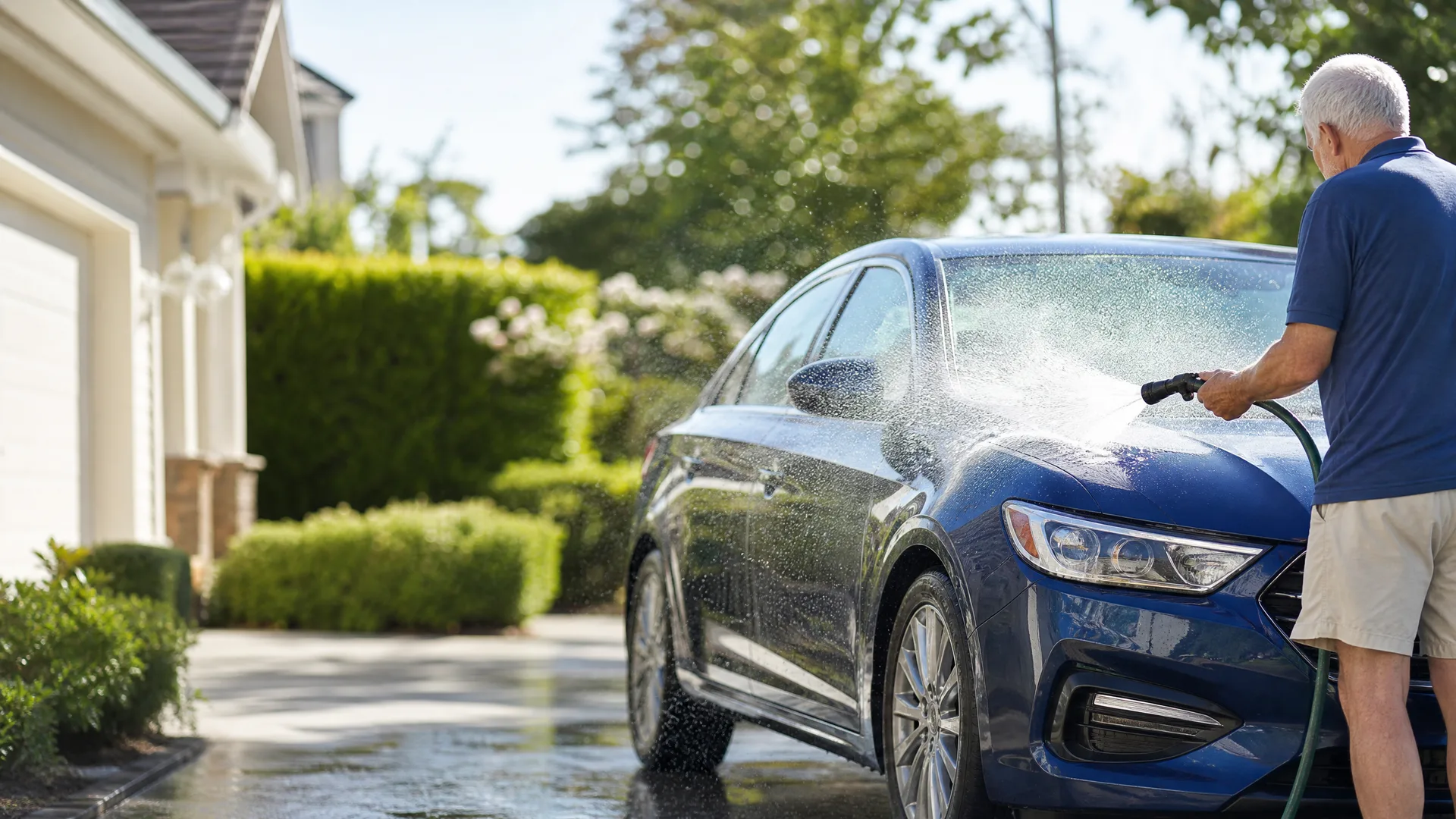
License Renewal at 85 in New York: What to Expect and How to Prepare
Free to compare
What New York Requires at Age 85 Renewal
New York requires drivers aged 85 and older to renew their license in person at a DMV office every 8 years, down from the standard online renewal option available to younger drivers. You must pass a vision test during this appointment, meeting the minimum standard of 20/40 vision in at least one eye with corrective lenses if needed. If you wear glasses or contacts, bring them and any documentation from your eye doctor confirming your current prescription.
The state does not mandate a road test at 85 unless a DMV examiner observes a specific concern during your transaction or your driving record shows recent at-fault accidents or moving violations. Vision is the only universal screening requirement at this age milestone. The appointment typically takes 30 to 60 minutes depending on office traffic, and you'll receive a temporary license to use while your permanent card is processed and mailed within two weeks.
If your vision does not meet the 20/40 standard, the DMV may issue a restricted license requiring corrective lenses while driving or limiting you to daytime driving only. These restrictions appear on your physical license and in the state database accessible to law enforcement and insurance carriers. Bringing updated vision correction or recent cataract surgery documentation can sometimes prevent a restriction if your eyesight has recently improved but hasn't been formally tested at the DMV yet.
How This Renewal Affects Your Insurance Rates
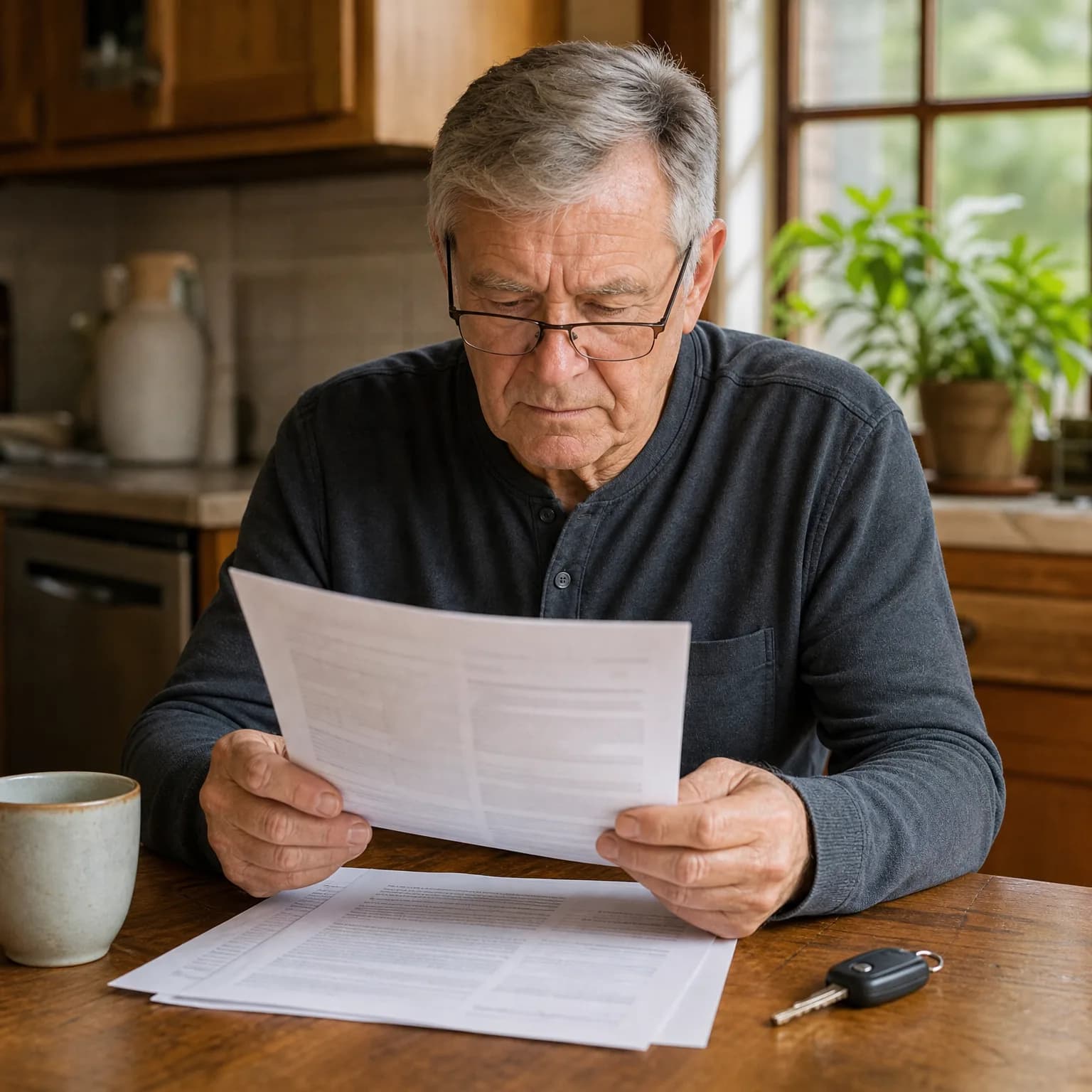
Most carriers apply a rate adjustment when a policyholder turns 85, independent of the DMV renewal outcome. Industry data shows auto insurance premiums for drivers aged 85 and older in New York typically increase 15–25% compared to rates at age 75, even for drivers with clean records and no claims history. Carriers treat age 85 as an actuarial threshold — the rate change happens at renewal following your birthday, not because you failed a test or received a restriction.
If your renewal results in a vision restriction such as corrective lenses required or daylight driving only, expect your carrier to apply that information at your next policy renewal. A daylight-only restriction can trigger an additional rate increase of 10–20% beyond the age-based adjustment, as carriers view restricted licenses as higher risk regardless of your actual mileage or driving patterns. Corrective lenses restrictions typically do not cause further rate increases if you were already wearing glasses while driving.
You can offset some of this increase by confirming you're receiving all applicable discounts. New York mandates that carriers offer a mature driver course discount — typically 5–10% off liability and collision premiums — to drivers who complete an approved defensive driving course within the past three years. AARP and AAA both offer state-approved online courses that qualify. If you completed a course two years ago, you're still eligible for the discount, but you must request it explicitly at renewal. Carriers do not automatically apply this discount even when they know your age and course completion status.

Preparing for the In-Person Appointment
Schedule your renewal appointment 60 to 90 days before your license expiration date to avoid any gap in legal driving status. New York DMV offices allow online appointment booking, and early morning slots on weekdays typically have the shortest wait times. Bring your current license, proof of Social Security number, one proof of New York residency such as a utility bill or bank statement dated within the past 90 days, and any corrective lenses you use for driving.
If you've had recent eye surgery, cataract removal, or a new prescription, bring a signed letter from your ophthalmologist or optometrist on office letterhead stating your current corrected vision measurement. This documentation can prevent the DMV from imposing a restriction based on an older vision test result in their system. The vision screening at the DMV uses a standard eye chart and takes less than two minutes — it measures distance vision only, not peripheral vision or night vision.
If you're concerned about the vision test, schedule a full eye exam with your own doctor one to two months before your DMV appointment. Your doctor can identify any correctable issues and update your prescription if needed, giving you time to adjust to new lenses before the DMV test. Failing the DMV vision test means you cannot renew that day — you'll need to return with updated corrective lenses or medical documentation, which delays your renewal and can create a coverage gap if your license expires in the interim.
See What Drivers Over 65 Are Paying Now
See If You Qualify for DiscountsHaving the Driving Conversation with Family
Adult children often raise concerns about continued driving around the same time as an 85th birthday renewal, creating tension during what's already a stressful process. Frame the conversation around specific observations rather than age alone. "I've noticed you're driving less than you used to" or "You mentioned trouble seeing street signs at night" opens discussion more productively than "You're 85 now and we need to talk about your driving."
If family members want to be involved in the renewal process, clarify what role makes sense. Attending the DMV appointment as a driver is useful since you cannot legally drive yourself home if you fail the vision test and your license is temporarily suspended. Attending as an observer during the transaction crosses into territory many seniors find infantilizing. Discuss this boundary before the appointment day.
If the renewal conversation surfaces genuine safety concerns, consider a voluntary driving evaluation through an occupational therapist certified in driver rehabilitation. These evaluations cost $300–$500 in most New York metro areas, are not reported to the DMV or insurance carriers, and provide specific feedback on reaction time, visual processing, and whether adaptive equipment might extend safe driving years. This is a middle path between full driving cessation and pretending concerns don't exist. Insurance does not typically cover these evaluations, but the out-of-pocket cost is often justified by the objective assessment it provides to the whole family.
When to Reconsider Full Coverage on an Older Vehicle
If you're driving a vehicle older than 10 years with a market value under $4,000, the age-85 rate increase is a natural moment to reconsider whether comprehensive and collision coverage remain cost-justified. Calculate the annual cost of these coverages and compare it to your vehicle's actual cash value minus your deductible. If you're paying $600 per year for collision with a $500 deductible on a car worth $3,000, the maximum claim payout after deductible is $2,500 — you'd recover your premium cost in just over four years, but only if you total the vehicle.
Switching to liability-only coverage can reduce your premium by 30–50%, a significant savings on a fixed income. You'd still carry New York's minimum required liability — $25,000 per person and $50,000 per accident for bodily injury, plus $10,000 property damage — but you'd self-insure for damage to your own vehicle. This makes sense if you have savings to replace the car if needed and you're driving fewer than 5,000 miles per year, reducing collision risk.
Before dropping collision and comprehensive, confirm your vehicle is paid off with no lienholder requiring full coverage. If you lease or finance, full coverage is mandatory regardless of vehicle age. Also consider your local risk factors: if you park on a street in a neighborhood with high theft or vandalism rates, comprehensive coverage may justify its cost even on an older vehicle. Comprehensive typically costs $150–$300 annually in New York and covers theft, weather damage, and vandalism — events unrelated to your driving ability.
How Medicare Interacts with Auto Insurance After an Accident
New York is a no-fault state, meaning your own auto policy's personal injury protection coverage pays your medical bills after an accident regardless of who caused the crash. Standard New York PIP provides $50,000 in medical coverage and is mandatory on every policy. If you're on Medicare, your auto insurance PIP pays first for accident-related injuries — Medicare is the secondary payer and only covers costs exceeding your PIP limit.
This coordination matters because PIP has no deductible and no copay for covered services related to the auto accident, while Medicare Part B carries a deductible and 20% coinsurance. For accident injuries treated within the first $50,000 of medical costs, you'll have lower out-of-pocket expenses using your auto PIP than you would using Medicare alone. Keep a copy of your auto insurance card with your Medicare card so healthcare providers bill the correct primary payer after an accident.
Some carriers offer reduced PIP limits or PIP exclusions for drivers with Medicare, advertising this as a cost-saving option. Rejecting this option and maintaining full $50,000 PIP is usually the better financial decision for senior drivers. The premium savings from reduced PIP is typically $50–$100 annually, but a single emergency room visit after an accident can exceed $10,000. Your PIP covers that cost in full; Medicare would leave you responsible for deductible and coinsurance.
Frequently Asked Questions
Can I renew my New York license online at age 85?
No. New York requires drivers aged 85 and older to renew in person at a DMV office and pass a vision test. Online renewal is not available once you reach 85, regardless of your driving record or vision history.
Will my insurance rate increase just because I turn 85?
Yes, most carriers apply a rate increase when you turn 85 even if your driving record is clean. Premiums for drivers 85 and older in New York typically increase 15–25% compared to age 75, independent of any DMV test results or restrictions.
Does New York require a road test at age 85?
No. New York does not mandate a road test at 85 unless a DMV examiner observes a specific concern during your renewal or your record shows recent at-fault accidents. Vision screening is the only universal requirement at this age.
How does the mature driver discount work in New York?
New York requires carriers to offer a discount of 5–10% to drivers who complete a state-approved defensive driving course. The discount applies for three years from course completion, but you must request it at renewal — carriers do not apply it automatically even when they know you qualify.
What happens if I fail the vision test at my renewal?
If you fail the vision test, you cannot renew your license that day and cannot legally drive until you return with updated corrective lenses or medical documentation showing you meet the 20/40 vision standard. Bring any new prescription or recent eye surgery records to avoid this delay.
Related Articles

NY License Renewal at 80: Road Test Triggers & Screening
4/29/2026
NY License Renewal at 70: Vision Test & Insurance Impact
4/29/2026

NY Vision Test at Renewal: Senior Driver Guide
4/29/2026

NY License Renewal at 75: Medical Exam Requirements
4/29/2026

NH License Renewal at 85: Testing & Insurance Impact
4/29/2026

NM License Renewal at 85: Testing & Insurance Guide
4/29/2026