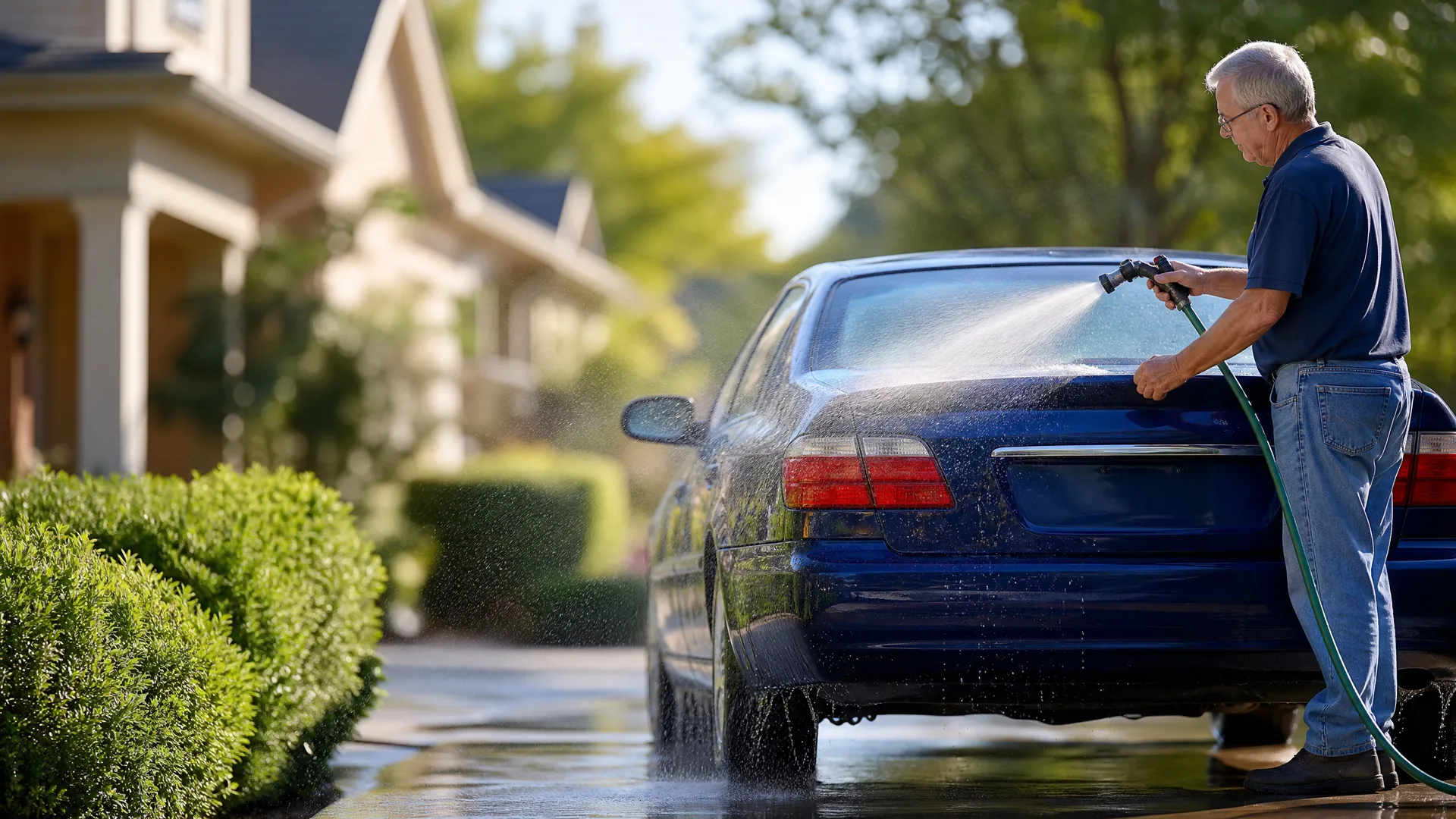
License Renewal at 85 in Oklahoma: What to Expect and How to Prepare
Free to compare
What Oklahoma Actually Requires at Age 85 Renewal
Oklahoma requires in-person renewal for drivers 85 and older, but the state does not mandate age-based vision screening or road testing at that threshold. You complete the standard renewal application, pay the $38.50 fee for a four-year license, and present current identification. The in-person requirement exists so a licensing examiner can observe your ability to complete the transaction independently.
The risk is not an automatic test. The risk is discretionary referral. If the desk examiner observes difficulty reading the form, confusion about the process, or physical instability while standing at the counter, they have authority to request vision screening or refer you to a driver assessment examiner. This happens case-by-case, not automatically at 85.
Most 85-year-old Oklahoma drivers complete renewal in under 15 minutes with no additional screening. The process becomes complicated only when an examiner flags a concern during the transaction itself. No Oklahoma statute requires testing at 85 — the statute requires in-person appearance so examiners can exercise judgment.

How to Prepare for the In-Person Appointment
Schedule your appointment at a Service Oklahoma location during mid-morning hours — Tuesday through Thursday between 10 a.m. and noon typically see shorter wait times than Monday mornings or late afternoons. Bring your current license, proof of Social Security number, and two documents establishing Oklahoma residency if your address has changed since your last renewal.
Complete the renewal application form at home before your appointment if possible. Service Oklahoma posts the form online, and arriving with it filled out eliminates the pressure of completing paperwork while standing at a counter under time pressure. If you wear corrective lenses for driving, wear them to the appointment — examiners note whether you're wearing glasses during the transaction, and inconsistency between your appearance and your license restriction raises flags.
If you use a cane or walker, bring it and use it normally. Examiners are trained to distinguish between mobility aids used competently and signs of disorientation or instability. Attempting to appear more mobile than you are creates the impression of concealment, which increases scrutiny.

When Family Members Should Get Involved
If an adult child or family member wants to accompany you to the renewal appointment, they can drive you there and wait in the lobby, but Oklahoma examiners require you to complete the transaction independently. A family member answering questions on your behalf or physically guiding you through the form signals dependence and may trigger additional screening.
The more productive family conversation happens before the appointment. If you've reduced your driving significantly — retired from commuting, stopped driving at night, or limited trips to daylight hours within a few miles of home — that's the moment to review whether your current auto insurance coverage still matches your actual use. Oklahoma does not offer a formal restricted license for seniors, but many carriers offer low-mileage discounts for drivers logging under 7,500 miles annually.
Some families use the license renewal as an opportunity to discuss whether comprehensive and collision coverage on a paid-off vehicle still makes financial sense. If your car is worth less than $4,000 and you're paying $600 annually for full coverage, you're insuring an asset you could replace with one year's premiums. That's a financial decision, not a safety decision, but the renewal timeline creates a natural moment to evaluate it.
See What Drivers Over 65 Are Paying Now
See If You Qualify for DiscountsWhat Happens If You're Referred for Additional Testing
If a Service Oklahoma examiner refers you for vision screening, you'll complete a standard acuity and peripheral vision test at the same appointment. Oklahoma requires 20/60 corrected vision in at least one eye and 140-degree horizontal peripheral vision. If you wear glasses or contacts and can read a standard eye chart at your last optometry visit, you will pass.
Road test referrals are less common and occur only when an examiner documents a specific concern beyond age. If referred, you'll schedule a driving assessment with a state examiner, typically within two to three weeks. The assessment uses a standard passenger vehicle on a predetermined route testing lane control, turning, speed management, and reaction to traffic signals. The examiner is evaluating functional ability, not comparing you to a 30-year-old driver.
If you fail a referred test, Oklahoma provides a 30-day temporary permit allowing you to practice and retest once. Most drivers who reach the referral stage and fail the first attempt choose not to retest — the functional limitation identified in the test typically confirms concerns they had already begun managing by limiting their driving. The test often clarifies a decision already in progress rather than creating a sudden crisis.

How Insurance Costs Change After 85 in Oklahoma
Oklahoma auto insurance rates for drivers 85 and older typically run 15–25% higher than rates for drivers aged 70–74, even with identical coverage and a clean driving record. Carriers price age as an actuarial factor independent of your individual history, and rate increases accelerate after 80 in most cases.
The offset is mature driver course discounts. Oklahoma does not mandate these discounts by law, but most major carriers writing in the state — State Farm, GEICO, Farmers, Allstate — offer 5–10% premium reductions for drivers 55 and older who complete an approved defensive driving refresher course. AARP Smart Driver and AAA Senior Drivers courses both qualify. The course costs $20–$25, lasts four to six hours, and the discount applies for three years in most cases. If your annual premium is $800, a 10% discount saves $240 over three years — a strong return on a one-day course.
Some Oklahoma drivers at 85 also qualify for low-mileage programs that reduce premiums based on actual odometer readings or telematics monitoring. If you've stopped commuting and drive fewer than 7,000 miles annually, you may reduce your rate by 10–20% simply by documenting your reduced mileage. Not all carriers offer these programs, which is why comparing quotes after 85 often uncovers meaningful savings from carriers whose pricing models reward reduced use rather than penalizing age.

Medical Payments Coverage and Medicare Coordination
If you're 85 and enrolled in Medicare, medical payments coverage on your Oklahoma auto policy functions as secondary insurance after a car accident. Medicare Part B covers accident-related injuries as primary, and your auto policy's medical payments coverage fills gaps — copays, deductibles, and services Medicare doesn't fully cover.
Most Oklahoma senior drivers carry $2,000 to $5,000 in medical payments coverage, which costs $30 to $60 annually. This is one of the few coverage types that becomes more valuable after 65, not less. If you're injured as a passenger in someone else's vehicle or struck as a pedestrian, your own medical payments coverage responds immediately without requiring you to file a claim against another driver's liability policy or wait for fault determination.
Some seniors drop medical payments coverage assuming Medicare makes it redundant. Medicare does not cover ambulance transport in all circumstances, and it will not pay for treatment you receive in a vehicle or at a roadside before reaching a hospital. Medical payments coverage on your auto policy covers those gaps without coordination delays. At $40 annually for $2,500 in coverage, this is rarely the place to reduce costs.
Frequently Asked Questions
Does Oklahoma require a road test at age 85?
No. Oklahoma does not require road testing based solely on age at 85 or any other age threshold. A road test is required only if a licensing examiner observes a specific concern during your in-person renewal appointment and refers you for a driving assessment.
Can I renew my Oklahoma license online after age 85?
No. Oklahoma requires in-person renewal for all drivers 85 and older. You must visit a Service Oklahoma location to complete the renewal transaction, even if you have a clean driving record and no medical restrictions.
How much does it cost to renew a driver's license at 85 in Oklahoma?
The standard four-year license renewal fee in Oklahoma is $38.50 for drivers of all ages, including those 85 and older. There are no additional age-based fees for renewal or testing unless you're referred for a driving assessment and choose to retest after an initial failure.
Will my car insurance increase after I turn 85 in Oklahoma?
Most carriers increase rates for drivers 85 and older by 15–25% compared to drivers aged 70–74, even with a clean record. The increase reflects actuarial age factors, not your individual driving history. Mature driver course discounts and low-mileage programs can offset much of this increase.
What happens if I fail the vision test at my Oklahoma license renewal?
If you fail the standard vision screening at renewal, you have 30 days to obtain corrective lenses or treatment from an optometrist and return for retesting. If your corrected vision still does not meet the 20/60 threshold, Oklahoma may issue a restricted license limiting you to daylight driving or prohibiting highway use, depending on your specific acuity level.
Related Articles

License Renewal at 80 in Oklahoma: What Changes
4/29/2026

Oklahoma Vision Test for Senior License Renewal Guide
4/29/2026

Oklahoma License Renewal at 75: Tests and Rates
4/29/2026
OK License Renewal at 70: Vision Test & Insurance
4/29/2026
License Renewal at 85 in Ohio: Tests & Insurance
4/29/2026

Alabama License Renewal at 85: Testing and Insurance
4/29/2026