
How to Lower Car Insurance Rates as a Senior Driver in Charlotte
Free to compare
The Mature Driver Course Discount North Carolina Requires (But Carriers Don't Advertise)
North Carolina General Statute §58-36-65 mandates that all auto insurers licensed in the state must offer a discount to drivers age 55 and older who complete an approved defensive driving course. The discount typically ranges from 5% to 15% depending on the carrier, applies to most coverage types, and renews every three years after you retake a shorter refresher course. Despite this legal requirement, most insurers in Charlotte don't proactively notify policyholders when they become eligible — you have to ask for it and provide proof of completion.
AARP Smart Driver and AAA's online courses are both approved by the North Carolina Division of Motor Vehicles and can be completed entirely online in about four hours, with no final exam requirement. The course fee runs $20–$25 for AARP members or $25–$35 for non-members, and the discount applies immediately once you submit your certificate to your insurer. For a Charlotte senior driver paying $1,200 annually for full coverage, a 10% discount saves $120 per year — meaning the course pays for itself in the first two months and continues saving money for the next three years.
You don't need to wait until your policy renewal to add this discount. Contact your agent or carrier as soon as you complete the course, provide your certificate number and completion date, and request the discount be applied to your current policy period. Most carriers will prorate the savings back to your completion date. If your insurer claims they don't offer this discount, cite the North Carolina statute by number — it's not optional for carriers operating in the state.

When Full Coverage Stops Making Financial Sense on a Paid-Off Vehicle
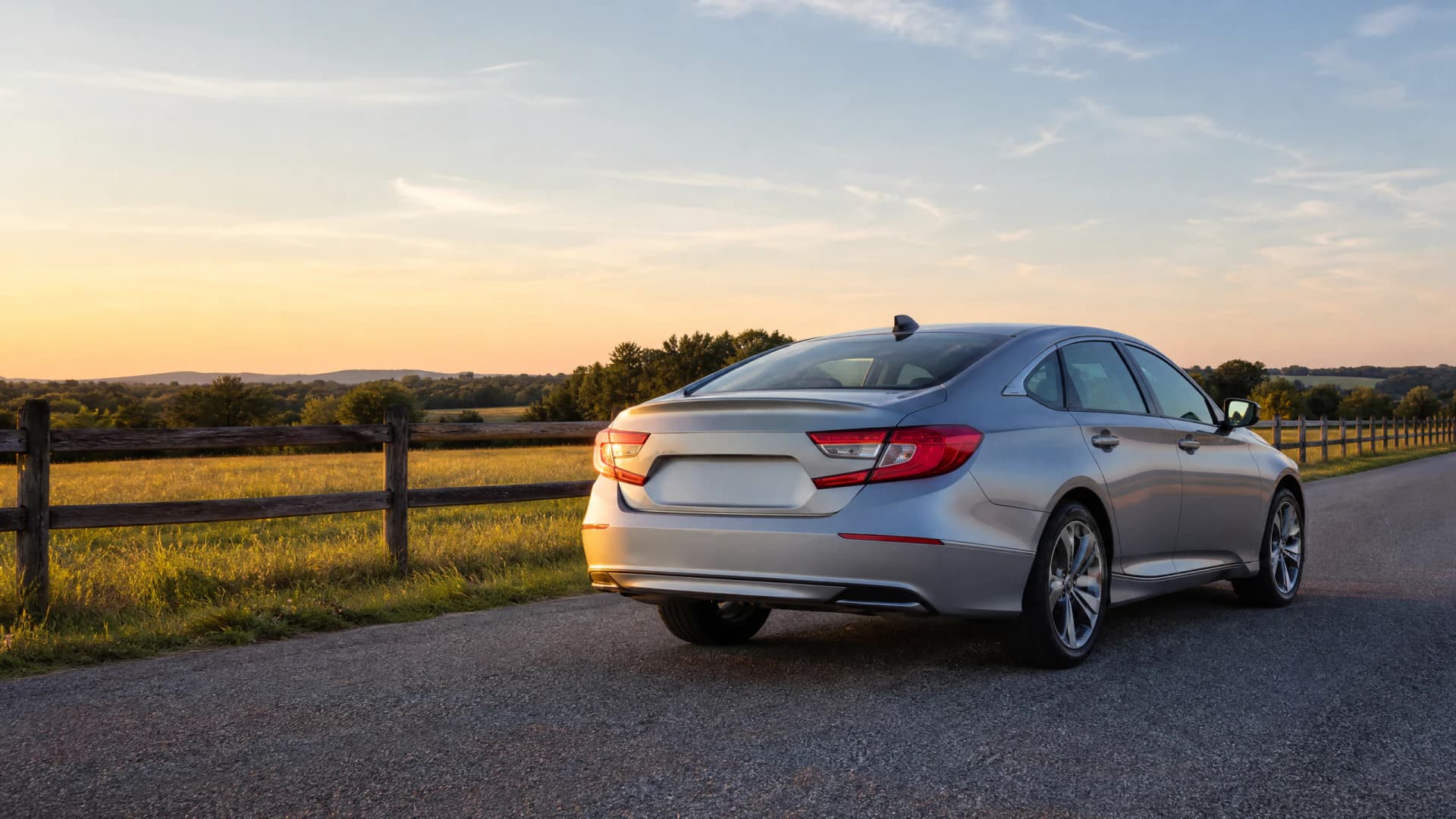
The standard advice to "keep full coverage until your car isn't worth much" becomes more specific when you're on a fixed income in Charlotte: if your annual collision and comprehensive premium exceeds 10% of your vehicle's actual cash value, you're likely overpaying for coverage you may never recover. A 2015 Honda Accord in good condition has an actual cash value around $8,000–$10,000 in the Charlotte market as of 2024, but collision and comprehensive coverage on that vehicle might cost $600–$900 annually for a senior driver with a clean record.
North Carolina requires liability coverage but does not mandate collision or comprehensive. If you drop both coverages on a paid-off vehicle, your premium typically falls 40–55%, but you assume full responsibility for repair or replacement costs after an accident you cause or a weather event. The decision point: if you have sufficient savings to replace the vehicle without financial hardship, dropping collision and comprehensive makes mathematical sense once the annual premium crosses that 10% threshold. If replacing the vehicle would strain your retirement funds, keeping at least comprehensive coverage (which protects against theft, hail, and weather damage common in Charlotte) provides security for $200–$400 annually.
Consider a hybrid approach if you're not certain: keep comprehensive coverage for storm and theft protection, but drop collision if you drive fewer than 7,000 miles annually and primarily use your vehicle for errands rather than highway commuting. This reduces your premium by 30–40% while maintaining protection against the non-accident risks that don't depend on your driving behavior. Review this decision annually as your vehicle depreciates — what made sense at $10,000 in value may not make sense at $6,000.

Low-Mileage and Usage-Based Programs That Actually Work for Retired Drivers
If you've retired and no longer commute to work, you're likely driving 40–60% fewer miles than you did during your working years, but your insurance rate won't automatically reflect that change unless you actively report it. Most major carriers in Charlotte offer low-mileage discounts starting at 10,000 annual miles or fewer, with discounts increasing at 7,500 miles and again at 5,000 miles. The discount ranges from 5% at the first tier to 15–20% for drivers logging fewer than 5,000 miles annually, but you must request a mileage review — carriers don't adjust this automatically based on your odometer reading at renewal.
Usage-based insurance programs (often called telematics or snapshot programs) monitor your actual driving through a smartphone app or plug-in device, tracking mileage, time of day, hard braking, and rapid acceleration. For senior drivers with clean habits who drive primarily during daylight hours for errands and appointments, these programs typically deliver 15–25% discounts after the initial monitoring period. State Farm's Drive Safe & Save, Progressive's Snapshot, and Nationwide's SmartRide all operate in Charlotte, with no penalty if your driving doesn't qualify for a discount — you simply don't receive the reduction.
The monitoring period typically runs 90 days, during which the device or app collects data on your driving patterns. After that window, the carrier calculates your discount based on miles driven, frequency of night driving (10 p.m. to 4 a.m.), and hard braking events. Senior drivers who avoid rush hour, don't drive late at night, and maintain smooth braking patterns often see discounts at the higher end of the range. If you're uncomfortable with tracking technology, the mileage-only discount remains the simpler option — just report your annual mileage accurately and request the adjustment at each renewal.

See What Drivers Over 65 Are Paying Now
See If You Qualify for DiscountsHow Medical Payments Coverage Interacts with Medicare in North Carolina
North Carolina does not require medical payments (MedPay) coverage, but many senior drivers carry it without understanding how it coordinates with Medicare after an accident. MedPay pays medical expenses for you and your passengers regardless of fault, up to your policy limit (typically $1,000–$10,000), and it pays primary — meaning it covers costs before Medicare processes any claims. This creates a specific advantage for Medicare enrollees: MedPay covers your Medicare Part B deductible ($240 in 2024) and any coinsurance amounts immediately, without waiting for Medicare's coordination of benefits process.
The cost for $5,000 in MedPay coverage typically runs $30–$60 annually in Charlotte, and it covers expenses that Medicare might not process immediately, including ambulance transport, emergency room visits, and initial treatment before Medicare authorization. If you're in an accident and transported to the ER, MedPay pays the bill directly while Medicare determines coverage and processes claims — eliminating out-of-pocket expenses during that gap period. For senior drivers on fixed incomes, this removes the risk of temporary financial strain while waiting for Medicare reimbursement.
If you already carry a Medicare supplement (Medigap) plan that covers your Part B deductible and coinsurance, the value of MedPay decreases significantly. Review your Medigap policy: if you have Plan F, Plan G, or Plan N, you already have robust coverage for most accident-related medical expenses, and paying for MedPay may duplicate benefits you've already purchased. In that case, dropping MedPay or reducing it to the minimum $1,000 level saves $40–$80 annually without creating meaningful risk. If you have Original Medicare only, without a supplement, keeping $5,000 in MedPay coverage provides valuable first-dollar protection.

Charlotte-Specific Rate Factors Senior Drivers Can Control
Auto insurance rates in Mecklenburg County run 12–18% higher than the North Carolina state average due to Charlotte's higher traffic density, accident frequency, and uninsured driver rates. Senior drivers living in specific ZIP codes within Charlotte see further variation: 28208, 28216, and 28269 consistently show higher claim frequencies and correspondingly higher premiums, while 28277, 28226, and 28105 (south Charlotte and surrounding areas) show lower rates for the same coverage and driver profile. If you're considering a move within the Charlotte metro area during retirement, your ZIP code can affect your premium by 10–15% even with identical coverage.
Garaging your vehicle in a secured garage rather than street parking or an open driveway can reduce your comprehensive premium by 5–10% in Charlotte, where vehicle theft rates are above the state average. If you're downsizing to a retirement community or active adult community with gated access and assigned garage parking, request a rate review when you update your garaging address — this change alone can reduce your comprehensive cost by $40–$80 annually. Carriers don't automatically apply this discount when you report an address change; you must specifically note the secured parking arrangement.
Bundling your auto and homeowners or renters insurance with the same carrier typically delivers a 10–20% discount on both policies, but the savings aren't equal across all carriers in Charlotte. If you've been with the same insurer for 15+ years, your loyalty discount may actually be smaller than the new customer discount a competitor offers for bundling. Shop your combined policies every 2–3 years, especially after age 65 when mature driver discounts become available — a carrier that offered competitive rates at age 60 may not be competitive at 70, and bundling with the wrong carrier can cost you more than separating the policies would.

What to Do When Your Rate Increases Despite a Clean Record
If you're 70 or older with no tickets, no accidents, and no claims in the past five years, but your Charlotte premium increased 10% or more at your last renewal, you're experiencing age-based rate adjustment rather than risk-based pricing. North Carolina allows insurers to use age as a rating factor, and most carriers increase rates for drivers beginning around age 70, with steeper increases after 75. This happens even with a perfect driving record because actuarial data shows higher claim costs in these age brackets — but it also means you're now in a different risk pool, and the carrier that offered you the best rate at 65 may not be competitive at 72.
Request a full quote comparison from at least three carriers when you notice an age-related increase. State Farm, Nationwide, and Auto-Owners Insurance often show competitive rates for senior drivers in Charlotte with clean records, while some carriers that marketed aggressively to younger drivers price themselves out of competitiveness for drivers over 70. Provide identical coverage limits, deductibles, and discount information to each carrier — if you qualified for the mature driver course discount with your current insurer, you qualify with any North Carolina carrier, so ensure each quote reflects that 5–15% reduction.
Timing matters: shop your rate 30–45 days before your renewal date to allow time for quote comparison and policy transition without a coverage gap. North Carolina does not penalize you for switching carriers mid-term, but avoid coverage lapses — even a single day without active insurance can be reported to the DMV and result in license suspension. If you find a better rate, contact your current carrier before canceling to see if they'll match or beat the competing offer. Retention departments often have additional discounts or rate adjustments not available through standard renewal processing, particularly for long-term customers with clean records.
Frequently Asked Questions
Does North Carolina require insurance companies to offer senior driver discounts?
Yes. North Carolina General Statute §58-36-65 requires all auto insurers licensed in the state to offer a discount to drivers age 55 and older who complete an approved defensive driving course. The discount typically ranges from 5–15% and must be renewed every three years with a refresher course.
How many miles do I need to drive to qualify for a low-mileage discount in Charlotte?
Most carriers offer low-mileage discounts starting at 10,000 annual miles or fewer, with larger discounts at 7,500 miles and 5,000 miles. If you've retired and no longer commute, you likely qualify — but you must request a mileage review from your insurer, as they don't automatically adjust rates based on reduced driving.
Should I keep comprehensive coverage on my paid-off car after retirement?
If your annual comprehensive and collision premium exceeds 10% of your vehicle's actual cash value, consider dropping collision but keeping comprehensive. Comprehensive protects against theft, hail, and storm damage common in Charlotte for $200–$400 annually, while collision coverage costs significantly more and only pays if you cause an accident.
Do I need medical payments coverage if I already have Medicare?
MedPay pays primary before Medicare processes claims, covering your Part B deductible and coinsurance immediately after an accident. If you carry a Medigap plan (F, G, or N), you likely have duplicate coverage and can reduce or drop MedPay. If you have Original Medicare only, $5,000 in MedPay provides valuable first-dollar protection for $30–$60 annually.
Why did my car insurance rate increase even though I have a clean driving record?
North Carolina allows insurers to use age as a rating factor, and most carriers increase rates for drivers beginning around age 70, with steeper increases after 75. This is actuarial pricing, not a reflection of your driving record — and it means you should shop competitors, as the carrier with the best rate at 65 may not be competitive at 72.
Related Articles

Convert Joint Auto Insurance After Spouse Dies | Wisconsin
4/29/2026

Oregon License Renewal at 85: Testing & Insurance Impact
4/29/2026

MO License Renewal at 75: Tests, Restrictions & Rates
4/29/2026

Surviving Spouse Auto Insurance in Colorado: Transfer Rules
4/29/2026

Car Insurance After 70: Lower Rates Despite Increases
4/1/2026

Spouse Died in Hawaii: Convert Joint Auto Policy
4/29/2026