
How to Lower Car Insurance Rates as a Senior Driver in Long Beach
Free to compare
The Mature Driver Course Discount California Requires (But Doesn't Automatically Apply)
California Insurance Code Section 1861.025 mandates that all insurers offer a premium reduction to drivers who complete an approved mature driver improvement course — but the law does not require carriers to notify you at age 55 when you become eligible, nor does it force them to apply the discount automatically at your next renewal. You must request it, provide proof of completion, and in many cases ask your agent to manually add the discount code to your policy. The reduction typically ranges from 5% to 15% depending on carrier, and it applies for three years before requiring recertification.
In Long Beach, courses are offered through AARP, AAA, and the California Highway Patrol's Age Well Drive Smart program. Most cost $15–$25 and can be completed online in 4–6 hours over multiple sessions. The annual savings on a policy costing $140/mo averages $84 to $252 per year — meaning the course pays for itself within the first two months. Despite this, the California Department of Insurance estimates that fewer than 30% of eligible senior drivers have claimed the discount.
When you call to request the discount, ask specifically: "Has the mature driver course discount been applied to my current policy, and if not, can it be backdated to my last renewal?" Some carriers will retroactively apply it for up to six months if you completed the course before your last renewal date but didn't submit proof at that time.
Low-Mileage and Retirement Status Adjustments Most Long Beach Seniors Qualify For
If you no longer commute to a workplace, your annual mileage has likely dropped by 6,000 to 12,000 miles compared to your working years — but your policy may still reflect a commute rating from a renewal five years ago. Carriers classify usage into brackets: pleasure (under 7,500 miles annually), occasional commute (7,500–12,000 miles), and regular commute (over 12,000 miles). Moving from the regular commute bracket to pleasure driving typically reduces premiums by 10% to 18%, which translates to $168 to $302 annually on a $140/mo policy.
Long Beach-specific driving patterns matter here. If your primary use is now errands within a three-mile radius of your home in Belmont Shore or trips to medical appointments along the 405 corridor, document that mileage. Several major carriers operating in California — including CSAA, Mercury, and Wawanesa — offer usage-based programs where you can submit odometer photos quarterly to verify low mileage and receive mid-term policy credits. These programs work differently than telematics: you're not being monitored for braking or acceleration, only confirming total miles driven.
When updating your policy, specify "retired, no regular commute" as your occupation status. This is a distinct rating factor from mileage and triggers additional classification adjustments. Some carriers reduce rates by an additional 3% to 8% when occupation changes from employed to retired, recognizing that you're no longer subject to rush-hour exposure or time-pressured driving.
The Full Coverage Decision on a Paid-Off Vehicle in Long Beach's Rate Environment
If you own a 2015–2018 vehicle outright — a common situation for Long Beach seniors who purchased or leased during their final working years — you're likely paying $95 to $160/mo for comprehensive and collision coverage on an asset now worth $8,000 to $14,000. The break-even calculation is straightforward: if your combined comprehensive and collision premium exceeds 10% of the vehicle's current value annually, you're paying more in coverage over a 10-year period than the maximum claim you could receive.
For a 2016 Honda Accord worth $11,500, annual comprehensive and collision premiums of $1,380 ($115/mo) represent 12% of vehicle value. Over five years, you'll pay $6,900 in premiums to insure an asset that will be worth approximately $6,500 at that point. This doesn't mean dropping coverage is always correct — it means the decision should be based on whether you have $8,000 to $12,000 accessible to replace the vehicle out-of-pocket if it's totaled, not on autopilot policy renewal.
California requires liability coverage but does not mandate comprehensive or collision. If you drop both, redirect that $115/mo toward maintaining higher liability limits. Many senior drivers carry the state minimum $15,000 per person / $30,000 per accident for bodily injury — limits that were adequate in 1985 but are dangerously low in 2025 Long Beach, where the average injury claim settlement exceeds $45,000. Raising bodily injury liability to $100,000/$300,000 typically costs $18 to $32/mo more, but provides substantially better asset protection if you're found at fault in a serious collision.
Medical Payments Coverage and How It Layers with Medicare in California Accidents
California is not a no-fault state, which means there is no mandatory Personal Injury Protection (PIP) requirement. Instead, carriers offer optional Medical Payments (MedPay) coverage in amounts ranging from $1,000 to $10,000. For senior drivers on Medicare, MedPay functions as a coordination layer: it pays first for accident-related medical expenses, then Medicare covers remaining costs subject to its deductibles and co-pays.
This matters because Medicare Part A has a deductible of $1,632 per benefit period for hospital stays, and Part B has a $240 annual deductible plus 20% coinsurance for outpatient services. If you're injured in a collision and require an emergency room visit, imaging, and follow-up orthopedic care, out-of-pocket costs can easily reach $2,500 to $4,000 even with Medicare coverage. A $5,000 MedPay policy costs approximately $4 to $9/mo and covers those gaps without requiring you to wait for a liability determination or settlement from the at-fault driver's insurer.
MedPay also covers passengers in your vehicle — relevant if you frequently transport a spouse or other family members. If both you and a passenger are injured and both are on Medicare, a single $5,000 MedPay policy can be applied per person up to the policy limit, providing $5,000 toward your medical costs and $5,000 toward your passenger's costs. This is one of the most underutilized coverage options among Long Beach senior drivers, despite its low cost relative to benefit.
See What Drivers Over 65 Are Paying Now
See If You Qualify for Discounts
Multi-Policy and Long-Tenure Discounts You May Already Qualify For
If you've been with the same carrier for more than five years, you likely qualify for a loyalty or continuous coverage discount ranging from 5% to 12%, but these are often coded into your policy silently and not itemized on your declarations page. Request a full discount audit from your agent: ask them to list every discount currently applied to your policy and every discount offered by the carrier that you don't currently receive. The gap between those two lists is where your savings live.
Bundling home and auto insurance with the same carrier typically generates a 15% to 25% discount on the auto portion, but the structure varies. Some carriers apply the discount only to the auto policy, others split it across both, and a few apply it only if both policies renew in the same month. If you own your Long Beach home outright and carry a small homeowners policy (dwelling coverage under $400,000), verify that the multi-policy discount is actually being applied — some carriers require minimum premium thresholds on both policies before the discount activates.
Other stacking discounts common among senior drivers: paid-in-full discount (3%–7% if you pay the six-month premium in one payment rather than monthly installments), paperless/auto-pay discount (2%–5%), and vehicle safety feature discounts for anti-lock brakes, airbags, and anti-theft systems. A 2018 or newer vehicle in Long Beach should automatically qualify for safety feature discounts, but if your policy was originally written on a 2012 vehicle and you replaced it in 2020, the old rating may still be in the system.
When to Compare Rates and What to Expect in Long Beach's Senior Market
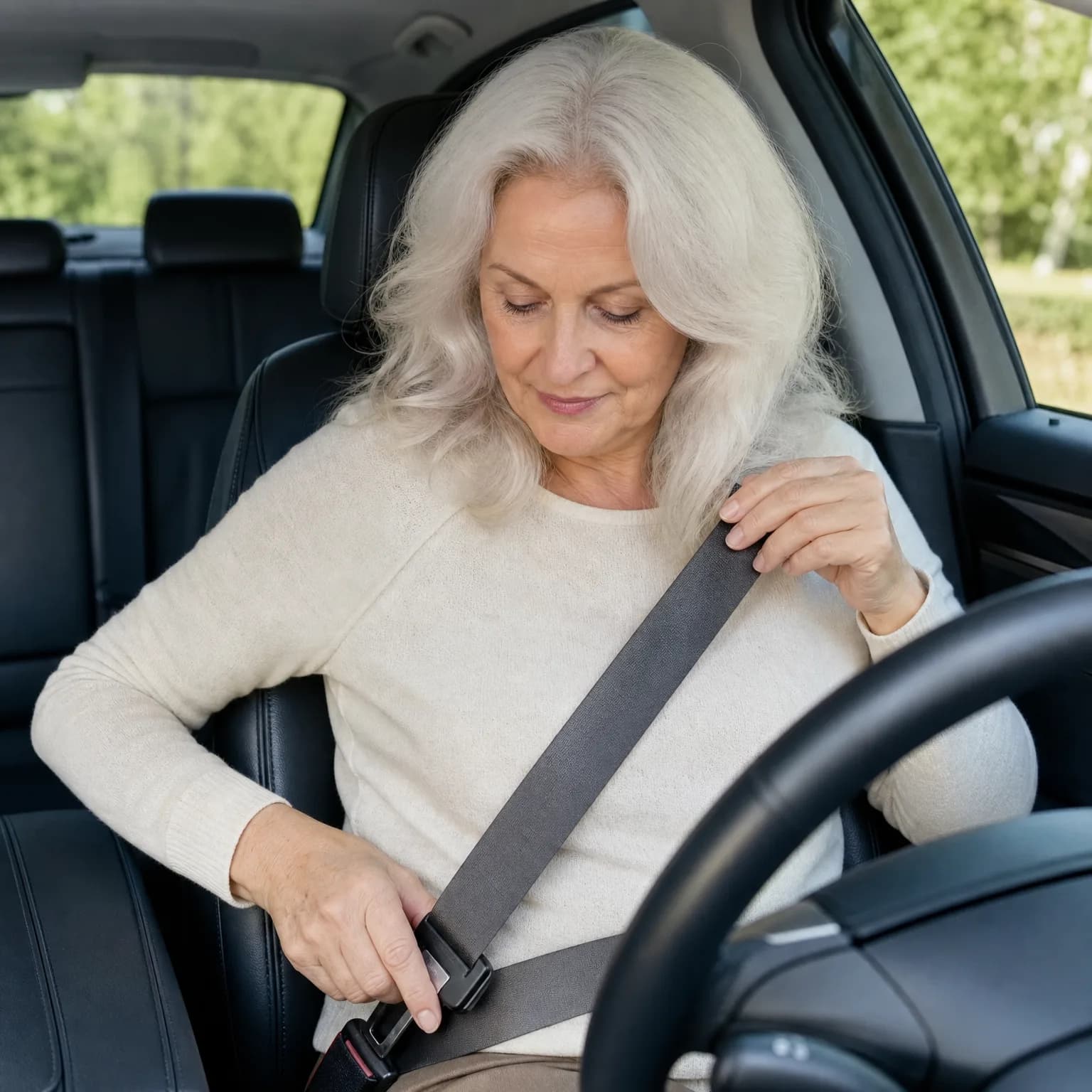
Auto insurance rates for senior drivers in California typically remain stable or decrease slightly between ages 65 and 70 for those with clean records, then begin to rise after age 72. The increase averages 8% to 14% between ages 72 and 75, and accelerates to 15% to 25% after age 80. These are actuarial pricing trends, not assessments of individual driving ability — but they apply regardless of your personal record.
If you haven't compared rates in more than three years, you're statistically likely to be overpaying by 12% to 22% compared to the best available rate for your profile. Long Beach has competitive carrier options specifically appealing to senior drivers with clean records: Wawanesa, CSAA, and Mercury frequently offer lower rates than State Farm, Farmers, or Allstate for drivers over 65 with no recent claims. Comparison should include at least four quotes with identical coverage limits — varying limits across quotes makes price comparison meaningless.
When requesting quotes, provide your current declarations page and specify: "I want the mature driver discount, low mileage rating for under 7,500 annual miles, and retirement occupation status applied from the start." This forces the quoting agent to price your actual risk profile rather than defaulting to standard assumptions. Many agents will quote you at standard rates first, then apply discounts only if you ask — a practice that inflates initial quotes and discourages switching.
California-Specific Programs and State Resources for Senior Drivers
The California Department of Insurance operates a consumer hotline at 1-800-927-4357 where senior drivers can request a policy review if they believe they've been incorrectly rated or denied a discount they're entitled to under state law. The department also maintains a public rate comparison tool, though it's less current than commercial comparison engines and doesn't include all carriers operating in Long Beach.
California's Low Cost Automobile Insurance Program is available to drivers meeting income requirements: $34,100 annually for a single person or $46,350 for a household of two as of 2025. The program offers liability-only coverage at significantly reduced rates — typically 40% to 60% below standard market rates — and is administered through a network of participating carriers. If you're on a fixed retirement income and own your vehicle outright, this program may provide adequate liability protection at a fraction of your current cost.
For senior drivers concerned about license renewal requirements, California requires vision testing and written knowledge testing at in-person DMV renewal appointments starting at age 70. There is no mandatory road test based solely on age. If you've recently completed a mature driver course, bring the completion certificate to your DMV appointment — some examiners will note it in your file, which can be helpful if you're ever involved in a minor collision and the investigating officer is determining fault.
Frequently Asked Questions
Does California require insurance companies to offer senior driver discounts?
Yes, California Insurance Code Section 1861.025 mandates that all auto insurers offer a discount to drivers aged 55 and older who complete an approved mature driver improvement course. However, the law does not require carriers to notify you of eligibility or apply the discount automatically — you must request it and provide proof of course completion. The discount typically ranges from 5% to 15% and renews every three years.
Should I keep comprehensive and collision coverage on my paid-off 2016 car?
It depends on your vehicle's current value and your ability to replace it out-of-pocket. If your annual comprehensive and collision premiums exceed 10% of the vehicle's market value, you're paying more over time than the maximum claim you could receive. For a vehicle worth $11,000, if you're paying more than $92/mo for these coverages, consider dropping them and redirecting that cost toward higher liability limits.
How does Medical Payments coverage work with Medicare after a car accident?
In California, Medical Payments (MedPay) coverage pays first for accident-related medical expenses before Medicare applies. This covers your Medicare deductibles and co-pays, which can total $2,500 to $4,000 for emergency and follow-up care. A $5,000 MedPay policy typically costs $4 to $9/mo and provides immediate payment without waiting for liability determination or settlement from another driver's insurance.
At what age do car insurance rates start increasing for senior drivers in California?
Rates typically remain stable or decrease slightly for drivers with clean records between ages 65 and 70, then begin rising after age 72. The increase averages 8% to 14% between ages 72 and 75, and 15% to 25% after age 80. These are actuarial pricing trends based on age brackets, not assessments of individual driving ability.
Can I get a discount for low mileage if I no longer commute to work?
Yes, most California carriers offer 10% to 18% lower rates for pleasure-use classification (under 7,500 annual miles) compared to regular commute rating. You must specifically request the change and update your occupation status to "retired, no regular commute." Some carriers also offer usage-based programs where you submit quarterly odometer photos to verify low mileage and receive mid-term credits.
Related Articles
Convert Joint Auto Insurance After Spouse Dies | Wisconsin
4/29/2026

Oregon License Renewal at 85: Testing & Insurance Impact
4/29/2026

MO License Renewal at 75: Tests, Restrictions & Rates
4/29/2026

Surviving Spouse Auto Insurance in Colorado: Transfer Rules
4/29/2026

Car Insurance After 70: Lower Rates Despite Increases
4/1/2026

Spouse Died in Hawaii: Convert Joint Auto Policy
4/29/2026