
How to Lower Car Insurance Rates as a Senior Driver in Stockton
Free to compare
California's Mandatory Mature Driver Discount: What Stockton Seniors Must Know
California Insurance Code Section 1861.025 requires all auto insurers operating in the state to offer premium discounts to drivers who complete state-approved mature driver improvement courses. The discount typically ranges from 5% to 15% depending on the carrier, and it applies for three years from course completion. In Stockton, where the average auto insurance premium for drivers 65–69 runs $145–$175 per month for full coverage, that translates to $87–$315 in annual savings—yet fewer than one in three eligible San Joaquin County senior drivers have taken an approved course in the past three years, according to California Department of Insurance data.
The state approves both in-person and online courses from providers including AARP, AAA, and the National Safety Council. Most courses run 4–8 hours and cost $20–$35, with completion certificates issued the same day for online formats. You must submit your certificate to your insurer within 60 days of completion to trigger the discount—it does not apply automatically at your next renewal. Many Stockton drivers miss this step, assuming their insurer will request proof, but California law places the disclosure burden on the policyholder.
Once applied, the discount renews automatically for three years as long as your policy remains active. After that period, you must retake an approved course and resubmit certification to maintain the reduction. If you're currently paying $160 per month and your carrier offers a 10% mature driver discount, you'll save $192 annually—recovering your course fee within the first two months and banking the difference for the remaining 34 months of the discount period.

How Insurance Rates Change for Stockton Drivers After Age 65
Auto insurance premiums in California typically remain stable or even decrease slightly for drivers in their early to mid-60s who maintain clean records, as this group statistically files fewer claims than drivers aged 35–50. The shift happens around age 70, when actuarial tables show increased claim frequency and severity. In Stockton specifically, rates for drivers 70–75 with identical coverage and driving history average 8–14% higher than rates for the same driver at age 68, according to rate filings from the top five carriers writing policies in San Joaquin County.
The steeper increases begin after 75, when some carriers implement age-band surcharges that can push premiums 18–25% above your age-68 baseline. This isn't universal—California prohibits pure age-based discrimination, so insurers must justify rate increases with actuarial data tied to claim patterns. But the pattern is consistent: a Stockton driver who paid $148 per month at age 68 may see that rise to $162 per month by 73 and $178 per month by 78, assuming no accidents or violations and identical coverage.
The good news: mileage-based discounts and coverage adjustments can offset much of this increase. If you've retired and no longer commute from Stockton to Sacramento or the Bay Area, your annual mileage has likely dropped from 12,000–15,000 miles to 6,000–8,000 miles. Most California carriers offer low-mileage discounts starting at 20% reductions for drivers logging under 7,500 miles annually, and some telematics programs from carriers like Nationwide and Progressive can cut premiums by an additional 10–15% if your driving patterns show low-risk behaviors.

Reassessing Full Coverage on Paid-Off Vehicles in Stockton
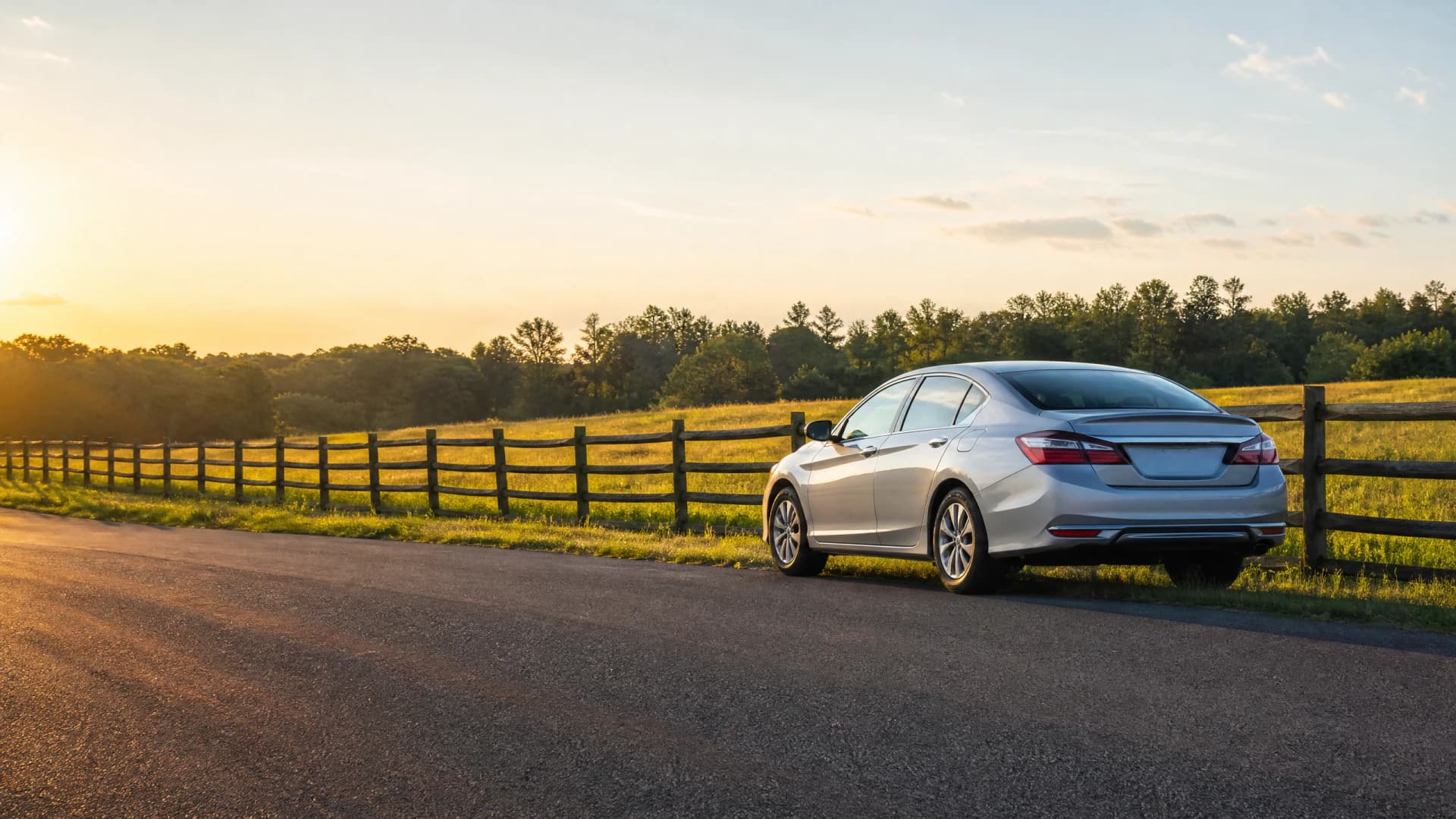
If you own a 2015 or older vehicle that's fully paid off and worth less than $5,000 according to Kelley Blue Book, the annual cost of comprehensive and collision coverage may exceed what you'd recover in a total-loss claim. Stockton's average annual premium for collision coverage on a 10-year-old sedan runs $420–$580, while comprehensive typically adds another $180–$260. If your vehicle's actual cash value is $4,200, you're paying $600–$840 annually to insure an asset that would net you roughly $3,800 after your deductible in a worst-case scenario.
The math shifts if your vehicle is newer or worth more than $8,000. A 2019 Honda Accord or Toyota Camry—common models among Stockton senior drivers—still carries a market value of $16,000–$22,000, making full coverage a justified expense even at $900–$1,100 annually. The decision point isn't age alone; it's the ratio of annual premium to potential claim payout. If you're paying more than 15–20% of your vehicle's value each year for collision and comprehensive, dropping to liability-only coverage and banking the savings often makes financial sense.
Before making this change, verify that you're carrying adequate liability limits. California's minimum requirement is 15/30/5 ($15,000 per person for bodily injury, $30,000 per accident, $5,000 for property damage), but those limits are dangerously low if you're found at fault in a serious accident. Most Stockton drivers should carry at least 100/300/50, which typically costs only $25–$40 more per month than minimum coverage but protects retirement assets from lawsuit judgments that could far exceed the state minimum.
Medicare and Medical Payments Coverage: What Stockton Seniors Need to Understand
California does not require personal injury protection (PIP) coverage, but most carriers offer optional medical payments (MedPay) coverage in amounts ranging from $1,000 to $10,000. If you're enrolled in Medicare, MedPay functions as secondary coverage—it pays out immediately after an accident regardless of fault, covering your deductible and copays before Medicare processes the claim. For a Stockton driver on a fixed income, $5,000 in MedPay coverage costs roughly $8–$14 per month and can prevent you from paying $1,500–$2,000 out of pocket for emergency room visits, ambulance transport, and initial treatment following a collision.
Medicare does not cover auto accident injuries until after your auto insurance medical coverage is exhausted. This "coordination of benefits" rule means that if you carry no MedPay and you're injured in an accident, you'll face Medicare's Part B deductible ($240 in 2024) plus 20% coinsurance on all covered services before Medicare pays anything. If your accident results in $8,000 in medical bills, you'd pay $1,840 out of pocket without MedPay. With $5,000 in MedPay, your insurer pays the first $5,000, Medicare covers most of the remaining $3,000, and your out-of-pocket drops to roughly $600.
The cost-benefit calculation favors carrying MedPay if you're over 70, live alone, or have any medical conditions that would complicate recovery from accident-related injuries. Stockton's traffic patterns—heavy Highway 99 and Interstate 5 commuter flow even for drivers who no longer work—mean accident severity can be higher than in purely residential areas. Spending an extra $10 per month for $5,000 in MedPay is financially sound for most senior drivers in San Joaquin County.

See What Drivers Over 65 Are Paying Now
See If You Qualify for Discounts
Low-Mileage and Usage-Based Programs Available to Stockton Drivers
If you're driving fewer than 8,000 miles per year, you should be enrolled in either a low-mileage discount program or a usage-based insurance (UBI) program that tracks actual miles driven. Most major carriers writing policies in Stockton—including State Farm, Farmers, Allstate, and GEICO—offer mileage verification programs that discount premiums by 10–25% for drivers logging under 7,500 annual miles. Verification methods vary: some carriers require an annual odometer photo, others use a plug-in device that reports mileage electronically, and a few newer programs use smartphone apps.
Usage-based programs go further by monitoring not just mileage but driving behaviors including speed, braking patterns, and time of day. Progressive's Snapshot, Nationwide's SmartRide, and Allstate's Drivewise all offer potential discounts of 10–30% for safe driving habits. The catch: these programs require either a plug-in device or continuous smartphone tracking, which some senior drivers find intrusive or technically frustrating. The upside: if you drive primarily during daylight hours, avoid freeways during rush hour, and don't brake hard or accelerate aggressively, the savings can be substantial—$180–$420 annually for a Stockton driver paying $140 per month.
Before enrolling in any UBI program, confirm whether the carrier can increase your rate based on driving data. California law prohibits insurers from raising premiums solely because of telematics data, but they can decline to renew your policy if the data reveals high-risk patterns. Most Stockton senior drivers see only discounts from these programs, but it's worth understanding the terms before agreeing to monitoring.
Bundling, Group Affiliation, and Loyalty Discounts Worth Pursuing in Stockton
If you own your home in Stockton and carry homeowners insurance separately from your auto policy, bundling both with the same carrier typically saves 15–25% on your combined premium. For a driver paying $155 per month for auto and $110 per month for homeowners, bundling can reduce the total to $225–$240 per month—an annual savings of $300–$480. Every major carrier writing policies in San Joaquin County offers multi-policy discounts, and the savings increase if you also bundle umbrella liability coverage.
Group affiliation discounts are underutilized by Stockton seniors. If you're a member of AARP, a retired federal employee, a veteran, or affiliated with a credit union or professional association, you likely qualify for group discounts ranging from 5–12%. AARP partners with The Hartford to offer auto insurance with built-in mature driver benefits and accident forgiveness, while USAA (available to veterans and their families) consistently rates among the lowest-cost carriers for senior drivers in California. Check your memberships—many Stockton residents belong to organizations that unlock insurance discounts they've never claimed.
Loyalty discounts reward drivers who stay with the same carrier for multiple years, but they're a double-edged sword. While some carriers reduce your premium by 5–10% after three to five years of continuous coverage, others quietly raise your base rate each year by amounts that exceed the loyalty discount. The solution: shop your rate every two to three years even if you're satisfied with your current carrier. Stockton drivers who haven't compared quotes in five years are often overpaying by $400–$800 annually, even after accounting for loyalty discounts and the hassle of switching.
When to Compare Rates and How to Approach Shopping as a Senior Driver
The best time to compare car insurance rates in Stockton is 30–45 days before your current policy renews. This gives you enough time to gather quotes, compare coverage details, and make an informed decision without rushing or letting your coverage lapse. California allows a brief grace period if you miss your renewal date, but any gap in coverage can result in higher rates when you reapply—carriers view lapses as high-risk indicators, even for drivers with decades of clean history.
When requesting quotes, provide identical coverage limits and deductibles to each carrier so you're comparing equivalent policies. If your current policy includes 100/300/50 liability limits, a $500 collision deductible, and $5,000 in MedPay, request the same from every competitor. Many comparison tools default to state minimum coverage, which artificially lowers quoted premiums but leaves you underinsured. Write down your current coverage details before starting the shopping process, and don't let an agent talk you into higher limits than you need simply because you're comparing.
Be prepared to provide your driver's license number, vehicle identification number (VIN), current policy declarations page, and details about any accidents or violations in the past five years. Stockton-area carriers pull motor vehicle records directly from the California DMV, so there's no benefit to omitting or downplaying incidents—they'll appear in your quote regardless, and inaccurate information can void your policy later. The entire comparison process typically takes 60–90 minutes if you're organized and have your documents ready.
Frequently Asked Questions
Do I have to retake the mature driver course every three years to keep my discount in California?
Yes, California's mature driver discount expires three years after course completion, and you must retake an approved course and resubmit your certificate to maintain the 5–15% premium reduction. Your insurer will not remind you when the discount expires—track the date yourself and schedule your renewal course 60–90 days before expiration to avoid any gap in savings.
Will my insurance rate automatically go up when I turn 70 in Stockton?
Not automatically on your birthday, but California carriers do adjust rates based on age bands, and most implement increases for drivers between 70–75. The increase is typically 8–14% compared to your premium at age 68, assuming identical coverage and driving record. You can offset much of this with mature driver discounts, low-mileage programs, and by dropping collision coverage on older paid-off vehicles.
Should I keep medical payments coverage if I already have Medicare?
Yes, because MedPay pays immediately after an accident and covers your Medicare deductibles and copays before Medicare processes the claim. Without MedPay, you'll face Medicare's Part B deductible plus 20% coinsurance on all accident-related medical bills. For Stockton seniors, $5,000 in MedPay costs only $8–$14 per month and can save you $1,500–$2,000 out of pocket after a serious accident.
How many miles do I need to drive to qualify for low-mileage discounts in California?
Most California carriers offer low-mileage discounts starting at 7,500 annual miles or less, with savings ranging from 10–25% depending on the insurer. If you've retired and no longer commute, your mileage has likely dropped enough to qualify—track your odometer for two months, multiply by six, and if the result is under 7,500 miles, contact your carrier to enroll in their mileage verification program.
Can my car insurance company drop me because of my age in California?
No, California law prohibits insurers from canceling or refusing to renew your policy based solely on age. Carriers can non-renew for reasons like multiple at-fault accidents, fraud, or non-payment, but age alone is not a valid basis for cancellation. If you receive a non-renewal notice that seems age-related, contact the California Department of Insurance to file a complaint.
Related Articles
Convert Joint Auto Insurance After Spouse Dies | Wisconsin
4/29/2026
Oregon License Renewal at 85: Testing & Insurance Impact
4/29/2026
MO License Renewal at 75: Tests, Restrictions & Rates
4/29/2026

Surviving Spouse Auto Insurance in Colorado: Transfer Rules
4/29/2026

Car Insurance After 70: Lower Rates Despite Increases
4/1/2026

Spouse Died in Hawaii: Convert Joint Auto Policy
4/29/2026