
Keeping Two Cars or Going Down to One in Retirement
The right choice depends less on your age than on how often that second car actually leaves the driveway.
Free to compare
It depends on how much you use the second car, not just its age or value
There's no rule that says a retired household should carry one car instead of two. The honest answer is that it comes down to use. If the second car sits most days and only comes out occasionally, you're paying for coverage on a car that's doing very little for you.
If you and your spouse still drive separately for work, appointments, or errands that don't overlap, keeping two cars often still makes sense. The decision holds up differently depending on how many miles that second car puts on each year, whether you could cover your needs by scheduling around one vehicle, and what your insurer charges for a second car versus what you'd save by dropping it entirely.
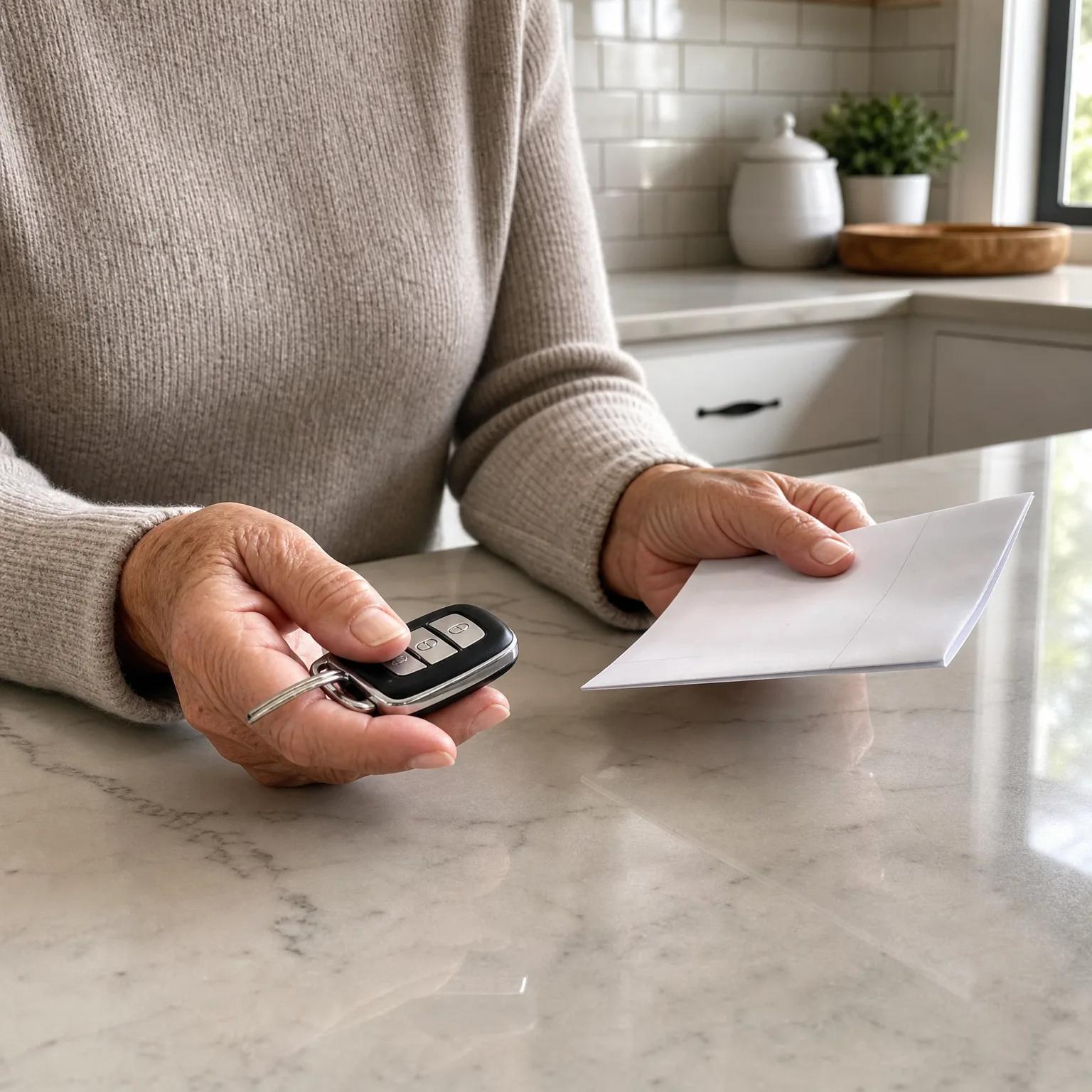
How often the second car actually gets driven
This is the thing to track before you decide anything. A car that goes to the grocery store once a week and sits otherwise is costing you a full policy for very little driving. A car that still does a daily commute or regular long trips is earning its keep.
Some insurers offer a lower rate for a car that's driven less, so ask your insurer whether they have a low mileage or usage based option before you assume the only choice is keep it fully insured or get rid of it.
If you're not sure how much the second car is really used, track it for a month. Note how many days it leaves the driveway and for what. That answer tells you more than its age or current value does.
A car that's barely driven also depreciates slowly in cost to insure, since insurers price largely on expected use. So the savings from dropping it may be smaller than they look at first glance. Get an actual quote for insuring it alone before you decide.
What it costs to insure one car versus two under the same policy
Most insurers give a discount for insuring more than one car on the same policy. That means the cost of the second car isn't simply its own premium in isolation. Dropping it doesn't always save as much as you'd expect, because the remaining car can lose that multi-car discount and its rate may go up slightly.
Ask your insurer for two numbers before deciding anything: what the policy costs with both cars, and what the single remaining car would cost on its own. Comparing those two numbers, not guessing from the renewal notice, tells you the real difference.
If you do decide to go down to one car, that's also a good time to get quotes from other insurers for the single car policy. The insurer that was competitive for two cars isn't always the best one for a single car policy.
Questions people ask about this
Should I sell the second car or just let the registration lapse?
If you're not driving it, selling it is almost always better than letting it sit unregistered and uninsured. An unused car still needs to be insured in most states if it's registered and kept on the road, and some states charge fees or penalties for a lapsed registration even if the car never moves. Check with your state's motor vehicle agency about what's required if you plan to keep a car you're not driving.
Does dropping to one car affect our auto insurance discount for bundling with home insurance?
Multi-policy discounts, the kind that combine home and auto, are usually separate from multi-car discounts, which apply to having more than one vehicle on the same auto policy. Dropping a car typically affects the multi-car part of your pricing, not the home bundle discount. Ask your insurer to confirm how the two discounts are structured on your policy, since this can vary by insurer.
Can I insure the second car only for part of the year if we only drive it seasonally?
Some insurers allow you to suspend comprehensive-only or liability coverage temporarily, but most states require at least liability coverage on any registered vehicle kept on the road. Ask your insurer whether they offer seasonal or pause options, and ask your state's motor vehicle agency whether a car can stay registered with reduced or suspended coverage. The rules differ by state and by insurer.
What happens to our auto insurance if one of us stops driving but keeps the car as a passenger?
You can usually keep a car insured and registered even if the person who owns it no longer drives, as long as someone else on the policy is listed as a driver. Tell your insurer who the primary driver is now, since insurers price based on who's actually behind the wheel. Leaving an outdated primary driver on file can affect your rate or a claim.
Is it cheaper to add an adult child as a driver instead of keeping a second car just for them to use when visiting?
This depends on how often the child drives the car and whether your insurer treats occasional visiting drivers differently from listed household drivers. Ask your insurer directly how they'd price it, since some charge for any driver with regular access to the car and others only for those who live in the household. Get a specific quote rather than assuming either option is automatically cheaper.
See what insuring one car costs compared to two before you decide anything.
Pull your current policy and get the exact premium for each car separately, not just the combined total. Call your insurer and ask two things: what the single remaining car would cost on its own, and whether they offer a low mileage or usage based rate for a car you plan to drive less. If you're leaning toward dropping to one car, get quotes from a couple of other insurers for that single car policy, since your current insurer's two-car pricing may not be their most competitive single car rate. Track the second car's actual use for a few weeks if you haven't already, since that number will tell you more than any estimate. If you decide to let a car go, contact your state's motor vehicle agency about properly cancelling the registration so you're not billed or penalized for a car you no longer have insured.