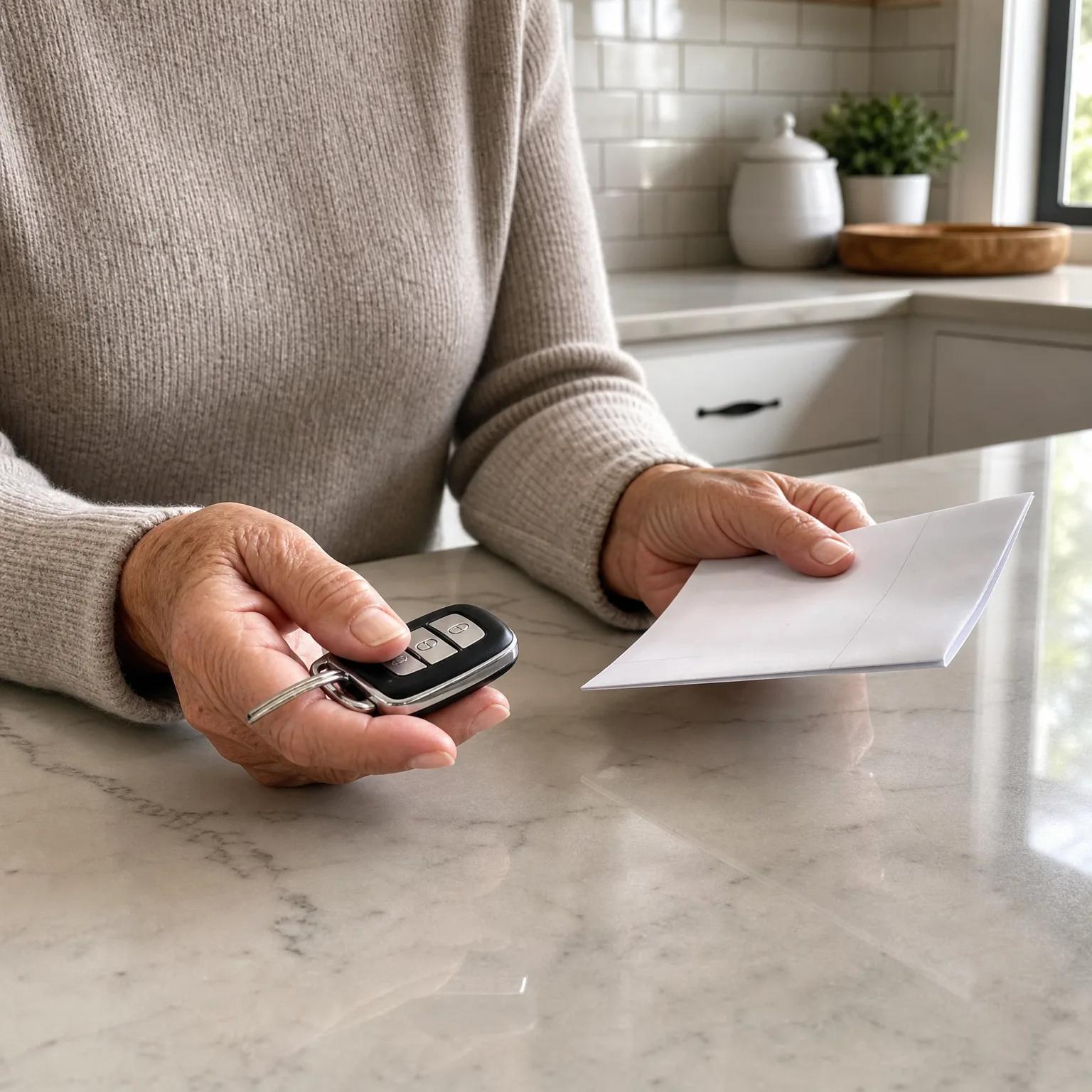
Should Seniors Go Down to One Car
It depends less on age than on whether that second car earns its keep on the road and on your policy.
Free to compare
There's no rule that says one car is right at a certain age
Going down to one car makes sense when the second one sits more than it drives. If it's used for errands a couple of times a week, selling it usually saves more in insurance, maintenance, and registration than keeping it around saves in convenience.
It makes less sense if the second car covers something the first one can't, like a spouse's separate schedule, a grandchild's school run, or a backup when one car is in the shop. The right call depends on how the two cars actually get used, not on a birthday.

How much the second car actually gets driven
Insurers price a car partly on how far and how often it's driven. A car that mostly sits in the driveway still costs something to insure, even at a lower rate for low mileage, because it's still a vehicle an insurer could have to pay a claim on.
If the second car is driven only occasionally, ask your insurer what a low-mileage or pleasure-use discount would do to that specific policy. Some insurers price this well. Others barely adjust for it, and the car ends up costing nearly as much to insure as one that's driven daily.
If you drop the car instead of insuring it as a backup, check whether your state or insurer requires you to formally cancel registration and insurance together. Letting insurance lapse on a car you still own, even one you've stopped driving, can cause problems if you ever want to insure it again or add it back.

What happens to your policy when you drop to one car
Multi-car discounts apply to the whole policy, not just the car that's gone. Dropping from two cars to one usually means losing that discount, so the remaining car's premium can go up even though you're insuring less overall. Ask your insurer to quote the one-car policy before you commit, rather than assuming the savings will match what you were paying for the second car alone.
If two drivers share one car going forward, make sure both are listed on the policy as drivers, not just one as the owner and the other as an occasional user. How an insurer treats an unlisted driver after a claim varies by insurer, so it's worth asking directly rather than guessing.
If the car being dropped was the newer or safer one, check whether the one you're keeping has the safety features your insurer prices on, like automatic emergency braking or anti-theft equipment. Keeping the older, less equipped car to save on insurance can sometimes cost more in the long run if it lacks features that would have qualified for a discount.
Questions people ask about this
Will dropping to one car lower my insurance a lot?
It lowers the total you pay for coverage, but not always by as much as removing one full policy would suggest. You lose any multi-car discount on the remaining vehicle, so ask your insurer for a real quote on the one-car policy rather than estimating from the current bill.
Should I keep the second car just for emergencies?
That depends on how you define emergency and how often one actually comes up. A car insured but rarely driven still carries a premium, so weigh that ongoing cost against what a rental or rideshare would cost the few times a year you'd actually need a backup.
What should I do with the car I'm not keeping?
Selling it outright usually stops the insurance and registration costs cleanly, while gifting it to a family member means making sure the title and insurance transfer properly. Check with your state's motor vehicle agency on what paperwork a transfer requires, since the process varies by state.
Does my insurer need to know if I go from two cars to one?
Yes, your policy needs to reflect the vehicles you actually own and insure. Call your insurer or agent directly to remove the car and ask how it affects the premium on the one you're keeping, since that number won't show up until you ask.
Is it better to insure one car well or two cars cheaply?
That depends on how the two cars get used, not on which costs less upfront. If both cars are driven regularly by different people, spreading coverage across two may cost less overall than one person racking up miles on a single car that then needs more extensive coverage.
See what one car would actually cost to insure before you decide to let the other go.
Pull your current policy and see exactly what each car costs to insure separately, including any multi-car discount applied. Call your insurer and ask for a quote on insuring just the car you'd keep, so you're comparing real numbers instead of guessing. If you're leaning toward selling the second car, check your state's process for canceling its registration and insurance at the same time, so you're not paying for a car you no longer have. If the car is going to a family member instead, ask your insurer how that affects your own policy before the transfer happens. Talk with whoever else drives either car now, so the household settles on who drives the one car and when, before the decision is final.