
Parkinson's Diagnosis and Driving in Illinois: What Happens Next
Free to compare
Does Illinois Require Doctors to Report a Parkinson's Diagnosis to the DMV?
No. Illinois does not mandate physician reporting of Parkinson's disease to the Illinois Secretary of State.
Unlike some states that require doctors to report specific conditions, Illinois places the legal burden on the driver. Under Illinois Administrative Code Title 92, Section 1030.30, drivers must self-report any medical condition that impairs their ability to operate a vehicle safely — including vision changes, reaction time delays, or cognitive impairment caused by Parkinson's — within 10 days of diagnosis or awareness.
Your neurologist won't contact the state, but if you experience tremors that affect steering control, vision changes from medication side effects, or cognitive symptoms that delay decision-making, the law considers you responsible for reporting. The vast majority of newly diagnosed drivers don't know this obligation exists until they receive a denial letter after an accident or a police report flags an incident.
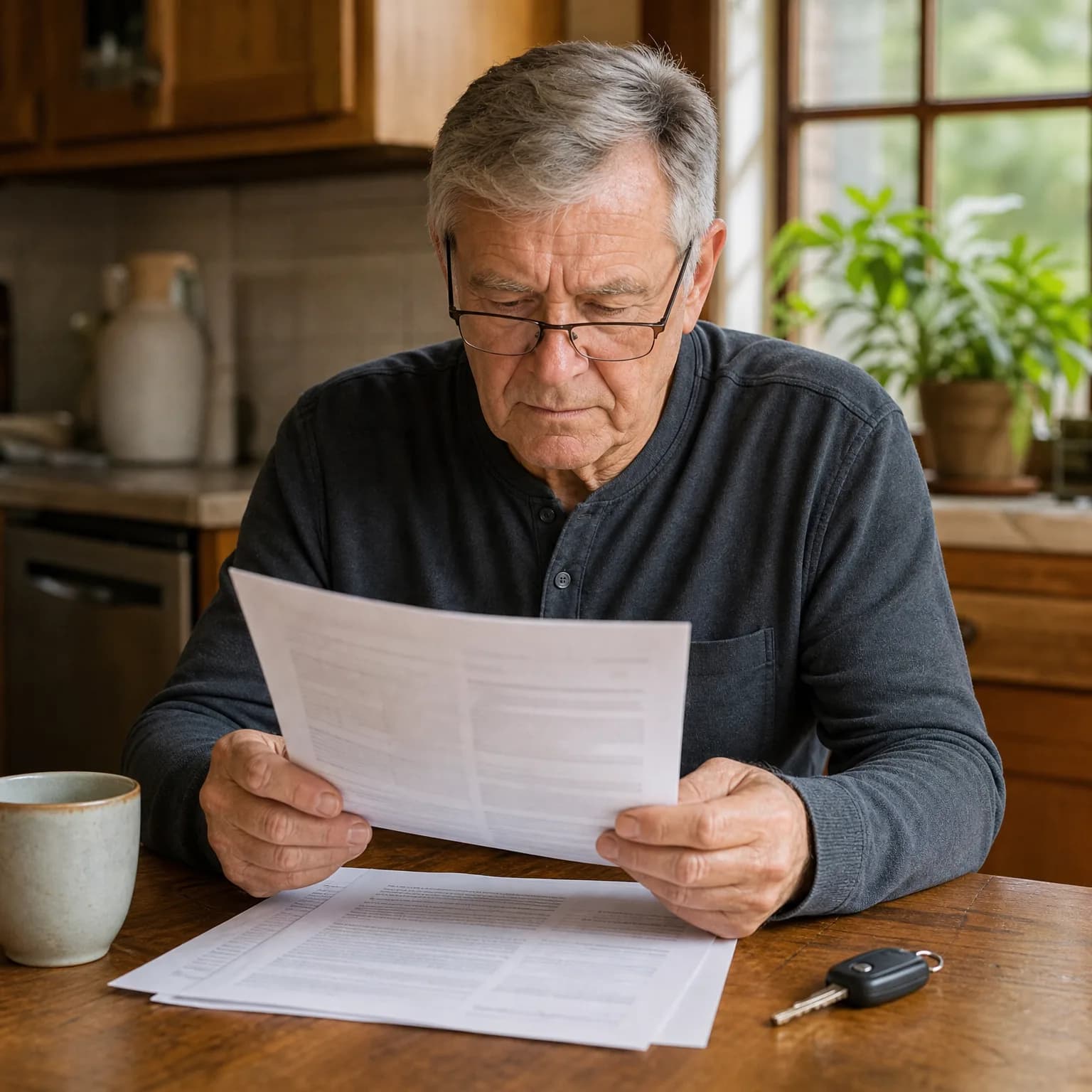
What Triggers a Medical Review of Your Illinois Driver's License?
A medical review begins when the Illinois Secretary of State receives a report from law enforcement, a family member, a physician who observes unsafe driving, or the driver themselves.
Most Parkinson's-related reviews start after a minor accident, a traffic stop where an officer notes tremors or delayed response, or a family member files a request for medical re-examination. The state sends a Medical Evaluation Form to your doctor, who must assess your functional ability to drive — not just confirm the diagnosis. Your neurologist will evaluate whether your symptoms currently impair vision, motor control, reaction time, or judgment.
If your doctor cannot certify you as safe to drive without restrictions, the Secretary of State may impose limitations: daylight-only driving, restrictions to familiar routes within a specific radius, mandatory annual re-certification, or full suspension until symptoms stabilize. These restrictions appear on your physical license and in the state's driver record database, which your insurer accesses at every renewal.


How Does a Parkinson's Diagnosis Affect Your Auto Insurance Rates in Illinois?
Your diagnosis alone does not trigger a rate increase, but license restrictions or a medical review flag in your driving record typically do.
Illinois carriers cannot legally raise your premium solely because you disclosed a Parkinson's diagnosis. However, if the Secretary of State imposes license restrictions — daylight-only driving, required annual medical certification, or mileage limitations — your insurer treats this as a risk modification. Expect rate increases of 15–35% depending on the severity of restrictions and your current coverage tier. A daylight-only restriction signals higher actuarial risk even if your driving record remains clean.
If you report an accident caused by a Parkinson's-related symptom (delayed braking, medication-induced confusion), the claim itself drives the rate increase, not the diagnosis. Carriers in Illinois can surcharge accident claims 20–40% at renewal regardless of medical cause. The claim stays on your record for three to five years.
Should You Tell Your Insurance Company About Your Diagnosis?
You are not legally required to disclose a Parkinson's diagnosis unless your policy application or renewal form specifically asks about neurological conditions, which most Illinois carriers do not.
However, voluntary early disclosure can work in your favor under specific circumstances. Some carriers — including State Farm and Progressive — offer medical hardship telematics programs that allow drivers with chronic conditions to demonstrate safe driving behavior through monitoring devices. If your driving data shows no impairment, you may qualify for a low-mileage or safe-driving discount that offsets the actuarial risk the carrier assigns to your condition. This option disappears once a formal restriction appears on your license.
If you wait until the state imposes restrictions, your insurer learns about it at renewal through your motor vehicle report. At that point, the carrier cannot offer a voluntary monitoring program — they apply the rate increase based on the restriction code in your state record.

See What Drivers Over 65 Are Paying Now
See If You Qualify for Discounts
What Coverage Adjustments Make Sense After a Parkinson's Diagnosis?
Most senior drivers carry higher liability limits than required, and those limits remain critical after a Parkinson's diagnosis.
Illinois requires only $25,000 per person and $50,000 per accident in bodily injury liability, but if Parkinson's-related symptoms cause an accident, your legal exposure increases. Plaintiffs can argue that you knew about a condition affecting your driving ability, which opens you to claims of negligence. Raising your liability coverage to $100,000/$300,000 or adding an umbrella policy protects retirement assets and home equity from a lawsuit. The cost difference is typically $15–$30 per month.
If your vehicle is paid off and worth less than $5,000, collision coverage becomes optional. Parkinson's diagnoses often coincide with reduced driving — if you now drive under 5,000 miles per year, collision premiums may exceed the vehicle's actual cash value. Keeping comprehensive coverage for theft, weather, and animal strikes makes sense; collision does not unless you financed the car.

Can You Keep Driving If Illinois Restricts Your License?
Yes, as long as you operate within the restrictions the state imposes.
A restricted license is not a suspension. If the Secretary of State limits you to daylight driving within a 10-mile radius of your home, you remain legally insured and licensed as long as you follow those parameters. Your insurer must continue coverage under the restricted terms — they cannot cancel your policy solely because restrictions appear on your license.
Violating your restrictions, however, voids coverage. If you drive at night under a daylight-only restriction and cause an accident, your carrier can deny the claim. You become personally liable for all damages, medical costs, and legal fees. The state also treats restriction violations as a Class A misdemeanor, which carries fines up to $2,500 and potential license suspension.
What Happens If Your Doctor Recommends You Stop Driving?
Your neurologist's recommendation does not automatically suspend your license, but ignoring it creates legal and financial liability.
If your doctor states in writing that Parkinson's symptoms make driving unsafe and you continue to drive, you assume full responsibility for any accident. Illinois courts have ruled that drivers who operate vehicles against clear medical advice cannot claim diminished capacity in negligence lawsuits — you are held to have knowingly accepted the risk. Your insurer can also deny claims under policy exclusions for intentional or reckless behavior.
If you disagree with your doctor's assessment, you have the right to request an independent medical evaluation through the Secretary of State's Medical Review Unit. A state-appointed physician will assess your functional driving ability using standardized tests. This process takes 60–90 days, during which your current license remains valid unless the state issues an emergency suspension.
Frequently Asked Questions
Can my insurance company drop me if I have Parkinson's disease?
No. Illinois law prohibits cancellation or non-renewal based solely on a medical diagnosis. However, your carrier can non-renew your policy if your driving record shows accidents or violations, or if you lose your license entirely. License restrictions alone do not justify cancellation.
How long does a medical review take in Illinois?
The Illinois Secretary of State typically completes medical reviews within 45–90 days after receiving your doctor's evaluation form. Emergency suspensions can occur within 10 days if the state receives a report of immediate impairment. You can drive under your current license during the review period unless an emergency suspension is issued.
Do I need to retake a driving test if Illinois restricts my license for Parkinson's?
Not automatically. The Secretary of State may require a road test if your doctor's evaluation indicates motor control or reaction time concerns, or if you request removal of restrictions after symptom stabilization. Vision and knowledge tests are more common than full road tests for medical reviews.
Will Medicare cover the cost of a medical evaluation for my license?
Medicare Part B typically covers neurological exams for Parkinson's management, but evaluations specifically for driver's license purposes are often considered administrative and may not be covered. Check with your neurologist's billing department before scheduling — out-of-pocket costs for driving-specific evaluations range from $150 to $400.
Related Articles
Parkinson's & Driving in Iowa: Reporting, Rates, Risk
4/29/2026
Parkinson's Diagnosis & Driving in Wisconsin for Seniors
4/29/2026

Parkinson's Diagnosis & Driving in Michigan: Rates
4/29/2026

Parkinson's, Driving & Insurance in Missouri for Seniors
4/29/2026
Parkinson's Diagnosis & Driving in Indiana
4/29/2026
Parkinson's & Driving in Idaho: Medical Reporting Rules
4/29/2026