Parkinson's Diagnosis and Driving in North Dakota: What Seniors Need to Know
Free to compare
Does North Dakota Require Doctors to Report Parkinson's to the DMV?
North Dakota does not require physicians to report Parkinson's disease diagnoses to the Department of Transportation. Unlike six states with mandatory medical reporting laws, North Dakota places the responsibility for reporting medical conditions that may impair driving on the individual driver, not the physician.
This means your neurologist will not automatically notify the state when you receive a Parkinson's diagnosis. However, the North Dakota Century Code 39-06-03 allows family members, law enforcement, and medical professionals to submit voluntary reports if they believe a driver poses a safety risk. The DOT then has the authority to require a medical examination, driving test, or both before renewing a license.
If you are diagnosed with Parkinson's, your license remains valid until its expiration date unless you receive a notification from the DOT requiring a medical review. Most senior drivers with early-stage Parkinson's continue driving safely for years after diagnosis, particularly if symptoms are well-managed with medication.

What Happens If the DOT Receives a Report About Your Driving?
When the North Dakota DOT receives a report about a driver's medical fitness — whether from a family member, physician, or law enforcement — the agency sends a letter requiring the driver to submit a Medical Report form completed by their physician. The physician must assess whether the condition impairs the ability to operate a vehicle safely.
If the medical report indicates you can drive safely with or without restrictions, the DOT typically renews your license without modification. If the report suggests limitations, the DOT may impose restrictions such as daylight driving only, speed limits, or geographic boundaries. If the physician determines you cannot drive safely, the DOT will suspend or revoke the license.
The critical detail most senior drivers miss: you have the right to request a hearing to contest a suspension or restriction within 30 days of receiving the notice. During this period, your license remains valid. Many drivers accept restrictions without realizing they can present additional medical evidence, request a driving evaluation from an occupational therapist, or demonstrate compensatory strategies that allow safe driving.
How Does a Parkinson's Diagnosis Affect Your Auto Insurance Rates?
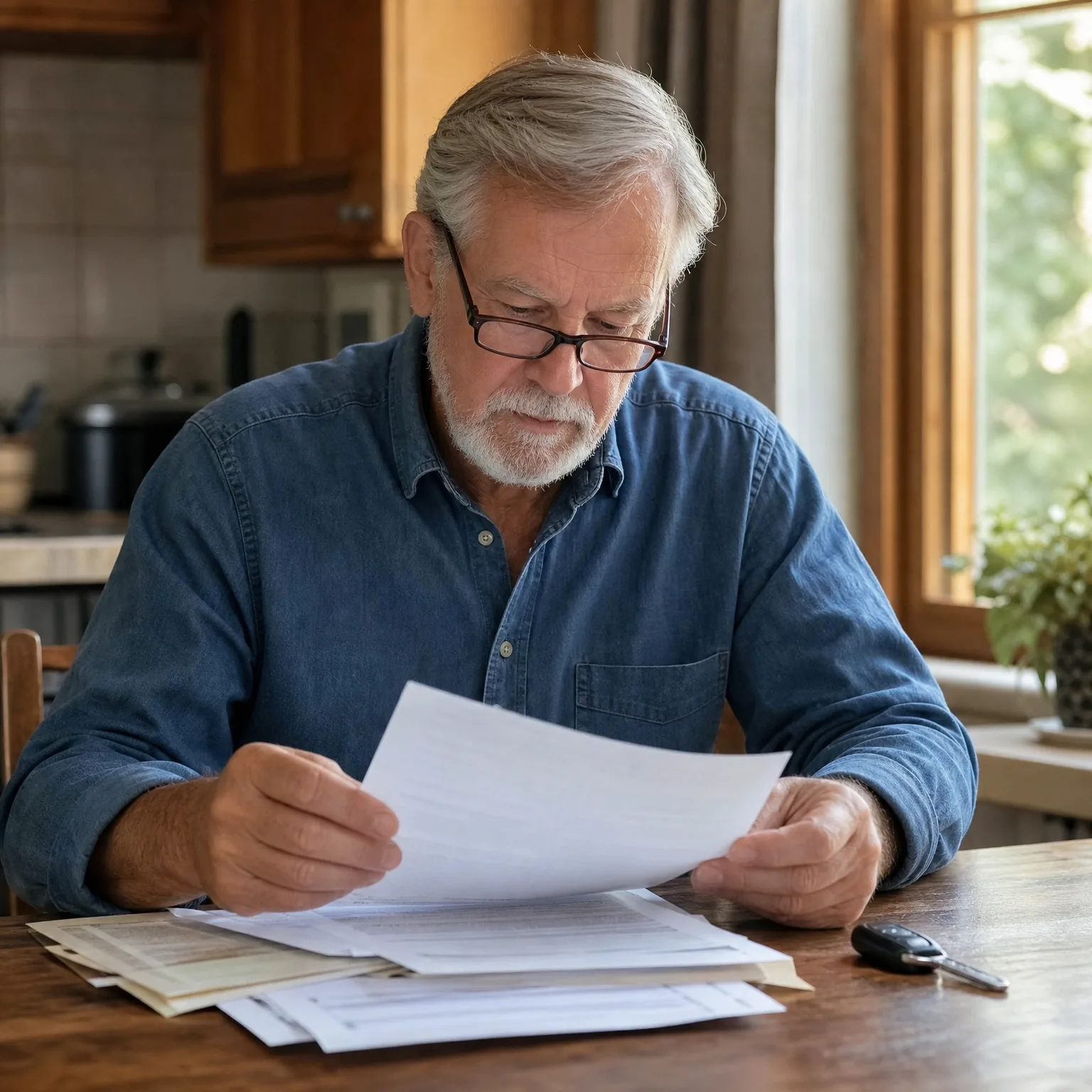
North Dakota carriers cannot increase your premium based solely on a medical diagnosis if your driving record remains clean and your license is unrestricted. However, when you apply for a new policy or answer renewal questionnaires asking whether you have any medical conditions that affect driving, disclosing Parkinson's can trigger a rate adjustment of 15–40% depending on the carrier and the stage of disease reported.
The rate impact varies significantly by insurer. State Farm and Auto-Owners, which hold the largest market share among North Dakota senior drivers, typically do not adjust rates for early-stage Parkinson's if the driver has no license restrictions and no at-fault accidents in the past three years. Progressive and Nationwide may apply surcharges even without restrictions, treating the disclosure as an elevated risk factor similar to sleep apnea or seizure disorders.
If you already have coverage and do not voluntarily disclose the diagnosis on a renewal form, most carriers will not discover it unless you file a claim and the diagnosis appears in medical records reviewed during the claims process. Failing to disclose a material medical condition when directly asked on an application or renewal form can provide grounds for the carrier to deny a claim or rescind the policy. The decision to disclose involves balancing legal obligation, claims risk, and rate impact — many senior drivers consult an independent agent familiar with North Dakota carrier underwriting practices before answering medical disclosure questions.
See What Drivers Over 65 Are Paying Now
See If You Qualify for DiscountsWhat Coverage Adjustments Make Sense After a Parkinson's Diagnosis?
Senior drivers with Parkinson's should evaluate whether collision and comprehensive coverage remain cost-justified, particularly if the vehicle is paid off and valued under $5,000. If your annual collision and comprehensive premiums exceed 10% of the vehicle's actual cash value, dropping both coverages and banking the premium savings often makes more financial sense than continuing full coverage.
Medical payments coverage becomes more valuable after a Parkinson's diagnosis. North Dakota is a fault state, meaning the at-fault driver's liability insurance pays for injuries in most accidents. However, medical payments coverage pays your medical bills regardless of fault, and it coordinates with Medicare to cover copays, deductibles, and services Medicare does not cover. A $5,000 medical payments limit costs $40–$70 annually for most senior drivers and eliminates out-of-pocket costs for emergency room visits, diagnostic imaging, and physical therapy after an accident.
If you stop driving entirely, you can exclude yourself as a driver on your household policy while maintaining coverage for a spouse or other household member. Excluded driver status typically reduces premiums by 20–35% because the carrier removes your risk profile from the calculation. You must sign an exclusion form acknowledging that the policy provides no coverage if you operate the vehicle. This option works well for couples where one spouse has stopped driving but the household still needs a vehicle and insurance for the other driver.

What Discounts Can Offset Rate Increases for Senior Drivers?
North Dakota does not mandate mature driver course discounts, but most major carriers offer them voluntarily. Completing an approved defensive driving course through AARP, AAA, or the North Dakota Safety Council qualifies senior drivers for discounts of 5–15% for three years. The course costs $20–$30 for AARP members and can be completed online in four to eight hours. For a senior driver paying $900 annually, a 10% discount saves $270 over three years — a return of roughly 400% on the course fee.
Low-mileage discounts apply if you drive fewer than 7,500 miles per year, which describes most retired North Dakota seniors who no longer commute. State Farm, Progressive, and Nationwide offer mileage-based discounts of 10–25% for drivers who verify annual mileage through odometer photos or telematics devices. If you previously drove 15,000 miles annually for work and now drive 5,000 miles in retirement, this discount can offset much of the rate impact from aging into a higher actuarial band.
Telematics programs such as State Farm Drive Safe & Save and Progressive Snapshot monitor braking, speed, and time of day. Senior drivers who avoid hard braking, stay under 80 mph, and drive primarily during daylight hours often qualify for discounts of 10–30%. Parkinson's-related motor symptoms may affect braking smoothness, but many drivers in early stages perform well on telematics metrics, particularly if they already avoid highway driving and high-traffic periods.

When Should You Stop Driving After a Parkinson's Diagnosis?
The decision to stop driving depends on symptom progression, medication effectiveness, and self-assessment of reaction time and judgment — not the diagnosis itself. Many senior drivers with Parkinson's continue driving safely for five to ten years after diagnosis, particularly if tremors are well-controlled and cognitive function remains intact.
Occupational therapists certified in driver rehabilitation can conduct clinical assessments and on-road evaluations to measure reaction time, visual scanning, and decision-making under realistic driving conditions. These evaluations cost $300–$500 and are not typically covered by Medicare, but they provide objective data that helps you and your family determine when modifications or cessation are appropriate. North Dakota has three certified driver rehabilitation specialists, located in Fargo, Bismarck, and Grand Forks.
If you are unsure whether your driving ability has declined, schedule the evaluation before the DOT or a family member initiates a formal review. Proactively stopping when you recognize limitations is safer and preserves more control over the transition than waiting for a license suspension. Many senior drivers report that the hardest part of stopping is not the driving itself but the loss of independence — planning alternative transportation through family, senior shuttle services, or ride-hailing apps before you stop driving makes the transition significantly easier.
Frequently Asked Questions
Can my family report me to the North Dakota DMV if they think I shouldn't drive?
Yes. North Dakota law allows family members to submit a Request for Driver Review to the DOT if they believe a driver poses a safety risk due to medical conditions or declining ability. The DOT will send the driver a letter requiring a physician's medical report and may require a driving test. The family member's identity is not disclosed to the driver in most cases.
Will my insurance company find out about my Parkinson's diagnosis?
Your insurer will not find out unless you disclose it on an application or renewal form, or unless the diagnosis appears in medical records reviewed during a claim. If you answer a direct question about medical conditions dishonestly, the carrier can deny claims or cancel the policy. Many senior drivers consult an independent agent about disclosure timing and carrier-specific underwriting practices.
What happens to my car insurance if I stop driving but my spouse still drives?
You can sign an excluded driver form to remove yourself from the policy while keeping coverage for your spouse. This typically reduces premiums by 20–35% because the carrier removes your risk profile from the rate calculation. The vehicle remains insured, but the policy provides no coverage if you operate it.
Does North Dakota require vision tests at license renewal for senior drivers?
North Dakota requires vision screening at every license renewal regardless of age. Drivers must demonstrate 20/40 vision in at least one eye, with or without corrective lenses. If you fail the screening, the DOT requires a report from an eye care professional before renewing the license. Parkinson's does not typically affect visual acuity, but it can impair contrast sensitivity and peripheral awareness.
Related Articles
Parkinson's & Driving in SD: Reporting, Rates, Coverage
4/29/2026
Parkinson's & Driving in Nebraska: License & Insurance
4/29/2026

Parkinson's & Driving in Wyoming: Rates, Licenses, Reporting
4/29/2026
Parkinson's & Driving in NM: License & Insurance Rules
4/29/2026

Parkinson's and Driving in NY: DMV Rules for Seniors
4/29/2026
Parkinson's & Driving in Idaho: Medical Reporting Rules
4/29/2026