
Parkinson's Diagnosis and Driving in Vermont: What Seniors Need to Know
Free to compare
Does Your Doctor Report a Parkinson's Diagnosis to Vermont DMV?
No. Vermont law prohibits mandatory physician reporting of medical conditions, including Parkinson's disease, to the Department of Motor Vehicles. Your doctor cannot report your diagnosis without your written consent, and no automatic license review is triggered by a Parkinson's diagnosis alone.
This places the decision about continued driving entirely in your hands and those of your treating physician. Vermont operates on a self-reporting and voluntary referral system, meaning you are expected to notify the DMV if your condition materially impairs your ability to drive safely. Law enforcement and family members may also request a medical review if they observe concerning behavior, but no database flags your license based on a diagnosis.
The practical consequence: your license remains valid unless a driving incident, police referral, or voluntary medical review changes that status. Most senior drivers with early-stage Parkinson's continue driving for years after diagnosis with no state intervention, but insurance outcomes depend on driving record, not medical file.

How Parkinson's Symptoms Can Affect Your Driving Record Without a License Suspension
Parkinson's disease affects motor control, reaction time, and spatial judgment — symptoms that can appear in driving behavior before they trigger a medical review. Common early indicators include delayed braking response, difficulty judging lane position, reduced head and neck mobility for checking blind spots, and challenges with complex maneuvers like merging or parallel parking.
If these symptoms contribute to an at-fault accident or moving violation, your insurance carrier will treat it as any other claim or ticket. Vermont carriers typically apply a 20–40% rate increase after a first at-fault accident for senior drivers, and that increase remains on your record for three years. A second incident within that window can double your premium or result in non-renewal.
The disconnect most senior drivers miss: your diagnosis has no direct impact on your rates, but the accidents caused by unmanaged symptoms do. Carriers do not receive medical records, but they do receive MVR updates showing every ticket, accident, and claim. Voluntary driving reduction or license surrender before an incident occurs protects your rate class in ways that post-accident damage control cannot.

Voluntary License Surrender in Vermont: How It Protects Your Insurance Options
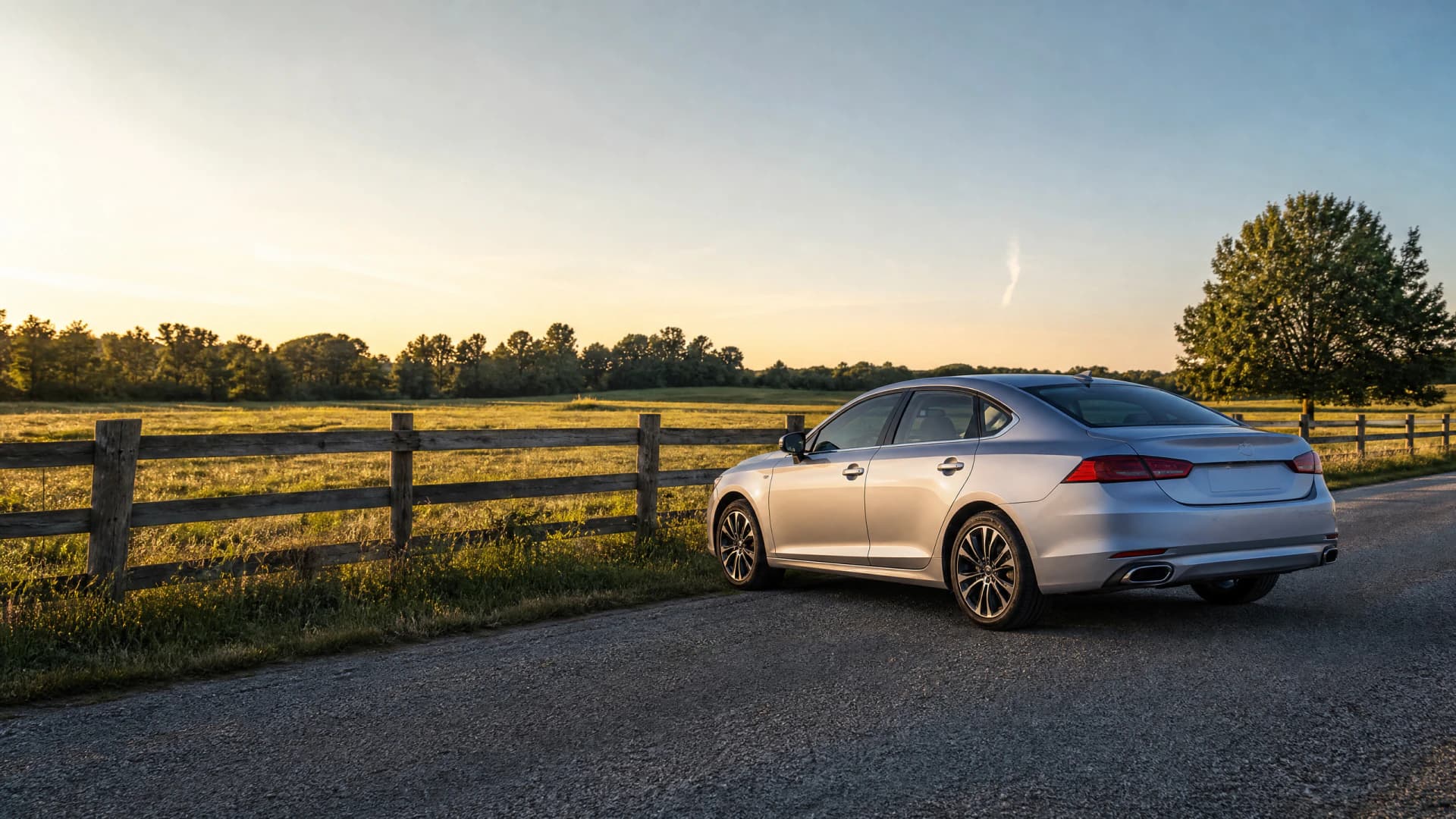
Vermont allows voluntary surrender of your driver's license at any DMV office without requiring a medical explanation or formal review. You retain a state-issued non-driver photo ID for identification purposes, and your driving record is closed without adding any adverse notation.
This matters for insurance in a way most senior drivers do not anticipate. If you surrender your license before a claim or violation appears on your record, your household policy continues under your spouse or co-resident driver without the rate penalty that follows an at-fault accident. Many carriers offer excluded driver status, which removes you from coverage entirely and reduces the household premium by 10–25%, depending on the insurer and your vehicle count.
If you wait until after an accident to stop driving, the claim remains on your record for three years, the rate increase applies immediately, and your household pays the elevated premium even after you are no longer driving. Timing is the variable that determines whether you preserve a clean record or lock in a multi-year surcharge. Vermont DMV does not penalize voluntary surrender, and reinstatement is possible if your condition stabilizes, though it requires a medical clearance review at that point.
Medical Payments Coverage and Medicare: What Applies After an Accident
Vermont does not require medical payments coverage, but it is included as an optional add-on on most policies, typically in $1,000 to $5,000 increments. This coverage pays medical bills for you and your passengers after an accident regardless of fault, and it applies before your health insurance.
For senior drivers on Medicare, medical payments coverage acts as a gap filler. Medicare Part B covers accident-related injuries, but it does not cover the immediate costs at the accident scene, ambulance transport in some cases, or co-pays and deductibles that can total $1,000 to $3,000 before Medicare begins paying. Medical payments coverage reimburses those out-of-pocket costs directly.
If Parkinson's symptoms increase your likelihood of a single-vehicle accident — such as striking a curb, guardrail, or fixed object due to delayed reaction time — medical payments coverage becomes more cost-justified than it is for drivers with no elevated risk factors. The coverage typically costs $15 to $40 annually per $1,000 of coverage. A $2,000 limit adds roughly $30 to $80 per year to your premium and covers the Medicare gaps that cause financial strain for drivers on fixed retirement income.

See What Drivers Over 65 Are Paying Now
See If You Qualify for Discounts
When Full Coverage No Longer Makes Financial Sense on a Paid-Off Vehicle
Comprehensive and collision coverage pay to repair or replace your vehicle after an accident or non-collision event, minus your deductible. If your vehicle is paid off and worth less than $5,000, the annual cost of full coverage often exceeds the potential payout after a total loss.
For senior drivers with Parkinson's, this calculation changes as driving frequency decreases. If you drive fewer than 3,000 miles annually — typical for retirees no longer commuting — and your vehicle is worth $4,000, paying $600 to $900 per year for collision and comprehensive coverage means you recover your premium cost only if you total the vehicle within five years. Most senior drivers in this position are better served by liability-only coverage, banking the premium savings, and self-insuring the vehicle replacement cost.
Vermont requires liability coverage at minimums of 25/50/10, meaning $25,000 per person for bodily injury, $50,000 per accident, and $10,000 for property damage. Dropping collision and comprehensive does not reduce those requirements, but it does cut your premium by 40–60% in most cases. If your vehicle is worth less than ten times your annual full coverage premium, the math favors dropping physical damage coverage and reallocating that money to higher liability limits or medical payments.

How to Report Reduced Mileage and Qualify for Low-Mileage Discounts
If Parkinson's symptoms lead you to reduce your driving to medical appointments, errands within a few miles of home, and occasional family visits, you likely qualify for a low-mileage discount. Vermont carriers typically apply this discount at thresholds of 7,500 miles per year or fewer, with deeper discounts at 5,000 miles and under.
The discount ranges from 5% to 15% depending on the carrier and your reported mileage. You must contact your insurer directly to request the adjustment — it is not applied automatically at renewal, even if your odometer reading suggests reduced use. Some carriers require an odometer photo or annual mileage verification, while others apply the discount based on your stated estimate and verify periodically.
If you previously drove 12,000 miles per year commuting and now drive 4,000 miles annually, the low-mileage discount can offset 10–15% of your base premium. Combined with mature driver course discounts and excluded driver status for a non-driving spouse, total savings often reach 20–30% compared to your pre-reduction premium. Most senior drivers leave this discount unclaimed because they do not realize reduced mileage must be reported to trigger the rate adjustment.
Mature Driver Course Discounts in Vermont: Eligibility and Savings
Vermont does not mandate that carriers offer mature driver course discounts, but most major insurers provide them voluntarily. The discount applies to drivers aged 55 and older who complete an approved defensive driving course, typically offered by AARP or AAA, and ranges from 5% to 10% for three years after course completion.
The course costs $20 to $30 for AARP members and can be completed online in four to six hours. If your current premium is $1,200 annually, a 10% discount saves $120 per year, recovering the course cost in the first billing cycle. The discount renews if you retake the course every three years.
For senior drivers with Parkinson's, the course content includes modules on compensating for reduced reaction time, managing complex intersections, and recognizing when driving conditions exceed your current ability. These are the same decision frameworks neurologists recommend, reframed as defensive driving strategies. Completing the course provides both the insurance discount and a structured self-assessment that many senior drivers find more useful than generalized medical advice about driving cessation.
Frequently Asked Questions
Can my insurance company require a medical exam if I have Parkinson's disease?
No. Vermont carriers cannot require a medical exam based solely on age or a disclosed diagnosis. They can request a DMV medical review if your driving record shows a pattern of accidents or violations, but the review is initiated by the state, not the insurer. Your rates are determined by your driving record and claims history, not your medical file.
What happens to my car insurance if I stop driving but keep my vehicle?
If you surrender your license or stop driving voluntarily, you can request excluded driver status on your household policy. This removes you from coverage, which typically reduces the premium by 10–25%. Your vehicle remains insured under another household driver, or you can maintain comprehensive-only coverage for fire, theft, and weather damage while parked. Most carriers require proof of license surrender or a signed excluded driver form.
How long does a Parkinson's-related accident stay on my insurance record in Vermont?
At-fault accidents remain on your motor vehicle record and insurance history for three years in Vermont, regardless of the underlying cause. Carriers do not classify accidents by medical condition — they apply surcharges based on fault determination and claim payout. The rate increase typically lasts the full three-year period unless you switch carriers, and even then, the accident appears during underwriting.
Do I have to tell my insurance company about a Parkinson's diagnosis?
No. Vermont does not require you to disclose medical diagnoses to your insurer unless the condition has already resulted in a license suspension or restriction imposed by the DMV. Voluntary disclosure does not reduce your rates or provide coverage benefits, and it may complicate underwriting if you later apply for a new policy. Your legal obligation is to maintain a valid license and report accidents or violations as required by your policy terms.
Can I get insurance if my Vermont license is restricted due to a medical condition?
Yes. If the DMV imposes restrictions such as daylight-only driving, radius limits, or required adaptive equipment after a medical review, you remain insurable under standard policies. You must disclose the restrictions to your carrier, and some insurers apply a small surcharge or require proof of compliance with the restriction terms. Rates are based on your restricted driving profile, not the underlying diagnosis.
Related Articles

Parkinson's & Driving in CT: License & Rate Impact
4/29/2026

Parkinson's & Driving in VA: Reporting, Rates, Coverage
4/29/2026
Parkinson's & Driving in WV: License & Insurance Rules
4/29/2026

Parkinson's & Driving in Idaho: Medical Reporting Rules
4/29/2026

Parkinson's & Driving in NH: Insurance Impact for Seniors
4/29/2026

Parkinson's & Driving in MA: Medical Reporting Rules
4/29/2026