Parkinson's Diagnosis and Driving in Virginia: What Changes Now
Free to compare
Does Your Doctor Report a Parkinson's Diagnosis to the Virginia DMV?
No. Virginia does not require physicians to report a Parkinson's diagnosis to the Department of Motor Vehicles. Medical reporting in Virginia is voluntary, not mandatory, which means your doctor will not automatically notify the state when you receive a diagnosis.
This places control in your hands — or in the hands of family members who may file a request for re-examination if they believe your driving has become unsafe. The DMV can also initiate a review based on law enforcement reports, accident patterns, or self-disclosure on a license renewal form.
If you do not disclose the diagnosis and do not trigger a review through another pathway, you can legally continue driving in Virginia until your next standard renewal cycle. Most senior drivers renew every eight years until age 75, then every five years, with vision testing required at in-person renewals but no automatic medical screening for neurological conditions.
What Happens If the DMV Does Learn About Your Diagnosis?
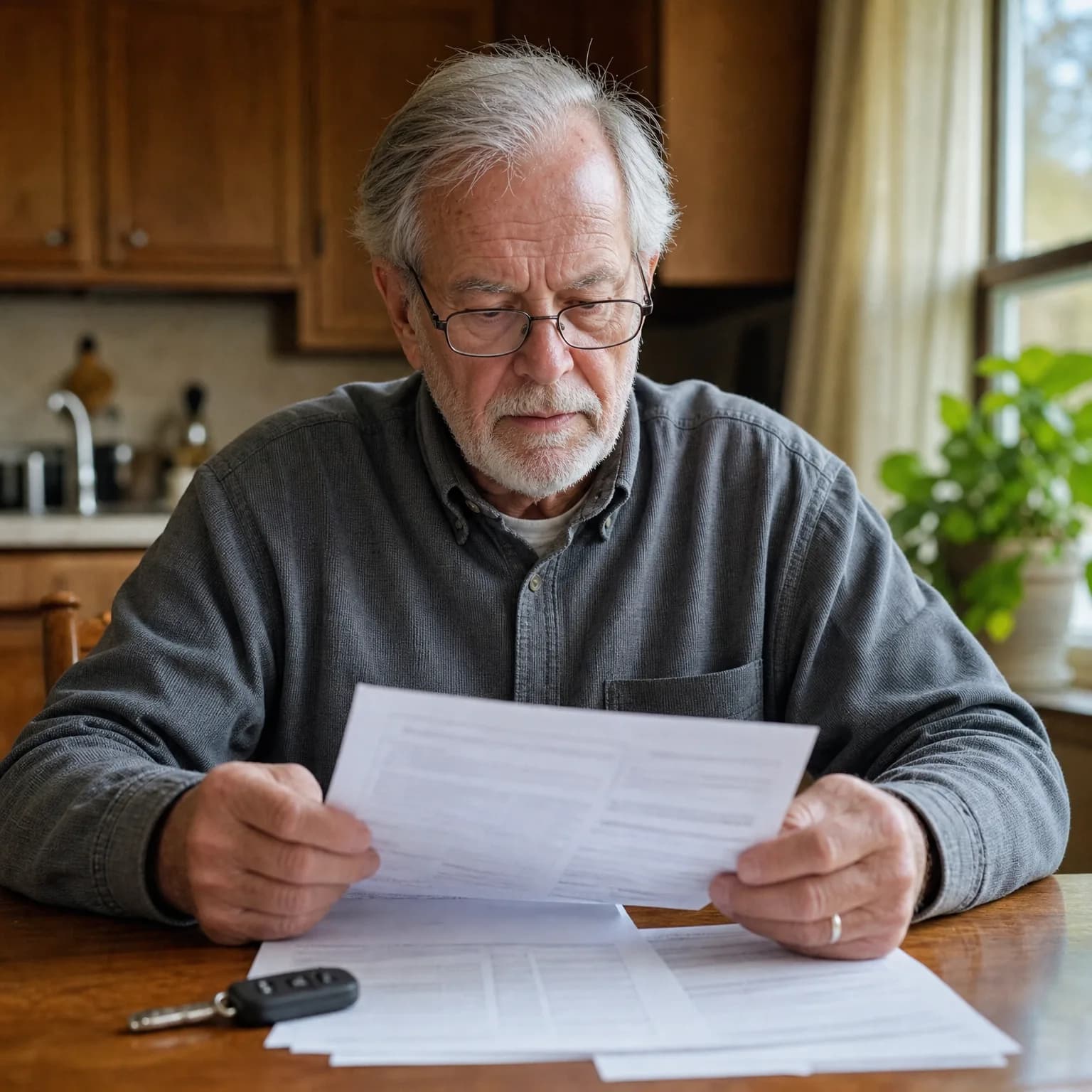
If the Virginia DMV receives information about your Parkinson's diagnosis — whether from a family request, an accident report, or your own disclosure — it can require you to submit a Medical Report Form completed by your treating physician. The form asks your doctor to assess whether your condition affects your ability to operate a vehicle safely, including questions about tremor severity, medication side effects, and cognitive function.
The DMV reviews the form and determines whether to impose restrictions (daytime-only driving, radius limits, required adaptive equipment), require a road test, or suspend your license. Mild Parkinson's with well-controlled symptoms and no cognitive impairment typically does not result in automatic suspension. Advanced symptoms, unpredictable medication cycles, or documented cognitive decline can lead to immediate restrictions or revocation.
You have the right to appeal any restriction or suspension through the Virginia DMV's medical review process. Most appeals require updated physician documentation and may include an on-road evaluation administered by a certified driving rehabilitation specialist.


How Does a Parkinson's Diagnosis Affect Your Auto Insurance Rates in Virginia?
Carriers in Virginia do not automatically receive notification of a Parkinson's diagnosis. Your rates will not change unless you disclose the condition to your insurer or file a claim that reveals the diagnosis. Disclosure is not legally required unless the carrier asks a direct health question on your application or renewal form, which most standard auto policies do not include.
If you do disclose, the carrier evaluates the severity of your condition, your driving record, and whether your physician has imposed any restrictions. Mild Parkinson's with no accidents and a clean record may result in no rate change. Moderate to severe symptoms, medication adjustments that affect alertness, or a recent accident can trigger a rate increase of 15–35% depending on the carrier's underwriting guidelines for medical conditions.
Some carriers will decline to renew a policy if the diagnosis includes documented cognitive impairment or if the state has imposed significant restrictions. If you are non-renewed, you may need to seek coverage through Virginia's assigned risk plan, which typically costs 40–80% more than standard market rates for drivers over 65.
Should You Reduce Coverage or Mileage After a Parkinson's Diagnosis?
Many senior drivers with early-stage Parkinson's voluntarily reduce their driving before any formal restrictions take effect. If you drive fewer than 5,000 miles per year — a common threshold for retirees who no longer commute — you may qualify for a low-mileage discount of 5–15% with most Virginia carriers. Some insurers offer usage-based programs that track actual mileage through a mobile app or plug-in device, which can yield higher discounts if your annual mileage drops significantly.
If you own your vehicle outright and drive infrequently, dropping collision and comprehensive coverage becomes a reasonable option. A paid-off 2015 sedan worth $8,000 with a $1,000 deductible yields a maximum claim payout of $7,000, but collision and comprehensive premiums for a senior driver in Virginia typically run $600–$900 annually. If you are driving fewer than 2,000 miles per year and your vehicle value continues to depreciate, you are effectively paying 8–12% of the car's value annually to insure against total loss.
Keep liability coverage at or above Virginia's minimum requirements (25/50/20) even if you reduce or eliminate physical damage coverage. Liability protects your assets in an at-fault accident, and that exposure does not decrease just because you drive less. Many senior drivers on fixed incomes increase liability limits to 100/300/100 for $15–$30 more per month, which provides meaningful asset protection without the cost burden of full coverage on an older vehicle.

See What Drivers Over 65 Are Paying Now
See If You Qualify for Discounts
What If You Stop Driving Entirely? Can You Pause or Cancel Your Policy?
If you decide to stop driving but want to keep your vehicle registered and insured — for example, if a family member will drive it occasionally or you are unsure whether you will resume driving — you can reduce your policy to comprehensive-only coverage, sometimes called storage coverage. This maintains coverage for theft, vandalism, fire, and weather damage while eliminating liability and collision. It costs 60–80% less than a full policy and keeps your insurance history continuous, which matters if you later decide to resume driving or sell the vehicle.
If you cancel your policy entirely and let your registration lapse, you will face a lapse in coverage history. Virginia insurers can charge higher rates for drivers who have gone more than 30 days without continuous coverage, even if the lapse was due to not driving. When you restart coverage after a gap of several months or years, expect to pay 10–25% more than you would have with continuous storage coverage.
If you plan to stop driving permanently, surrendering your license to the DMV can prevent family members or the state from initiating future re-examinations, but it also closes the door on resuming driving without going through the full application process again. Most senior drivers with early-stage Parkinson's keep their license active and maintain storage coverage until they are certain they will not return to the wheel.

Do Mature Driver Courses Still Apply After a Parkinson's Diagnosis?
Virginia does not mandate mature driver course discounts, but most carriers operating in the state offer them voluntarily. The discount typically ranges from 5–10% and applies for three years after course completion. If you complete an approved course before your diagnosis or restrictions take effect, the discount remains valid through the end of the three-year period unless your policy is non-renewed for other reasons.
Some carriers will not allow you to enroll in a mature driver course if you have already disclosed a neurological condition or if the state has imposed driving restrictions. Check with your insurer before registering for a course — the discount is not automatic, and some underwriting systems flag medical disclosures that disqualify you from defensive driving credits even if the course is state-approved.
If you are still driving without restrictions and have not yet disclosed your diagnosis, completing a mature driver course now locks in the discount for the next three years and may offset part of any future rate increase if your condition progresses and you later disclose it to your carrier.
How Does Medicare Interact With Auto Insurance After an Accident?
If you are injured in a car accident in Virginia and you have Medicare, your auto insurance medical payments coverage or personal injury protection pays first — before Medicare. Virginia is a tort state with optional medical payments coverage, which means you can add MedPay in amounts ranging from $1,000 to $10,000. MedPay covers your medical bills regardless of fault and coordinates with Medicare by paying first, which prevents Medicare from denying claims due to primary payer rules.
Without MedPay, Medicare can refuse to pay accident-related bills if it determines that auto insurance should have been the primary payer. This creates a gap if you are at fault and have no MedPay, or if the at-fault driver is uninsured and you lack uninsured motorist coverage. For senior drivers on Medicare, adding $5,000 in MedPay costs $40–$80 annually and eliminates coordination-of-benefits disputes that can delay treatment and reimbursement.
If your Parkinson's symptoms contributed to an accident — for example, a sudden tremor or medication timing issue — and the other party files a claim against your liability coverage, your insurer will pay the claim up to your policy limits. Your own Medicare and MedPay cover your injuries. Parkinson's is not considered an exclusion under standard auto policies, so your coverage remains valid even if the diagnosis played a role in the accident.
Frequently Asked Questions
Can my family request the DMV re-examine me after a Parkinson's diagnosis?
Yes. Any family member, law enforcement officer, or physician can submit a Request for Driver Re-examination to the Virginia DMV if they believe your Parkinson's symptoms have made driving unsafe. The DMV will mail you a Medical Report Form to be completed by your doctor, and you may be required to take a road test or accept restrictions based on the findings.
Will my insurance company find out about my Parkinson's diagnosis?
Not automatically. Carriers do not receive DMV medical records or diagnoses unless you disclose the condition, file a claim that reveals it, or the state imposes a restriction that appears on your driving record. Most standard auto policies do not ask health questions on renewal forms, so the diagnosis remains private unless you choose to report it.
What happens to my rates if I voluntarily stop driving but keep my car?
You can reduce your policy to comprehensive-only coverage, which eliminates liability and collision but keeps the vehicle insured for theft, fire, and weather damage. This costs 60–80% less than full coverage and maintains continuous insurance history, which prevents lapse surcharges if you later resume driving or need to sell the vehicle.
Does surrendering my license affect my insurance rates if I later want to drive again?
If you surrender your Virginia driver's license, you will need to reapply from the beginning if you decide to drive again, including written and road tests. Insurers treat newly licensed drivers over 65 as higher risk, which can result in rates 15–30% higher than if you had kept your license active with storage coverage during the non-driving period.
Related Articles

Parkinson's & Driving in DC: Insurance Rate Impact
4/29/2026

Parkinson's & Driving in Vermont: License & Insurance
4/29/2026

Parkinson's and Driving in NY: DMV Rules for Seniors
4/29/2026

Parkinson's & Driving in PA: Medical Reporting Rules
4/29/2026

Parkinson's & Driving in FL: Reporting, Rates, Limits
4/29/2026

Parkinson's & Driving in MA: Medical Reporting Rules
4/29/2026