
Parkinson's, Driving, and Insurance in DC: What Seniors Must Know
Free to compare
Does Washington DC Require Doctors to Report Parkinson's Diagnoses to the DMV?
No. Washington DC does not mandate physician reporting of Parkinson's disease or other progressive medical conditions to the Department of Motor Vehicles. DC operates under a voluntary reporting framework, meaning your neurologist cannot report your diagnosis without your explicit consent, even if they believe your condition affects driving ability.
This places the responsibility on you as the driver. Under DC Code § 50-1401.01, you are legally required to self-report any medical condition that impairs your ability to operate a vehicle safely. Failure to disclose a known impairing condition creates liability exposure if you're involved in an accident—your insurer can deny coverage if they determine you knowingly withheld material health information.
The practical effect: your Parkinson's diagnosis itself won't trigger an automatic license review or restriction. However, any traffic violations, accidents, or observable driving impairments can prompt DMV intervention regardless of whether a medical condition is on file. If a law enforcement officer observes impaired driving and documents it in their report, the DMV can require a medical evaluation and driver assessment as a condition of license renewal.

Can Your Insurance Company Find Out About Your Parkinson's Diagnosis?
Your carrier won't receive direct notification from your doctor or the DC DMV, but they access your diagnosis through other channels. Most national carriers participate in prescription drug monitoring data exchanges and claims databases that flag Parkinson's medications—levodopa/carbidopa combinations, dopamine agonists, and MAO-B inhibitors appear in these systems within 30-60 days of your first fill.
Carriers also review Medicare claims data if you're enrolled. A neurologist visit coded with ICD-10 G20 (Parkinson's disease) becomes part of your claims history, which underwriters can access during renewal underwriting or after any claim you file. This doesn't mean automatic rate increases—it means the information is available if the carrier chooses to re-evaluate your risk profile.
The trigger most seniors miss: filing a claim, even a minor one, often prompts a full underwriting review. If your Parkinson's diagnosis appears in that review and you didn't disclose it on your original application, the carrier can rescind coverage retroactively or deny the current claim for material misrepresentation. Disclosure at renewal is the safest approach, even if the diagnosis hasn't affected your driving.


How Parkinson's Affects Auto Insurance Rates for DC Seniors
Rate impact varies by carrier and stage of diagnosis. If your driving record remains clean and you're still driving independently, many carriers apply no immediate surcharge for early-stage Parkinson's. The industry's actuarial models focus on observable risk—accidents, violations, and claim frequency—not diagnoses alone.
Rates typically increase 15-35% if you've had any at-fault accident or moving violation within 36 months of diagnosis disclosure. Carriers interpret the combination as higher future risk, even if the incident had no connection to your condition. This is where DC seniors lose money: most don't know that completing an approved mature driver course within 90 days of renewal can offset 5-15% of that increase, and the discount remains active for three years with most carriers.
If your neurologist recommends driving restrictions—daylight only, familiar routes, no highway driving—document those restrictions and follow them. Some carriers offer reduced-mileage or restricted-use discounts for drivers who self-limit, but you must request them explicitly. State Farm and Nationwide both offer usage-based programs that can cut premiums 10-25% if your annual mileage drops below 5,000 miles, common for retirees managing Parkinson's symptoms.
What Happens If DC DMV Requests a Medical Evaluation
The DMV's Medical Review Unit can require a driver evaluation at any age if they receive a report of unsafe driving, regardless of medical diagnosis. For Parkinson's patients, this most often follows a police report documenting erratic driving, a minor accident with witness statements describing confusion or delayed reaction, or a family member's direct report to the DMV.
You'll receive written notice requiring you to submit a Medical Report Form (DC DMV Form 731) completed by your treating neurologist within 30 days. Your doctor must assess your cognitive function, motor control, reaction time, and judgment as they relate to driving. The DMV may also require an on-road driving assessment administered by an occupational therapist certified in driver rehabilitation.
If restrictions are imposed—limited geographic radius, daylight-only driving, no passengers—you must inform your insurance carrier within 10 days under most policy terms. Failure to report restrictions can void coverage. However, these restrictions often qualify you for lower rates if you're willing to accept a restricted-use policy, which some carriers price 20-40% below standard coverage for the same liability limits.

See What Drivers Over 65 Are Paying Now
See If You Qualify for Discounts
Coverage Adjustments That Make Sense for Seniors with Parkinson's
Most DC seniors with Parkinson's are driving paid-off vehicles 6-12 years old and questioning whether full coverage remains cost-justified. If your vehicle's market value is below $4,000 and your collision/comprehensive premiums exceed $600 annually, you're paying more in coverage over three years than you'd recover in a total loss claim after deductible.
Medical payments coverage becomes more valuable, not less. DC is a fault state, meaning the at-fault driver's liability coverage pays your medical bills after an accident. But if you're injured in a single-vehicle accident or hit by an uninsured driver, your medical payments coverage (typically $5,000-$10,000) pays immediately without requiring fault determination. For seniors managing Parkinson's-related medical costs, this provides faster reimbursement than waiting for Medicare coordination of benefits.
Uninsured motorist coverage is non-negotiable in DC, where approximately 12% of drivers carry no insurance despite the mandate. If an uninsured driver causes an accident that exacerbates your Parkinson's symptoms or creates new mobility limitations, your uninsured motorist bodily injury coverage is your only financial recovery path. Minimum DC limits are $25,000/$50,000, but seniors with assets to protect should carry $100,000/$300,000 or higher.
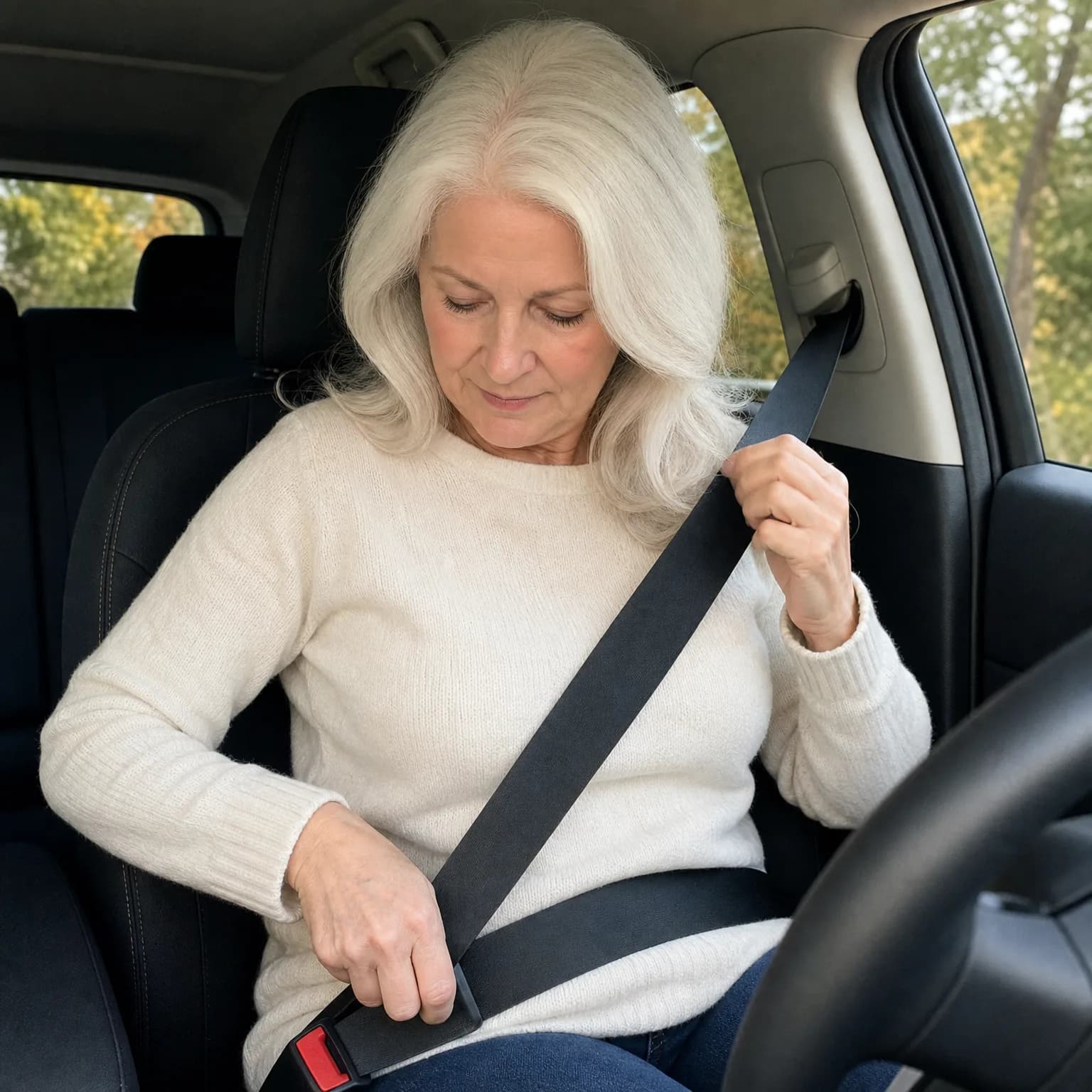
Mature Driver Course Discounts DC Seniors Don't Claim
DC mandates that all carriers licensed in the district offer a mature driver discount to any policyholder who completes an approved driver improvement course. The discount ranges from 5-15% depending on carrier, and it applies for three years from course completion. AARP's Smart Driver course (online or in-person), AAA's Roadwise Driver program, and the National Safety Council's Defensive Driving Course all qualify.
The missed opportunity: fewer than 30% of DC seniors who qualify actually claim this discount, according to DC Department of Insurance and Securities Regulation data. Most assume their carrier will apply it automatically at renewal. They won't. You must submit your course completion certificate and explicitly request the discount in writing. If you completed the course mid-policy term, most carriers will apply the discount retroactively to your last renewal date if you request it within 60 days of completion.
For a senior paying $1,200 annually, a 10% mature driver discount saves $360 over the three-year active period. If you're managing Parkinson's and concerned about rate increases, this discount creates immediate offset and signals to underwriters that you're actively maintaining driving skills despite your diagnosis.
When to Stop Driving and How It Affects Your Policy
The decision to stop driving is medical, personal, and financial. If your neurologist recommends you stop and you continue driving, you create legal liability that your insurance policy likely won't cover. Most policies exclude coverage for accidents that occur while the insured is driving against explicit medical advice.
If you stop driving but want to maintain your license and insurance for occasional use—family emergencies, daytime errands—most carriers offer named-driver exclusions or stored-vehicle policies. You remain listed on the policy but designate another household member as the primary driver, reducing your premium 40-60% while keeping the vehicle insured and your license current.
Surrendering your license ends your insurance requirement, but it also ends your insurability. If your Parkinson's symptoms improve or stabilize and you want to resume driving in 12-24 months, you'll re-enter the market as a lapsed driver, which triggers high-risk surcharges of 50-100% at most carriers. The safer path: maintain minimum liability coverage on a stored-vehicle or named-driver policy even if you're not actively driving. This preserves your continuous coverage history and avoids the lapsed-driver penalty if you return to the road.
Frequently Asked Questions
Will my auto insurance company drop me if I disclose my Parkinson's diagnosis?
No, not based on diagnosis alone. DC prohibits carriers from canceling or refusing to renew a policy solely because of a medical condition if your driving record remains clean. Rate adjustments are permitted, but cancellation requires documented driving impairment—accidents, violations, or failed driver evaluations.
Does Medicare cover costs if I'm injured in a car accident?
Medicare pays secondary to auto insurance. Your medical payments coverage or the at-fault driver's liability coverage pays first. Medicare covers remaining costs after those limits are exhausted, but reimbursement can take 60-120 days. Medical payments coverage provides faster access to funds for seniors managing ongoing Parkinson's treatment costs.
Can my adult children report my diagnosis to the DMV without my permission?
Yes. DC allows family members to submit confidential reports to the DMV's Medical Review Unit if they believe a driver poses a safety risk. The DMV will require a medical evaluation, but your diagnosis alone won't trigger automatic license suspension—only documented driving impairment will.
How long does the mature driver discount last in DC?
Three years from course completion. You must renew the course and resubmit certification every three years to maintain the discount. Most carriers require 30-60 days advance notice before the discount expires, but automatic renewal is rare—you must request continuation explicitly.
Related Articles

Parkinson's and Driving in WA: Reporting & Insurance
4/29/2026
Parkinson's & Driving in VA: Reporting, Rates, Coverage
4/29/2026
Parkinson's & Driving in PA: Medical Reporting Rules
4/29/2026
Parkinson's & Driving in Colorado: License Impact
4/29/2026

Parkinson's and Driving in CA: DMV Reporting Rules
4/29/2026

Parkinson's and Driving in NY: DMV Rules for Seniors
4/29/2026