
Parkinson's and Driving in Washington: What You Must Report
Free to compare
Does Washington require you to report a Parkinson's diagnosis to the DMV?
Washington does not require automatic reporting of a Parkinson's diagnosis to the Department of Licensing. You must report only if your physician determines the condition impairs your ability to operate a vehicle safely, or if you experience symptoms that affect reaction time, motor control, or judgment while driving.
The state uses a physician-initiated reporting system. Your doctor can submit a confidential Driver Fitness Determination to the DOL if they believe your Parkinson's symptoms create unsafe driving conditions. The DOL then reviews the report and may require a driving skills test, restrict your license to certain hours or locations, or in rare cases suspend driving privileges until symptoms are managed.
This places the reporting decision largely in clinical hands. Most drivers with early-stage Parkinson's whose symptoms are well-controlled with medication continue driving without DOL involvement. The risk surfaces when symptoms progress or medication effectiveness fluctuates during the day.
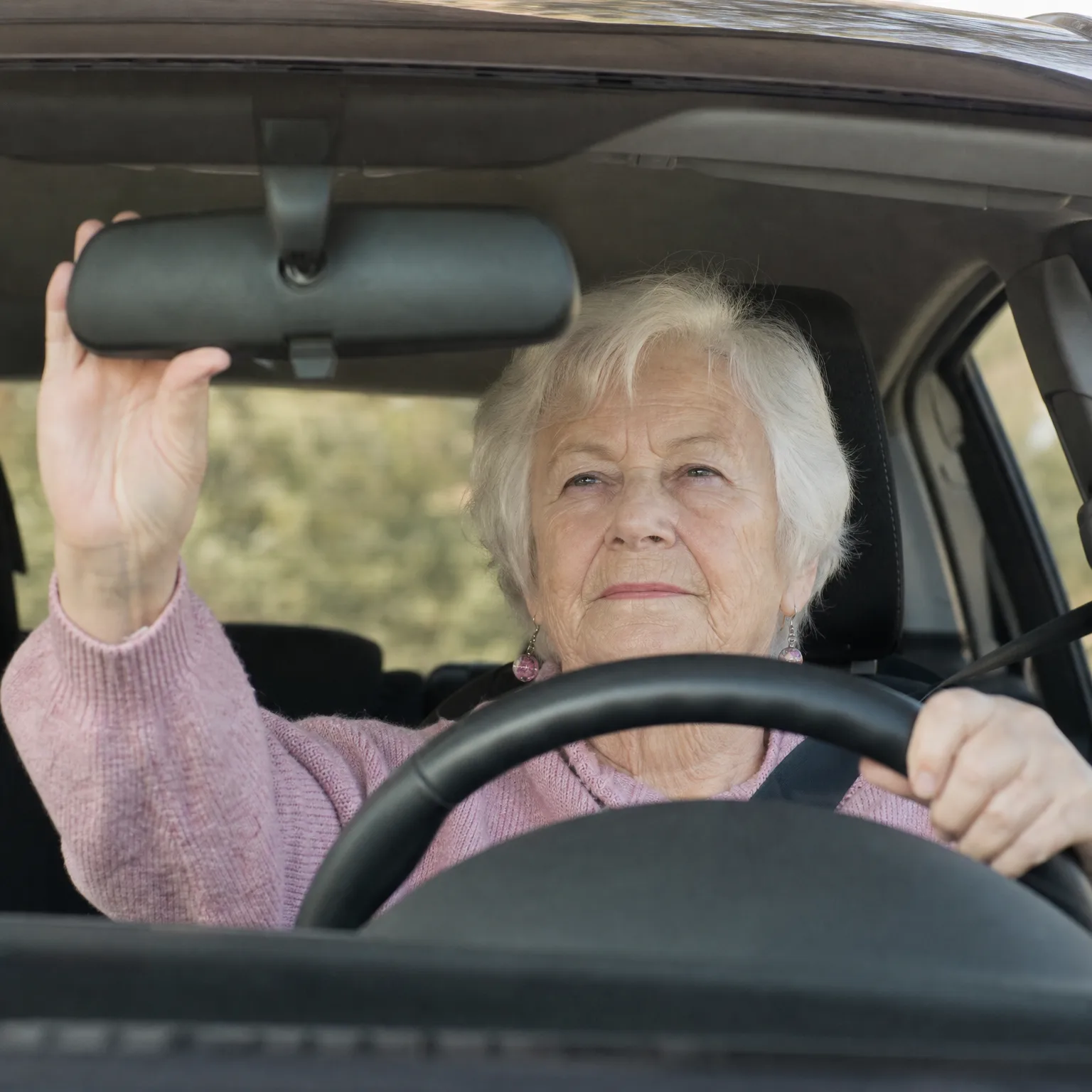
How insurance companies discover Parkinson's diagnosis without your direct disclosure
Carriers rarely learn about Parkinson's from driver self-reporting. They discover the condition through medical payments claims, prescription drug monitoring programs available to underwriting departments, or medical records requests following any at-fault accident.
If you file a claim for medical treatment after an accident and the hospital records note Parkinson's as a pre-existing condition, that diagnosis becomes part of your claim file. Underwriting reviews claim files at renewal. A Parkinson's notation triggers a formal medical inquiry, even if the accident itself was minor and the diagnosis didn't contribute to the collision.
Some carriers subscribe to prescription monitoring databases that flag medications commonly prescribed for Parkinson's management—carbidopa-levodopa, pramipexole, ropinirole. If your name appears in these databases and you haven't disclosed the condition on your application, the carrier may treat it as a material misrepresentation and either increase your premium or request a physician's statement confirming your fitness to drive.

What rate increase should you expect after your carrier learns of the diagnosis?
Washington drivers with disclosed Parkinson's typically see premium increases of 15–35% at the next renewal cycle, depending on disease stage and whether any license restrictions are in place. Estimates based on available industry data; individual rates vary by driving history, vehicle, coverage selections, and location.
Carriers price the diagnosis as an elevated risk factor similar to sleep apnea or epilepsy. The increase applies even if you've had no accidents, no violations, and your physician has confirmed you're safe to drive. The actuarial model treats the diagnosis itself as predictive of future claim frequency, regardless of your individual symptom severity.
Drivers with restrictions noted on their license—such as "daytime driving only" or "must complete annual medical review"—face steeper increases, often 40–60% above standard rates. Some carriers non-renew policies entirely once restrictions appear, forcing the driver into the non-standard market where premiums can double.
Should you proactively disclose the diagnosis to your insurance company?
Proactive disclosure carries both legal and financial consequences you should weigh carefully. Washington law does not require you to notify your carrier of a Parkinson's diagnosis unless a policy application or renewal form explicitly asks about neurological conditions. Most standard applications do not ask this question directly.
If you disclose voluntarily, your premium increases immediately at the next renewal. If you withhold the information and the carrier discovers it later through a claim or database check, they may retroactively adjust your premium or deny a future claim on the grounds that you failed to disclose a material fact. The key question is whether your application asked the question in the first place.
Review your most recent application or renewal documents. If the form asked "Do you have any medical condition that could impair your ability to operate a vehicle?" and you answered no after your diagnosis, that creates a misrepresentation issue. If the form asked only about violations, accidents, and other drivers in the household, you had no duty to disclose the diagnosis unsolicited.
See What Drivers Over 65 Are Paying Now
See If You Qualify for Discounts
How Medicare and private health insurance interact with auto medical payments coverage after an accident
Washington is a fault-based state, meaning the at-fault driver's liability coverage pays medical bills for injured parties. If you cause an accident, your liability coverage pays the other driver's medical costs, and your own injuries are covered by your personal injury protection or medical payments coverage if you purchased it.
Medicare does not coordinate with auto insurance the way it does with employer health plans. If you're injured in an accident you didn't cause, the at-fault driver's liability coverage is primary and must pay before Medicare. If you carry medical payments coverage and you're injured in an accident you caused, that coverage pays first, up to your policy limit, and Medicare pays remaining costs.
Medicare has subrogation rights. If you receive a liability settlement that includes compensation for medical bills Medicare already paid, Medicare can demand repayment. This complicates settlement negotiations for senior drivers involved in accidents. Medical payments coverage on your own policy typically pays without subrogation complications, which makes it valuable supplemental coverage even if you have Medicare.

What coverage adjustments make sense as Parkinson's symptoms change
Most senior drivers with Parkinson's own paid-off vehicles and no longer commute daily. Full coverage may no longer be cost-justified if your vehicle's actual cash value has dropped below $4,000 and your comprehensive and collision premiums exceed 10% of that value annually.
Drop collision and comprehensive coverage once replacement cost minus deductible leaves you with less than $2,000 in potential claim payout. Keep liability coverage at or above Washington's minimum of 25/50/10, and consider increasing it to 100/300/100 if you own a home or have retirement assets. A single at-fault accident can expose those assets to judgment if your liability limit is too low.
Medical payments coverage becomes more valuable, not less, as health conditions develop. A $5,000 medical payments rider typically costs $40–$80 per year and pays your accident-related medical bills immediately without subrogation, deductible, or copay. This coverage bridges the gap between the accident and the settlement of any liability claim you file against the other driver.
How to prepare for a DOL fitness determination review if your physician files a report
If your physician submits a Driver Fitness Determination form, the Washington DOL mails you a notice requiring either a driving skills test, a medical update from your physician, or both. You have 30 days to respond. Missing that deadline results in automatic license suspension.
The driving skills test is the standard road test, not a specialized medical assessment. You'll be evaluated on lane control, speed management, signaling, parking, and response to traffic conditions. The examiner is not a medical professional and will not assess your Parkinson's symptoms directly—they assess only your demonstrated driving ability during the 20-minute test.
If you pass the test but your physician's report indicates progressive symptoms, the DOL may impose restrictions: daytime driving only, no freeway driving, annual retesting, or a requirement to submit updated physician reports every six months. You can drive under these restrictions, but your insurance premium will increase once the restrictions appear on your motor vehicle record.
Frequently Asked Questions
Can my insurance company cancel my policy after learning I have Parkinson's?
Washington law prohibits mid-term cancellation based solely on a medical diagnosis if you haven't had an at-fault accident or license suspension. Your carrier can non-renew your policy at the end of the term, giving you 45 days' notice, or increase your premium at renewal. Non-renewal forces you into the non-standard market where premiums are typically 50–100% higher than standard rates.
Do I need to retake a driving test if I'm diagnosed with Parkinson's in Washington?
Washington does not require automatic retesting based on a Parkinson's diagnosis. You must retake the driving skills test only if your physician files a Driver Fitness Determination with the DOL stating that your symptoms may impair safe driving, or if the DOL receives a report from law enforcement or a family member raising safety concerns. Passing the test allows you to keep your license, though restrictions may be added.
Will my adult children be notified if the DOL restricts my license?
No. The Washington DOL does not notify family members of license restrictions or medical reviews unless you authorize that disclosure in writing. The notice goes only to the address on file with the DOL. If your adult children want to stay informed, you must choose to share DOL correspondence with them yourself.
Can I still get senior driver discounts if I have Parkinson's?
Yes. Washington carriers cannot deny mature driver course discounts or low-mileage program eligibility based solely on a medical diagnosis. If you complete an approved defensive driving course and your license remains unrestricted, the 5–10% mature driver discount applies. Low-mileage programs require telematics monitoring, which some drivers with Parkinson's prefer to avoid due to privacy concerns.
What happens to my insurance rates if I voluntarily stop driving?
If you stop driving and surrender your license voluntarily, most carriers remove you from the policy entirely rather than listing you as an excluded driver. This eliminates your portion of the premium. If you keep your license but store your vehicle and stop driving temporarily, you can switch to storage coverage with liability-only protection, reducing your premium by 60–80% while maintaining continuous coverage history.
Related Articles

Parkinson's & Driving in DC: Insurance Rate Impact
4/29/2026
Parkinson's & Driving in Oregon: Reporting & Insurance
4/29/2026
Parkinson's Diagnosis & Driving in Wisconsin for Seniors
4/29/2026
Parkinson's & Driving in Alaska: Reporting Rules
4/29/2026
Parkinson's & Driving in Idaho: Medical Reporting Rules
4/29/2026
Parkinson's & Driving in PA: Medical Reporting Rules
4/29/2026