
Renewing Your NJ License After a Stroke: Medical Review & Next Steps
Free to compare
What New Jersey Requires for License Renewal After a Stroke
New Jersey Motor Vehicle Commission requires a completed Medical Report Form (Form BA-49) signed by your treating physician before processing any license renewal or reinstatement following a stroke. Your doctor must certify you meet the state's functional ability standards: adequate vision, cognitive function, and motor control to operate a vehicle safely. The MVC medical review unit evaluates each case individually—there is no automatic denial based on stroke history alone.
You cannot renew online or by mail after a medical event requiring physician clearance. You must submit Form BA-49 and any supporting medical records to the MVC Medical Review Unit by mail or in person at a motor vehicle agency. Processing typically takes 4 to 8 weeks from the date MVC receives complete documentation, though complex cases requiring additional specialist evaluation can extend to 12 weeks.
If your stroke occurred within 6 months of your scheduled renewal date, New Jersey law permits you to drive on your current license until MVC completes its review, provided you submitted renewal paperwork before expiration and your physician has not explicitly restricted your driving. If your doctor advises against driving during recovery, that medical restriction supersedes the renewal grace period.

When You Must Notify Your Insurance Carrier
New Jersey insurance regulations require you to report any medical condition that results in license suspension or restriction within 30 days of receiving notice from MVC. A formal medical review that delays renewal does not automatically constitute suspension, but if MVC issues a temporary restriction or conditional license during the review period, that triggers the disclosure requirement.
Most carriers will not cancel your policy during an active medical review if you notify them proactively and provide documentation that you've submitted all required medical clearances to MVC. Failing to disclose a license restriction discovered later—at renewal or after a claim—gives the carrier grounds to deny coverage retroactively or cancel your policy for material misrepresentation.
The disclosure timeline matters more than many senior drivers realize. If you wait until your license is formally suspended to notify your insurer, you may face immediate non-renewal. If you disclose during the medical review process while your current license remains valid, most carriers will extend your policy on a month-to-month basis until MVC issues its decision, particularly if you have a long clean driving history.


How Medical Review Affects Your Current Auto Insurance Policy
Your auto insurance remains valid during MVC's medical review process as long as your current license has not expired or been formally suspended. Carriers cannot cancel a policy solely because you disclosed a pending medical review, but they can choose not to renew at your next policy term if the review extends beyond your renewal date.
If MVC restricts your license—for example, daylight driving only or within a 10-mile radius—you must report that restriction to your insurer immediately. Some carriers will maintain full coverage with a restriction endorsement; others will require you to adjust your policy to reflect limited use. A restricted license does not automatically increase your premium, but it changes your risk profile and may affect your eligibility for certain discounts.
If MVC suspends your license pending additional medical evaluation, most carriers will cancel your policy within 30 days unless you request non-owner coverage or explicitly suspend the policy yourself. Voluntary suspension preserves your continuous coverage history and avoids a lapse notation that increases rates significantly when you reinstate. If you own your vehicle outright and are not financing it, suspending rather than canceling keeps your rate classification intact.

See What Drivers Over 65 Are Paying Now
See If You Qualify for DiscountsWhat Happens If Your License Renewal Is Denied
New Jersey MVC denies approximately 12–18% of medical review cases involving stroke or neurological conditions, typically when the applicant cannot demonstrate adequate cognitive function, reaction time, or field of vision to meet state safety standards. If denied, you receive a written determination explaining the specific medical criteria you did not meet and your right to appeal within 20 days.
A license denial terminates your auto insurance eligibility for standard personal auto policies. You must notify your carrier within 10 days of the denial. Most insurers will cancel your policy effective the date of MVC's denial letter, and you will receive a prorated refund for unused premium. If you are financing or leasing your vehicle, your lender may require you to maintain comprehensive and collision coverage even without a valid license—check your loan agreement before canceling.
If you appeal the denial and MVC grants a hearing, your insurance situation depends on whether MVC issues a temporary conditional license during the appeal. If they do not, you cannot legally drive and should suspend your policy rather than cancel it outright. If you win your appeal and MVC reinstates your license, you can reactivate a suspended policy immediately; if you canceled, you must reapply as a new customer and will likely face higher rates.

How to Restart Coverage After Medical Clearance
Once MVC approves your license renewal following medical clearance, you have 30 days to reinstate or purchase new auto insurance before the state classifies you as an uninsured driver subject to surcharges. If you suspended your previous policy rather than canceling it, contact your carrier immediately with a copy of your renewed license—most will reactivate your policy within 24 to 48 hours at your previous rate.
If your previous carrier non-renewed your policy during the medical review period, you will need to shop for new coverage. Expect rate quotes 15–30% higher than your pre-suspension premium, even with a clean driving record, because the lapse in coverage signals higher risk to underwriters. New Jersey requires all carriers to offer coverage to licensed drivers, but they are not required to offer their best rates to applicants with recent lapses.
Before accepting the first quote, compare rates from at least three carriers and ask specifically about mature driver discounts, low-mileage programs, and defensive driving course credits. Many senior drivers returning from medical suspension drive significantly fewer miles than before their stroke and qualify for usage-based or low-mileage discounts that offset the lapse penalty. AARP and AAA both offer mature driver courses recognized by New Jersey insurers for premium reductions of 5–10%.
Whether You Should Adjust Your Coverage After Stroke Recovery
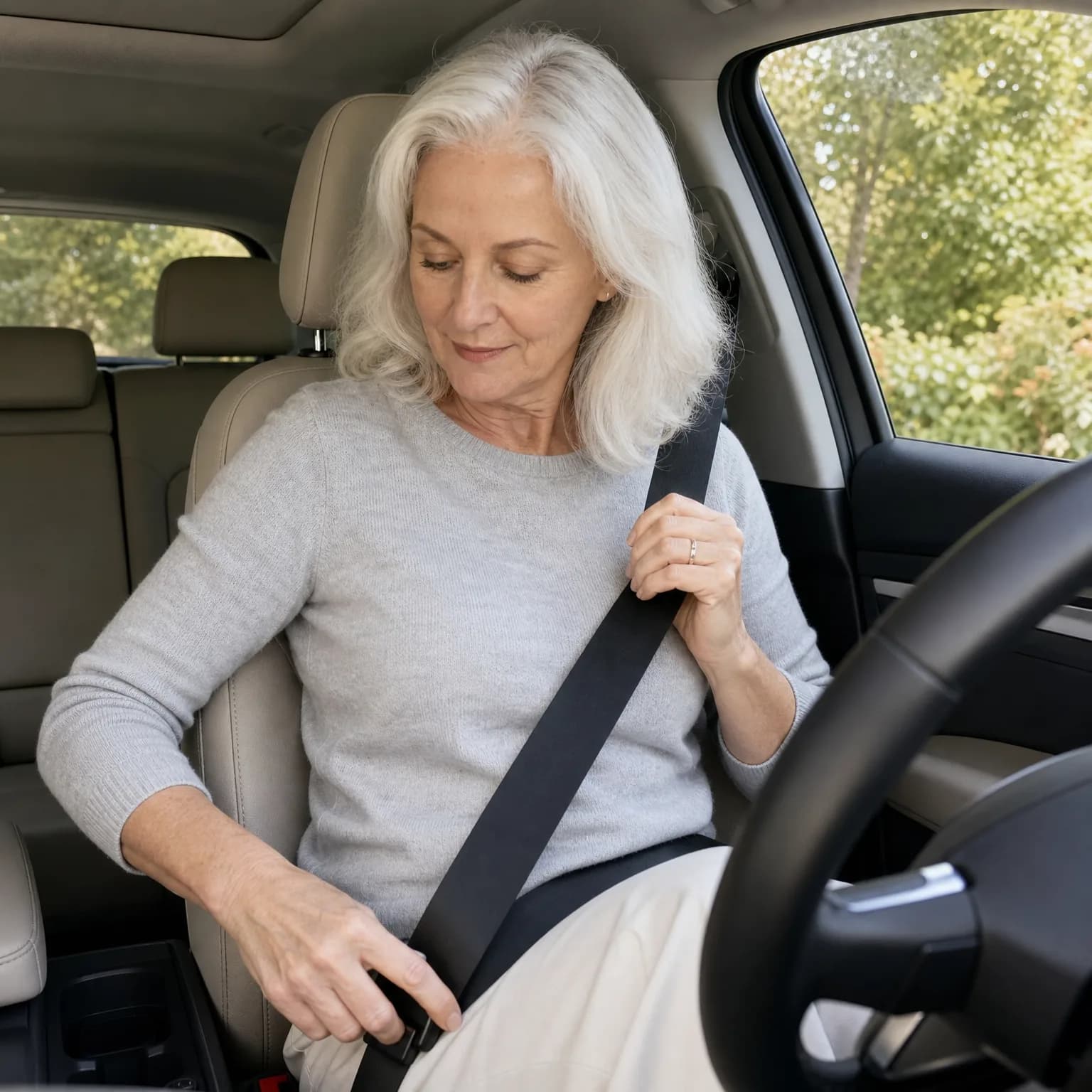
Many senior drivers who return to driving after stroke recovery reduce their annual mileage by 40–60%, often limiting trips to local errands, medical appointments, and occasional family visits. If your post-recovery driving pattern fits that profile, switching to a low-mileage or pay-per-mile policy can reduce your premium by $300 to $600 annually compared to standard coverage.
If you own your vehicle outright and its current value is under $5,000, dropping collision and comprehensive coverage may make financial sense—you would pay more in premiums over two to three years than the vehicle's replacement value. Keep liability, medical payments, and uninsured motorist coverage at or above New Jersey's minimum required limits: $15,000 per person and $30,000 per accident for bodily injury, and $5,000 for property damage. Most senior drivers carry higher liability limits to protect retirement assets.
Medical payments coverage becomes more important after a stroke, particularly if you are on Medicare. New Jersey's minimum PIP coverage ($15,000) coordinates with Medicare but pays first for accident-related injuries, preserving Medicare benefits and avoiding out-of-pocket costs for emergency treatment. If your health has changed significantly since your last policy review, increasing medical payments coverage to $25,000 or $50,000 adds $8 to $15 per month but eliminates gaps between PIP exhaustion and Medicare activation.
Frequently Asked Questions
Can I drive while waiting for New Jersey MVC to review my medical clearance after a stroke?
You can drive on your current valid New Jersey license while MVC reviews your medical documentation, provided your physician has not issued explicit driving restrictions and you submitted your renewal application before your license expired. If your doctor advises against driving during recovery, that medical restriction supersedes the MVC review grace period and you must stop driving immediately.
Will my car insurance rates go up after a stroke even if I get medical clearance?
Your rates will not increase solely because you had a stroke and obtained medical clearance to drive again. However, if your policy lapsed during the medical review period or your carrier non-renewed you, expect new quotes 15–30% higher than your previous premium due to the coverage gap. Maintaining continuous coverage by suspending rather than canceling your policy avoids this penalty.
Do I have to tell my insurance company that I had a stroke if MVC renewed my license?
You must disclose any license suspension or restriction resulting from your stroke within 30 days of receiving notice from MVC. If MVC renewed your license without restriction after medical review, you are not required to disclose the underlying medical condition to your insurer. However, if you were asked about medical events on your most recent policy application and the information has changed, you should update your carrier at renewal.
What type of car insurance do I need if New Jersey denies my license renewal after a stroke?
If MVC denies your license renewal, you cannot maintain a standard personal auto policy because you are not legally permitted to drive. If you own your vehicle and are making loan payments, your lender may require you to keep comprehensive and collision coverage even without a license. If you do not own the vehicle or it is paid off, you should cancel your policy to avoid paying for coverage you cannot use.
Related Articles

NM License Renewal After Stroke: Medical Review Process
4/29/2026

NY License Renewal After Stroke: Medical Review Steps
4/29/2026

VT License Renewal After Stroke: Medical Review Steps
4/29/2026
NC License Renewal After Stroke: Medical Review Guide
4/29/2026

Renewing Nebraska License After Stroke: Medical Review
4/29/2026

NH License Renewal After Stroke: Medical Review Steps
4/29/2026