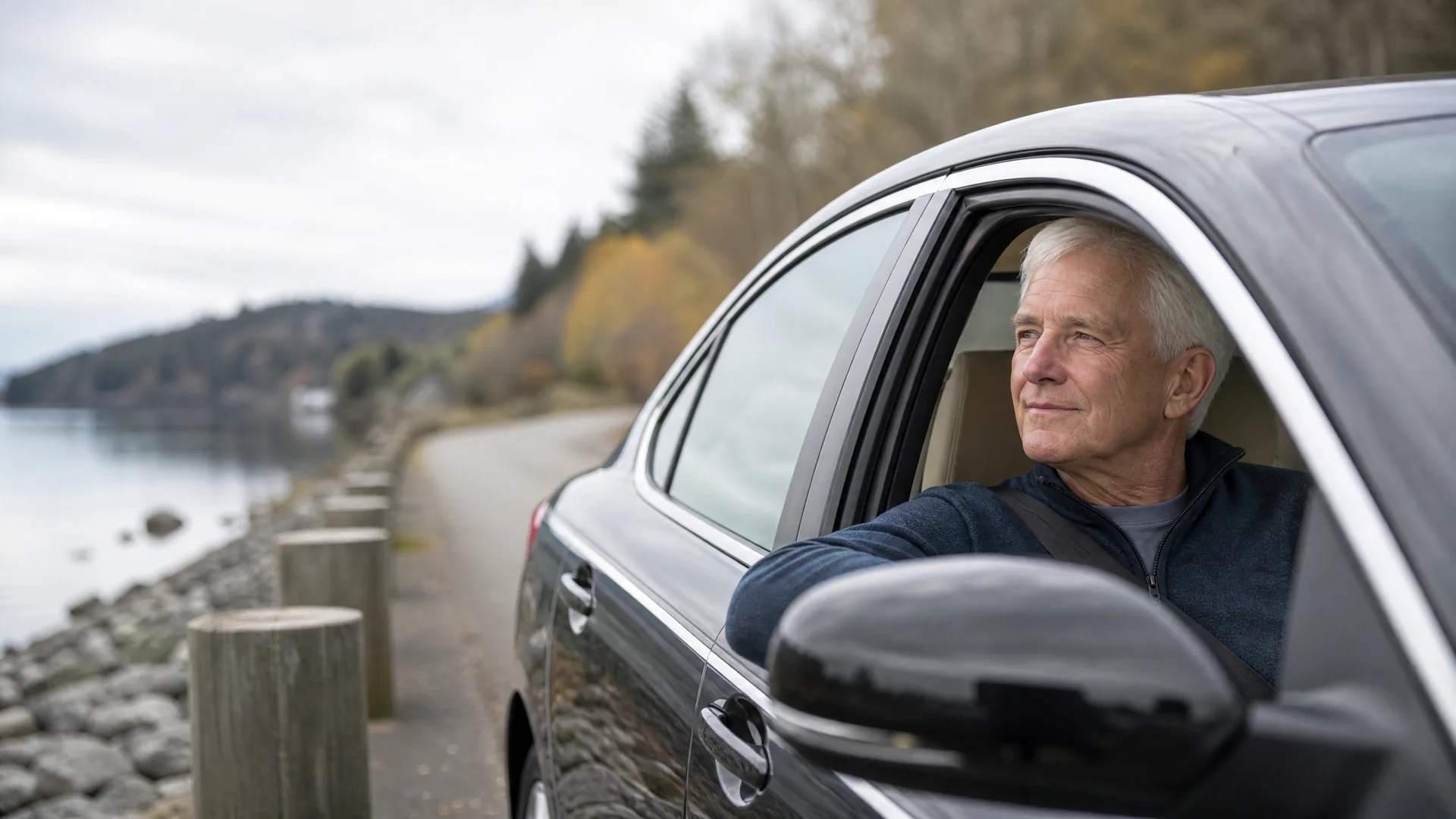
Wisconsin Seizure Disorder Rules for Senior Drivers
Free to compare
Wisconsin Requires a 3-Month Seizure-Free Period Before Driving Privileges Resume
Wisconsin law mandates a minimum 3-month seizure-free waiting period after a seizure disorder diagnosis or any seizure event before you can legally drive. This period begins from the date of the most recent seizure, not the date of diagnosis. Your treating physician must submit a completed Medical Report Form (MV3701) to the Wisconsin Department of Transportation certifying you have been seizure-free for the required period and that your condition is controlled through medication or other treatment.
The waiting period applies regardless of whether the seizure occurred while driving or at home. Wisconsin uses a physician-based reporting system rather than mandatory physician reporting to the DMV — your doctor does not automatically notify the state, but they must certify your fitness to drive before the DMV will clear you. If you had a provoked seizure caused by a known temporary condition (severe dehydration, medication reaction, or withdrawal), your physician may request a waiver or reduced waiting period, but the DMV makes the final determination.
During the 3-month waiting period, you cannot legally operate a vehicle in Wisconsin. If you are stopped or involved in an accident during this period, you face penalties for driving without medical clearance, and your insurance carrier will deny any claim related to that incident.

How Medical Certification Works and What Your Doctor Must Submit
Your treating physician must complete Wisconsin Form MV3701 (Medical Report for Driver Fitness) and submit it directly to the Wisconsin DMV. The form requires your doctor to certify the date of your last seizure, the type of seizure disorder, current medications, treatment compliance, and their professional opinion on your fitness to drive. The form also asks whether you have experienced any seizures in the past 12 months and whether your condition is controlled.
If your physician certifies you are seizure-free for 3 months and your condition is medically controlled, the DMV reviews the submission and issues clearance. This process typically takes 10 to 15 business days after the DMV receives the completed form. You cannot drive legally until you receive written clearance from the DMV, even if your doctor has already completed the form.
If your seizure disorder requires ongoing monitoring, Wisconsin may issue a restricted license requiring annual or biannual medical recertification. Your physician must submit updated MV3701 forms at the intervals specified by the DMV. Missing a recertification deadline results in automatic suspension of your driving privileges until you submit the required documentation.


Why You Must Notify Your Auto Insurance Carrier Within 30 Days
Most auto insurance policies in Wisconsin require you to notify your carrier of any medical condition that affects your ability to drive safely within 30 days of diagnosis or the seizure event. This notification requirement appears in the policy conditions section, not the coverage exclusions, and failure to comply allows the carrier to deny any future claim related to a seizure or medical event — even if the seizure was not the direct cause of the accident.
Carriers treat seizure disorder disclosure as a material change in risk. If you notify your carrier within the required 30-day window, they cannot cancel your policy mid-term based solely on the disclosure, but they can adjust your premium at renewal or decline to renew. If you fail to notify within 30 days and later file a claim, the carrier can argue you concealed a material fact and deny the claim entirely. This creates a narrow compliance window: you must notify your carrier during the 3-month waiting period when you are not legally driving.
Some carriers require a copy of the DMV medical clearance letter before they will reinstate full coverage. Others accept a physician's letter on office letterhead stating you have been cleared to drive. Confirm your carrier's specific documentation requirements when you make the initial notification to avoid delays when your DMV clearance is issued.

See What Drivers Over 65 Are Paying Now
See If You Qualify for DiscountsWhat Happens to Your Premium After Disclosure
Wisconsin does not prohibit carriers from adjusting premiums based on medical conditions that affect driving risk, but rate increases must be filed with the Wisconsin Office of the Commissioner of Insurance and applied consistently across similar risk profiles. Senior drivers who disclose a controlled seizure disorder typically see premium increases ranging from 15% to 40% at renewal, depending on the carrier, the frequency of prior seizures, and whether the condition requires ongoing monitoring.
Carriers view seizure disorders as predictive of future claim risk, even when the condition is controlled through medication. If you have been seizure-free for 12 months or longer and your physician certifies no recurrence risk, some carriers offer reinstatement of your prior rate after the monitoring period ends. This reinstatement is not automatic — you must request it and provide updated medical documentation.
If your current carrier imposes a rate increase you cannot afford on a fixed income, you have the right to shop for coverage elsewhere. Wisconsin does not classify controlled seizure disorders as a basis for mandatory high-risk pool placement, and several carriers writing senior driver policies in the state do not surcharge for medical conditions if you provide physician certification of fitness to drive. Comparing rates after disclosure often yields savings of $300 to $600 annually compared to accepting your current carrier's renewal increase.

How a Seizure Disorder Affects Coverage Decisions for Paid-Off Vehicles
Many senior drivers on fixed incomes question whether full coverage remains cost-justified on a paid-off vehicle, and a seizure disorder diagnosis sharpens that question. If your premium increases 20% to 40% after disclosure and you drive a vehicle worth less than $8,000, the annual cost of comprehensive and collision coverage may exceed the vehicle's depreciated value within two policy terms.
Wisconsin requires liability coverage only — comprehensive and collision are optional once your vehicle is paid off and you have no lienholder requirement. Dropping comprehensive and collision coverage after a seizure disorder diagnosis reduces your annual premium by 40% to 60%, depending on your deductible and vehicle value. The tradeoff: you pay out of pocket for any damage to your own vehicle, regardless of fault.
If you drop collision coverage, consider retaining comprehensive coverage if you live in an area with higher rates of vehicle theft, vandalism, or weather-related damage. Comprehensive coverage in Wisconsin typically costs $15 to $30 per month for senior drivers with clean records and vehicles valued under $10,000. This coverage pays for non-collision losses — theft, hail damage, broken glass, animal strikes — and remains cost-justified even when collision coverage is not.

Medical Payments Coverage and Medicare Coordination for Senior Drivers
Wisconsin auto insurance policies include optional medical payments (MedPay) coverage, which pays for medical expenses resulting from an auto accident regardless of fault. MedPay limits range from $1,000 to $10,000 per person, and the coverage applies to you, your passengers, and any family members injured in your vehicle.
Senior drivers enrolled in Medicare often assume MedPay is redundant, but Medicare does not pay immediately after an accident — it waits to determine whether auto insurance or another liable party should cover the expenses first. MedPay pays within days of claim submission and covers Medicare deductibles, copays, and expenses Medicare does not cover, including ambulance transport and emergency room facility fees. For senior drivers with controlled seizure disorders, MedPay provides a financial buffer if a medical event occurs while driving and results in injury.
MedPay coverage in Wisconsin typically costs $8 to $18 per month for $5,000 in coverage. If you have a seizure disorder requiring ongoing monitoring, this coverage is worth carrying even if you have Medicare — it eliminates the coordination delay and covers out-of-pocket expenses Medicare leaves unpaid.
Frequently Asked Questions
Can I drive in Wisconsin while waiting for DMV medical clearance after a seizure?
No. Wisconsin law prohibits driving during the mandatory 3-month seizure-free waiting period, even if your physician has cleared you to drive. You cannot legally operate a vehicle until you receive written clearance from the Wisconsin DMV after they review your completed Medical Report Form (MV3701).
Will my auto insurance cancel my policy if I report a seizure disorder?
Wisconsin carriers cannot cancel your policy mid-term based solely on a seizure disorder disclosure if you notify them within the required 30-day window. They can adjust your premium at renewal or decline to renew, but they cannot cancel immediately for medical disclosure alone.
Do I need to notify my insurance company if my doctor clears me to drive after a seizure?
Yes. Most Wisconsin auto insurance policies require notification of any medical condition affecting your ability to drive safely within 30 days of diagnosis or the seizure event. Failure to notify within this window allows the carrier to deny future claims related to a medical event, even if the seizure was not the direct cause of the accident.
How much does car insurance increase after a seizure disorder diagnosis in Wisconsin?
Senior drivers in Wisconsin typically see premium increases ranging from 15% to 40% at renewal after disclosing a controlled seizure disorder, depending on the carrier and the frequency of prior seizures. Rate increases vary by carrier, and shopping for coverage after disclosure often yields savings of $300 to $600 annually.
Related Articles

Seizure Disorder & Driving in Wyoming: Senior Guide
4/29/2026

Seizure Disorder & Driving in WA: Senior Driver Guide
4/29/2026

WV Seizure Disorder & Driving: Waiting Periods for Seniors
4/29/2026

Seizure Disorder & Driving in Indiana: Seniors Guide
4/29/2026

Seizure Disorder & Driving in Montana: Senior Guide
4/29/2026

Seizure Disorder & Driving in Iowa: Senior Driver Guide
4/29/2026