
Senior Car Insurance Renewal Checklist: 8 Things to Review Yearly
Free to compare
1. Verify Your Mature Driver Course Discount Was Applied
If you completed a state-approved mature driver course in the past three years, check whether the discount appears as a separate line item on your current policy. Most carriers require you to submit proof of completion manually at each renewal — they won't pull course completion data automatically. The discount typically ranges from 5% to 15% depending on your state, which translates to $80–$240 annually on a policy averaging $1,600/year.
Some states mandate this discount by law once you provide proof of completion. California, Florida, and New York require insurers to offer it, while states like Illinois and Montana leave it to carrier discretion. If your renewal documents don't show a mature driver discount and you completed an AARP Smart Driver or AAA course within the lookback period, contact your agent with your certificate number before your renewal date.
The lookback period varies: some carriers honor courses completed within 36 months, others require completion within 24 months of the renewal date. If your course is approaching expiration, schedule the refresher before renewal rather than after — most insurers won't backdate the discount to cover months you were unqualified.

2. Update Your Annual Mileage to Reflect Retirement Driving
Your policy likely still lists the mileage estimate from when you commuted daily. If you're now driving 6,000 miles per year instead of 12,000, you're overpaying for collision and comprehensive coverage priced to your old exposure level. Carriers use annual mileage as a primary rating factor — cutting reported miles in half can reduce premiums 10–18% depending on the insurer.
Most companies offer low-mileage discounts starting at thresholds between 7,500 and 10,000 annual miles. Some require odometer verification via photo submission at renewal, while others accept self-reporting. If your carrier doesn't offer a formal low-mileage program, ask about pay-per-mile or usage-based options — these programs track actual miles driven and can cut costs significantly for drivers averaging under 8,000 miles annually.
Be precise with your estimate. Insurers may audit odometer readings at claim time, and a material discrepancy between reported and actual mileage can complicate claims or trigger retroactive premium adjustments. Count all miles driven, including weekend trips and errands — most retired drivers underestimate by 15–20% when calculating casually.
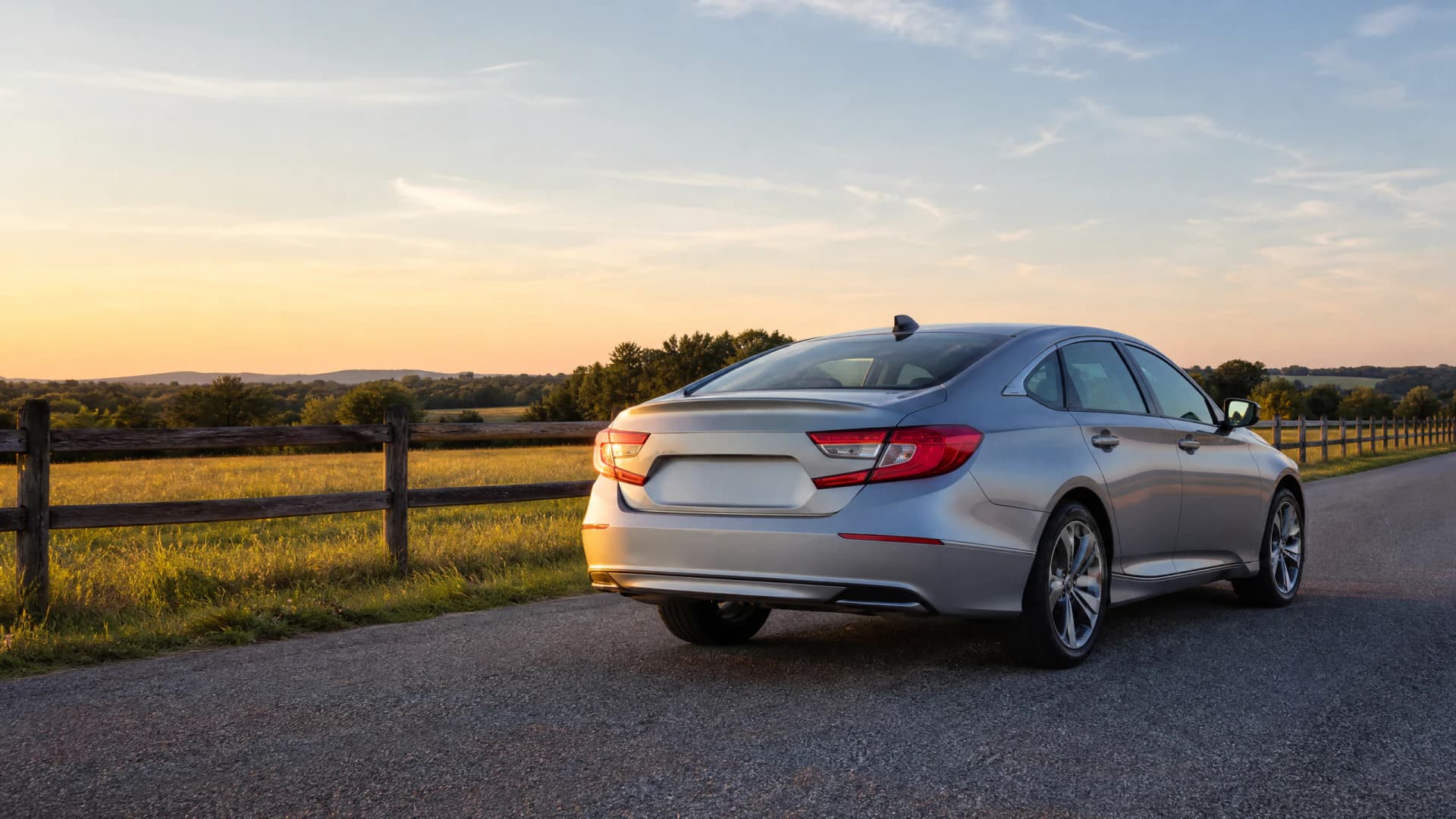

3. Reassess Full Coverage on Paid-Off Vehicles Over 10 Years Old
If your vehicle is paid off and worth less than $4,000, you may be paying more in annual comprehensive and collision premiums than you'd recover after a total loss. The math changes significantly once a car crosses the 10-year threshold: a 2014 sedan worth $3,200 typically carries $600–$900 in annual collision/comprehensive premiums, but any claim payout would be capped at actual cash value minus your deductible.
Run this calculation at every renewal: multiply your collision and comprehensive premiums by three years (the typical ownership horizon for senior drivers). If that total exceeds your vehicle's current market value, dropping to liability-only coverage makes financial sense. You can verify your car's value using NADA or Kelley Blue Book — use the "trade-in" value rather than "private party" as it's closer to what insurers use for total loss settlements.
Keep comprehensive coverage even when dropping collision if you live in an area with high hail, theft, or animal collision rates. Comprehensive premiums average $150–$250 annually and cover non-collision losses like windshield damage or vandalism — risks that don't decline with vehicle age. Check whether your state requires specific liability limits before making coverage changes.
4. Review Liability Limits Against Your Asset Protection Needs
Your liability coverage should reflect your current financial situation, not what you carried during your working years. If you've built retirement assets — a paid-off home, investment accounts, or significant savings — minimum state liability limits won't protect those assets in a serious at-fault accident. A single severe injury claim can exceed $100,000, and state minimums in many jurisdictions sit at $25,000 per person.
Most insurance professionals recommend 100/300/100 coverage for retired drivers with assets to protect: $100,000 per person for bodily injury, $300,000 per accident, and $100,000 for property damage. Increasing from state minimums to 100/300/100 typically adds $150–$300 annually — far less than the cost of liquidating retirement accounts to satisfy a judgment. If your assets exceed $300,000, consider an umbrella policy providing an additional $1–2 million in liability coverage for $200–$400 per year.
Your state may also affect this calculation. Florida, California, and Texas see higher litigation rates and larger jury awards than rural states, making higher liability limits more critical. Review your coverage against both your asset level and your state's lawsuit environment — a paid-off $400,000 home in a litigious state creates more exposure than the same home in a state with damage caps.

See What Drivers Over 65 Are Paying Now
See If You Qualify for Discounts
5. Confirm Medical Payments Coverage Doesn't Duplicate Medicare
Medical payments coverage (MedPay) pays accident-related medical bills regardless of fault, but if you're covered by Medicare, this coverage may be redundant. Medicare Part B covers accident injuries as secondary insurance after your auto policy's personal injury protection or MedPay pays out, but in states without mandatory PIP, MedPay often duplicates what Medicare already provides.
If you carry MedPay limits of $5,000 or more and have Medicare plus a supplement plan, you're likely paying $60–$120 annually for coverage you won't use. Medicare doesn't coordinate with MedPay — it processes claims independently, meaning the MedPay benefit rarely triggers if Medicare has already paid. Dropping MedPay in non-PIP states can be a safe reduction for drivers with comprehensive health coverage.
The calculus differs in no-fault states with mandatory personal injury protection. Michigan, Florida, and Pennsylvania require PIP coverage that pays before Medicare, and you can't drop it regardless of your health insurance situation. In those states, review your PIP limits instead — you may be able to reduce them if Medicare provides adequate backup coverage. Consult your state's requirements before making changes to injury coverage.

6. Ask About Telematics Discounts if You Drive Predictably
Usage-based insurance programs that monitor your driving habits via smartphone app or plug-in device now offer discounts averaging 10–25% for safe driving patterns. If you drive primarily during daylight hours, avoid hard braking, and maintain consistent speeds, you'll likely qualify for the maximum discount within the first policy period. These programs reward exactly the driving patterns most retired drivers already exhibit.
The monitoring period typically lasts 90 days, after which your discount locks in for the policy term. Most programs track hard braking events, rapid acceleration, speed relative to posted limits, and time of day. Night driving (10 PM–4 AM) and high-mileage days trigger rate increases, but if you rarely drive after dark and don't exceed 40–50 miles per trip, your rates will usually improve.
Some carriers guarantee you won't pay more than your current rate even if your driving score is poor, making enrollment risk-free during the trial period. Progressive Snapshot, State Farm Drive Safe & Save, and Allstate Drivewise all offer senior-friendly programs with no penalty for low scores during initial enrollment. If you're uncomfortable with continuous monitoring, ask whether your carrier offers a one-time discount for completing the initial 90-day assessment.
7. Check Whether Bundling Still Saves Money at Renewal
The multi-policy discount you received for bundling home and auto insurance three years ago may no longer be the best deal. Carriers frequently increase base rates on bundled policies while keeping the percentage discount stable, which means your actual savings shrink over time even though the discount appears unchanged at 15–20%.
Request standalone quotes for both your auto and homeowners policies at renewal, then compare the total cost to your current bundled rate. In many cases, switching your auto policy to a competitor while keeping homeowners with your current carrier saves $300–$600 annually even after losing the bundle discount. Pay special attention if your home insurance has remained flat or decreased while auto premiums climbed — that's a signal the bundle may no longer be cost-effective.
Some insurers offer deeper discounts for bundling three or more policies. If you carry umbrella coverage, life insurance, or a separate policy on a recreational vehicle, ask whether adding those to your bundle increases the auto discount beyond the standard two-policy rate. The incremental savings from a third policy occasionally exceed the cost of the additional coverage.

8. Document Any Vehicle Safety Features Added Since Last Renewal
If you've added a dashcam, upgraded to winter tires, or installed an anti-theft device, those modifications may qualify for additional discounts your insurer won't know about unless you report them. Anti-theft discounts average 5–15%, while winter tire discounts in northern states can reduce collision premiums by 5–10% during winter months.
Backup cameras, blind-spot monitoring, and automatic emergency braking also trigger discounts at most major carriers, but only if the features are documented in your policy file. If you purchased a vehicle in the past year or added aftermarket safety equipment, provide your agent with the equipment list or VIN so they can verify which discounts apply. Many insurers now offer discounts for dashcams with cloud storage, as the footage helps resolve disputed liability claims.
The discount structure varies significantly by carrier. Some apply safety feature discounts automatically when you provide a VIN for a newer vehicle, while others require manual documentation of each feature. If you're driving a 2018 or newer model with factory safety systems, request a full safety feature audit — you may qualify for stacked discounts totaling 15–25% that weren't applied at your last renewal.
Frequently Asked Questions
How often should senior drivers shop for car insurance rates?
You should compare rates from at least three carriers every renewal period, which is typically every six or twelve months. Rates for senior drivers can shift significantly between ages 65 and 75 as carriers adjust age-based pricing, and the company offering the best rate at 67 may not be competitive at 72. Shopping annually takes 30–45 minutes and saves an average of $350–$470 for drivers who switch.
Will my insurance company notify me if I qualify for a new discount?
Most insurers will not proactively notify you about newly available discounts — you must ask at each renewal. Mature driver course discounts, low-mileage programs, and telematics options almost always require you to initiate enrollment and provide documentation. The exception is vehicle safety feature discounts on newer cars, which some carriers apply automatically when you update your vehicle information.
Can I reduce coverage mid-policy or do I have to wait until renewal?
You can adjust coverage at any time, and most changes take effect within 24–48 hours of your request. Dropping collision or comprehensive mid-term triggers a prorated refund for the unused portion of your policy period. However, some discounts like mature driver course completion or annual mileage reductions may only apply at renewal depending on your carrier's policy.
What happens to my car insurance rate if I move to a different state after retirement?
Your rate will change based on your new state's minimum coverage requirements, regional risk factors, and available discounts. Some states mandate mature driver discounts while others leave them optional, and no-fault states require personal injury protection that significantly increases premiums. You're required to update your policy within 30–60 days of establishing residency, and your carrier will re-rate your policy based on your new garaging address.
Is it worth keeping collision coverage on a paid-off car worth $5,000?
It depends on your annual premium and deductible. If you're paying $400/year for collision with a $500 deductible, you'd recover at most $4,500 after a total loss — meaning you'd break even after 11 years of premium payments. Most financial advisors recommend dropping collision once annual premiums exceed 10% of the vehicle's current value, which for a $5,000 car means any premium above $500/year.
Related Articles

Convert Joint Auto Insurance After Spouse Dies | Wisconsin
4/29/2026

Oregon License Renewal at 85: Testing & Insurance Impact
4/29/2026

MO License Renewal at 75: Tests, Restrictions & Rates
4/29/2026

Surviving Spouse Auto Insurance in Colorado: Transfer Rules
4/29/2026

Car Insurance After 70: Lower Rates Despite Increases
4/1/2026

Spouse Died in Hawaii: Convert Joint Auto Policy
4/29/2026