Senior Driver Car Insurance Discounts in Fresno — Complete Guide
Free to compare
Why Your Fresno Premium Increased Despite a Clean Record
If you've driven accident-free for years but noticed your Fresno premium climb 12–18% after turning 70, you're experiencing the actuarial shift most California carriers apply between ages 70 and 75. Unlike rate increases tied to violations, these adjustments reflect statistical risk pools rather than your individual driving history. The pattern is consistent across Fresno: drivers see modest 3–5% annual increases from 65 to 70, then steeper jumps — sometimes 15–20% — between 70 and 75.
California law prohibits using age as the sole rating factor, but carriers combine it with other variables like annual mileage and claims frequency in your ZIP code. In Fresno's 93650 and 93711 areas, where collision claim rates run higher than state averages, age-related increases compound with local risk factors. The result: a 72-year-old driver with 40 years of clean history may pay more than a 45-year-old with one at-fault accident.
The recovery strategy isn't to argue the increase — it's to stack every available discount you qualify for but haven't claimed. Most Fresno seniors have at least three unclaimed discounts sitting in their policy terms, never activated because California doesn't require automatic application. A mature driver course completion, low-mileage verification, and defensive driving update can collectively offset 18–25% of your premium, often recovering the entire age-related increase and more.

The Seven Discounts Fresno Senior Drivers Qualify For but Rarely Claim
California doesn't mandate mature driver course discounts, but nearly every carrier operating in Fresno offers them — typically 5–10% off your premium for completing an approved 4–8 hour course. The discount applies for three years, then expires unless you retake the course. Most policies don't send renewal reminders, so drivers who qualified in 2020 are now paying full rates without realizing the discount lapsed. AARP and AAA both offer state-approved courses online for $20–$25, and the average Fresno driver saves $140–$220 annually, recovering the course cost in six weeks.
Low-mileage discounts are the second most underutilized. If you're no longer commuting to downtown Fresno or driving to the Central Valley for work, you likely qualify for programs that cut premiums 10–20% for drivers logging under 7,500 miles annually. Some carriers require odometer verification every six months; others use telematics dongles or smartphone apps. The key detail: you must request enrollment. Carriers don't automatically move you into low-mileage tiers even if your annual mileage drops by half after retirement.
Paid-in-full discounts, multi-policy bundling (home or renters), and paperless billing together add another 8–15%. Many Fresno seniors already have homeowners or renters coverage but never bundled it with auto, leaving 10–12% on the table. Anti-theft device discounts apply if your vehicle has factory-installed systems like OnStar or LoJack — but you need to provide proof of installation. Defensive driving course discounts, distinct from mature driver programs, offer an additional 5–8% and are available through some carriers even if you've already claimed the mature driver reduction.
Good driver discounts for maintaining a clean record over 3–5 years typically auto-apply, but if you switched carriers in that window, the new insurer may not have your full history. Request a motor vehicle report review to confirm all eligible years count toward the discount tier.

How California's Mature Driver Course Discount Works in Fresno
California Insurance Code allows but doesn't require insurers to offer mature driver discounts, so availability and discount percentages vary by carrier. In Fresno, the range runs from 5% at budget carriers to 10% at mid-tier providers, applied to collision and liability premiums but not comprehensive in most cases. The course must be approved by the California Department of Motor Vehicles — check the DMV's list before enrolling, as non-approved courses won't qualify you for the insurance discount even if they improve your driving skills.
Most approved courses take 4–6 hours and can be completed online over multiple sessions. AARP's Smart Driver course costs $25 for members, $20 for non-members, and satisfies all California carrier requirements. AAA offers a similar program for $25. Upon completion, you receive a certificate valid for three years from the completion date — not from the date you submit it to your insurer. Submit the certificate within 30 days to ensure the discount applies to your next billing cycle rather than waiting until the policy renewal six months later.
The discount doesn't automatically renew. Three years after your first course, the discount expires on your policy anniversary unless you complete a refresher. Most carriers don't send expiration notices, so mark your calendar for 33 months after completion and schedule the refresher before the discount drops off. If you miss the window, you'll need to complete the course again and resubmit proof — the discount won't be backdated to cover the months you paid full premium.
When Full Coverage No Longer Makes Financial Sense on a Paid-Off Vehicle
If you're driving a 2012 Honda Accord or 2014 Toyota Camry that's been paid off for years, you're likely spending $80–$120 monthly on collision and comprehensive coverage to protect an asset worth $6,000–$9,000. The math shifts once your vehicle's actual cash value drops below roughly $4,000 or when your annual collision and comprehensive premiums exceed 10% of the car's value. In Fresno, where collision coverage averages $65–$85 monthly for senior drivers and comprehensive runs $30–$45, you're paying $1,140–$1,560 annually to insure a depreciating asset.
The break-even calculation: if your car is worth $7,000 and you're paying $1,200 yearly for full coverage, you'll recover that premium cost in a total-loss claim. But after your $500–$1,000 deductible, the net payout is $6,000–$6,500. If you keep the car another three years, you've paid $3,600 in premiums to protect against a loss of an asset that will be worth $4,500–$5,000 by then. Many Fresno seniors find that switching to liability-only coverage at this point and banking the $100 monthly savings creates a better financial cushion than maintaining collision coverage on a vehicle approaching end-of-service life.
The exception: if you couldn't afford to replace the vehicle out-of-pocket after a total loss, keeping collision coverage makes sense even on an older car. But if you have $8,000–$12,000 in accessible savings or could manage with one vehicle temporarily, dropping to liability-only — which California requires at minimum 15/30/5 limits — typically saves $900–$1,400 annually for Fresno drivers over 65. That amount, invested in a vehicle replacement fund, compounds faster than the depreciating value of collision coverage on an aging car.
See What Drivers Over 65 Are Paying Now
See If You Qualify for Discounts
How Medicare Interacts with Medical Payments Coverage in California
Medical Payments coverage (MedPay) pays for accident-related medical expenses regardless of fault, typically in $1,000–$10,000 increments. California doesn't require MedPay, but it's often bundled into policies at $5,000 limits for $8–$15 monthly. For senior drivers on Medicare, the question is whether MedPay duplicates existing coverage or fills a gap Medicare doesn't address.
Medicare Part B covers accident-related injuries, but it doesn't pay immediately — there's a deductible and 20% coinsurance. MedPay acts as primary coverage in California, meaning it pays first before Medicare processes the claim. If you're injured in a Fresno collision and transported to Community Regional Medical Center, MedPay covers the ambulance bill, emergency room copays, and initial treatment costs without waiting for Medicare's coordination of benefits process. This front-loaded payment prevents out-of-pocket expenses that could take weeks to recover through Medicare.
The cost-benefit: $5,000 MedPay coverage runs $10–$12 monthly in Fresno, or $120–$144 annually. If you're in relatively good health, have a Medicare supplement plan that covers Part B coinsurance, and maintain an emergency fund of $3,000–$5,000, MedPay may be redundant. But if you're on Original Medicare without a supplement, that 20% coinsurance on a $15,000 emergency room visit becomes $3,000 out-of-pocket — money MedPay would cover immediately. Most Fresno senior drivers find that $5,000 MedPay at $10–$12 monthly offers worthwhile peace of mind, even with Medicare, because it eliminates the cash flow gap between the accident and Medicare reimbursement.
Telematics Programs for Low-Mileage Fresno Drivers
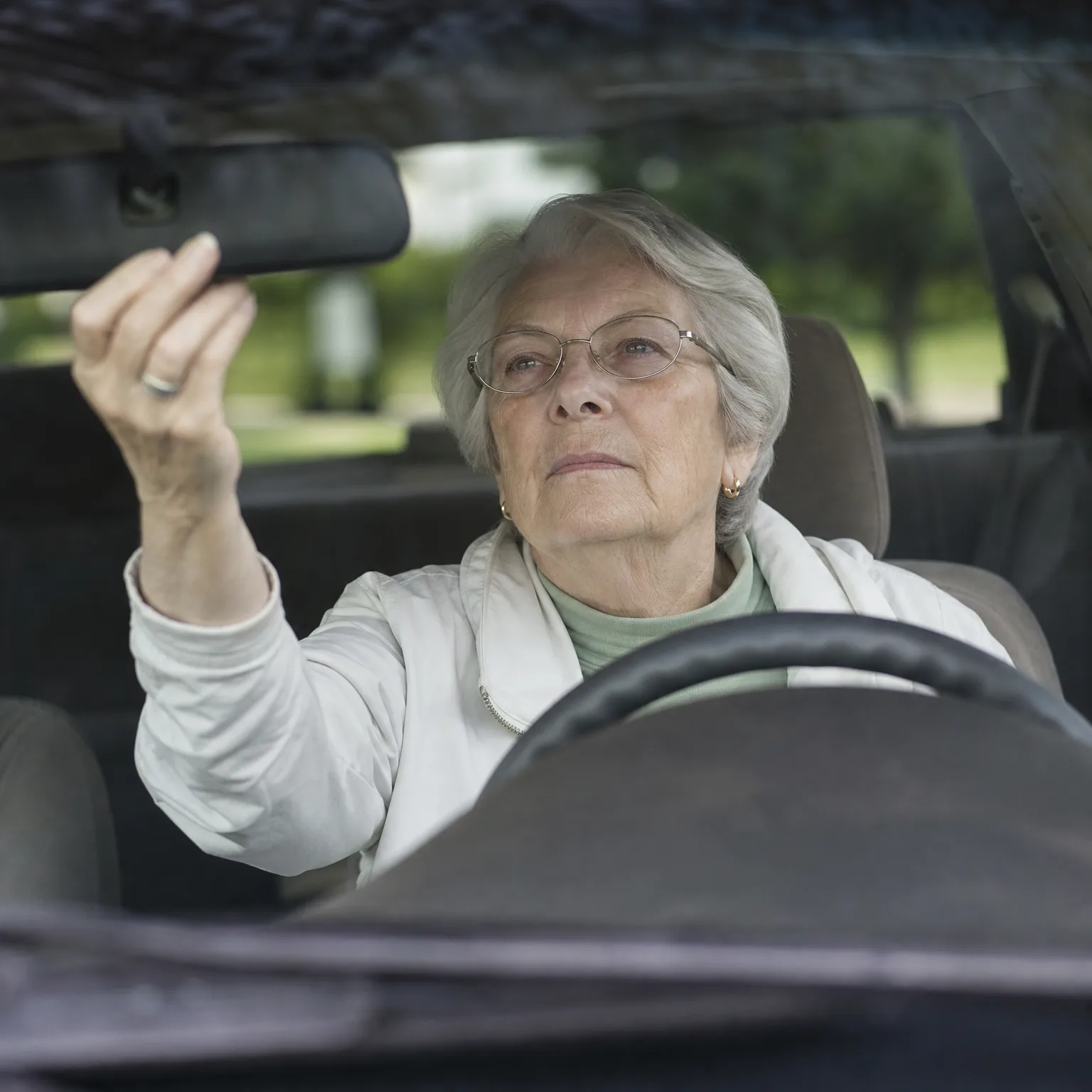
If you're driving under 7,000 miles annually — common for Fresno retirees who no longer commute to Clovis, Madera, or downtown — telematics programs can cut premiums 15–30% based on actual usage rather than estimated mileage. These programs use a smartphone app or plug-in device to track miles driven, time of day, braking patterns, and speed. The discount structure varies: some carriers offer an immediate 10% enrollment discount, then adjust your rate every six months based on monitored behavior. Others provide a participation discount of 5–8% just for enrolling, with additional savings if your driving patterns score well.
The concern most senior drivers raise: privacy and data collection. Telematics devices track location, speed, and driving times, which some drivers find intrusive. California law requires insurers to disclose what data is collected and how it's used, but it doesn't restrict collection itself. If privacy is a priority, look for mileage-only programs that verify odometer readings every six months without continuous monitoring. Metromile and similar pay-per-mile models aren't widely available in Fresno, but several major carriers offer low-mileage verification discounts that don't require real-time tracking.
The savings math: a Fresno driver paying $110 monthly who qualifies for a 20% telematics discount saves $264 annually. Over three years, that's $792 — enough to offset concerns about data sharing for many budget-conscious seniors. But if your driving includes frequent evening trips, quick stops, or highway speeds above 75 mph, telematics scoring may work against you. Request a 90-day trial period if available, so you can evaluate your score before committing to annual enrollment.
What to Do If You're Quoted Higher Rates After Turning 75
Rate increases at 75 are common across California carriers, but the size of the jump — and whether you have leverage to negotiate it — depends on your claims history and how long you've been with your current insurer. Drivers who've been claim-free with the same carrier for 10+ years have more negotiating room than those who switched recently. Start by requesting a policy review: ask your agent or the carrier's retention department to audit all applied discounts and verify that mature driver, low-mileage, and good driver discounts are active and current.
If the rate increase is substantial — 20% or more — get comparison quotes from at least three other carriers. Use your current coverage limits and deductibles as the baseline so you're comparing identical policies. In Fresno, rates for senior drivers vary widely: the same 75-year-old with a clean record might pay $95 monthly with one carrier and $145 with another for identical 100/300/100 liability limits. Loyalty doesn't always reward you in auto insurance; switching carriers every 3–5 years often yields better rates than staying with one insurer for decades.
Before switching, verify that the new policy won't penalize you for a coverage gap. California carriers can increase rates if you've had a lapse in coverage exceeding 90 days, even if the lapse was intentional (like during a period when you weren't driving). If you're comparing quotes while your current policy is active, time the switch to begin the day your old policy expires — not a week later. A single day without coverage can trigger lapse penalties that eliminate any savings from the new policy.
Frequently Asked Questions
Do I need to retake the mature driver course every three years in California?
Yes, California's mature driver course discount expires three years from your completion date, and you must retake an approved course to renew the discount. Most carriers don't send reminders, so the discount silently drops off your policy unless you track the expiration date and complete a refresher course before it lapses.
Will switching insurance companies at age 75 cause my rates to increase?
Switching carriers doesn't directly increase rates due to your age, but new insurers may not offer the same loyalty or tenure discounts you earned with your previous carrier. Comparison shop at least 90 days before your renewal to ensure the new policy's total cost — including all available discounts — actually saves you money after accounting for any lost tenure benefits.
Can I drop collision coverage but keep comprehensive on my paid-off car?
Yes, you can carry comprehensive-only coverage in California, which protects against theft, vandalism, weather damage, and animal strikes while eliminating the higher-cost collision premium. This arrangement makes sense for senior drivers whose vehicles are worth $6,000–$10,000 but who park in secure areas and want protection against non-collision risks at $30–$45 monthly instead of paying $95–$130 for full coverage.
Does AARP offer lower car insurance rates for seniors in Fresno?
AARP doesn't provide insurance directly but endorses The Hartford, which offers AARP members a package of senior-specific discounts including accident forgiveness and new car replacement. Rates vary widely by individual circumstances, so AARP-endorsed coverage isn't automatically cheaper than other carriers — you should compare quotes from The Hartford, State Farm, Nationwide, and regional California carriers to find the lowest rate for your specific profile.
If I only drive 3,000 miles per year, how much can I save with a low-mileage discount?
Low-mileage discounts in California typically range from 10–25% depending on the carrier and your annual mileage. A Fresno driver paying $105 monthly who qualifies for a 20% low-mileage discount saves roughly $252 annually, but you'll need to verify your odometer reading every six months or enroll in a telematics program that tracks actual miles driven.
Related Articles
Convert Joint Auto Insurance After Spouse Dies | Wisconsin
4/29/2026
Oregon License Renewal at 85: Testing & Insurance Impact
4/29/2026

MO License Renewal at 75: Tests, Restrictions & Rates
4/29/2026

Surviving Spouse Auto Insurance in Colorado: Transfer Rules
4/29/2026

Car Insurance After 70: Lower Rates Despite Increases
4/1/2026

Spouse Died in Hawaii: Convert Joint Auto Policy
4/29/2026