
Senior Driver Car Insurance Discounts in Los Angeles — Complete Guide
Free to compare
Why Los Angeles Senior Drivers Pay More Despite Clean Records
Los Angeles senior drivers face a unique rate structure that has little to do with actual driving behavior. California insurers use age-based actuarial tables that typically increase premiums 8–15% between ages 65 and 70, then another 12–20% between 70 and 75, regardless of your driving record. In Los Angeles specifically, the combination of dense traffic patterns, higher collision repair costs, and medical claim expenses creates a compounding effect — even if you've driven the same routes safely for 30 years.
The frustrating reality is that your premium can rise substantially despite no accidents, no tickets, and reduced mileage. A 68-year-old Los Angeles driver with a clean record and the same vehicle coverage might see their annual premium increase from $1,400 at age 65 to $1,680 by age 70 — a 20% jump with no change in risk behavior. Insurers justify this through aggregate age-group statistics, not your individual record.
This rate pressure makes unclaimed discounts particularly costly. If you're eligible for a mature driver course discount (typically 5–10% in California), a low-mileage discount (5–15%), and a telematics program (10–20%), you could be leaving $250–$450 per year on the table simply because your carrier won't apply these savings unless you specifically enroll or request them.
California's Mature Driver Course Discount: What Los Angeles Seniors Need to Know
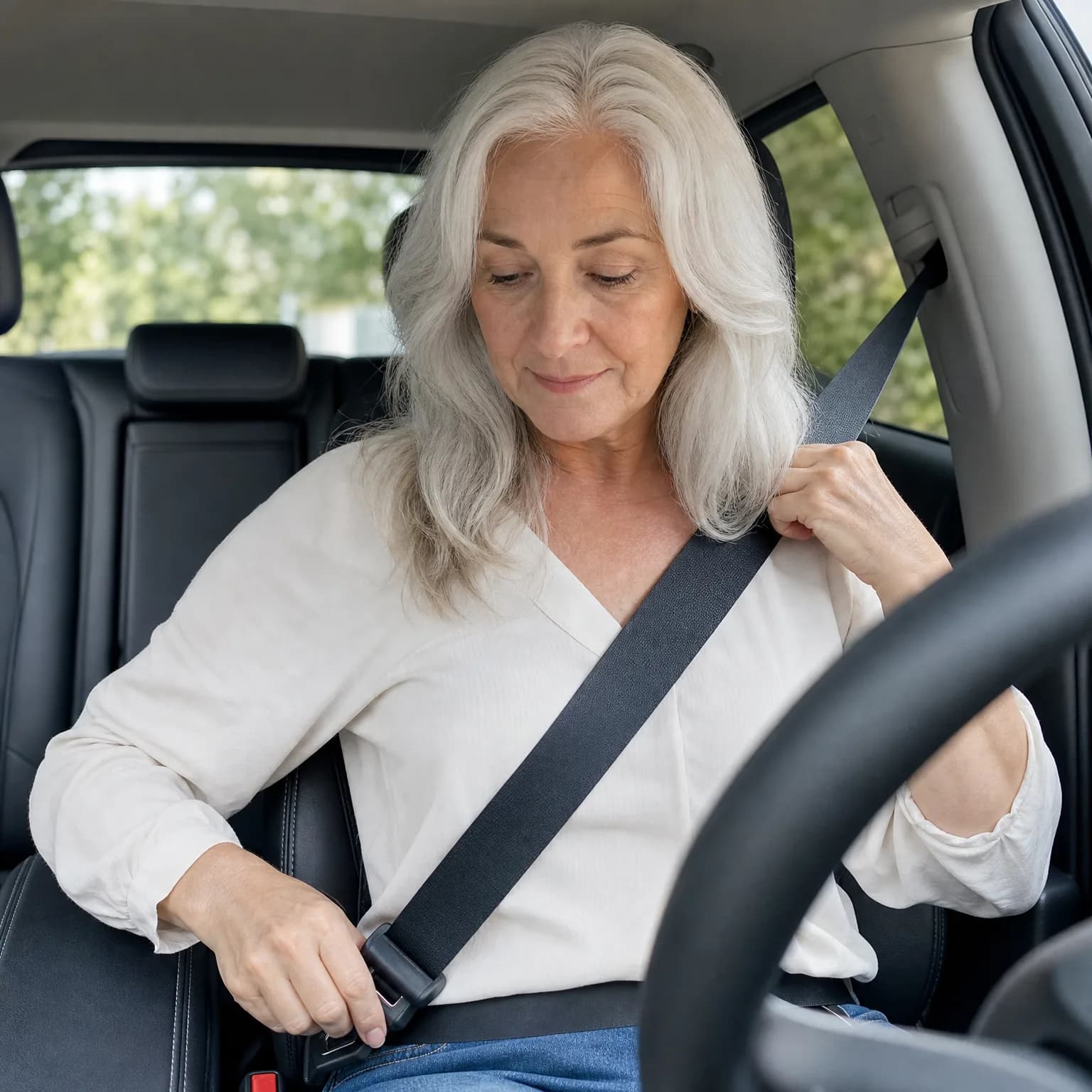
California does not mandate that insurers offer mature driver discounts, but most major carriers provide them — and they require completion of a state-approved course before the discount applies. The California Department of Motor Vehicles approves courses from AAA, AARP, and several online providers. Once completed, the discount typically ranges from 5–10% and remains active for three years before requiring recertification.
The critical detail most Los Angeles seniors miss: you must submit proof of course completion directly to your insurance carrier. Simply taking the course does not trigger the discount. You'll receive a certificate upon completion that must be uploaded through your carrier's portal, emailed to your agent, or mailed to their processing center. Most insurers apply the discount within one billing cycle after receiving documentation.
Courses cost $15–$35 and take 4–8 hours to complete, either online or in-person. For a driver paying $1,600 annually, a 7% discount saves $112 per year. Over the three-year validity period, that's $336 in savings from a $25 course investment. AARP's Smart Driver course is the most widely recognized in Los Angeles and can be completed entirely online. AAA offers in-person classes throughout Los Angeles County if you prefer classroom instruction.

Low-Mileage and Usage-Based Discounts for Retired Drivers
If you've stopped commuting to work or drive fewer than 7,500 miles annually, you likely qualify for low-mileage discounts that many Los Angeles seniors don't realize exist. California law requires insurers to consider mileage as a rating factor, but carriers vary widely in how aggressively they discount for reduced driving. Metromile, for example, charges a base rate plus per-mile fees — potentially saving significant money for drivers under 5,000 miles per year.
Most traditional carriers offer tiered mileage discounts: typically 5–10% for drivers under 7,500 annual miles, and 10–15% for those under 5,000 miles. The challenge is that your carrier won't automatically adjust your mileage classification unless you request a review. If you estimated 12,000 miles annually when you set up your policy five years ago but now drive 6,000 miles, you're paying for risk exposure you no longer create.
Telematics programs (Snapshot from Progressive, DriveEasy from Geico, SmartRide from Nationwide) can deliver even larger discounts — 10–25% for safe driving patterns — but require installing a device or using a smartphone app that monitors braking, acceleration, and time of day. For senior drivers with smooth driving habits who avoid rush-hour traffic, these programs often produce better savings than age-based discounts alone. The privacy trade-off matters: you're sharing trip data with your insurer in exchange for lower premiums. Request a detailed explanation of what data is collected and how long it's retained before enrolling.
Full Coverage vs. Liability-Only: The Paid-Off Vehicle Question
Many Los Angeles seniors pay for comprehensive and collision coverage on vehicles they own outright — coverage that may no longer make financial sense depending on the vehicle's value. If your car is worth $4,000 and you're paying $900 annually for comprehensive and collision with a $500 deductible, you're paying 22.5% of the vehicle's value each year to insure against damage. After a claim, you'd receive at most $3,500 after the deductible.
The conventional guideline: if annual comprehensive and collision premiums exceed 10% of your vehicle's current value, consider dropping to liability-only coverage. For a 2012 Honda Accord worth $6,500, that threshold is $650 per year. Check your current premium breakdown — most carriers separate liability, comprehensive, and collision line-items on your declarations page. If comprehensive and collision combined exceed $650, you're likely better served moving those dollars into savings for future vehicle replacement.
California requires minimum liability coverage of 15/30/5 ($15,000 per person for injury, $30,000 per accident, $5,000 for property damage), but those limits are dangerously low in Los Angeles where medical costs and vehicle values run high. A single moderate injury claim can exceed $15,000. Most financial advisors recommend 100/300/100 minimums for seniors with assets to protect. Dropping comprehensive and collision on an older vehicle creates room in your budget to increase liability limits without raising your total premium. For more context on how liability requirements work, see liability insurance.

See What Drivers Over 65 Are Paying Now
See If You Qualify for Discounts
Medical Payments Coverage and Medicare Coordination
Medical payments coverage (MedPay) becomes complicated for Los Angeles seniors on Medicare. MedPay covers medical expenses for you and your passengers after an accident, regardless of fault, with typical limits of $1,000–$10,000. Medicare also covers accident-related injuries, creating potential overlap — but MedPay pays primary (first) while Medicare pays secondary, meaning MedPay can cover deductibles and copays that Medicare doesn't.
For a senior on Medicare with a $500 emergency room copay after a minor accident, a $5,000 MedPay policy would cover that out-of-pocket cost immediately. MedPay also covers passengers who may not have their own health insurance. The cost is typically $30–$80 annually for $5,000 coverage in Los Angeles. Whether this is worthwhile depends on your Medicare supplemental coverage and savings cushion for unexpected medical costs.
California does not require MedPay, but it's often bundled into policies without clear explanation of what it does. Review your declarations page: if you're paying for MedPay but have comprehensive Medicare supplemental insurance (Medigap Plan F or G), you may be duplicating coverage. Conversely, if you have Original Medicare without supplemental coverage, MedPay provides valuable gap protection for accident-related costs. Discuss coordination of benefits with both your insurance agent and Medicare advisor before dropping coverage.

How to Audit Your Current Policy for Unclaimed Discounts
Most Los Angeles seniors have no clear picture of what discounts they currently receive versus what they qualify for. Start by requesting a full discount breakdown from your carrier — not just your declarations page, but a specific list of every discount applied and every discount you're eligible for but not enrolled in. Major carriers are required to provide this information upon request in California.
Common unclaimed discounts for senior drivers: mature driver course completion (5–10%), low annual mileage (5–15%), paid-in-full policy (3–7%), paperless billing (2–5%), multi-policy bundling if you have homeowners insurance (10–20%), and telematics/safe driver programs (10–25%). If you're not seeing all applicable discounts on your account, ask your agent why and what documentation is needed to activate them.
Set a calendar reminder to review your policy annually, ideally 60–90 days before renewal. Rate structures change, new discount programs launch, and your own circumstances shift — miles driven, vehicles owned, bundling opportunities. A 20-minute annual audit can uncover $200–$500 in savings that weren't available or weren't communicated the previous year. Document every discount conversation in writing (email confirmation) so you have a record if promised discounts don't appear at renewal.
Comparing Carriers: When Loyalty Costs You Money
Staying with the same Los Angeles insurer for decades often costs senior drivers significantly more than switching. Carriers offer aggressive new-customer discounts (10–20% off for the first policy term) that disappear at renewal, while long-term customers receive modest loyalty discounts (typically 3–5%) that don't offset the actuarial age increases applied annually. A 70-year-old driver who has been with the same carrier for 15 years may be paying 25–40% more than a comparable driver who switches every 2–3 years.
California allows you to compare rates without affecting your coverage or current policy. Request quotes from at least three carriers, providing identical coverage limits and deductibles for accurate comparison. Many Los Angeles seniors discover they can save $400–$800 annually by switching to a carrier that weights age factors differently or offers more robust senior discount programs. GEICO, State Farm, and AAA consistently rank among the more competitive options for California senior drivers, but individual rates vary based on ZIP code, vehicle, and driving history.
Before switching, verify the new carrier's financial stability (A.M. Best rating of A- or higher), claims process reputation, and local agent availability if you prefer in-person service. The cheapest rate means nothing if claims take months to process or customer service is inaccessible. Check the California Department of Insurance complaint database for carriers you're considering — it lists complaints per thousand policies, giving you a normalized comparison of customer experience. For broader context on how coverage types interact, explore full coverage options.
Frequently Asked Questions
Does AARP offer car insurance discounts for seniors in Los Angeles?
AARP does not directly provide car insurance but partners with The Hartford to offer members age 50+ access to policies with senior-focused discounts including mature driver course savings, accident forgiveness, and RecoverCare services. Discounts vary but typically range 5–10% for course completion. You must be an AARP member to access Hartford's AARP-branded policies.
At what age do car insurance rates start increasing for senior drivers in California?
Most California insurers begin applying age-based rate increases around age 65, with premiums rising 8–15% between 65 and 70, then 12–20% between 70 and 75. The increases are gradual and carrier-specific, tied to actuarial tables rather than individual driving behavior. A clean driving record does not prevent these age-related increases.
Can I get a discount if I only drive my car a few thousand miles per year in Los Angeles?
Yes, most California carriers offer low-mileage discounts ranging from 5–15% for drivers under 7,500 annual miles. You must request a mileage review and provide documentation (odometer reading or maintenance records). Some carriers like Metromile use per-mile pricing that can save significantly more for drivers under 5,000 miles annually.
Should I keep comprehensive and collision coverage on my 10-year-old paid-off car?
If your annual comprehensive and collision premiums exceed 10% of your vehicle's current market value, most financial advisors recommend dropping that coverage and putting the premium savings toward future vehicle replacement. For a car worth $5,000, that threshold is $500 per year. Maintain higher liability limits to protect your assets even if you drop physical damage coverage.
Do I need medical payments coverage if I'm already on Medicare?
Medical payments coverage (MedPay) can still provide value for Medicare recipients because it pays primary, covering deductibles and copays that Medicare doesn't. It also covers passengers who may not have health insurance. If you have comprehensive Medigap supplemental coverage, MedPay may duplicate benefits. Review your specific Medicare plan with your agent before deciding.
Related Articles

Convert Joint Auto Insurance After Spouse Dies | Wisconsin
4/29/2026

Oregon License Renewal at 85: Testing & Insurance Impact
4/29/2026

MO License Renewal at 75: Tests, Restrictions & Rates
4/29/2026

Surviving Spouse Auto Insurance in Colorado: Transfer Rules
4/29/2026
Car Insurance After 70: Lower Rates Despite Increases
4/1/2026

Spouse Died in Hawaii: Convert Joint Auto Policy
4/29/2026