
Senior Driver Car Insurance in Chicago — Best Rates Guide
Free to compare
Why Chicago Senior Drivers Pay More — And What Actually Changes After 65
Chicago senior drivers face a compounding rate problem: the city's elevated base premiums — driven by high accident frequency, theft rates, and uninsured motorist claims — combine with age-based actuarial adjustments that typically begin between ages 70 and 75. The average Chicago driver aged 65 pays roughly $1,450–$1,850 annually for full coverage, but that same driver at age 75 often sees premiums rise 15–25% despite maintaining a clean record and driving fewer miles.
Illinois does not mandate mature driver course discounts, which means carriers offer them selectively and almost never apply them without a direct request. State Farm, Allstate, and Nationwide offer 5–15% discounts for AARP Smart Driver or similar approved courses, but internal audits show fewer than 30% of eligible senior policyholders actually receive the credit. The discount renews every three years as long as you retake the course, but the onus is entirely on you to provide proof of completion and request the adjustment.
Chicago's Cook County location adds another layer: higher liability minimums make sense here because of dense traffic and elevated injury claim costs, but many senior drivers carry the state minimum $25,000/$50,000 bodily injury limits on vehicles they rarely drive beyond neighborhood errands. That mismatch — low coverage on a high-risk road network — creates both financial exposure and missed opportunities to reallocate premium dollars toward coverages that better match your actual risk profile.
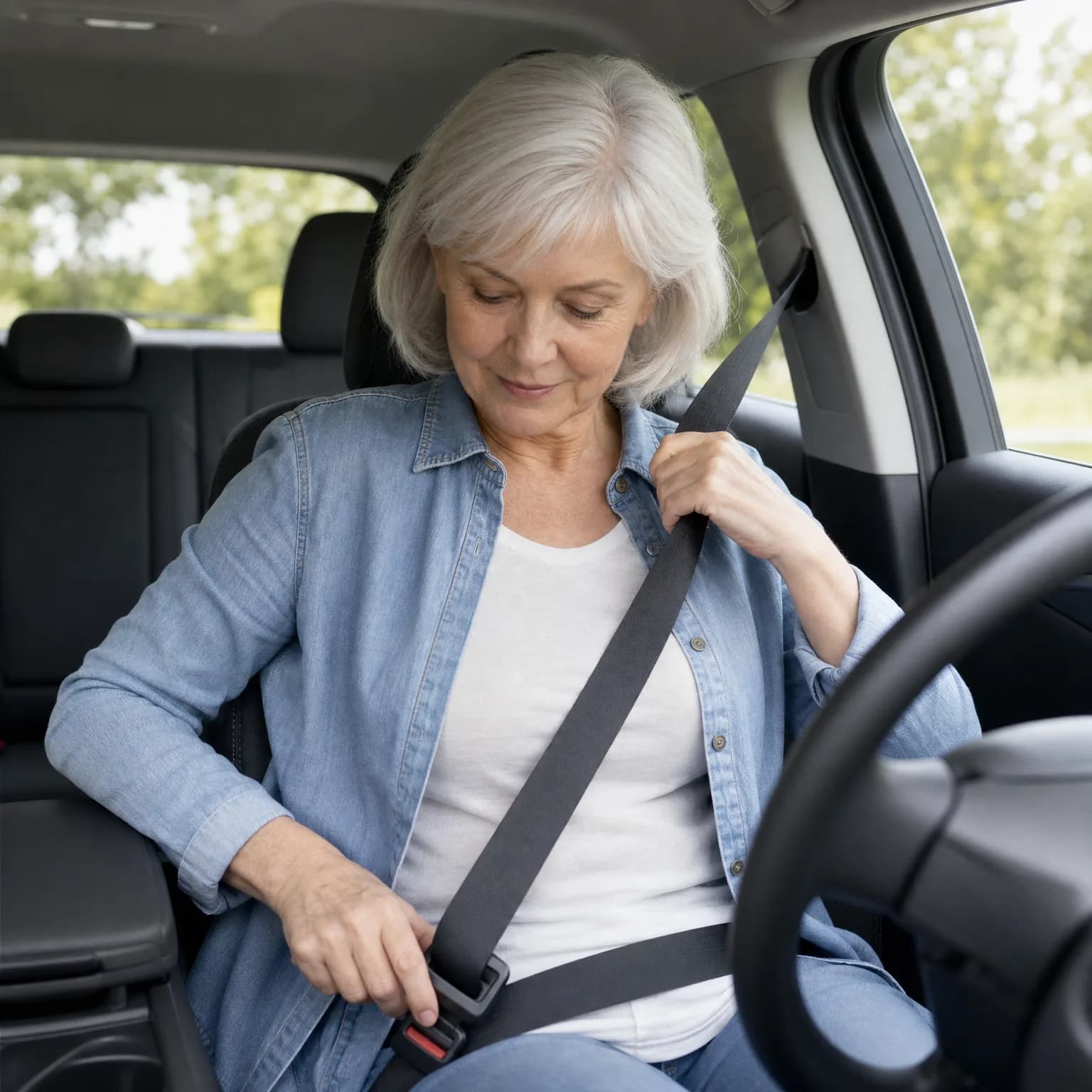
Mature Driver Course Discounts: The Single Highest-Value Action for Chicago Seniors
The AARP Smart Driver course — available online for $25 or in-person through local libraries and community centers — delivers a 5–15% premium reduction with most major carriers writing policies in Chicago. For a senior couple paying $3,200 annually on two vehicles, that's $160–$480 in annual savings for an eight-hour course that can be completed at your own pace. The discount applies for three years, making the effective annual cost under $10.
Not all carriers honor the same courses. State Farm and Country Financial accept AARP Smart Driver, AAA RoadWise Driver, and certain Illinois-specific defensive driving courses approved by the Secretary of State. Progressive and Geico accept AARP and AAA but require you to upload the certificate through your online account or mail it to underwriting — the discount will not appear until the next billing cycle after submission, and you must track it yourself because automated reminders are rare.
Timing matters. If you complete the course mid-policy term, request immediate re-rating rather than waiting for renewal. Most carriers will apply the discount retroactively to the date you completed the course if you submit the certificate within 30 days, but waiting until renewal means you forfeit months of savings. Call your agent directly or use the carrier's mobile app to upload proof — email submissions often sit unprocessed in general inboxes for weeks.


Low-Mileage and Usage-Based Programs for Retired Chicago Drivers
If you no longer commute to the Loop or drive fewer than 7,500 miles annually, you are likely overpaying based on outdated mileage estimates from when you were working. Allstate's Milewise, State Farm's Drive Safe & Save, and Nationwide's SmartMiles all operate in Chicago, but they function differently and reward different behaviors.
Allstate Milewise charges a low daily base rate plus a per-mile rate — typically $2–$4 per day plus 3–7 cents per mile. For a senior driver covering 4,000 miles annually, that translates to roughly $850–$1,200 per year compared to $1,600–$2,000 under a traditional policy. The program requires a plug-in device that tracks mileage but not driving behavior, which appeals to drivers uncomfortable with telematics monitoring of speed or braking patterns.
State Farm's Drive Safe & Save monitors both mileage and driving habits — hard braking, acceleration, and time of day. The discount can reach 30% for low-mileage drivers who also avoid high-risk hours (10 p.m.–4 a.m.), but drivers who make frequent short trips with stop-and-go patterns common in Chicago neighborhoods may see smaller discounts or none at all. The program runs for an initial review period, then locks in your discount for six months before reassessing.
Nationwide SmartMiles is structured like Milewise but often delivers better per-mile rates for drivers covering under 5,000 miles annually. The key difference: SmartMiles uses odometer photos submitted via app rather than a plug-in device, which some senior drivers prefer for simplicity. If your driving is genuinely low-mileage and you can document it, request quotes from all three programs — rate differences of $300–$600 annually are common depending on your specific usage pattern.

See What Drivers Over 65 Are Paying Now
See If You Qualify for DiscountsCoverage Adjustments That Make Sense for Chicago Seniors on Fixed Income
If you own a 2012–2016 vehicle that's paid off and worth $6,000–$10,000, the math on comprehensive and collision coverage often no longer justifies the premium. Comprehensive and collision typically cost $600–$900 annually combined in Chicago, and most policies carry a $500–$1,000 deductible. If your vehicle is worth $7,500 and you're paying $750 per year for comp/collision, you're recovering your full vehicle value in premiums every ten years — and any claim pays out only the actual cash value minus your deductible.
The counterargument: Chicago's high theft and vandalism rates, especially for older sedans and SUVs parked on-street. If you garage your vehicle overnight and your ZIP code shows low property crime (use the Chicago Police Department's data portal to check your specific beat), dropping to liability-only makes financial sense. If you park on-street in neighborhoods with elevated auto theft — particularly Garfield Park, Austin, or South Shore — retaining comprehensive coverage at a higher deductible ($1,000 instead of $500) cuts premium cost while preserving theft protection.
Medical payments coverage and Medicare coordination is a blind spot for most senior drivers. Medicare does not cover auto accident injuries immediately — it only becomes primary after your auto policy's medical payments or personal injury protection (PIP) is exhausted. Illinois requires only $20,000 in medical payments, but a senior driver hospitalized after an accident can easily exceed that in the first 48 hours. Increasing medical payments to $5,000–$10,000 adds roughly $40–$80 annually but closes the gap before Medicare processes claims, which can take 30–90 days.

Chicago-Specific Rate Factors Senior Drivers Can Control
Your ZIP code drives more of your premium than your driving record in Chicago. A 68-year-old driver with a clean record in Lincoln Park (60614) pays 20–35% less than an identical driver in Englewood (60621) solely due to accident frequency, theft rates, and uninsured motorist claims in each area. You cannot change your address to save on insurance, but understanding this dynamic clarifies why your premium may have increased despite no personal claims — your neighborhood's aggregate loss experience changed.
Bundling home and auto coverage delivers 10–25% discounts with most carriers, but the structure matters. If you own your home outright and carry only dwelling coverage with no mortgage requirement, shop your auto policy separately — bundling often locks you into mid-tier auto pricing to preserve the home discount. If you rent, renter's insurance costs $150–$250 annually in Chicago and typically triggers a 5–10% auto discount, making the net cost negligible and coverage valuable for personal property.
Credit-based insurance scoring affects Illinois premiums significantly, and senior drivers often have excellent credit but outdated information on file with their carrier. Request that your insurer re-pull your credit score if you've improved your score in the past two years, paid off a mortgage, or corrected errors on your credit report. The re-score can trigger a 5–15% rate reduction if your profile has improved, but it requires a formal request — carriers do not automatically refresh credit data between renewals.

How to Compare Rates Without Oversharing Personal Information
Senior drivers report frustration with online quote tools that request extensive personal information before displaying any pricing. The most efficient approach: use a single multi-carrier comparison tool that pulls quotes from 8–12 insurers simultaneously rather than visiting each carrier's site individually. Provide your VIN, current coverage levels, and accurate annual mileage — lowballing mileage to get a better quote will result in claim denial if the insurer audits your odometer later.
Request quotes at multiple liability limits. Chicago's dense traffic and high medical costs make $100,000/$300,000 bodily injury limits more appropriate than the state minimum $25,000/$50,000, and the premium difference is often only $150–$250 annually. Running quotes at both levels shows you the exact cost of increased protection rather than forcing you to guess whether the upgrade is worth it.
Ask every insurer about affinity discounts tied to organizations you already belong to — AARP, AAA, union retiree groups, alumni associations, and professional organizations often negotiate 5–12% discounts with specific carriers. These are rarely advertised and almost never appear in online quote tools, so a direct phone call to the carrier's senior specialist line (most major insurers have one) surfaces discounts the algorithm misses.
Frequently Asked Questions
Do Chicago car insurance rates automatically go up at age 65?
Rates do not automatically increase at 65 — most carriers begin age-based adjustments between 70 and 75, with typical increases of 10–20% by age 75 even with a clean record. The timing and magnitude vary by carrier, but the increases are driven by actuarial data on accident frequency in older age groups, not individual driving behavior.
Will my insurance company notify me when I qualify for a mature driver discount?
No. Illinois does not require carriers to notify policyholders of discount eligibility, and most insurers do not proactively apply mature driver course discounts. You must complete an approved course, submit the certificate, and request the discount explicitly — it will not appear automatically at renewal.
How does Medicare work with car insurance after an accident?
Medicare becomes secondary to your auto policy's medical payments or PIP coverage. Your auto insurance pays first up to your policy limit, then Medicare covers remaining eligible expenses. If your medical payments limit is low ($1,000–$2,000), you may face a coverage gap while Medicare processes claims, which typically takes 30–90 days.
Should I keep full coverage on a paid-off car if I'm retired?
It depends on your vehicle's value, how you use it, and where you park. If your car is worth under $5,000 and you're paying more than $500 annually for comprehensive and collision, dropping to liability-only often makes financial sense unless you park on-street in a high-theft area. Chicago's elevated theft rates justify retaining comprehensive for many senior drivers even on older vehicles.
Related Articles

Convert Joint Auto Insurance After Spouse Dies | Wisconsin
4/29/2026

Oregon License Renewal at 85: Testing & Insurance Impact
4/29/2026

MO License Renewal at 75: Tests, Restrictions & Rates
4/29/2026

Surviving Spouse Auto Insurance in Colorado: Transfer Rules
4/29/2026

Car Insurance After 70: Lower Rates Despite Increases
4/1/2026

Spouse Died in Hawaii: Convert Joint Auto Policy
4/29/2026