
Senior Driver Car Insurance in Los Angeles: Best Rates Guide
Free to compare
Why Los Angeles Senior Drivers Face Higher Premiums Despite Clean Records
Auto insurance rates in Los Angeles increase an average of 12–18% for drivers between ages 65 and 70, with steeper jumps of 20–30% after age 75, according to California Department of Insurance rate filings. These increases happen regardless of your driving record—they're actuarial adjustments based on age brackets, not your individual performance. If you've driven the same paid-off 2015 Honda Accord for years without a single claim and suddenly see a $40–$60 monthly increase at renewal, you're experiencing this age-based recalibration.
Los Angeles compounds this problem with the highest base rates in California. The average 70-year-old driver in Los Angeles pays $185–$240 per month for full coverage compared to $140–$175 in San Diego or Sacramento. Dense traffic, higher collision frequency, and elevated repair costs in LA all contribute. But here's what most seniors don't realize: those same risk factors make certain discounts more valuable in Los Angeles than anywhere else in the state.
California law prohibits using age alone as the primary rating factor, but insurers legally bundle age with other correlated variables—annual mileage estimates, garaging location, and claims frequency by age cohort. The result is that your premium climbs even when nothing about your actual driving has changed. Understanding this distinction matters because the recovery strategy isn't about proving you're a safe driver—you already are. It's about systematically claiming every available offset.
Mature Driver Course Discounts: The $200–$350 You're Leaving Unclaimed
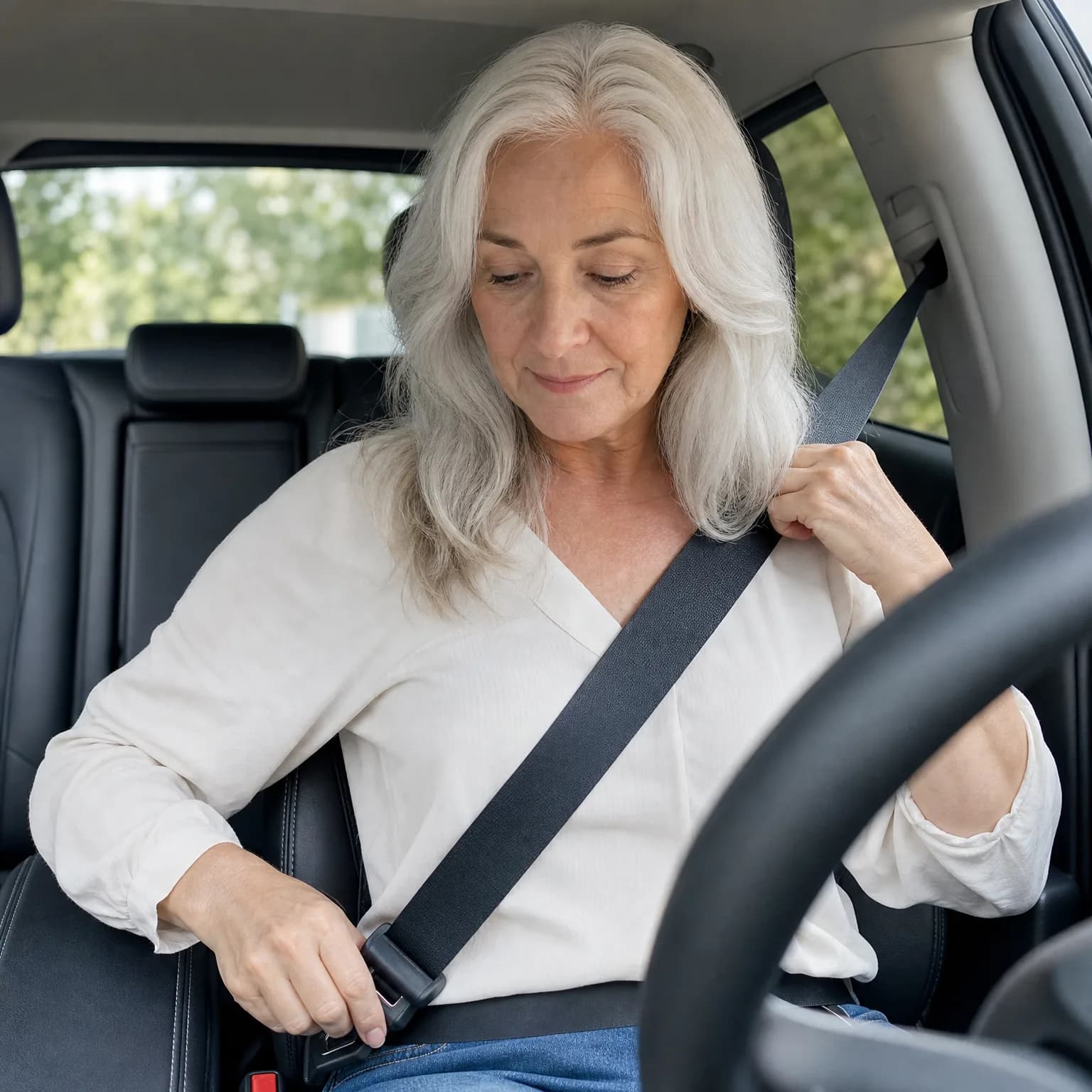
California requires insurers to offer mature driver course discounts, but carriers don't apply them automatically. You must complete an approved course, submit the certificate, and request the discount explicitly. Most Los Angeles seniors who qualify never claim it, leaving $200–$350 per year on the table. The discount typically ranges from 5–15% depending on your carrier, and it applies for three years before you need to recertify.
Approved courses in California include AARP Smart Driver (online or in-person, $25 for members), AAA Senior Driving courses ($20–$30), and other DMV-approved providers. The online versions take 4–6 hours total and can be completed in segments. You receive a certificate immediately upon completion, which you then submit to your insurer. Some carriers process the discount within one billing cycle; others require you to call and confirm they've applied it.
Here's the critical detail most articles miss: the discount expires after three years, and carriers don't remind you to recertify. If you completed a course in 2021, your discount likely disappeared in 2024 without notification. Check your current policy declarations page under "discounts applied." If you don't see "mature driver" or "defensive driving" listed, you're either not receiving it or it expired. Los Angeles drivers who recertify on schedule save more than those in lower-cost California markets because the percentage discount applies to a higher base premium.

Low-Mileage and Telematics Programs for Retired Los Angeles Drivers
If you're no longer commuting to work, you're likely driving 30–50% fewer miles than you did five years ago. Most Los Angeles seniors drive 5,000–8,000 miles annually compared to the California average of 12,000–14,000. Every major carrier offers low-mileage discounts, but you must notify them of your reduced driving—they won't lower your rate based on estimated mileage alone.
Low-mileage programs in California require odometer verification, either through photos you submit via app, annual odometer readings, or telematics devices that track actual mileage. Discounts range from 5–20% depending on how far below the threshold you drive. State Farm's Drive Safe & Save, Nationwide's SmartMiles, and Metromile's pay-per-mile model all serve the Los Angeles market. For drivers under 6,000 annual miles, pay-per-mile policies often deliver the steepest savings—$60–$90 per month compared to traditional full coverage.
Telematics programs also monitor driving behaviors: hard braking, acceleration, time of day, and speed. Many seniors hesitate because they assume the monitoring will increase rates, but the opposite is usually true. Los Angeles drivers who avoid rush hour, brake smoothly, and maintain consistent speeds see discounts of 10–25%. Progressive's Snapshot, Allstate's Drivewise, and Liberty Mutual's RightTrack all operate in LA. The key qualification: if you primarily drive during daylight hours on weekends and avoid the 405 during peak congestion, these programs reward exactly that behavior.
Full Coverage vs. Liability-Only: The Breakeven Calculation for Paid-Off Vehicles
If you own a paid-off vehicle worth less than $5,000–$7,000, you're likely paying more in annual comprehensive and collision premiums than you'd ever recover in a claim. A 2014 Toyota Camry with 110,000 miles has an actual cash value around $6,000–$7,500 in Los Angeles. If your collision and comprehensive premiums total $80–$100 per month, you're paying $960–$1,200 annually to insure a depreciating asset. After factoring in your deductible (typically $500–$1,000), a total loss claim nets you $5,500–$6,500.
The standard breakeven threshold: if your vehicle's value is less than 10 times your annual collision and comprehensive premium, dropping to liability-only makes financial sense for most seniors on fixed incomes. That same Camry owner paying $1,000 annually for full coverage crosses that threshold. Switching to liability-only typically reduces premiums by 40–50%, bringing monthly costs down from $200–$240 to $110–$140 in Los Angeles.
Before dropping coverage, consider two variables. First, do you have sufficient emergency savings to replace the vehicle if totaled? Most financial advisors recommend $5,000–$10,000 in accessible reserves before eliminating comprehensive and collision. Second, does your vehicle have sentimental or functional value beyond its cash worth? If this is the car you've driven for 15 years and you'd replace it with a similar model regardless of a claim payout, the math changes. But if you'd move to rideshare or public transit after a total loss, liability-only is usually the better financial decision.

See What Drivers Over 65 Are Paying Now
See If You Qualify for Discounts
Medical Payments Coverage and Medicare: What LA Seniors Actually Need
Most Los Angeles seniors carry medical payments coverage (MedPay) without understanding how it coordinates with Medicare. MedPay covers immediate accident-related medical expenses for you and your passengers regardless of fault. In California, it's optional, with limits typically ranging from $1,000 to $10,000. If you already have Medicare Parts A and B, MedPay functions as secondary coverage—it pays deductibles, copays, and expenses Medicare doesn't cover, like ambulance rides.
Here's the coordination most agents don't explain clearly: Medicare pays first for accident-related injuries, then MedPay covers the gap. A $5,000 MedPay policy on top of Medicare typically costs $8–$15 per month in Los Angeles. For seniors with Medigap policies that already cover Medicare deductibles and copays, this creates redundant coverage. Review your Medigap plan—if it includes coverage for Part A and Part B cost-sharing, you're paying twice for the same protection.
The exception: if you regularly transport grandchildren or friends without their own health insurance, MedPay covers their medical expenses as passengers. A $5,000 policy provides meaningful protection in that scenario. But for seniors who drive alone or only with a spouse who also has Medicare and Medigap, dropping MedPay or reducing it to the minimum $1,000 saves $80–$150 annually with minimal risk exposure. California doesn't require MedPay, and Medicare provides more comprehensive medical coverage than any auto policy.

Comparing Los Angeles Carriers: Which Offer the Best Senior-Specific Discounts
Not all carriers weight senior discounts equally in Los Angeles. CSAA (AAA's California underwriter) and Nationwide typically offer the most aggressive mature driver course discounts at 10–15%, while some direct writers like Geico and Progressive cap theirs at 5–8%. The difference on a $200 monthly premium is $20–$30 per month—$240–$360 annually.
When comparing quotes, request a detailed breakdown showing every applied discount. Los Angeles seniors typically qualify for 4–6 stackable discounts: mature driver course, low mileage, multi-policy (if you bundle home or renters insurance), paid-in-full, automatic payment, and loyalty. A 68-year-old Los Angeles driver with a clean record, 6,000 annual miles, and a mature driver certificate should see total discounts of 25–40% off base rates. If your current policy shows fewer than three applied discounts, you're likely overpaying.
Carrier stability matters for seniors who prefer long-term relationships. California's top-rated carriers for senior drivers—based on complaint ratios filed with the California Department of Insurance—include CSAA, Wawanesa, USAA (for military-affiliated families), and Auto Club Insurance Group. These carriers average fewer than 0.4 complaints per 1,000 policies for the 65+ demographic, compared to the state average of 0.8. Lower complaint ratios typically correlate with smoother claims processes and fewer unexpected non-renewals.
State-Specific Programs and Resources for California Senior Drivers
California offers several state-administered resources most Los Angeles seniors don't know exist. The California Department of Motor Vehicles' Senior Ombudsman Program provides free guidance on license renewal requirements, medical review processes, and your rights during re-examination. If you've received a re-examination notice or have questions about vision or knowledge test requirements, this program offers direct assistance without going through your insurer.
The California Low Cost Automobile Insurance Program serves drivers with limited incomes who meet specific eligibility requirements. For seniors with annual household incomes under $34,480 (individual) or $46,620 (couple), the program offers liability coverage starting at $376–$521 annually—significantly below market rates. Coverage limits are lower than full commercial policies, but for seniors driving older vehicles who only need liability protection, it's a viable option administered through participating carriers.
California also mandates that insurers cannot non-renew your policy solely due to age. If you receive a non-renewal notice, the carrier must cite specific underwriting reasons—claims history, license status changes, or material misrepresentation. Age alone is not a permissible reason under California Insurance Code Section 1861.02. If you suspect age discrimination in underwriting or renewal, file a complaint directly with the California Department of Insurance—they investigate every submission and have enforcement authority over carriers operating in the state.
Frequently Asked Questions
Do I have to retake the mature driver course every three years in California?
Yes, mature driver discounts in California expire after three years, and you must complete an approved refresher course to maintain the discount. Most carriers don't send reminders when your certification expires, so the discount simply disappears from your policy. Set a calendar reminder for 2.5 years after completion to recertify before it lapses.
Will my car insurance automatically decrease when I retire and stop commuting?
No, insurers don't automatically adjust your rate when you retire. You must contact your carrier, report your reduced annual mileage, and request enrollment in a low-mileage or pay-per-mile program. Most require odometer verification through photos or telematics devices to confirm the lower mileage before applying discounts.
Can my insurance company drop me just because I turned 75?
No, California law prohibits insurers from non-renewing policies based solely on age. If you receive a non-renewal notice, the carrier must provide specific underwriting reasons such as claims history, license suspension, or fraud. Age alone is not a legally permissible reason under California Insurance Code Section 1861.02.
Should I keep medical payments coverage if I already have Medicare?
It depends on your Medigap coverage. If you have a Medigap plan that covers Medicare deductibles and copays, medical payments coverage on your auto policy is largely redundant. The exception is if you regularly transport passengers without health insurance—MedPay covers their medical expenses regardless of fault.
How much can I save by switching from full coverage to liability-only on my paid-off car?
Los Angeles drivers typically save 40–50% by dropping comprehensive and collision coverage on paid-off vehicles. On a $200/month full coverage policy, that translates to $80–$100 monthly savings, or roughly $1,000–$1,200 annually. The decision depends on your vehicle's current value and whether you have emergency savings to replace it if totaled.
Related Articles
Convert Joint Auto Insurance After Spouse Dies | Wisconsin
4/29/2026

Oregon License Renewal at 85: Testing & Insurance Impact
4/29/2026
MO License Renewal at 75: Tests, Restrictions & Rates
4/29/2026

Surviving Spouse Auto Insurance in Colorado: Transfer Rules
4/29/2026

Car Insurance After 70: Lower Rates Despite Increases
4/1/2026
Spouse Died in Hawaii: Convert Joint Auto Policy
4/29/2026