
Senior Driver Insurance Comparison Guide for Tucson
Free to compare
How Auto Insurance Rates Change for Tucson Drivers After 65
Arizona carriers typically begin adjusting premiums upward starting around age 70, with rate increases averaging 8–15% between ages 70 and 75 for Tucson drivers with clean records. Unlike some states that cap age-based rate increases, Arizona does not mandate rate protections for senior drivers, meaning carriers have considerable latitude in how they price policies for older drivers.
The timing matters significantly: most carriers apply modest adjustments between 65 and 70, then steeper increases after 70 and again after 75. A Tucson driver paying $95/mo at age 68 might see that climb to $108/mo by age 73 and $122/mo by age 77, even with no accidents or violations. These increases reflect actuarial tables, not individual driving performance.
However, Arizona does require carriers to offer mature driver course discounts, which can offset 5–15% of your premium depending on the insurer. The problem: fewer than 30% of eligible Arizona seniors actually claim this discount, according to AARP data, because carriers don't automatically enroll you when you turn 65 or remind you at renewal. You must complete an approved course and submit proof to your insurer.

Mandatory Mature Driver Course Discounts in Arizona
Arizona law requires insurers to offer premium reductions to drivers who complete state-approved defensive driving or mature driver courses. The discount typically ranges from 5% to 15% and remains active for three years from course completion. AARP Driver Safety and AAA Mature Driving courses are the most widely accepted programs in Tucson, with both offering in-person and online formats.
The AARP course costs $25 for members ($20 online) and takes approximately four hours to complete. AAA's program runs $25–$30 depending on format. If your current premium is $110/mo and you qualify for a 10% discount, that's $132 in annual savings — a return of more than 400% on a $25 course investment in the first year alone. The discount renews as long as you retake an approved course every three years.
Timing the course strategically matters: complete it 30–45 days before your policy renewal date, then submit your certificate of completion directly to your agent or carrier. Some insurers apply the discount retroactively to your renewal date; others apply it only from the date you submit documentation. Call your carrier before enrolling to confirm their specific processing timeline and which courses they accept — not all approve every program.
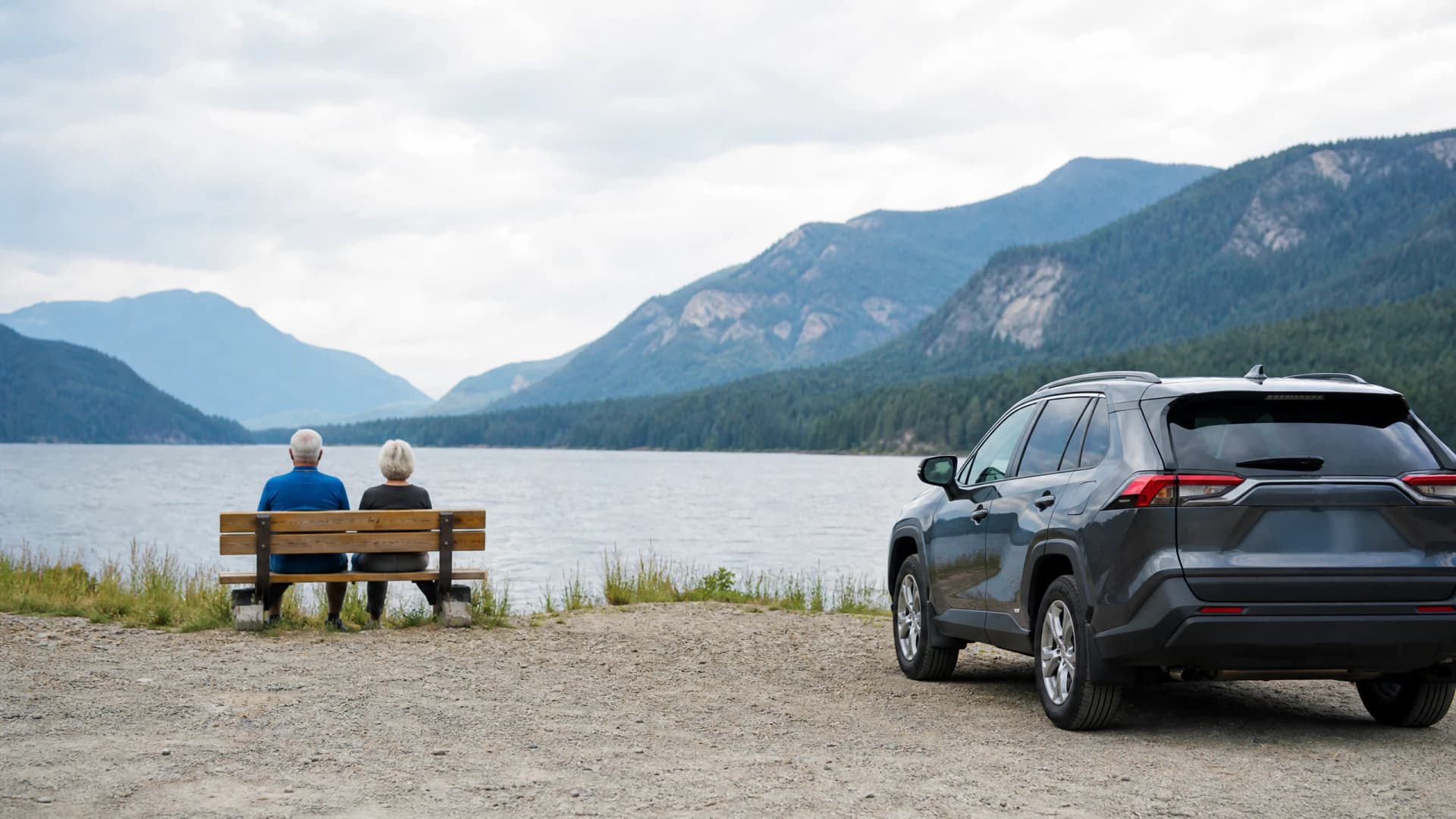

Low-Mileage and Usage-Based Programs for Retired Tucson Drivers
If you no longer commute to work and drive fewer than 7,500 miles annually, low-mileage discounts can reduce premiums by 10–25% with most major carriers operating in Tucson. State Farm, Progressive, and Nationwide all offer mileage-based programs, but qualification thresholds and verification methods vary significantly.
Progressive's Snapshot program uses a plug-in device or smartphone app to track actual mileage and driving patterns, offering discounts up to 30% for drivers who log minimal miles and avoid hard braking. State Farm's Drive Safe & Save works similarly but weights mileage more heavily than driving behavior. Nationwide's SmartMiles charges a base rate plus a per-mile fee, which can dramatically reduce costs for Tucson seniors driving under 5,000 miles per year — but becomes expensive if you suddenly take a long road trip.
The critical question: how does the program handle annual mileage verification? Some carriers require odometer photos at renewal; others use telematics continuously. If you're uncomfortable with tracking technology or drive inconsistently — 3,000 miles some years, 9,000 others — a traditional low-mileage discount based on self-reported annual miles may offer better value than a usage-based program that penalizes variability.
Full Coverage vs. Liability-Only on Paid-Off Vehicles
Once your vehicle is paid off and worth less than $4,000–$5,000, the math on comprehensive and collision coverage often stops making sense for Tucson drivers on fixed incomes. If your vehicle is worth $3,500 and your combined comprehensive and collision premium is $45/mo, you're paying $540 annually to insure an asset worth $3,500 — and that's before your deductible.
Run this calculation: if your deductible is $500 and your car's actual cash value is $3,200, the maximum payout after a total loss is $2,700. Divide your annual comprehensive and collision premium by that maximum payout. If you're paying $600/year in coverage for a potential $2,700 payout, you'll break even only if you total your vehicle every 4.5 years. Most senior drivers with clean records go decades without total-loss claims.
Before dropping full coverage, confirm you maintain Arizona's minimum liability limits — $25,000 per person and $50,000 per accident for bodily injury, plus $15,000 for property damage. Many Tucson seniors carry higher liability limits ($100,000/$300,000/$100,000 or more) because retirement assets and home equity create lawsuit exposure that state minimums don't adequately protect. Dropping collision and comprehensive makes sense on older vehicles; reducing liability coverage rarely does.

See What Drivers Over 65 Are Paying Now
See If You Qualify for Discounts
How Medical Payments Coverage Interacts with Medicare in Arizona
Medical payments coverage (MedPay) pays for accident-related medical expenses regardless of fault, with limits typically ranging from $1,000 to $10,000. For Tucson seniors on Medicare, the question is whether MedPay duplicates existing health coverage or fills a gap.
Medicare Part B covers injuries sustained in auto accidents, but you'll pay the annual deductible ($240 in 2024) plus 20% coinsurance on all covered services. MedPay acts as primary coverage, paying before Medicare, which means it can cover your deductible and coinsurance without triggering Medicare Secondary Payer rules. A $5,000 MedPay policy typically costs $8–$15/mo in Tucson — reasonable if you want to avoid out-of-pocket costs after an accident.
The coverage becomes more valuable if you regularly transport passengers. MedPay covers anyone injured in your vehicle, including friends or family members who may not have their own health insurance or whose plans carry high deductibles. If your spouse rides with you frequently and has a Medicare Advantage plan with a $3,000 annual out-of-pocket maximum, MedPay can prevent a single accident from consuming their entire deductible. Review your specific Medicare plan's accident coverage and cost-sharing structure before deciding whether to add or drop MedPay.

Comparing Tucson Carriers for Senior-Specific Programs
Not all carriers operating in Tucson offer the same senior-focused discounts or rate structures. USAA (available only to military members and families) and Auto-Owners consistently rank among the most competitive for senior drivers in Arizona, while GEICO and Progressive often deliver better rates for drivers willing to use telematics or usage-based programs.
State Farm and Farmers maintain strong local agent networks in Tucson, which some seniors prefer for in-person service and claims support, but their rates for drivers over 70 trend 12–18% higher than direct-to-consumer carriers for comparable coverage. The trade-off: local agents can bundle home and auto policies, review your coverage annually, and sometimes identify discounts you've missed — services that online-only carriers don't provide.
When comparing quotes, request identical coverage limits and deductibles from each carrier, and specifically ask about mature driver course discounts, low-mileage programs, and multi-policy bundling. A quote that appears $20/mo cheaper may exclude coverages you currently carry or assume annual mileage you no longer drive. Arizona requires carriers to provide renewal notices 30 days before your policy expires, giving you time to shop and switch without a coverage gap — but waiting until the week before renewal limits your options and leverage.
When to Re-Evaluate Your Tucson Auto Insurance Coverage
Three triggering events should prompt a full coverage review for Tucson senior drivers: your vehicle reaching 8–10 years old or dropping below $5,000 in value, your annual mileage falling below 7,500 miles for two consecutive years, or your premium increasing more than 10% at renewal without a corresponding claim or violation.
If you've recently relocated within Tucson — say, from the Catalina Foothills to central Tucson near the University of Arizona — your rate should reflect the new ZIP code's claim frequency and theft rates. Carriers often fail to adjust rates downward when you move to a lower-risk area but always increase them when you move to higher-risk zones. Request a re-rating based on your current garaging address.
Finally, if an adult child or family member has suggested it's time to reconsider your coverage, treat that as an opportunity for a collaborative review rather than a confrontation. Bring your current policy, recent renewal notice, and a list of how many miles you've driven in the past 12 months. Many Tucson seniors discover they're overinsured on older vehicles but underinsured on liability — a combination that costs more and protects less than a properly structured policy.
Frequently Asked Questions
Do Tucson auto insurance rates automatically decrease when I retire and stop commuting?
No, carriers do not automatically adjust your rate when you retire. You must contact your insurer, update your annual mileage estimate, and ask about low-mileage or usage-based discounts. Most Tucson carriers require you to request these programs explicitly — they are not applied at renewal without your action.
How long does the Arizona mature driver course discount last?
The discount remains active for three years from the date you complete an approved mature driver course. You must retake an approved course and resubmit documentation every three years to maintain the discount. Set a calendar reminder 90 days before expiration to avoid losing the benefit.
Should I keep comprehensive coverage on a 12-year-old paid-off sedan in Tucson?
If the vehicle's actual cash value is below $5,000 and your annual comprehensive and collision premium exceeds 15–20% of that value, dropping full coverage and keeping only liability usually makes financial sense. Calculate your maximum potential payout (vehicle value minus deductible) and compare it to what you're paying annually for that protection.
Can I take the AARP mature driver course online and still get the Arizona insurance discount?
Yes, all major carriers operating in Tucson accept AARP's online Driver Safety course for the mandatory mature driver discount. The online version costs $20 for AARP members, takes about four hours, and generates a certificate you submit directly to your insurer. Confirm your specific carrier accepts online courses before enrolling.
Does Medicare cover all my medical costs if I'm injured in a car accident in Tucson?
Medicare Part B covers accident-related injuries, but you'll pay the annual deductible and 20% coinsurance on all services. Medical payments coverage (MedPay) on your auto policy pays first, covering your Medicare deductible and coinsurance without affecting your health insurance. A $5,000 MedPay policy typically costs $8–$15/mo in Tucson.
Related Articles

Convert Joint Auto Insurance After Spouse Dies | Wisconsin
4/29/2026

Oregon License Renewal at 85: Testing & Insurance Impact
4/29/2026

MO License Renewal at 75: Tests, Restrictions & Rates
4/29/2026

Surviving Spouse Auto Insurance in Colorado: Transfer Rules
4/29/2026

Car Insurance After 70: Lower Rates Despite Increases
4/1/2026

Spouse Died in Hawaii: Convert Joint Auto Policy
4/29/2026