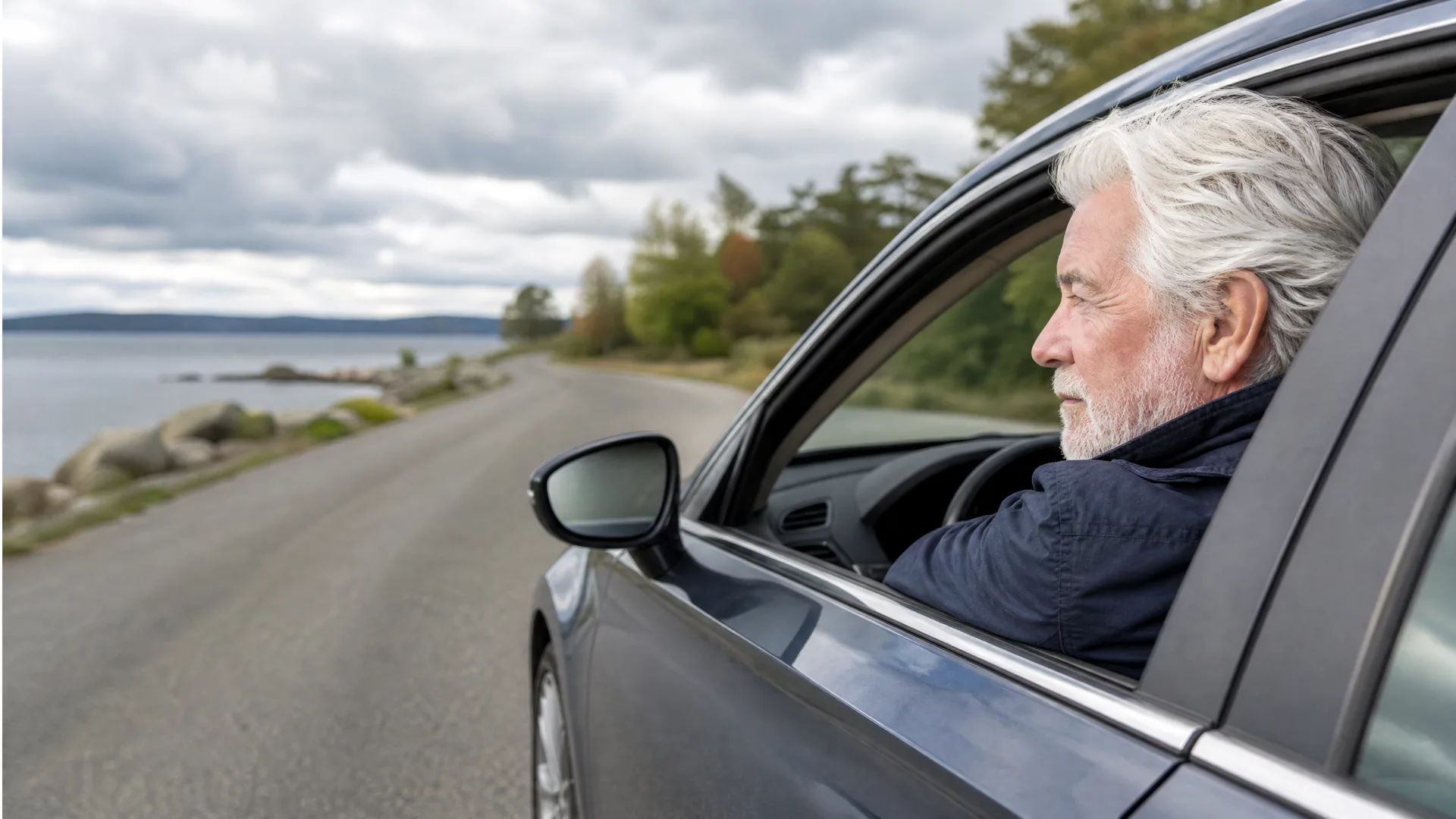
Vision Exams and License Renewal for Alaska Drivers Over 65
Free to compare
When Does Alaska Require Vision Testing at Renewal?
Alaska requires vision testing at every license renewal once you turn 69. Below that age, you renew without an in-person vision exam unless the DMV has been notified of a medical condition affecting your vision. At 69 and older, you must pass a vision screening administered by the DMV or submit a Vision Examination Certificate completed by an optometrist or ophthalmologist within the past 12 months.
The standard is 20/40 vision in at least one eye, with or without corrective lenses. If you wear glasses or contacts, bring them to the test. If your corrected vision falls below 20/40 but meets 20/70 with both eyes open, you can still drive legally in Alaska, but the DMV will place restrictions on your license.
If you know your vision has declined since your last renewal, schedule an eye exam with your optometrist before your DMV appointment. Arriving with a completed Vision Examination Certificate from your doctor often moves the process faster and gives you a clearer picture of what restrictions, if any, will apply.

What Happens If You Don't Pass the Vision Test?
If your vision measures between 20/70 and 20/100 in your better eye, Alaska will issue a restricted license rather than suspend it outright. Common restrictions include daylight driving only, no freeway driving, requirement for outside mirrors on both sides of the vehicle, or a geographic radius limit. The specific restriction depends on your measured acuity and any peripheral vision limitations identified during the exam.
If your vision falls below 20/100 in both eyes even with correction, Alaska will not renew your license. At that threshold, the state considers your vision insufficient for safe operation of a vehicle under any restriction. You have the right to appeal through a DMV hearing, but the burden is on you to demonstrate that adaptive equipment or other accommodations allow you to drive safely.
A failed vision test triggers a DMV report to your insurance carrier in most cases. Carriers treat a vision-based restriction similarly to a minor moving violation when recalculating your premium at renewal. Expect an increase of 10–20% if a new restriction appears on your record, though the impact varies by carrier and your overall driving history.


Should You Request a Restriction Before You Fail the Test?
If you've already stopped driving at night because of glare sensitivity or reduced contrast perception, requesting a daylight-only restriction before your renewal can prevent a test failure from appearing on your DMV record. Alaska allows drivers to voluntarily accept restrictions if they submit a Vision Examination Certificate from their eye doctor recommending the limitation.
This matters because a proactive restriction looks different to insurers than a failed test. When you request the restriction in advance, there's no failure event reported to your carrier. The restriction itself still appears on your license and may trigger a rate adjustment, but you avoid the compounding effect of a test failure combined with the restriction.
Most senior drivers don't realize this option exists. If your night vision has declined to the point where you've already modified your driving habits, formalizing that limitation with the DMV before renewal can save you both the stress of a failed exam and a steeper insurance increase.
How Vision Restrictions Affect Your Auto Insurance Rates in Alaska
Carriers in Alaska receive notification when the DMV adds a restriction to your license, whether it's for vision, medical conditions, or adaptive equipment requirements. A daylight-only restriction typically increases premiums by 8–15% at your next renewal. More severe restrictions, such as geographic radius limits or no-freeway endorsements, can trigger increases of 15–25%.
The rate impact depends on how the carrier classifies the restriction in their underwriting model. Some treat vision restrictions as equivalent to a minor violation. Others apply a medical risk surcharge. A few carriers, particularly those with senior-focused programs, apply no surcharge if you've maintained a clean driving record for three or more years prior to the restriction.
If you receive a restriction, contact your agent or carrier before your policy renews. Ask specifically whether the restriction triggers a surcharge, whether that surcharge applies if you reduce your annual mileage below a certain threshold, and whether completing a mature driver course offsets the increase. State Farm and GEICO have both waived vision restriction surcharges for Alaska drivers who reduce their reported mileage below 5,000 miles per year and complete an approved defensive driving course.

See What Drivers Over 65 Are Paying Now
See If You Qualify for Discounts
What Counts as an Approved Vision Examination in Alaska?
Alaska accepts vision exams from licensed optometrists and ophthalmologists. The exam must be documented on the state's Vision Examination Certificate form, available as a PDF download from the Alaska DMV website or at any DMV office. Your eye doctor completes the form during your exam, certifies your visual acuity with and without correction, notes any field of vision limitations, and signs the certificate.
The certificate is valid for 12 months from the exam date. If your renewal falls outside that window, you'll need a new exam. Some optometry offices in Anchorage, Fairbanks, and Juneau are familiar with the DMV form and keep copies on hand. If your provider hasn't completed one before, bring a printed copy to your appointment.
Do not rely on your general physician to complete this form unless they are also licensed as an optometrist or ophthalmologist. Alaska does not accept vision screenings from primary care doctors, urgent care clinics, or nurse practitioners for license renewal purposes. Only exams conducted by eye care specialists meet the DMV's standard.

Can You Drive While Waiting for a Restricted License to Arrive?
Once you pass the vision test and the DMV processes your renewal with a restriction, Alaska issues a temporary paper license valid for 60 days. You are legally allowed to drive under the terms of the restriction using this temporary document while the permanent card is mailed. The restriction is printed on the temporary license, and you must comply with it immediately.
If you fail the vision test and are awaiting an appeal hearing or additional documentation, Alaska does not issue a temporary license. Your driving privileges are suspended from the date of the failed test until the issue is resolved. Driving during this suspension period is illegal and will result in a citation for driving without a valid license, which carries a minimum fine of $500 and potential vehicle impoundment.
If you need to drive for medical appointments or essential errands while your license status is uncertain, contact Alaska's DMV Driver Services division to confirm whether a provisional permit is available in your situation. These are rare and granted only under specific hardship circumstances.
Should You Drop Collision and Comprehensive If You Get a Daylight Restriction?
A daylight-only restriction reduces your annual mileage and limits your exposure to higher-risk driving conditions, which is why some senior drivers consider dropping collision and comprehensive coverage once a restriction is in place. If your vehicle is paid off, worth less than $5,000, and you drive fewer than 3,000 miles per year, the math often supports reducing to liability-only coverage.
Before making that change, calculate your total annual premium for collision and comprehensive against your vehicle's actual cash value. If you're paying more than 10% of the vehicle's value annually to insure it for physical damage, and you have sufficient savings to replace the vehicle out of pocket, dropping those coverages makes sense. If your vehicle is worth $8,000 and you're paying $600 per year for comp and collision, you're paying 7.5% annually to insure an asset you could self-insure.
Keep in mind that Alaska's winter driving conditions increase the likelihood of weather-related comprehensive claims even for drivers who avoid night and highway driving. If you park outside and your area sees heavy snow, hail, or ice storms, comprehensive coverage remains cost-effective even on an older vehicle. Many senior drivers in Anchorage and Fairbanks keep comprehensive but drop collision once a restriction reduces their highway and commute exposure.
Frequently Asked Questions
Does Alaska require vision tests for drivers under 69?
Alaska does not require vision testing at renewal for drivers under 69 unless the DMV receives a medical report indicating a vision impairment. Once you turn 69, vision testing becomes mandatory at every renewal regardless of your driving record or medical history.
Will my insurance company find out if I get a vision restriction on my Alaska license?
Yes. The Alaska DMV reports all license restrictions to insurers, including vision-based limitations. Most carriers apply a surcharge of 8–15% when a daylight or other vision restriction appears on your record, though some waive the increase if you maintain a clean driving record and reduce your annual mileage.
Can I renew my Alaska license online if I'm over 69?
No. Alaska requires in-person renewal with vision testing once you turn 69. You must visit a DMV office or submit a Vision Examination Certificate completed by a licensed optometrist or ophthalmologist. Online renewal is not available for drivers 69 and older.
What is the vision requirement for an unrestricted Alaska driver's license?
Alaska requires 20/40 vision in at least one eye, with or without corrective lenses, for an unrestricted license. If your corrected vision is between 20/70 and 20/100, you can still drive with restrictions such as daylight-only or no-freeway endorsements.
How long does a vision restriction stay on my Alaska license?
Vision restrictions remain on your Alaska license unless your vision improves and you submit a new Vision Examination Certificate showing you meet the 20/40 standard. You can request restriction removal at any time by passing a new exam administered by the DMV or your eye doctor.
Related Articles

Alaska License Renewal at 75: Medical & Rate Rules
4/29/2026

Alabama License Renewal at 70: Vision & Insurance Impact
4/29/2026

Alabama Vision Test at 65: Restrictions & Insurance
4/29/2026

Alabama License Renewal at 85: Testing and Insurance
4/29/2026

Hawaii Vision Test for Seniors: Renewal Requirements
4/29/2026

Oregon Vision Test at Renewal: Senior Driver Guide
4/29/2026