Connecticut Vision Test and License Renewal After 65
Free to compare
What Connecticut's Vision Standard Actually Requires
Connecticut requires 20/40 vision in at least one eye, with or without corrective lenses, to pass the standard license renewal vision test. This is less strict than the 20/20 standard many drivers assume applies. If you wear glasses or contacts and can read the 20/40 line with them on, you pass — the examiner will note the corrective lens restriction on your license, but you keep full driving privileges.
The test measures distance vision only. Peripheral vision, color perception, and depth perception are not formally tested during standard renewals, though an examiner can refer you for additional evaluation if they observe signs of impairment during the appointment. Connecticut does not accept vision test results from your optometrist — the test must be administered in person at DMV during your renewal visit.
Drivers over 65 must renew in person every four years, and the vision test is administered at every renewal. There is no option to renew online or by mail once you turn 65, regardless of how clean your driving record is. The vision requirement is the same whether you're renewing at 66 or 86 — Connecticut does not impose stricter standards for older age brackets.
What Happens If You Don't Pass the 20/40 Standard
A failed vision test results in immediate denial of your renewal. Your existing license remains valid for 60 days from the test date, giving you time to see an eye care provider, obtain updated corrective lenses, and return for retesting. If you do not retest and pass within 60 days, your license is suspended.
Connecticut does not mail advance notice about the 60-day window. The examiner will hand you a form explaining the retest requirement and the suspension date, but you are responsible for tracking the deadline. Missing it means paying a $175 reinstatement fee and completing the full vision retest process after suspension — you cannot simply walk in and retest once suspended.
If your vision cannot be corrected to 20/40 in at least one eye, you are not automatically barred from driving. Connecticut offers restricted licenses for drivers who meet alternative visual acuity standards, but you must request the restriction evaluation at the time of your failed test. DMV staff are not required to offer this option proactively — most will, but not all do.

How Restricted Licenses Work for Drivers Who Don't Meet 20/40
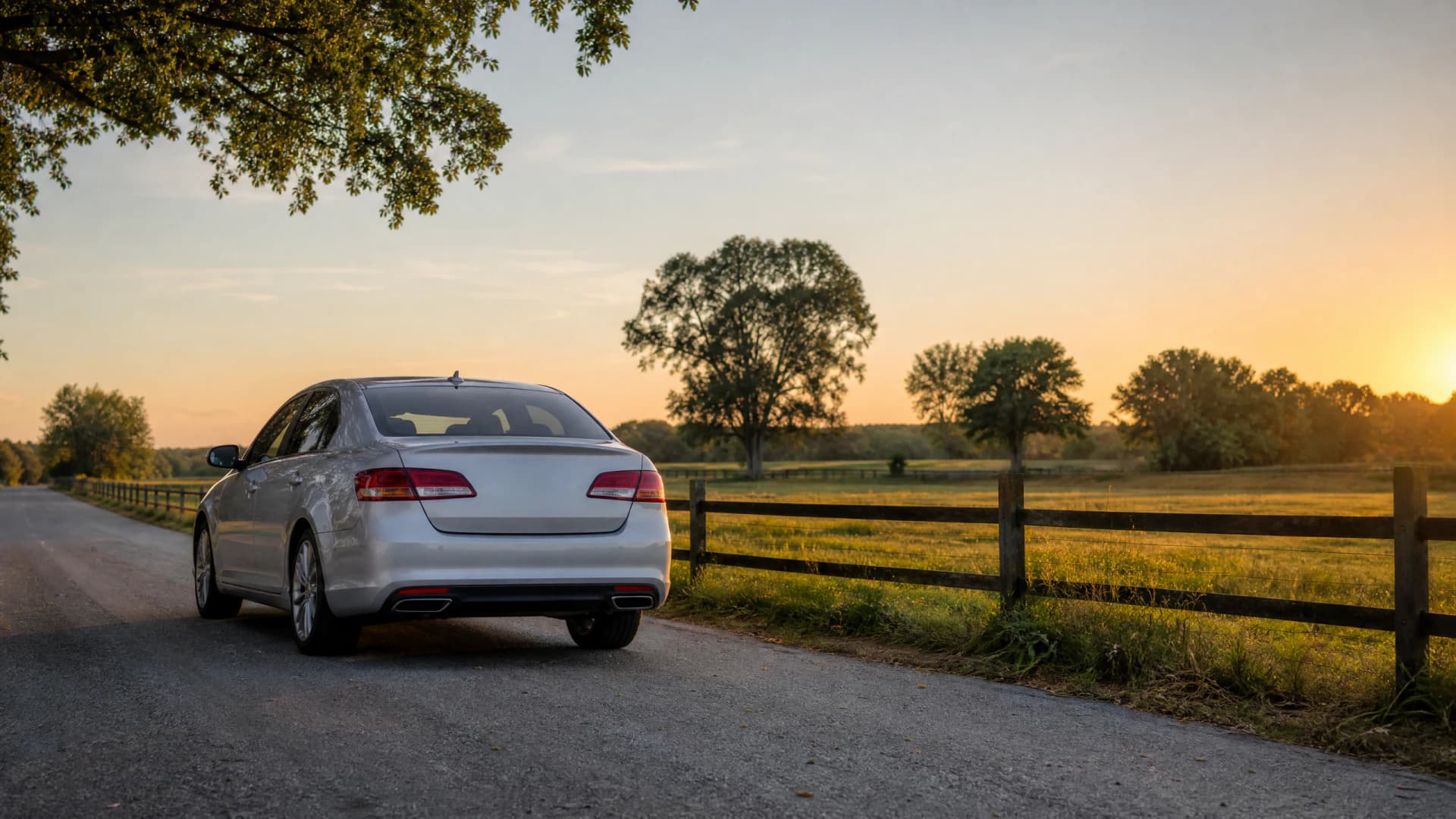
Connecticut issues daylight-only restricted licenses to drivers with visual acuity between 20/50 and 20/70 in at least one eye. This restriction limits you to driving during daylight hours only, defined as sunrise to sunset, and prohibits night driving even with headlights or in well-lit areas. The restriction is printed on your license and enforced by law — driving outside permitted hours is treated as driving without a valid license.
To qualify for a daylight restriction, you must request the evaluation during your renewal appointment after failing the standard test. The same DMV examiner will retest you using the daylight standard chart. If you meet the 20/50 threshold, the restriction is applied immediately and you receive your renewed license that day. There is no additional fee beyond the standard renewal cost.
If your vision is worse than 20/70 in both eyes, Connecticut does not issue a restricted license. At that threshold, you must cease driving and surrender your license. The state does not offer area-restricted licenses (limiting you to familiar routes or neighborhoods) or speed-restricted licenses — daylight-only is the sole restriction category based on vision impairment.

See What Drivers Over 65 Are Paying Now
See If You Qualify for DiscountsProgressive Conditions and When to Test Before Your Renewal Date
If you have been diagnosed with macular degeneration, glaucoma, diabetic retinopathy, or cataracts, your vision may deteriorate between renewal cycles. Connecticut allows you to request a vision retest at any DMV branch before your scheduled renewal date if you believe your vision has changed enough to affect your driving.
Requesting an early test does not reset your renewal cycle or extend your current license expiration. If you pass, your existing license remains valid until its printed expiration date — the early test simply confirms you still meet the standard. If you fail, the 60-day retest window begins immediately, even if your license wasn't set to expire for another year.
This option is underused but valuable for drivers managing degenerative eye conditions. Testing early, when you first notice vision changes, gives you time to adjust to corrective lens updates or pursue cataract surgery before your license expires. Waiting until your mandatory renewal date compresses that adjustment period into 60 days, which is often insufficient for surgical scheduling and recovery.

What Auto Insurers Need to Know About Vision Restrictions
Connecticut law requires you to notify your auto insurer within 30 days if your license is restricted or suspended for any reason, including vision-related restrictions. Failing to disclose a daylight-only restriction can void your coverage if you are involved in an accident outside permitted hours — the insurer can deny the claim on the basis of material misrepresentation.
Most insurers do not increase your premium solely because you now hold a daylight-restricted license. The restriction actually reduces your exposure — you are no longer driving during higher-risk night hours, which statistically reduces collision probability for your age group. Some carriers apply a small rate reduction for restricted licenses, though this is not automatic and must be requested.
If your license is suspended for failing to retest within 60 days, your insurer will be notified through Connecticut's continuous monitoring system. A suspension for vision-related non-compliance typically results in a 10-20% premium increase for 3-5 years after reinstatement, even if you pass the retest and restore full privileges. The increase reflects underwriting treatment of any suspension period, regardless of cause. Avoiding suspension by retesting within the 60-day window eliminates this rate consequence entirely.

Medical Payments Coverage and Medicare Coordination for Senior Drivers
Connecticut does not require medical payments coverage, but if you carry it and are injured in an accident, it pays before Medicare processes the claim. Most senior drivers over 65 assume Medicare covers all accident-related injuries, but Medicare is a secondary payer when auto insurance medical payments coverage exists — your auto policy pays first, up to your coverage limit, and Medicare covers remaining eligible expenses.
This coordination matters for drivers with restricted licenses. If you are involved in an accident during prohibited hours (night driving on a daylight-only license), your liability coverage may still apply depending on fault determination, but your medical payments coverage can be denied outright. The insurer treats driving outside restriction as operating without a valid license, which voids first-party medical coverage in most policies.
If you currently carry medical payments coverage and transition to a restricted license, confirm with your insurer whether the restriction affects your first-party benefits. Some carriers treat restrictions as acceptable licensure and continue coverage during permitted hours. Others categorize any restriction as elevated risk and exclude medical payments entirely. The policy language varies by carrier — this is not standardized across Connecticut insurers.
Frequently Asked Questions
Can I use my eye doctor's vision test results instead of taking the DMV test?
No. Connecticut does not accept vision certification from optometrists or ophthalmologists for license renewal. You must complete the vision test in person at DMV during your renewal appointment, even if you have recent professional test results showing you meet the standard.
Will my insurance rate go up if I get a daylight-only restricted license?
Most insurers do not increase rates for a daylight-only restriction — some apply a small reduction because you are no longer driving during higher-risk night hours. You must notify your insurer within 30 days of receiving the restriction, but the restriction itself typically does not trigger a premium increase for senior drivers.
What happens if I fail the vision test on my 65th birthday renewal?
Your current license remains valid for 60 days from the test date. You must see an eye care provider, obtain updated corrective lenses if needed, and return to DMV for retesting within that window. If you do not retest and pass within 60 days, your license is suspended and you must pay a $175 reinstatement fee.
Can I request a restricted license for familiar routes only if my vision is declining?
No. Connecticut offers only one vision-based restriction: daylight driving for drivers with visual acuity between 20/50 and 20/70 in at least one eye. The state does not issue area-restricted or route-restricted licenses based on vision impairment.
Does Medicare cover accident injuries if I have medical payments coverage on my auto policy?
Your auto insurance medical payments coverage pays first, up to your policy limit, and Medicare covers remaining eligible expenses as secondary payer. If you are driving outside the terms of a restricted license when the accident occurs, your medical payments coverage may be denied entirely, leaving Medicare as primary for the claim.