
Kentucky Vision Exam at Renewal: What Seniors Need to Know
Free to compare
Kentucky's Vision Standard at License Renewal for Drivers 65 and Older
Kentucky requires 20/60 vision in at least one eye with corrective lenses if needed. This is more lenient than many states — you don't need 20/40 vision, and you don't need both eyes to pass. The test happens at every renewal after age 65, which shifts to in-person every four years starting at your first renewal after turning 65.
Most senior drivers pass without issue if they wear updated prescription glasses or contacts. The DMV uses a standard vision screening machine, not a full eye exam. You read lines of letters or numbers at a fixed distance. The entire test takes under two minutes.
If you wear glasses or contacts for distance vision, bring them to your renewal appointment. The examiner will not pass you based on uncorrected vision if you normally drive with corrective lenses. Kentucky does not allow you to renew online or by mail once vision testing becomes mandatory at age 65, regardless of your driving record.
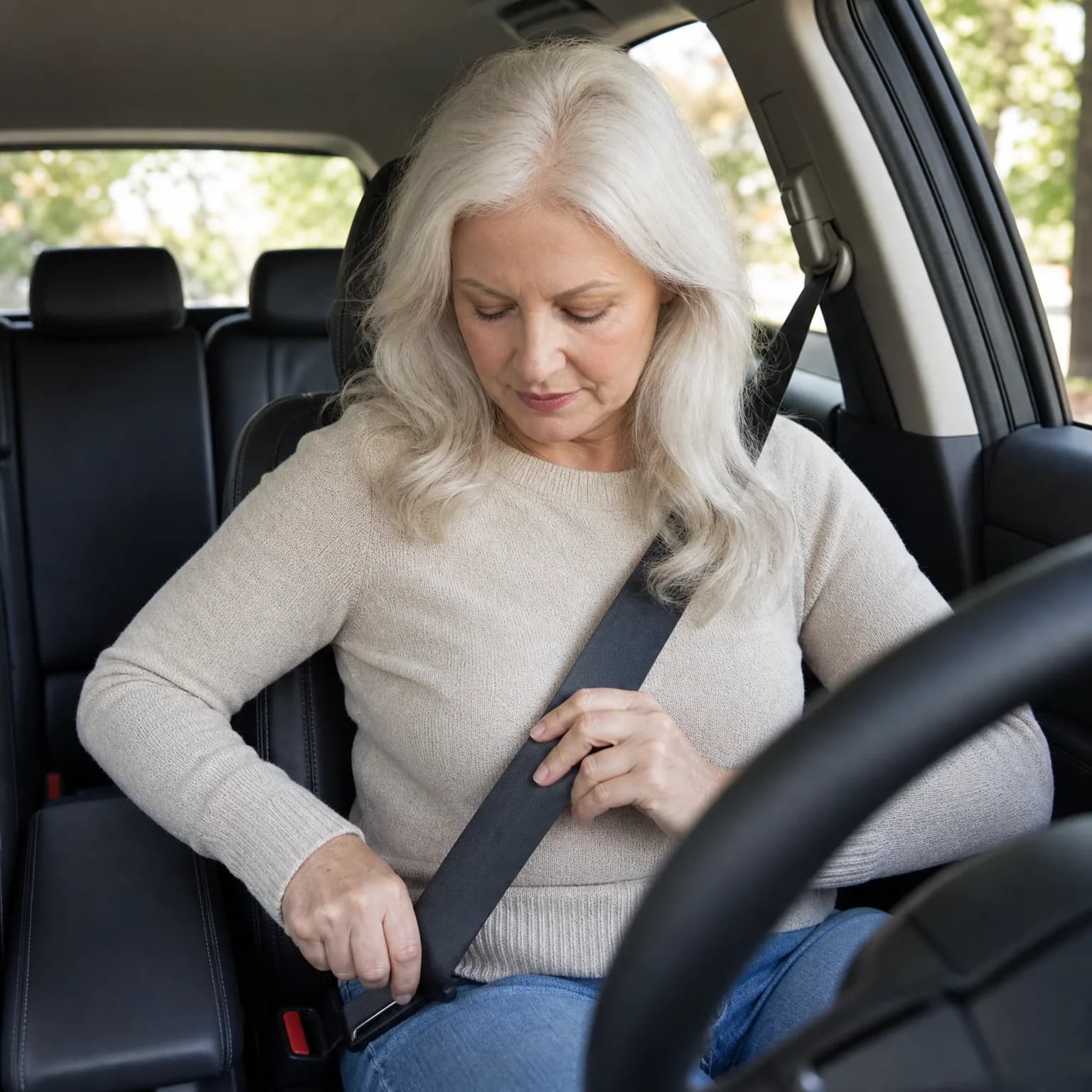
What Happens If You Don't Meet the 20/60 Standard
Failing the vision screening does not immediately suspend your license. Kentucky issues a 60-day temporary driving permit and requires you to see an eye care professional for a full exam. The eye doctor completes a Vision Examination Report (Form TC 96-187) and submits it to the Kentucky Transportation Cabinet.
If the eye exam confirms you cannot reach 20/60 vision in either eye even with correction, Kentucky will not renew your license without restrictions. The state offers several restriction options: daylight driving only, limited radius from home, no interstate highways, or a requirement for outside mirrors on both sides. Your eye doctor recommends appropriate restrictions based on your specific vision limitations.
The 60-day permit allows you to continue driving legally while resolving the vision issue. If you don't submit the completed eye exam form within 60 days, your license suspends automatically. Under current state requirements, that suspension requires you to restart the renewal process from the beginning once your vision situation is resolved, including paying all fees again.

Requesting a Restricted License Before You Fail the Vision Test
Kentucky allows you to request driving restrictions voluntarily at renewal even if you pass the vision screening. This is underutilized by senior drivers who know their night vision has declined but can still meet the 20/60 daytime standard.
Voluntary restrictions avoid the failure-and-retest cycle. If you request a daylight-only restriction before taking the vision test, you bypass the mandatory eye doctor visit and the 60-day temporary permit process. The restriction appears on your license immediately, and you leave the DMV with a valid renewed license that day.
The distinction matters for insurance reporting. A failed vision test triggers a state notification to your insurer in some cases, particularly if you required the 60-day medical permit. A voluntary restriction requested at the time of renewal does not generate the same automatic notification, though insurers can see the restriction code when they pull your motor vehicle record at your next policy renewal.
How Vision Restrictions Affect Your Auto Insurance Rates
Kentucky does not require you to notify your insurance carrier when you add a driving restriction to your license. Your insurer will see the restriction when they pull your MVR, which most carriers do annually at policy renewal.
Daylight-only restrictions typically do not increase your premium. Most senior drivers with this restriction already drive primarily during daylight hours, so the restriction reflects existing behavior rather than new risk. Some carriers view it as a responsible disclosure and apply no rate adjustment.
Carriers treat a failed vision test followed by medical review differently than a voluntary restriction. If your license was temporarily suspended for vision and required medical clearance to reinstate, some insurers classify that as a license interruption event. That can trigger a rate increase of 10-25% depending on the carrier, even though you were not at fault in an accident and committed no violation. The increase typically applies for three years from the resolution date.
If you drive fewer miles after adding a restriction, request a low-mileage discount review. Many senior drivers who accept a daylight-only restriction were already avoiding night driving and can qualify for mileage-based discounts they were not previously claiming.

See What Drivers Over 65 Are Paying Now
See If You Qualify for Discounts
What Auto Insurers Are Told When Kentucky Restricts or Suspends a License for Vision
Kentucky reports license suspensions to the national Problem Driver Pointer System (PDPS), which insurers query when underwriting or renewing policies. A vision-related suspension appears on your record as a medical suspension, not a violation-based suspension.
Insurers do not receive automatic real-time notifications when you add a restriction or fail a vision test. They learn about it when they pull your driving record, which happens at renewal for most carriers. A small number of carriers pull records mid-term if you file a claim, but that is not standard practice for senior drivers with clean records.
The restriction code on your Kentucky license is visible to law enforcement and to anyone who examines your physical license, including insurance agents. If you voluntarily disclose the restriction to your agent before renewal, some carriers will note it in your file without pulling a new MVR, which delays any potential rate review until your next scheduled renewal cycle.

Preparing for Your Vision Test at Kentucky License Renewal
Schedule an eye exam with your optometrist or ophthalmologist 30-60 days before your renewal appointment. Bring an updated prescription and properly fitted glasses or contacts to the DMV. Kentucky does not accept eye exam results in place of the DMV vision screening unless you have already failed the screening and received the 60-day medical permit.
If your eye doctor tells you that you are close to the 20/60 threshold or that your vision is declining, ask whether a daylight-only restriction makes sense for your situation. You can request that restriction at the DMV counter before taking the screening test. The examiner will process the restriction without requiring you to fail first.
If you are renewing within six months of cataract surgery, LASIK, or another vision correction procedure, bring documentation of the procedure and your most recent post-operative exam results. Kentucky examiners can refer borderline cases to medical review even if you technically pass, and documentation speeds that review process.
Whether You Should Keep Full Coverage If Your License Becomes Restricted
A daylight-only or radius restriction does not change your legal liability coverage requirements. Kentucky still requires 25/50/25 liability minimums regardless of restrictions on your license.
Collision and comprehensive coverage decisions depend on your vehicle value and your financial situation, not your license restrictions. If your vehicle is worth less than $4,000 and you are paying more than $400 per year for collision coverage, the math typically favors dropping collision and keeping comprehensive for weather, theft, and animal strike coverage.
Medical payments coverage becomes more valuable for senior drivers as Medicare does not cover all accident-related costs immediately. A $5,000 medical payments policy costs $40-$80 per year in Kentucky and covers the gap between the accident date and Medicare processing for ambulance transport, emergency room co-pays, and initial treatment. This is separate from your liability coverage and pays regardless of fault.
Frequently Asked Questions
Does Kentucky require a vision test at every renewal after age 65?
Yes. Kentucky requires an in-person vision screening at every license renewal after age 65, which occurs every four years. You must demonstrate 20/60 vision in at least one eye, with corrective lenses if you normally wear them. Online and mail renewals are not available once vision testing becomes mandatory.
Will my insurance company find out if I fail the vision test at DMV?
Not immediately. Kentucky does not send real-time notifications to insurers when you fail a vision screening. Your carrier will see the temporary medical permit or any resulting license suspension when they pull your motor vehicle record, which most do annually at policy renewal. Voluntary restrictions requested before failing the test generate less scrutiny than failed tests requiring medical review.
Can I request a daylight-only restriction before taking the vision test?
Yes. Kentucky allows you to request driving restrictions voluntarily at renewal even if you would pass the vision screening. Requesting a daylight-only restriction before the test avoids the failed-test process, the 60-day medical permit, and the required eye doctor visit. The restriction appears on your renewed license immediately.
How much does a daylight driving restriction increase my car insurance rates?
Most carriers apply no rate increase for a voluntary daylight-only restriction, particularly if you already drive primarily during the day. A restriction added after failing the vision test and receiving a temporary medical permit can trigger a 10-25% increase at some carriers, classified as a license interruption event. The increase typically lasts three years from the resolution date.
What happens if I don't pass the Kentucky vision test at my renewal?
Kentucky issues a 60-day temporary driving permit and requires you to see an eye care professional for a full exam. The eye doctor completes Form TC 96-187 and submits it to the Transportation Cabinet. If you cannot reach 20/60 vision in either eye, Kentucky offers restricted license options. If you don't submit the eye exam form within 60 days, your license suspends and you must restart the renewal process.
Related Articles
KY License Renewal at 70: Vision Test & Insurance
4/29/2026

License Renewal at 85 in Kentucky: Testing & Insurance
4/29/2026

Kentucky License Renewal at 80: Tests & Requirements
4/29/2026
Kansas License Renewal at 70: Vision Tests & Insurance
4/29/2026
Vision Restrictions & Kansas License Renewal (Age 65+)
4/29/2026

Kansas License Renewal at 80: Tests and Requirements
4/29/2026