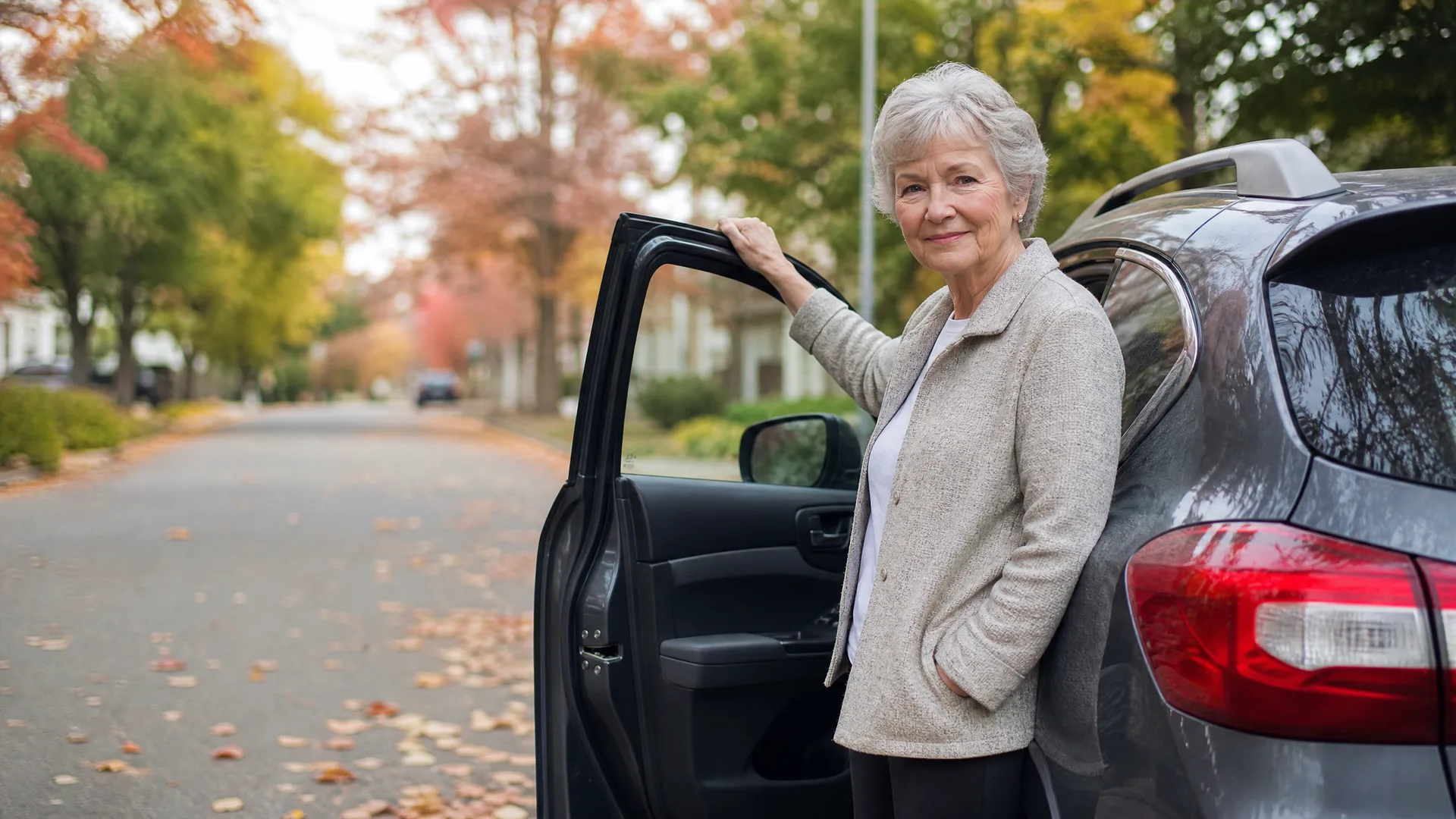
Vision Deterioration and Louisiana License Renewal for Senior Drivers
Free to compare
What Louisiana Requires for Vision Testing at License Renewal After Age 70
Louisiana requires an in-person vision screening at every license renewal once you turn 70, and you cannot renew online or by mail after that age regardless of your driving record. The standard is 20/40 vision in at least one eye with or without corrective lenses, measured using the DMV's wall chart during your renewal appointment.
If you wear glasses or contacts and haven't updated your prescription recently, the DMV will note the corrective lenses requirement on your renewed license. If you don't meet 20/40 even with correction, the examiner will refer you to complete Form DPSMV 1965, a vision specialist statement from an optometrist or ophthalmologist, before issuing any license.
The renewal cycle remains four years for drivers 70 and older, but unlike younger drivers, you must appear in person at each renewal and pass the vision screening every time. There is no provision to skip the test based on a recent eye exam from your own doctor.

How to Pass the Vision Exam if Your Eyesight Has Changed
If you've noticed difficulty reading road signs at distance or seeing clearly at night, schedule an eye exam with your optometrist before your renewal appointment. Louisiana accepts updated prescriptions for glasses or contacts during the DMV vision screening, and most senior drivers who fail the initial screening pass after returning with corrective lenses.
Bring your current glasses or contacts to the DMV even if you don't wear them while driving. The examiner tests you with correction first. If you meet 20/40 with lenses, your license will note the restriction and you're required to wear them whenever you drive.
If you cannot reach 20/40 in one eye even with corrective lenses, ask your eye doctor to complete the DPSMV 1965 vision specialist statement. Louisiana allows restricted licenses for drivers with vision between 20/50 and 20/70 in the better eye, but the restrictions depend on your specific visual acuity and field of vision results. Your doctor submits the form directly to the Office of Motor Vehicles, and the OMV determines what restrictions apply.

What a Restricted License Means for Louisiana Senior Drivers
Louisiana issues restricted licenses with specific limitations based on your vision specialist's findings. The most common restrictions for senior drivers with vision deterioration are daylight driving only (no driving from sunset to sunrise), radius restrictions (limiting you to a certain mile range from your residence), and prohibitions on interstate or high-speed highway driving.
You can still drive legally with a restricted license as long as you stay within the stated limits. The restrictions are printed on the front of your license, and law enforcement can cite you for driving outside those parameters even if you're otherwise following traffic laws.
Many senior drivers assume a restricted license means they'll lose their insurance coverage or face a massive rate increase. Under current Louisiana law, carriers cannot refuse to insure you solely because you hold a restricted license, and most carriers do not apply a surcharge for vision-based daylight or radius restrictions if your driving record is otherwise clean. Some senior driver discounts—particularly mature driver course discounts and low-mileage discounts—remain available even with restrictions on file.
How Insurance Carriers Treat Vision Restrictions in Louisiana
Carriers ask about license restrictions during application and renewal, and you're required to disclose any restrictions printed on your license. Failing to disclose a restriction can void your policy if discovered during a claim investigation.
Daylight-only and radius restrictions typically do not trigger a rate increase at most major carriers in Louisiana if you're 65 or older with no recent violations or claims. Carriers view these restrictions as risk-reducing rather than risk-increasing, particularly for senior drivers who already drive fewer miles and avoid night driving voluntarily.
If your restriction limits you to a narrow radius or prohibits highway driving entirely, some carriers may decline to offer coverage or may price you into a non-standard policy. This is more common with national carriers than with regional carriers familiar with Louisiana's senior driver population. If you're declined, contact an independent agent who works with carriers that specialize in senior drivers or restricted license holders. Rates vary widely, and the first decline does not mean you're uninsurable.
See What Drivers Over 65 Are Paying Now
See If You Qualify for Discounts
When to Request a Restricted License Instead of Surrendering Your License
If your eye doctor tells you that you're unlikely to meet Louisiana's 20/40 standard even with updated lenses, ask whether you'd qualify for a restricted license before assuming you must stop driving entirely. Many senior drivers can still meet the 20/50 or 20/60 threshold that allows daylight-only or radius-restricted driving.
A restricted license lets you continue driving for essential trips—medical appointments, grocery shopping, church, or visiting family—within the daylight hours and geographic limits specified. For drivers who no longer commute or drive long distances, these restrictions often match their actual driving patterns.
Before surrendering your license voluntarily, compare the cost and availability of alternative transportation in your area against the cost of maintaining restricted driving privileges. In many Louisiana parishes outside the New Orleans metro area, public transit and ride services are limited, and maintaining even restricted driving access can mean the difference between independence and isolation.

What Insurers Need to Know When You Add a Restricted License
Contact your insurance agent or carrier as soon as you receive a restricted license. Provide a copy of your new license showing the printed restrictions, and confirm that your policy reflects the restrictions accurately.
Some carriers will ask you to sign an acknowledgment that you understand the restrictions and agree to comply with them. This is standard practice and protects both you and the carrier. If you're involved in an accident while driving outside your restrictions—such as driving at night with a daylight-only restriction—your carrier may deny the claim and cancel your policy.
Ask your agent whether your restricted license affects your eligibility for any senior driver discounts you currently receive. Mature driver course discounts and low-mileage discounts typically remain available. If your carrier indicates they will not renew your policy due to the restriction, request that statement in writing and begin shopping immediately. You have options, and the first carrier's decision is not the final word.
How to Maintain Your Vision and Avoid Restrictions at Future Renewals
Schedule annual eye exams with your optometrist even in years when you're not renewing your license. Many vision changes in senior drivers are gradual, and early detection of cataracts, glaucoma, or macular degeneration allows for treatment that can preserve your vision and your unrestricted license.
If you're diagnosed with cataracts, ask your ophthalmologist about the timeline for surgery. Cataract removal often restores vision to levels that meet Louisiana's unrestricted licensing standard, and Medicare Part B covers the procedure when medically necessary.
Keep copies of your vision exam results and any treatment records. If your vision improves after surgery or treatment, you can request that the OMV remove restrictions from your license by submitting an updated DPSMV 1965 form from your eye doctor showing that you now meet the 20/40 standard without restrictions.
Frequently Asked Questions
Can I renew my Louisiana driver's license online after age 70?
No. Louisiana requires all drivers age 70 and older to renew in person at an OMV office and pass a vision screening at every renewal. Online and mail renewal options are not available once you turn 70, regardless of your driving record or vision history.
Will my car insurance rate increase if I get a restricted license in Louisiana?
Most major carriers in Louisiana do not increase rates for daylight-only or radius restrictions if you're 65 or older with a clean driving record. Carriers generally view vision-based restrictions as risk-reducing for senior drivers. Disclosure is required, but a surcharge is uncommon for these restriction types.
What happens if I fail the vision test at Louisiana DMV renewal?
The examiner will ask you to obtain Form DPSMV 1965 from an eye doctor. If your vision is between 20/50 and 20/70 in your better eye, Louisiana may issue a restricted license with daylight-only or radius limits. If your vision is worse than 20/70, the state typically will not issue a license.
Can I still get a senior driver discount with a restricted license?
Yes. Mature driver course discounts and low-mileage discounts remain available to Louisiana senior drivers with restricted licenses at most carriers. The restrictions do not automatically disqualify you from senior-specific discounts as long as you meet the other program requirements.
How do I get restrictions removed from my Louisiana license after vision improves?
Submit an updated DPSMV 1965 vision specialist statement from your optometrist or ophthalmologist showing that you now meet the 20/40 standard. The OMV will review the form and issue a new unrestricted license if you qualify. This is common after cataract surgery or successful treatment for other vision conditions.
Related Articles

Louisiana License Renewal at 70: Vision & Insurance
4/29/2026
Louisiana License Renewal at 80: Road Test & Vision Rules
4/29/2026

License Renewal at 85 in Louisiana: Tests & Insurance
4/29/2026
Louisiana License Renewal at 75: Medical and Rate Rules
4/29/2026

Arkansas Vision Test for License Renewal: Senior Guide
4/29/2026
MS License Renewal at 70: Vision, Tests & Insurance
4/29/2026