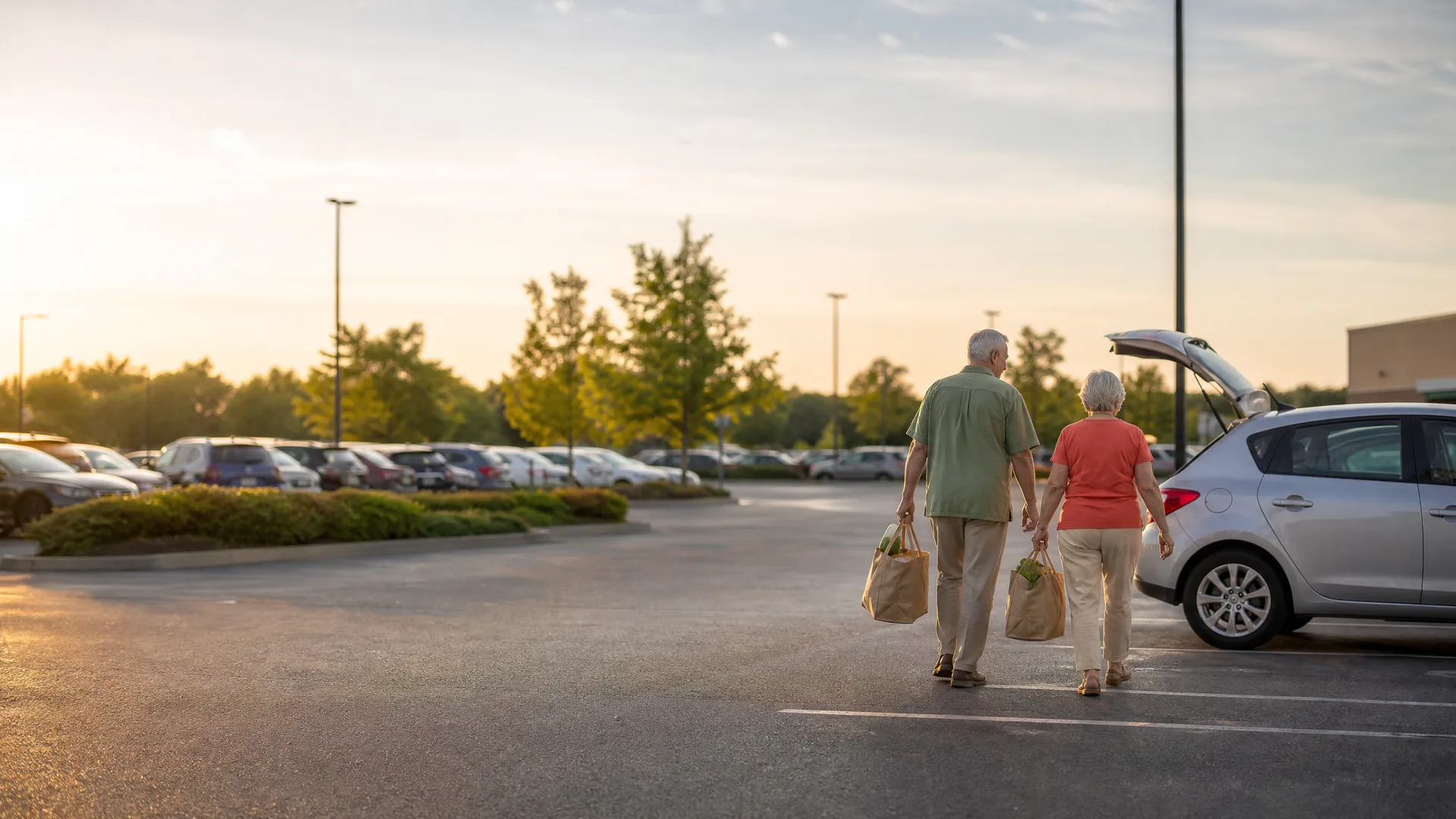
Massachusetts Vision Test at Renewal: What Senior Drivers Need to Know
Free to compare
Massachusetts Vision Requirements for License Renewal After Age 75
Massachusetts requires an in-person vision screening at every license renewal once you turn 75, moving away from the mail-in renewal option available to younger drivers. You must achieve at least 20/40 visual acuity in at least one eye, with or without corrective lenses, to pass the standard screening.
If you wear glasses or contacts, bring them to your renewal appointment — the RMV tests your corrected vision, not your naked eye performance. The screening uses a standard vision machine at the RMV counter, takes less than two minutes, and tests both central acuity and peripheral field.
Failing the initial screening doesn't automatically revoke your license. The RMV will issue a referral form requiring your eye care provider to complete a detailed vision assessment, which you must return within 30 days to avoid suspension.

What Happens If You Don't Pass the RMV Vision Screening
The RMV issues a Vision Screening Referral Form that your optometrist or ophthalmologist must complete. This form evaluates visual acuity, peripheral vision, depth perception, and any medical conditions affecting vision — diabetes-related retinopathy, glaucoma, cataracts, and macular degeneration are the most common conditions flagged.
Your eye care provider sends the completed form directly to the RMV Medical Affairs Branch. If the report confirms you don't meet the 20/40 standard but shows correctable vision with treatment or surgery, the RMV typically issues a temporary license valid 60 to 90 days while you address the condition.
If your vision cannot be corrected to 20/40, you have two options most senior drivers don't know exist: request a restricted license with daylight-only or geographic limitations, or appeal the denial through the Board of Appeal on Motor Vehicle Liability Policies and Bonds. The restricted license option preserves limited driving privileges and keeps your insurance policy in force, which matters if you share a household vehicle or may regain full vision later.

Requesting a Restricted License Instead of Full Revocation
Massachusetts allows drivers who fail the vision standard to apply for a restricted license under 540 CMR 2.05. Common restrictions include daylight driving only (no driving from 30 minutes after sunset to 30 minutes before sunrise), geographic radius limits (within 10 or 15 miles of home), or prohibition from limited-access highways.
You request restrictions through your eye care provider's completed referral form — the provider indicates which restrictions would allow you to drive safely given your specific vision condition. The RMV Medical Affairs Branch reviews the recommendation and issues the restricted license if approved, typically within 15 business days.
A restricted license remains valid through your normal renewal cycle, usually five years, unless your vision deteriorates further. Violating the restrictions — driving at night on a daylight-only license, for example — results in immediate suspension and potential insurance cancellation. Your insurer receives notification of the restriction from the RMV and adjusts your policy accordingly, though most carriers don't increase premiums solely for daylight or radius restrictions if your driving record remains clean.
See What Drivers Over 65 Are Paying Now
See If You Qualify for DiscountsHow Vision Restrictions Affect Your Auto Insurance Coverage
Your insurance company receives automatic notification when Massachusetts issues a restricted license, and the restriction prints directly on your license card. Most carriers don't raise premiums for daylight-only or geographic restrictions alone, particularly for senior drivers with otherwise clean records — the actuarial data shows restricted license holders file fewer claims than full-privilege drivers in the same age bracket.
You must inform your insurer if you receive a restricted license, even though the RMV also notifies them. Failing to disclose can void coverage if you're involved in an accident while violating your restriction. If you're driving outside your permitted hours or area and cause an accident, your liability coverage typically still protects the other party under Massachusetts law, but your collision and comprehensive coverage may be denied for your own vehicle.
Some senior drivers on fixed incomes with paid-off vehicles use a restricted license as a trigger to drop collision coverage entirely, keeping only the state-required liability and potentially comprehensive for non-driving risks. If you're only driving daytime errands within 10 miles of home, the collision premium may no longer justify the coverage on a vehicle worth under $5,000.
Improving Your Vision to Restore Full Driving Privileges
Cataract surgery, updated prescription lenses, or treatment for diabetic retinopathy can restore vision to the 20/40 standard required for unrestricted licensing. Once your eye care provider confirms your corrected vision meets the threshold, you submit a new Vision Screening Report to the RMV Medical Affairs Branch requesting removal of restrictions.
The RMV processes unrestriction requests within 10 business days if the medical documentation is complete. You'll receive a new license without the printed restriction, and the RMV sends updated status to your insurance carrier — though you should also notify your insurer directly to ensure your policy reflects the change immediately.
If your vision condition is progressive and unlikely to improve — advanced macular degeneration or glaucoma-related field loss, for example — a restricted license may be the permanent solution that keeps you mobile for essential trips while acknowledging reduced visual capacity. Many senior drivers in this situation pair the restricted license with volunteer driver programs or ride-sharing accounts for needs outside their restriction parameters.

What Insurers Need to Know When a Policyholder Gets Vision Restrictions
Carriers receive electronic notification from the Massachusetts RMV when a policyholder's license status changes to restricted, typically within 5 business days of issuance. The notification includes the specific restriction type — daylight only, geographic radius, or highway prohibition — which the carrier must note in the policy file.
Most insurers don't automatically re-rate the policy for a vision-related restriction unless the restriction coincides with other risk factors like recent accidents or violations. Industry data shows daylight-restricted senior drivers have 15-20% lower claim frequency than unrestricted drivers in the same age bracket, though this doesn't typically translate to a formal discount.
If the policyholder drives in violation of their restriction and files a claim, the carrier must still provide liability coverage to injured third parties under Massachusetts compulsory insurance law, but can deny first-party collision and comprehensive claims and may non-renew the policy. Documented restriction violations — a police report noting nighttime operation on a daylight-only license — give carriers grounds for immediate cancellation in some cases.
Frequently Asked Questions
Can I renew my Massachusetts license online after age 75?
No. Massachusetts requires in-person renewal with vision screening at every renewal cycle once you turn 75. You cannot use the online or mail-in renewal options available to younger drivers, regardless of your driving record or vision history.
Does a daylight-only restriction increase my car insurance rates in Massachusetts?
Most carriers don't raise premiums solely for a daylight or geographic restriction, particularly for senior drivers with clean records. Industry data shows restricted license holders file fewer claims than unrestricted drivers in the same age group, though this rarely translates to a formal discount.
What happens to my insurance if I drive at night on a daylight-restricted license?
Your liability coverage still protects injured third parties under Massachusetts compulsory insurance law, but your carrier can deny collision and comprehensive claims for your own vehicle and may non-renew or cancel your policy. Documented violations give insurers grounds for immediate cancellation in some cases.
How long does it take to get a restricted license approved in Massachusetts?
The RMV Medical Affairs Branch typically issues a restricted license within 15 business days after receiving your eye care provider's completed referral form with restriction recommendations. You cannot drive legally during this review period unless the RMV issues a temporary license.
Related Articles

License Renewal at 85 in MA: Testing & Insurance
4/29/2026
MA License Renewal at 70: Vision, Tests & Insurance
4/29/2026

License Renewal at 80 in MA: Tests and Requirements
4/29/2026
Maine Vision Test for Senior License Renewal Guide
4/29/2026
MA License Renewal at 75: Medical Exam & Rate Impact
4/29/2026
Maine License Renewal at 70: Vision Test & Insurance
4/29/2026