
Nebraska Vision Test at Renewal: What Senior Drivers Need to Know
Free to compare
What happens when you fail the vision test at Nebraska DMV renewal
You receive a temporary license valid for 30 to 60 days while you get an eye exam from an optometrist or ophthalmologist. Nebraska DMV does not suspend your license immediately — the temporary authorization keeps you legal while you address the vision issue. If corrective lenses bring you to the 20/40 standard in at least one eye, your doctor completes form MV-22R and you return to DMV for a corrective lens restriction added to your license.
If you cannot reach 20/40 even with correction, Nebraska offers restricted licenses for specific driving patterns: daylight only, local radius limits, or posted route restrictions. These require a vision specialist's recommendation and DMV approval, but they preserve your ability to drive for essential errands, medical appointments, and grocery trips. Most senior drivers in this situation qualify for daylight-only restrictions, which cover 80% of typical driving needs for retirees no longer commuting.
The failure itself does not appear on your driving record as a violation. Your insurance company does not receive automatic notification unless your license class changes from unrestricted to restricted, which happens in fewer than 15% of cases. If you add a corrective lens restriction only, your license class remains the same and no insurer notification occurs under current state requirements.

Why Nebraska vision testing starts earlier for senior drivers
Nebraska requires vision screening at every renewal starting at age 72, while drivers under 72 renew every five years without mandatory testing. The state uses age as a proxy for increased risk of cataracts, glaucoma, macular degeneration, and diabetic retinopathy — conditions that affect approximately 40% of drivers over 70 according to the National Eye Institute.
You take the vision test in person at your county DMV office using a standard Snellen chart or electronic screening device. The passing standard is 20/40 vision in at least one eye, with or without corrective lenses. If you wear glasses or contacts, bring them to the test. Peripheral vision is also screened — you must have at least 140 degrees of horizontal vision, which eliminates most drivers with advanced glaucoma or severe field loss.
Nebraska does not offer online renewal for drivers 72 and older specifically because of this vision requirement. You must appear in person at each renewal cycle, which occurs every five years for drivers 72 and older and every four years for drivers over 84.

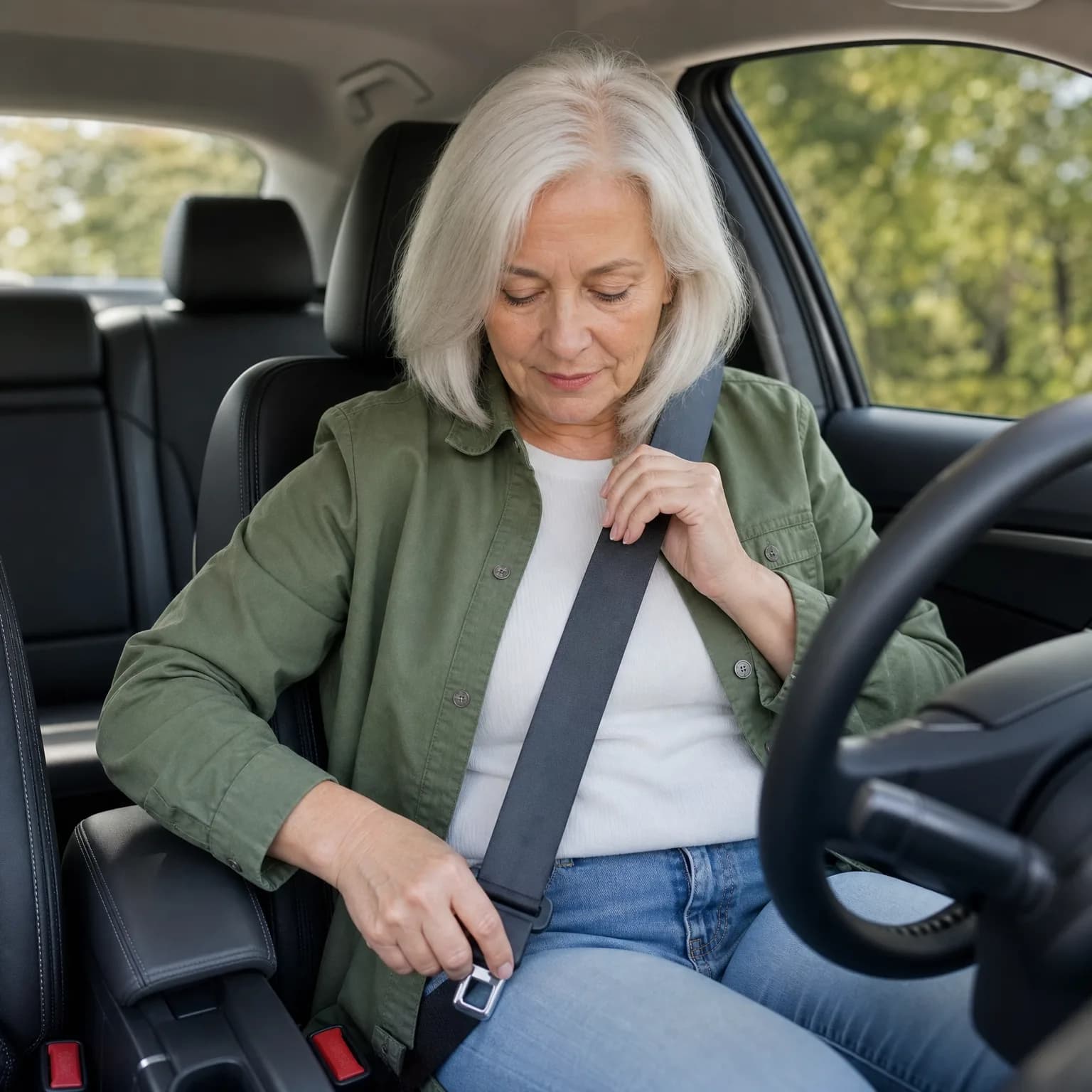
How restricted licenses work and what routes qualify
A restricted Nebraska license specifies the exact conditions under which you can drive: daylight hours only, within a certain radius of your home, or on specific posted routes you submit to DMV. The most common restriction for senior drivers is daylight only, defined as sunrise to sunset, which eliminates night driving when glare and reduced contrast sensitivity create the highest risk.
Radius restrictions typically range from 10 to 25 miles from your residence, covering local medical appointments, grocery stores, and church or community center visits. You submit a map with your restriction application showing the routes you need to maintain independence. DMV reviews the request with your vision specialist's recommendation and approves restrictions that match your demonstrated visual capability.
Route-specific restrictions are less common but available for drivers who can navigate familiar roads safely but cannot handle unfamiliar areas or complex intersections. You must drive only the routes listed on your restriction, and law enforcement can verify your location against your approved map during any traffic stop. Most senior drivers find daylight-only restrictions sufficient and less administratively complex than radius or route limits.
What your insurance company actually needs to know
Nebraska law requires you to notify your insurer only if your license class changes from unrestricted to restricted. Adding a corrective lens endorsement does not change your license class and does not trigger a notification requirement. If you receive a daylight-only or radius restriction, you must inform your carrier within 30 days — most carriers request a copy of your restricted license and update your policy file without changing your premium.
Insurers treat corrective lens restrictions as neutral events. Approximately 60% of drivers over 65 already wear corrective lenses while driving, and the endorsement simply formalizes what your carrier assumes about senior policyholders. Your rate does not increase unless your restriction reflects a significant vision impairment that required a formal restriction beyond corrective lenses.
Daylight-only restrictions can actually reduce your premium with some carriers. If you agree to a daylight restriction and your insurer knows you no longer drive at night, you eliminate the highest-risk driving period for senior drivers — night accidents account for nearly 35% of senior driver claims despite representing less than 20% of miles driven. Ask your agent whether your carrier offers a discount for voluntary daylight-only restrictions, even if not required by DMV. Several regional carriers in Nebraska offer 5% to 10% reductions for seniors who certify they drive only during daylight hours.

See What Drivers Over 65 Are Paying Now
See If You Qualify for Discounts
How often you need to re-test and what triggers earlier review
Nebraska requires vision screening at every renewal once you reach age 72 — every five years until age 84, then every four years after that. There is no exemption for passing previous tests or for drivers with perfect records. If your vision deteriorates between renewals, your doctor can report you to DMV, which triggers an earlier reexamination.
Family members and law enforcement can also request a driver reexamination if they observe unsafe driving behavior potentially caused by vision loss. DMV sends you a notice requiring you to appear for retesting within 30 days. If you fail, the temporary license process begins again, but your existing license remains valid during the appeal and treatment period.
Most senior drivers who fail the initial vision test pass the retest after cataract surgery, updated prescription lenses, or glaucoma treatment. Cataract surgery alone restores 20/40 vision or better in more than 90% of cases, and Medicare covers the procedure when vision falls below functional thresholds. The entire cycle from failed test to successful retest typically takes 60 to 90 days, well within Nebraska's temporary license window.

What medical conditions require earlier reporting
Nebraska requires physicians to report patients diagnosed with conditions that impair safe driving, including advanced macular degeneration, uncontrolled diabetes with retinopathy, stroke affecting visual fields, and certain neurological conditions. Your doctor submits form MV-334 directly to DMV, which triggers a reexamination notice separate from your regular renewal cycle.
You have 30 days from the notice date to appear for retesting. If your condition is being treated and your vision meets the 20/40 standard, you pass and no restriction is added. If you cannot meet the standard, DMV evaluates you for a restricted license based on your doctor's functional assessment. In cases of progressive conditions like macular degeneration, DMV may issue a restricted license with a mandatory retest in one or two years rather than the standard five-year cycle.
Diabetic retinopathy is the most common condition triggering early review for senior drivers in Nebraska. If your endocrinologist or ophthalmologist reports your condition and your vision is correctable to 20/40, you pass the retest but DMV may add a notation requiring annual vision certifications from your eye doctor. This does not restrict your driving but creates a monitoring requirement to catch rapid deterioration before your next standard renewal.
How vision restrictions affect coverage and premium calculations
Adding a corrective lens restriction has zero effect on your auto insurance premium with every major carrier operating in Nebraska. The restriction confirms you already drive with glasses or contacts, which your insurer assumes for most senior policyholders. No notification to your carrier is required, and no rate adjustment occurs.
Daylight-only and radius restrictions typically do not increase your premium either, and some carriers reduce rates because you are explicitly eliminating high-risk driving conditions. State Farm, GEICO, and Nationwide all treat voluntary daylight restrictions as neutral or favorable risk factors for drivers over 70. If your restriction was imposed due to a serious vision impairment rather than voluntary risk reduction, your carrier may review your policy, but rate increases are uncommon unless the restriction coincides with an accident or claim.
If your license is fully suspended due to vision failure and you cannot obtain even a restricted license, your policy cancels for lack of a valid license. You can maintain coverage on your vehicle with a named driver policy if another household member has a valid license, but you cannot be listed as a covered driver. Most senior drivers facing full suspension qualify for restricted licenses, making complete loss of coverage rare in vision-related cases.
Frequently Asked Questions
Can I renew my Nebraska license online if I'm over 72?
No. Nebraska requires all drivers aged 72 and older to renew in person at a county DMV office because of the mandatory vision screening requirement. Online renewal is not available for this age group regardless of your driving record or previous test results.
Does failing the vision test at renewal go on my driving record?
No. The vision test failure does not appear as a violation on your Nebraska driving record. You receive a temporary license while you get an eye exam and return with corrective documentation. Only license suspensions for failure to resolve the vision issue within the temporary period appear on your record.
Will my insurance rate increase if I add a corrective lens restriction?
No. Adding a corrective lens restriction to your Nebraska license does not affect your auto insurance premium. Approximately 60% of drivers over 65 already wear glasses or contacts while driving, and insurers treat the restriction as a neutral administrative notation.
How long does a restricted license last in Nebraska?
A restricted Nebraska license lasts until your next scheduled renewal — five years for drivers aged 72 to 84, and four years for drivers over 84. You must pass the vision test again at renewal, and your restriction may be removed if your vision improves to 20/40 or better without limitation.
What happens if my vision gets worse between renewals?
Your eye doctor can report significant vision deterioration to Nebraska DMV, which triggers a reexamination notice requiring you to retest within 30 days. If you fail, you receive another temporary license while you pursue treatment or apply for a more restrictive license class.
Related Articles

Nebraska License Renewal at 70: Vision and Insurance
4/29/2026
Nebraska License Renewal at 80: Tests and Requirements
4/29/2026
Nebraska License Renewal at 75: Medical Rules & Rates
4/29/2026

Nevada Vision Test at Renewal: Senior Driver Guide
4/29/2026

License Renewal at 85 in Nebraska: What to Expect
4/29/2026

North Dakota Vision Test for License Renewal: Senior Guide
4/29/2026