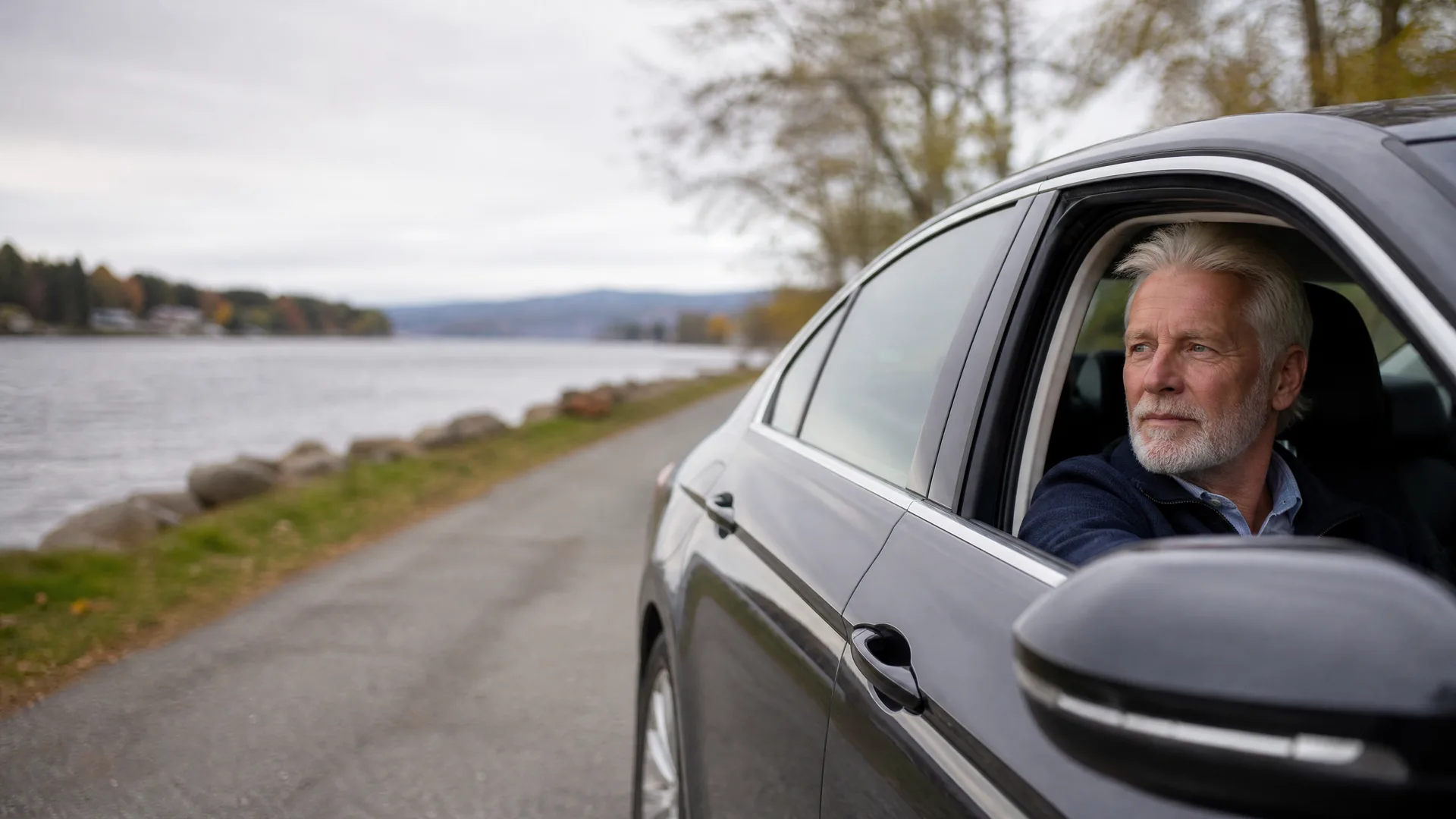
Oklahoma Vision Test for License Renewal: What Seniors Need to Know
Free to compare
What happens if you don't pass the vision test at your Oklahoma license renewal?
Oklahoma requires 20/50 vision in at least one eye to renew without restriction. If you test below that threshold, the DPS offers a restricted license rather than denying renewal outright. These restrictions typically limit you to daylight driving only, require corrective lenses, or confine you to a radius from your home address.
The restriction prints directly on your license. It's not a separate document you can leave at home. Law enforcement sees it during any traffic stop, and your insurance carrier sees it when they pull your motor vehicle record at renewal or after any claim.
Most seniors renewing in Oklahoma don't realize the vision test is mandatory at every renewal after age 65, not just when you turn 70 or 75. You can't skip it by renewing online. Under current state requirements, drivers 65 and older must appear in person and pass the vision screening before the clerk processes renewal.

How strict is the 20/50 vision standard, and can you wear glasses during the test?
You can wear glasses, contact lenses, or other corrective lenses during the DPS vision test. The 20/50 requirement applies with correction, not without. If you wear glasses daily but left them at home on renewal day, ask to reschedule rather than testing without them.
20/50 vision means you can read at 20 feet what someone with normal vision reads at 50 feet. It's roughly half the clarity of 20/20 vision. Most seniors with updated prescriptions pass comfortably. The test uses a standard vision screening machine that displays letters at varying sizes — you read the smallest line you can see clearly.
If you fail the initial screening, the examiner may retest you once. If you still don't meet 20/50 in either eye, they'll discuss restriction options. You leave with a license that day, but it will carry the vision restriction code the examiner selects based on your test performance and your stated driving needs.
What vision restrictions does Oklahoma DPS actually assign, and how do they limit your driving?
Oklahoma uses several standard restriction codes. The most common for vision-related issues: corrective lenses required, daylight driving only, or a geographic radius restriction. Corrective lenses is the mildest — it simply requires you to wear your glasses whenever you drive. Daylight only prohibits driving after sunset or before sunrise. Radius restrictions confine you to a set number of miles from your home address, typically 10 to 25 miles depending on whether you live in a rural or urban area.
Less common restrictions include limiting you to speeds under 45 mph or requiring outside mirrors on both sides of your vehicle. The examiner assigns restrictions based on your test results and a brief interview about where and when you typically drive. If you mention you only drive to church, the grocery store, and your doctor's appointments within a few miles of home, expect a radius restriction.
These restrictions are legally enforceable. Driving outside your restriction — even by one mile or one minute past sunset — is the same violation as driving without a valid license. It won't trigger a separate criminal charge in most cases, but it gives law enforcement cause to cite you and gives your insurer grounds to question coverage if you're in an accident outside your permitted parameters.
Do insurance companies find out about vision restrictions, and do they change your rate?
Your insurer pulls your motor vehicle record at renewal and after any claim. Vision restrictions appear on that record the same way a speeding ticket or accident does. Most carriers review MVRs every six to twelve months for existing customers, and always before issuing a new policy.
Whether your rate changes depends on the carrier and the restriction type. A corrective lenses restriction rarely triggers a rate increase — it's a documentation requirement, not a driving limitation. Daylight-only or radius restrictions signal reduced capability, and some carriers treat them as risk factors similar to a minor violation. Rate increases in these cases typically range from 10% to 20%, though some carriers don't penalize restricted licenses at all if your driving record is otherwise clean.
The larger risk is coverage denial during a claim. If you're in an accident outside your restriction — a fender bender at dusk when your license says daylight only, or a collision 15 miles from home when your radius limit is 10 — the carrier may argue you were driving illegally and deny the claim outright. This is rare but not unheard of, particularly with liability claims where the carrier is looking for reasons to limit payout.
See What Drivers Over 65 Are Paying Now
See If You Qualify for Discounts
Can you request a specific restriction, or does the DPS examiner decide for you?
The examiner has discretion, but you can advocate for the restriction that matches your actual driving. If you only drive during the day anyway, a daylight restriction may be preferable to a radius limit that could prevent you from visiting family one county over. Be specific about your routine when the examiner asks.
Some seniors request a radius restriction proactively even if they could qualify for daylight-only, because they know they'll never drive outside their local area and the radius restriction feels less stigmatizing than a time-based limit. Others push back on radius limits because they want the freedom to drive to a specialist appointment in Oklahoma City or Tulsa a few times a year, even if most daily trips stay close to home.
The examiner's goal is to issue a restriction you can live within while keeping you and other drivers safe. If your vision is borderline and you're cooperative about accepting a reasonable restriction, most examiners will work with you. If you argue that you don't need any restriction despite failing the test twice, expect the examiner to assign the most conservative option available.

Should you update your insurer immediately after receiving a restricted license, or wait until renewal?
Most carriers will find out at your next policy renewal when they pull your MVR. You're not legally required to notify them the day you receive the restriction, but some policies include a clause requiring you to report material changes in your driving status within 30 days. A vision restriction is arguably material, particularly if it's a daylight or radius limit.
Notifying your carrier early gives you control over the conversation. You can explain that the restriction doesn't affect your actual driving habits — you've been driving daylight-only for years by choice, or you've never driven more than 10 miles from home since you retired. Carriers are more likely to leave your rate unchanged if you frame the restriction as formalizing what you were already doing, rather than as a new limitation imposed because your vision declined.
If you're worried about a rate increase, consider shopping for a new policy before notifying your current carrier. Some carriers are far more lenient about restricted licenses for senior drivers than others, particularly if you have a long clean record and low annual mileage. Get quotes with your new restriction status disclosed up front, compare them to your current premium, and switch if you find a better rate. Switching carriers is often easier than negotiating with your current insurer after they've already decided to increase your rate.
What happens if your vision gets worse and you can't pass even with restrictions?
If you can't meet the 20/50 standard in either eye even with corrective lenses, Oklahoma DPS will not issue a license. At that point your legal options are limited: you can appeal the decision with medical documentation from an ophthalmologist, or you can stop driving.
Appeals are rarely successful unless your vision loss is temporary and treatable. If you're recovering from cataract surgery and expect your vision to improve within a few weeks, the DPS may issue a temporary restricted license while you heal. If your vision loss is permanent and progressive — macular degeneration, advanced glaucoma, diabetic retinopathy — the appeal will likely be denied.
Once your license is revoked for vision failure, your insurance policy cancels automatically in most cases. You're no longer an insurable driver because you're no longer a legal driver. If you own a vehicle but can't drive it, you can maintain parked-car coverage — comprehensive only, no liability or collision — until you sell the vehicle or transfer the title to a family member who will drive it. Some seniors in this situation keep the vehicle titled in their name but add an adult child or grandchild to the policy as the primary driver, effectively converting their policy into coverage for someone else's use of their car.
Frequently Asked Questions
Does Medicare cover vision tests for driver's license renewal in Oklahoma?
Medicare Part B covers routine eye exams for certain conditions like glaucoma or diabetes, but it does not cover vision tests specifically for license renewal. The DPS vision screening itself is free and included in your renewal fee, but if you need an updated prescription or treatment before retesting, you'll pay out of pocket unless you have separate vision insurance. Some seniors schedule an optometrist visit a few weeks before renewal to confirm their prescription is current.
Can I renew my Oklahoma license online if I'm over 65 and my vision hasn't changed?
No. Oklahoma requires all drivers aged 65 and older to renew in person and pass a vision test at every renewal, regardless of whether your vision has changed. Online renewal is not available to seniors even if your last renewal was recent and your record is clean. This is a state-mandated safety requirement that applies to every driver in this age group.
Will my car insurance cancel immediately if I get a daylight-only restriction?
No. Your policy will not cancel automatically when you receive a restricted license. Most carriers discover the restriction when they pull your motor vehicle record at your next renewal, which could be several months away. At that point they may adjust your rate, leave it unchanged, or in rare cases non-renew your policy if they consider the restriction high-risk. Cancellation mid-term is extremely rare unless you're involved in an accident outside your restriction.
What is the vision requirement for a commercial driver's license in Oklahoma?
Commercial drivers must meet 20/40 vision in each eye, a stricter standard than the 20/50 required for a regular operator's license. If you hold a CDL and can't pass the 20/40 test, you'll lose your commercial driving privileges even if your vision is good enough for a restricted personal license. Most senior drivers don't hold CDLs, but those who drove commercially before retirement sometimes don't realize the CDL expires separately and requires its own vision test.
Related Articles

License Renewal at 80 in Oklahoma: What Changes
4/29/2026

OK License Renewal at 70: Vision Test & Insurance
4/29/2026
Oklahoma License Renewal at 75: Tests and Rates
4/29/2026
OK License Renewal at 85: Testing Rules for Seniors
4/29/2026
Oregon Vision Test at Renewal: Senior Driver Guide
4/29/2026

Texas Vision Test for License Renewal After 65
4/29/2026