
Tennessee Vision Test for License Renewal: Senior Driver Guide
Free to compare
What vision standard does Tennessee require to renew without restrictions?
Tennessee requires 20/40 vision in at least one eye to renew your license without restrictions. You must pass this screening at the Driver Services Center when renewing in person, which is required for most drivers aged 65 and older under current state requirements.
If you wear corrective lenses to meet the 20/40 standard, the examiner adds a "B" restriction to your license requiring you to wear them while driving. This restriction does not affect your insurance rates — carriers treat corrective lens requirements as standard. The restriction that matters for insurance purposes is a daylight-only limitation, assigned when your vision falls between 20/50 and 20/70 in the better eye.
Tennessee does not accept vision test results from your optometrist in place of the in-person screening. You take the test at the counter using the state's equipment, and the examiner makes the determination on the spot. If you've noticed changes in your vision since your last renewal, schedule an eye exam before your renewal appointment so you know whether you'll pass the state standard.

How do you prepare for the Tennessee vision screening if your eyesight has changed?
Bring your current prescription glasses or contact lenses to the renewal appointment — the examiner tests you with whatever correction you normally use. If you have separate glasses for distance and reading, bring the distance pair. The screening measures your ability to see road signs and hazards, not close-up tasks.
Schedule an optometry appointment 30 to 60 days before your license expiration if you've noticed any of these changes: difficulty reading road signs at normal distances, increased glare sensitivity at night, or trouble judging distances when changing lanes. Your optometrist can tell you whether your current correction brings you to 20/40, and whether a prescription update would help you pass without restrictions.
If your optometrist tells you that even with optimal correction your vision falls below 20/40, ask them to document your acuity level in both eyes. You'll need this information to request a specific restriction type rather than accepting whatever the examiner assigns. Tennessee offers several restriction codes, and the one your insurer sees determines whether your rates increase and whether certain coverage types remain available to you.

What restricted license options does Tennessee offer for vision between 20/50 and 20/100?
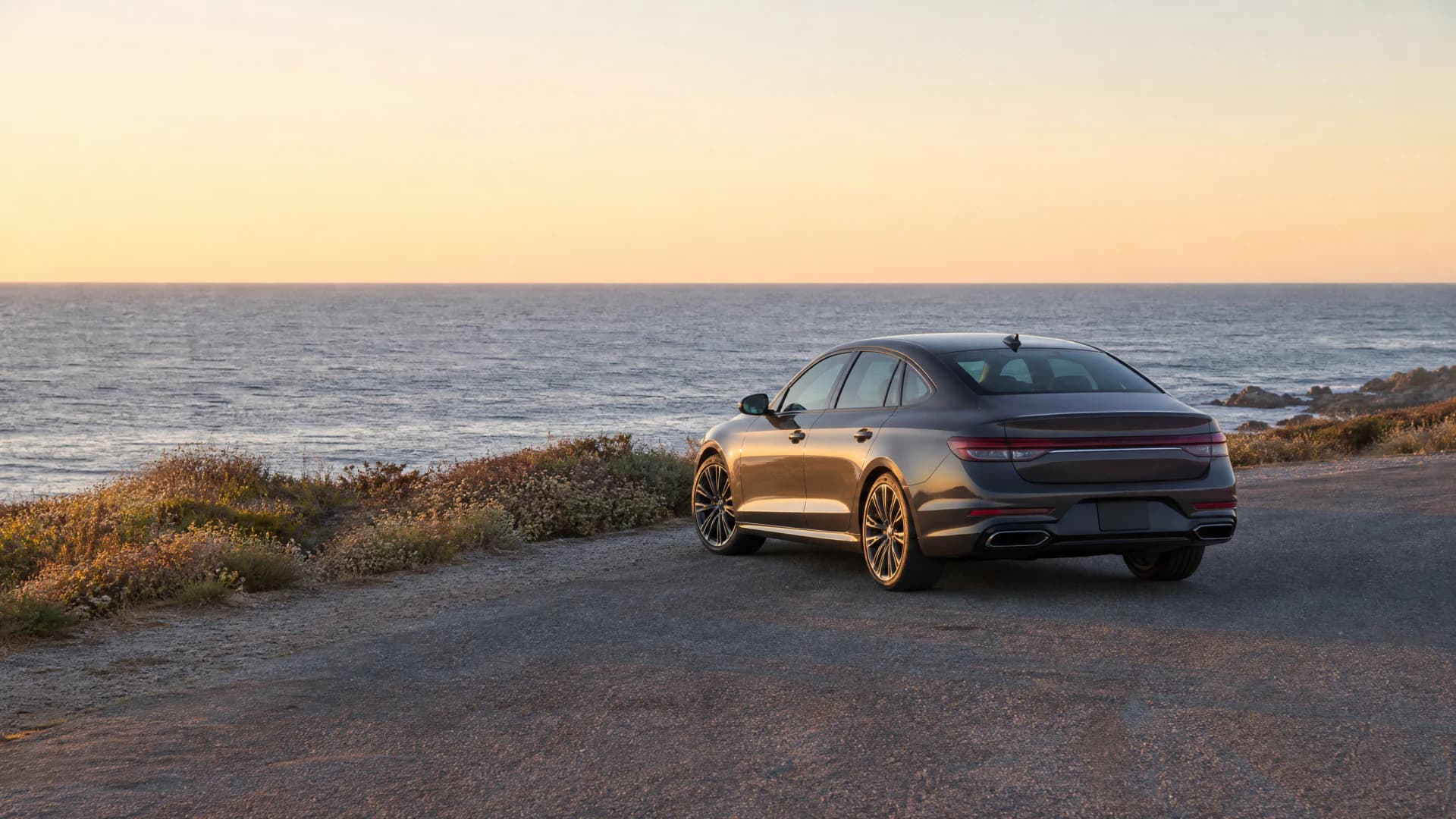
Tennessee assigns a daylight-only restriction (code "E") if your best corrected vision measures between 20/50 and 20/70. This restriction prohibits driving from one hour after sunset to one hour before sunrise. Most carriers increase premiums 5 to 15 percent when this restriction appears on your license because it signals reduced visual capacity, even though the restriction itself limits your driving to lower-risk daylight hours.
If your vision falls between 20/70 and 20/100 in the better eye, Tennessee offers a more limited license restricting you to daylight driving within a specific radius from your home — typically 25 or 50 miles depending on the examiner's assessment. This restriction triggers significantly higher rate increases, often 20 to 40 percent, and some carriers refuse to write new policies for drivers with geographic restrictions. If you already have coverage, your current carrier cannot cancel mid-term based solely on a restriction added at renewal, but they will adjust your premium at the next renewal cycle.
You can request a specific restriction type if your vision qualifies for multiple categories. If your acuity measures exactly 20/70, you sit at the boundary between daylight-only and daylight-with-radius restrictions. Bring documentation from your optometrist and explicitly request the daylight-only code if your vision meets that threshold. The examiner has discretion, but documented acuity gives you a basis to advocate for the less restrictive option.

See What Drivers Over 65 Are Paying Now
See If You Qualify for DiscountsWhat happens to your insurance rates when Tennessee adds a vision restriction?
Carriers receive notification of license restrictions through routine MVR checks, which most run at every renewal and some run at policy inception. A corrective lens requirement ("B" restriction) does not affect your rates. A daylight-only restriction ("E" code) typically increases premiums 5 to 15 percent, with the higher end of that range applying to drivers over 70. Geographic radius restrictions trigger larger increases because they signal more significant vision impairment.
Some carriers offer restricted-driver policies specifically designed for seniors with daylight or radius limitations. These policies cost less than standard coverage with a surcharge applied, but they exclude night driving from coverage entirely. If you drive during prohibited hours and cause an accident, the carrier can deny the claim based on license restriction violation. Read your policy declarations carefully after any restriction is added — some carriers automatically convert you to a restricted-driver policy without explicit notification, which changes your coverage terms even though the premium may stay similar.
If you receive a restriction and your rate increases at the next renewal, compare coverage across at least three carriers before accepting the new premium. Rate increases for restricted licenses vary widely by carrier. One national carrier may add 25 percent while a regional competitor adds only 8 percent for the same restriction code. Your current carrier's loyalty discount may no longer offset the restriction surcharge, making a switch cost-effective even after decades with the same insurer.

Can you remove a vision restriction from your Tennessee license after cataract surgery or other treatment?
Tennessee allows you to retest and remove restrictions at any Driver Services Center once your vision improves to 20/40 or better. You do not need to wait until your next renewal cycle. Bring documentation from your ophthalmologist confirming your post-surgical acuity, take the standard vision screening, and if you pass, the examiner issues an updated license without the restriction.
Notify your insurance carrier as soon as the restriction is removed. Most carriers do not monitor for restriction removals as closely as they monitor for new restrictions, which means the surcharge may continue at renewal unless you specifically request a re-evaluation. Provide your carrier with a copy of your updated license showing the restriction code removed. The rate reduction should apply at your next renewal, though some carriers prorate the decrease effective immediately if you're mid-term.
Cataract surgery, LASIK, or updated prescription lenses frequently bring senior drivers back above the 20/40 threshold. If your optometrist or ophthalmologist recommends any vision correction procedure, ask them explicitly whether the expected outcome will meet Tennessee's unrestricted standard. The cost of the procedure may be partially offset by the elimination of insurance surcharges over the following years, particularly if you're currently paying a 15 to 25 percent increase due to a daylight restriction.

What do insurers need to know about vision restrictions when quoting senior drivers?
Carriers must ask about license restrictions during the application process, and they verify your answer against your MVR before binding coverage. If you fail to disclose a restriction and the carrier discovers it during underwriting, they can rescind the quote or refuse to bind the policy. If the restriction appears after you've bound coverage, the carrier cannot cancel mid-term in Tennessee unless you misrepresented your license status on the application.
Vision restrictions affect risk classification differently than moving violations. A daylight restriction does not place you in the high-risk category the way a DUI or multiple speeding tickets would, but it does move you out of the preferred or standard tier at most carriers. Some carriers maintain a separate "restricted driver" tier with its own rate table, while others apply a percentage surcharge to your base rate. The method matters because surcharges compound with other rate factors while tier reclassification may actually result in a smaller total increase if you qualify for senior discounts within the restricted tier.
If you're shopping for coverage and you know a restriction is likely at your next renewal, disclose it to the agent or during the online quote process. Rates quoted without restriction data will not hold once the carrier runs your MVR. Some carriers offer better restricted-driver rates than others, and identifying those carriers before you renew saves you from switching policies twice within the same year.
Frequently Asked Questions
Does Medicare cover injuries from a car accident if I have a vision-restricted license in Tennessee?
Medicare covers accident-related injuries regardless of your license restriction status, but it pays as secondary insurer if you carry medical payments or PIP coverage on your auto policy. Your auto insurance medical coverage pays first up to your policy limits, then Medicare covers remaining eligible expenses. A vision restriction does not affect Medicare eligibility or coverage scope.
Will my car insurance company cancel my policy if I fail the Tennessee vision test?
Tennessee carriers cannot cancel your policy mid-term solely because you receive a vision restriction at renewal. They can increase your premium at the next renewal cycle, and they can choose not to renew your policy when the term ends. If you fail the vision test entirely and lose your license, the carrier can cancel for loss of licensed operator, but restrictions alone do not trigger mid-term cancellation under current state requirements.
Can I drive at night in Tennessee with a daylight-only restriction if it's an emergency?
Tennessee law does not provide an emergency exception to daylight-only restrictions. If you drive during prohibited hours and cause an accident, your insurance carrier can deny the claim based on license restriction violation, and you can face citations for driving outside your restriction. If you need to drive at night regularly, you must retest and have the restriction removed or arrange alternative transportation.
How much does car insurance cost in Tennessee for drivers over 65 with a vision restriction?
Related Articles

TN License Renewal at 70: Vision Test & Insurance Facts
4/29/2026

TN License Renewal at 80: Tests, Restrictions & Rates
4/29/2026

TN License Renewal at 75: Medical Rules & Rate Impact
4/29/2026
TN License Renewal at 85: Testing & Insurance Changes
4/29/2026

Texas Vision Test for License Renewal After 65
4/29/2026

Connecticut Vision Test for License Renewal Over 65
4/29/2026