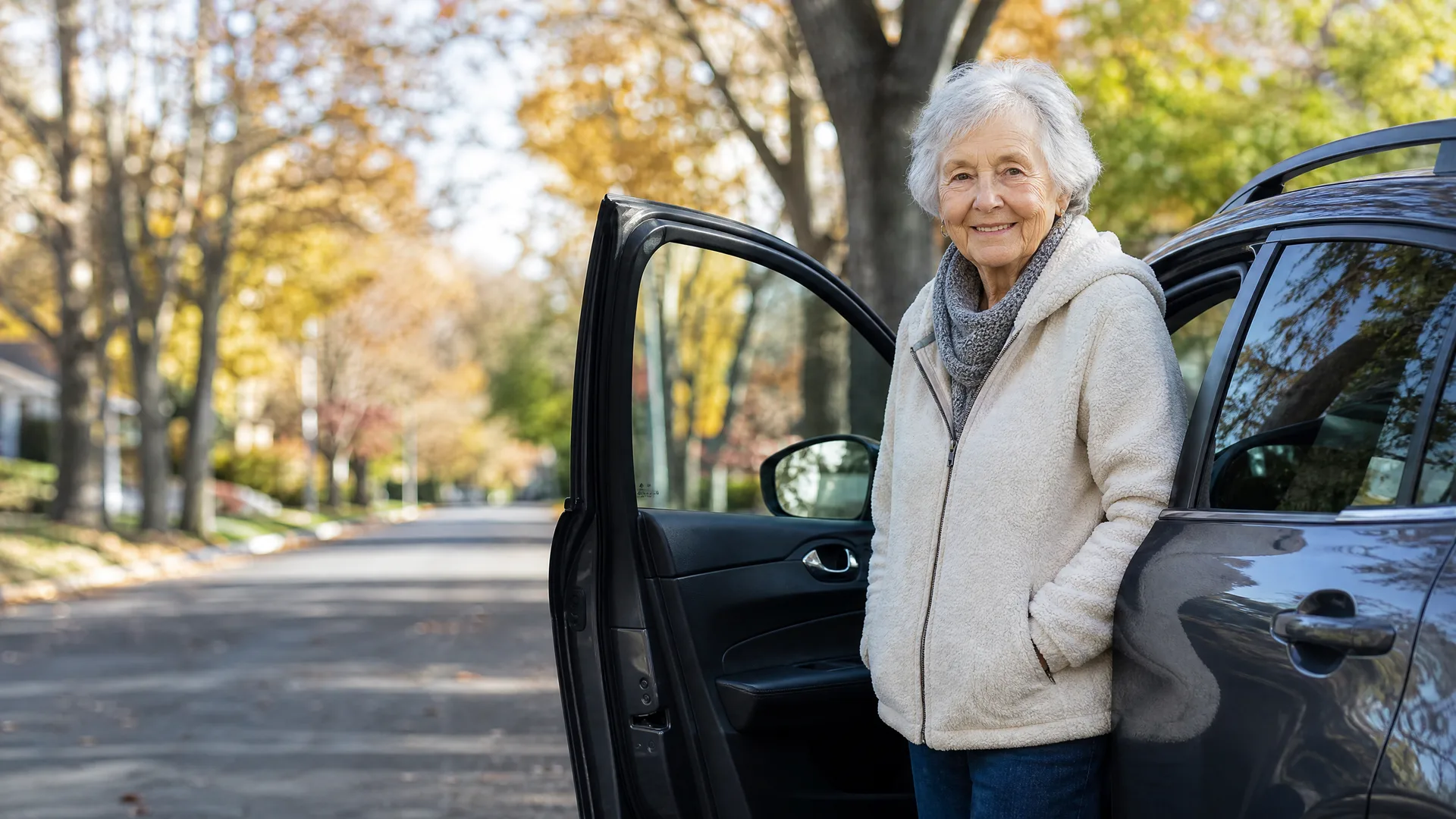
Wyoming Vision Test for License Renewal: What Senior Drivers Need
Free to compare
Wyoming's Vision Standard and What Happens When You Don't Meet It
Wyoming requires 20/40 vision in at least one eye to renew your license without restrictions. The test happens at every renewal after age 65, and the examiner measures both acuity and peripheral vision. If you test below 20/40 but above 20/70, Wyoming offers restricted licenses allowing daytime driving, limited geographic areas, or prohibition of interstate highway use.
The restriction appears as a printed code on your license. Code B restricts you to daylight hours only. Code C limits you to a specific radius from your address. Code D prohibits interstate highway driving. You can hold multiple restrictions simultaneously.
What the DMV examiner won't tell you: insurers treat most restriction codes as risk classification changes. A daylight-only restriction can increase your premium even if you already drive only during the day and have a clean record. The increase typically ranges from 8% to 15% depending on the carrier and your current risk tier.
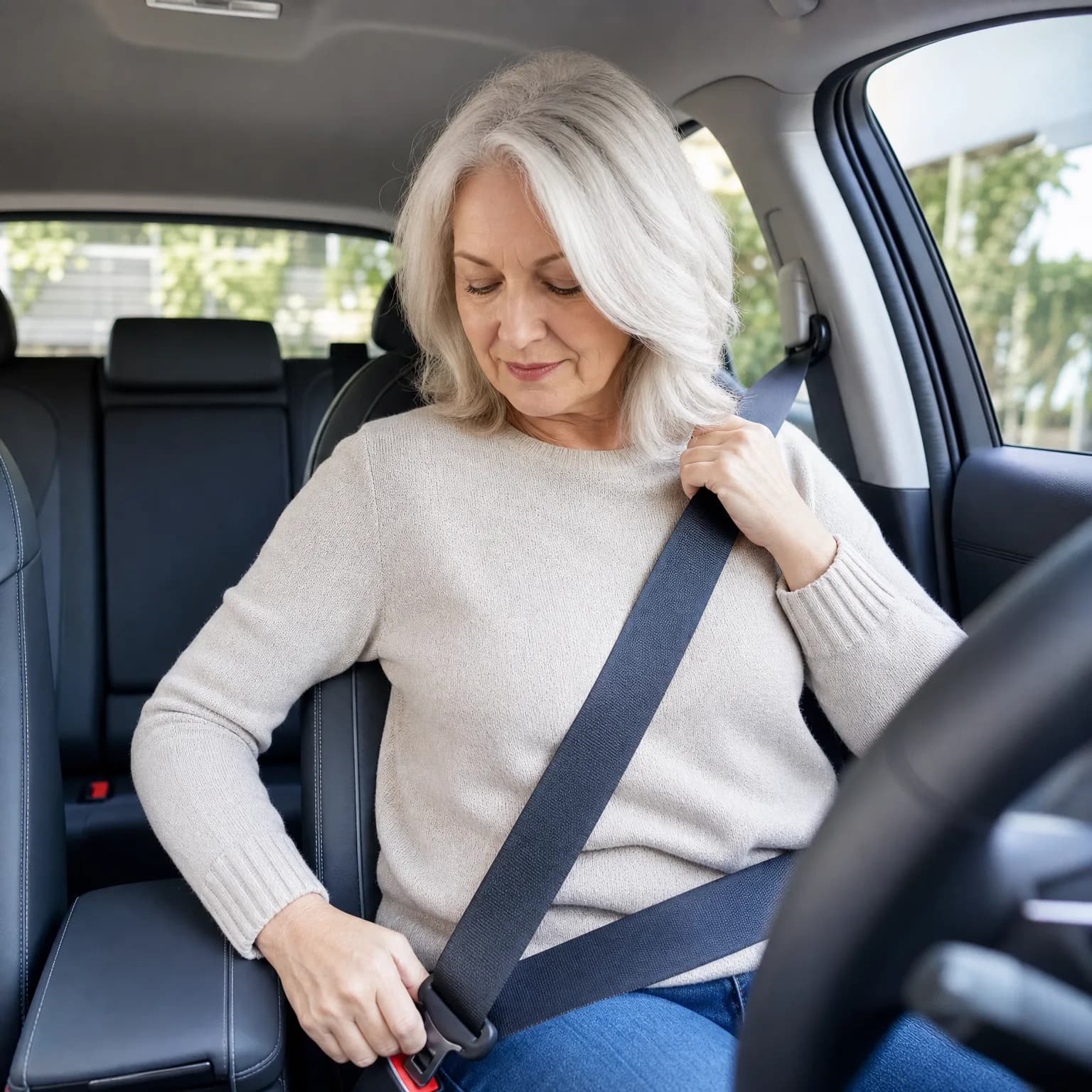
How to Request a Restricted License If You Don't Pass the Standard Test
If you test below 20/40 at renewal, the examiner will ask if you want to apply for a restricted license or surrender your license. Request the restriction immediately during that appointment — Wyoming doesn't allow you to apply for restrictions by mail or online after leaving the office.
The examiner will retest your vision to determine which restrictions apply to your specific acuity level. Wyoming uses a matrix: 20/50 to 20/70 qualifies for daylight-only or area restrictions. Below 20/70 in both eyes with corrective lenses typically results in license surrender, though Wyoming allows appeal to the Medical Advisory Board if your eye care professional submits documentation that you can drive safely under specific conditions.
You'll receive the restricted license the same day if you're renewing in person. The restriction codes print directly on the license card. No separate certificate or documentation is issued. Keep a copy of your vision test results — you'll need them when discussing coverage with your insurer.

What Insurers Need to Know and Why They Ask About Restrictions
Wyoming law requires you to notify your insurer within 30 days of receiving a restricted license. The notification requirement appears in Wyoming Statute 31-9-402, though enforcement is complaint-driven rather than systematic. Failure to notify can void coverage if you're involved in an accident while driving outside your restriction parameters.
Carriers ask about restrictions during renewal and mid-term policy reviews because actuarial data shows restricted drivers file claims at rates 12–18% higher than unrestricted drivers in the same age bracket, according to Insurance Information Institute analysis of senior driver claim patterns. The higher rate reflects selection bias — drivers who need restrictions often have other age-related changes affecting reaction time or judgment that don't appear on a standard vision chart.
Not all carriers price restrictions identically. State Farm and American Family typically apply smaller surcharges for daylight-only restrictions than for geographic or highway prohibitions. Progressive and GEICO treat any restriction code as a flat risk increase. USAA evaluates restrictions case-by-case for military-affiliated seniors. The carrier won't volunteer this pricing structure — you need to ask your agent specifically how your restriction will be classified before renewal processes.
Whether You Should Disclose a Restriction You're Not Currently Violating
Wyoming's 30-day notification requirement is legally binding regardless of whether you drive within your restrictions voluntarily. If you receive a daylight-only restriction but already limit yourself to daytime driving, you still must notify your insurer. The legal obligation exists independent of your actual behavior.
The consequence of non-disclosure appears during claims investigation. If you're involved in an accident at any time after receiving the restriction — even during permitted hours, even if the accident wasn't your fault — the claims adjuster will pull your license record as standard procedure. A restriction code that doesn't match your policy file gives the carrier grounds to deny the claim for material misrepresentation.
Some seniors delay notification hoping to avoid a rate increase. The strategy fails because Wyoming reports license restrictions to the National Driver Register within 10 days of issuance. Most carriers pull NDR data at every policy renewal. The restriction will surface whether you disclose it or not, and delayed disclosure creates a documentation gap that carriers interpret as intentional concealment rather than oversight.

See What Drivers Over 65 Are Paying Now
See If You Qualify for Discounts
Coverage Adjustments That Make Sense After Receiving a Restriction
A restricted license changes your risk profile in ways that may justify coverage changes beyond the restriction surcharge. If you're restricted to daylight driving and you previously carried collision coverage on a paid-off vehicle, the reduced exposure hours lower your collision risk enough that dropping to comprehensive-only becomes cost-justified for many seniors.
Medical payments coverage becomes more important after vision-based restrictions because Wyoming is an at-fault state and restricted drivers involved in accidents face higher liability presumptions during claim investigation. A $5,000 medical payments addition costs $8–$12 per month but pays your immediate medical bills regardless of fault determination. Medicare doesn't cover auto accident injuries during the liability investigation period, which averages 45–60 days in Wyoming.
Uninsured motorist coverage should remain at your liability limits or higher. Wyoming's uninsured driver rate runs 13–16% depending on county. If an uninsured driver hits you during permitted hours and you carry state minimum UM coverage, you'll face out-of-pocket costs for any injury exceeding $25,000 per person. Increasing UM from 25/50 to 100/300 costs $15–$25 per month for most senior drivers.

How Vision Restrictions Interact With Mature Driver Discounts
Wyoming doesn't mandate mature driver course discounts, but most carriers writing in the state offer them voluntarily. The discount ranges from 5% to 15% depending on carrier and your base rate. The course must be approved by the Wyoming Department of Transportation and completed within the past three years.
A vision restriction doesn't disqualify you from mature driver discounts, but some carriers reduce the discount percentage for restricted drivers. State Farm applies the full discount. Nationwide reduces it by one-third for any restriction code. Progressive applies the full discount but calculates it after the restriction surcharge, not before — the order of operations matters when surcharges and discounts compound.
If you're considering taking a mature driver course after receiving a restriction, complete the course before notifying your insurer of the restriction. Submit both updates simultaneously at renewal. Some agents will process them in the order that produces the lowest net premium, but you can't rely on agent discretion — explicit timing in your submission controls the calculation sequence.
What Happens If Your Vision Improves and the Restriction Is Lifted
Wyoming allows you to retest at any Driver Services office if your vision improves due to surgery, new corrective lenses, or medical treatment. You'll pay the standard retest fee of $10. If you pass the 20/40 standard, the examiner removes the restriction code and issues an updated license the same day.
Notify your insurer within 30 days of restriction removal using the same process required for initial notification. Provide a copy of your new license and request immediate removal of any restriction-based surcharges. Most carriers process the change as a mid-term policy adjustment with a pro-rated premium refund for the remaining policy period.
The refund calculation matters: some carriers credit you from the date you pass the retest, others from the date you notify them, and a few only apply the change at your next renewal. Ask your agent explicitly which date controls the adjustment before submitting your notification. The difference can be $40–$80 depending on how many months remain on your current term.
Frequently Asked Questions
Does Wyoming require vision testing at every renewal for drivers over 65?
Yes. Wyoming requires an in-person vision test at every license renewal once you reach age 65. The test measures both visual acuity and peripheral vision, and you must achieve at least 20/40 in one eye to renew without restrictions.
Will my car insurance go up if I get a daylight-only restriction on my Wyoming license?
Most carriers increase premiums 8–15% for any restriction code, including daylight-only, even if you already drive only during the day. State Farm and American Family typically apply smaller surcharges for daylight restrictions than for geographic limits, but you must ask your agent how your specific carrier classifies the restriction before renewal.
Do I have to tell my insurance company about a license restriction if I'm not violating it?
Yes. Wyoming law requires you to notify your insurer within 30 days of receiving any license restriction regardless of your driving patterns. Failure to disclose can void coverage during claims investigation because carriers pull your license record as standard procedure after any accident.
Can I still get a mature driver discount if I have a vision restriction on my Wyoming license?
Yes, but some carriers reduce the discount for restricted drivers. State Farm applies the full discount, while Nationwide reduces it by one-third for any restriction code. Progressive applies the full discount but calculates it after the restriction surcharge, which reduces the net benefit.
What happens to my insurance rate if my vision improves and Wyoming removes my restriction?
You can retest at any Wyoming Driver Services office once your vision improves. If you pass, notify your insurer within 30 days and request immediate removal of restriction surcharges. Most carriers process this as a mid-term adjustment with a pro-rated refund, though some only apply the change at your next renewal.
Related Articles

WY License Renewal at 75: Medical Review Triggers
4/29/2026

WY License Renewal at 70: Vision Test & Insurance Impact
4/29/2026

License Renewal at 85 in Wyoming: Tests & Insurance
4/29/2026

Wyoming License Renewal at 80: Tests & Requirements
4/29/2026
West Virginia Vision Test at Renewal After 65
4/29/2026
Idaho Vision Test at License Renewal: Senior Driver Guide
4/29/2026