
Car Insurance Shopping Guide for San Diego Senior Drivers
Free to compare
Why San Diego Senior Drivers See Rate Changes After 65
Auto insurance rates in California typically increase 8–15% between age 65 and 75, with steeper jumps after age 70 in most rating models. This happens even if your driving record remains spotless and your annual mileage drops. Carriers treat age 70 as a statistical inflection point where claim frequency begins to rise, regardless of individual driver history.
San Diego's urban density adds a second layer. Higher traffic volume in neighborhoods like North Park, Mission Valley, and along the I-5 corridor increases collision exposure compared to rural California counties. Carriers price that ZIP-code risk into your premium, which means two 72-year-old drivers with identical records can see $40–$60 monthly differences based solely on whether they live in La Jolla versus Alpine.
The good news: California allows mature driver course discounts of 5–15% depending on carrier, and San Diego seniors who complete an approved course and request the discount typically save $15–$27 per month on full coverage policies. The course requirement resets every three years, but the discount applies continuously once you qualify and maintain enrollment.
Discounts San Diego Seniors Must Ask For Directly
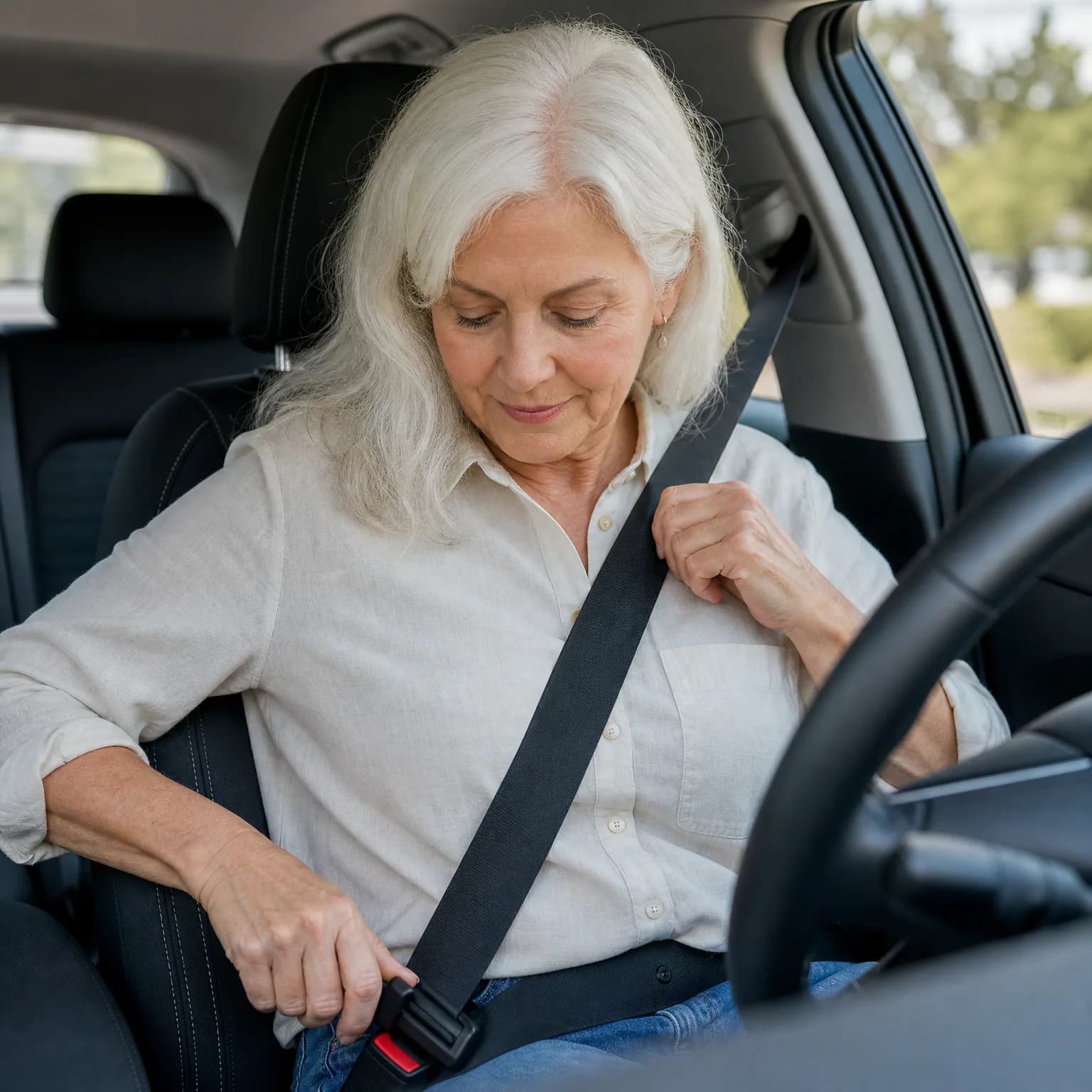
Most California carriers do not automatically apply mature driver discounts at renewal. You complete an approved defensive driving course through AARP, AAA, or an online provider, then contact your insurer to request the discount and provide your completion certificate. If you don't ask, the discount doesn't appear—even if you've been a customer for 20 years.
Low-mileage discounts work the same way. If you've retired and now drive 6,000 miles annually instead of 15,000, your rate should reflect that reduction. But carriers won't adjust your mileage estimate unless you tell them. San Diego seniors who update their annual mileage from the default 12,000–15,000 range down to their actual 5,000–7,000 retirement mileage typically see immediate reductions of $12–$22 per month.
Pay-in-full discounts, paperless billing, and multi-policy bundling are also opt-in at many carriers. If you own your home and carry homeowners insurance separately, bundling with the same carrier that handles your auto policy often yields 10–20% combined savings. That's $18–$35 monthly on a typical San Diego senior driver's full coverage policy.

When Full Coverage Still Makes Sense on a Paid-Off Vehicle
If your car is paid off and worth less than $5,000, dropping comprehensive and collision coverage usually makes financial sense. The rule most financial planners use: if your vehicle's value is less than 10 times your annual premium for those coverages, you're paying more to insure it than you'd recover in a total loss.
For a 2015 Honda Accord worth $8,000, comprehensive and collision in San Diego typically cost $45–$65 monthly combined. Over three years, you'd pay $1,620–$2,340 to insure an asset worth $8,000—and that value drops each year while your premium stays flat or rises. If you can cover a $5,000–$8,000 loss from savings without financial hardship, liability-only coverage makes sense.
But if your vehicle is worth $12,000 or more, or if losing it would eliminate your ability to get to medical appointments, grocery stores, or family obligations, keep full coverage. San Diego's high rate of uninsured drivers—estimated at 15–17% statewide—means your collision coverage protects you even when the at-fault driver has no insurance. Your deductible choice matters here: raising it from $500 to $1,000 cuts comprehensive and collision premiums by 15–25%, saving $8–$16 monthly without eliminating protection.

See What Drivers Over 65 Are Paying Now
See If You Qualify for DiscountsHow Medical Payments Coverage Works Alongside Medicare
Medical payments coverage (MedPay) pays accident-related medical bills regardless of fault, up to your policy limit. In California, it covers you, your passengers, and your family members injured in your vehicle. Limits typically range from $1,000 to $10,000, with $5,000 coverage costing $4–$8 monthly in San Diego.
If you're on Medicare, MedPay functions as secondary coverage. It pays deductibles, copays, and expenses Medicare doesn't cover—like ambulance rides, which Medicare Part B covers at only 80% after you meet your deductible. A $400 ambulance bill leaves you with an $80–$150 out-of-pocket cost that MedPay handles immediately, without affecting your Medicare benefits or triggering subrogation.
For San Diego seniors on fixed incomes, $5,000 MedPay coverage costs less annually than a single emergency room visit's out-of-pocket expenses. It also covers passengers who may not have Medicare or adequate health insurance, protecting you from liability if a friend or family member is injured while riding with you.

Comparing Carriers in San Diego's Senior Insurance Market
Rate variance for senior drivers in San Diego is wider than most age groups. A 70-year-old driver with a clean record seeking full coverage on a 2018 Toyota Camry might receive quotes ranging from $110/month to $195/month for identical liability limits and deductibles. That $85 monthly spread—$1,020 annually—exists because carriers weigh age differently in their pricing models.
Some carriers specialize in senior driver retention and offer more competitive rates after age 65. Others focus on younger demographics and price senior drivers less aggressably. The only way to identify which group a carrier falls into is to compare at least three quotes with identical coverage specifications. Request quotes with the same liability limits (100/300/100 is standard for drivers with assets to protect), the same deductibles, and the same coverage types.
When comparing, confirm each quote includes the mature driver discount if you've completed an approved course, reflects your actual annual mileage, and applies any multi-policy or pay-in-full discounts you qualify for. A quote that appears $20/month cheaper but omits the mature driver discount you're entitled to isn't actually cheaper—it's incomplete. For guidance on California-specific senior driver programs and state requirements, review state resources that detail mandated coverage minimums and available discount structures.

What Changes When You Stop Driving
If you've stopped driving entirely but still own a vehicle, you need to maintain liability coverage in California if the car is registered and not formally placed in storage. But you can request a "pleasure use" or "stored vehicle" classification that dramatically reduces your premium—often by 40–60%—since the vehicle is no longer used for regular transportation.
If you're driving occasionally—once or twice weekly for errands or appointments—update your annual mileage estimate to reflect that reality. A drop from 10,000 miles to 3,000 miles annually typically reduces premiums by 15–25%. Carriers verify mileage through odometer checks or telematics, so provide accurate estimates rather than lowballing to get a cheaper quote.
For seniors who have fully stopped driving and transferred vehicle ownership to an adult child or sold the car, maintaining a non-owner liability policy keeps your insurance history continuous. This matters if you occasionally drive a friend's car, rent vehicles when traveling, or might return to driving later. Non-owner policies in San Diego cost $25–$45 monthly and provide the same liability protection as a standard auto policy without covering a specific vehicle.
Frequently Asked Questions
Do I have to take a mature driver course in person or can I do it online?
California approves both in-person and online mature driver courses for insurance discount eligibility. AARP offers a fully online course that takes 4–6 hours, costs around $20–$25, and qualifies for the discount at most carriers. Once you complete the course and receive your certificate, contact your insurer directly to request the discount—it's not applied automatically.
Will my insurance company drop me if I have an accident after age 70?
California carriers cannot drop you solely due to age, but they can non-renew your policy after an at-fault accident depending on your total claims history and company guidelines. A single minor accident typically won't trigger non-renewal if you've been claim-free for several years prior. If non-renewal does happen, the California Automobile Assigned Risk Plan guarantees you can still obtain coverage, though rates will be higher than the standard market.
Should I keep uninsured motorist coverage if I already have Medicare?
Yes. Uninsured motorist coverage pays for vehicle damage and injury expenses when you're hit by a driver with no insurance—a scenario that affects 15–17% of California drivers. Medicare covers your medical bills, but it won't repair your car or compensate you for a totaled vehicle. Uninsured motorist property damage coverage fills that gap and typically costs $6–$12 monthly in San Diego.
How often do I need to shop for new car insurance rates after 65?
Review your rate every 12–18 months, especially after major changes like moving, reducing mileage, or completing a mature driver course. Senior driver rates vary widely between carriers, and the company that offered the best rate at 65 may not be competitive at 72. Comparing three quotes annually takes 30–45 minutes and often uncovers $400–$900 in annual savings on identical coverage.
Can I still get a good rate if I've had my license for 50+ years but just moved to San Diego?
Yes, but your rate will reflect San Diego ZIP code risk factors regardless of your driving history length. Carriers price based on where you garage the vehicle, so moving from a rural area to urban San Diego typically increases premiums by 10–20% even with a clean record. Your decades of experience and clean driving history still qualify you for good driver and longevity discounts, which partially offset the location-based increase.
Related Articles

Convert Joint Auto Insurance After Spouse Dies | Wisconsin
4/29/2026

Oregon License Renewal at 85: Testing & Insurance Impact
4/29/2026

MO License Renewal at 75: Tests, Restrictions & Rates
4/29/2026

Surviving Spouse Auto Insurance in Colorado: Transfer Rules
4/29/2026

Car Insurance After 70: Lower Rates Despite Increases
4/1/2026

Spouse Died in Hawaii: Convert Joint Auto Policy
4/29/2026