
Senior Driver Insurance Savings Tips for Reno Residents
Free to compare
Why Nevada Seniors Must Ask for Discounts They Already Qualify For
Nevada does not mandate that insurers automatically apply mature driver course discounts at renewal, which means most Reno seniors who complete an approved course never see the savings unless they explicitly request the adjustment. Carriers including State Farm, Geico, and Allstate offer 5–15% discounts for drivers 55 and older who complete defensive driving courses, but internal data from the Nevada Division of Insurance shows fewer than 30% of eligible policyholders actually receive these reductions. The gap isn't eligibility — it's activation.
In Reno specifically, where the average full-coverage premium for a 68-year-old driver with a clean record runs $140–$175/mo, that unclaimed 10% mature driver discount represents $168–$210 in annual savings. Add in a low-mileage discount for drivers who've stopped commuting to work, and the combined reduction can reach $300–$450 per year. These aren't promotional offers — they're standard program discounts that require you to initiate the conversation with your agent or carrier.
The timing matters because Nevada-approved mature driver courses through AARP, AAA, and other providers cost $20–$30 and take 4–6 hours to complete online. The discount typically applies for three years before requiring recertification, meaning your net three-year savings on a typical Reno policy would be $475–$605 after course costs. Most carriers require the certificate submission within 30 days of course completion to backdate the discount to your current policy period rather than waiting until the next renewal.

How Reno's Rate Environment Affects Drivers Over 65
Auto insurance rates for senior drivers in Nevada typically remain stable or even decrease slightly between ages 65 and 70 for drivers with clean records, then begin rising 8–12% annually after age 72 according to rate filings reviewed by the Nevada Division of Insurance. Reno's urban driving environment — higher traffic density than rural Nevada but lower theft and collision frequency than Las Vegas — creates a pricing middle ground where carriers weight age factors more heavily than geography after age 70.
The practical effect: a 67-year-old Reno driver with no violations who paid $162/mo for full coverage in 2023 might see that same coverage cost $168/mo at age 68, $175/mo at age 70, and $195/mo by age 73 with no change in driving behavior or claims history. These increases aren't penalties for incidents — they're actuarial adjustments based on age-correlated injury severity data that affects all senior drivers regardless of individual record.
This is precisely why mature driver discounts and mileage-based programs become financially significant after 65. A 10% mature driver discount and a 15% low-mileage reduction on that $175/mo policy brings the monthly cost down to $134/mo — essentially rolling your premium back to where it was three years earlier. The discounts don't eliminate age-based rating factors, but they can offset them entirely for drivers who qualify for multiple reductions.

Low-Mileage Programs for Retired Reno Drivers
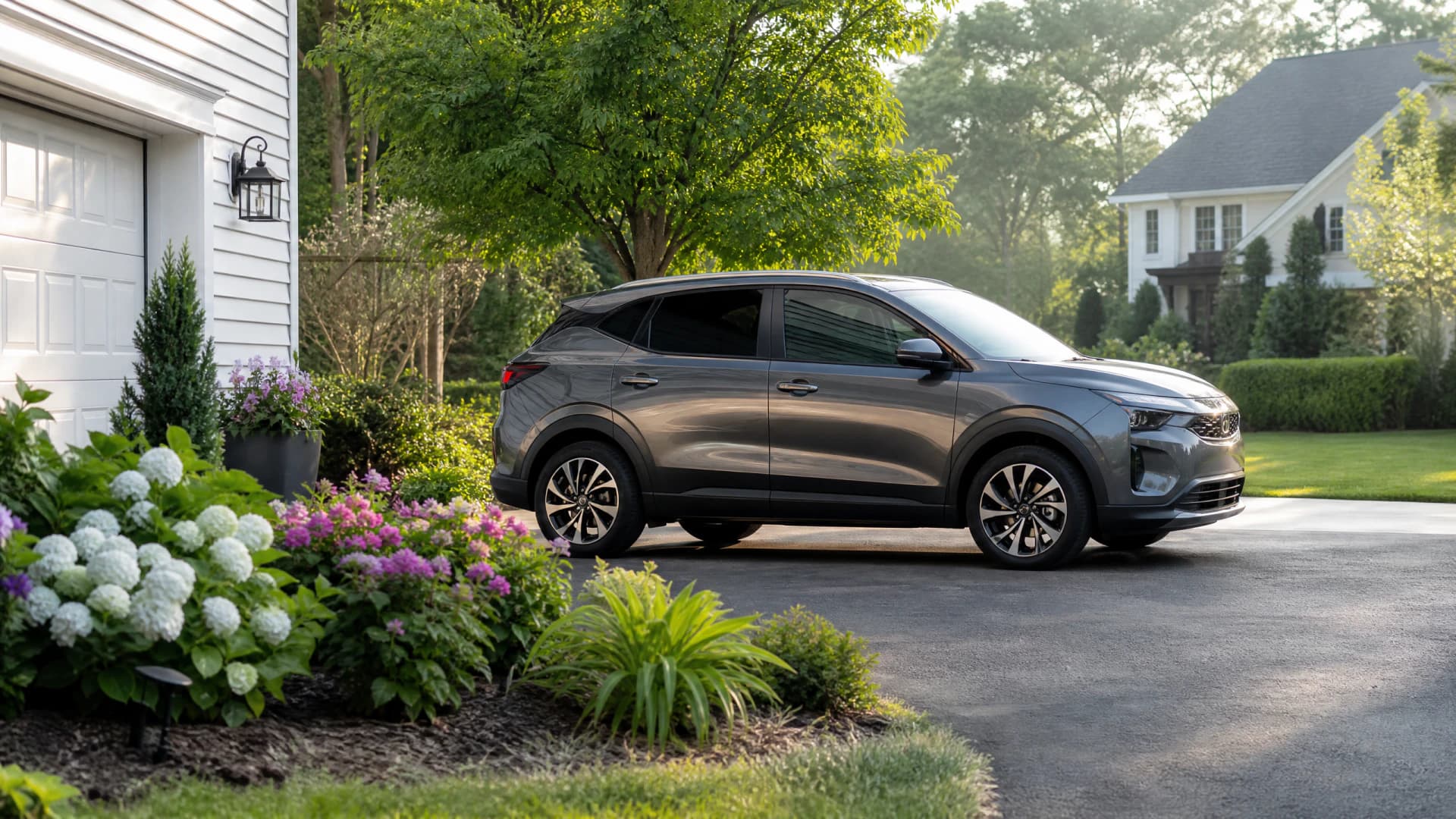
If you've stopped commuting to work and now drive fewer than 7,500 miles annually, you likely qualify for low-mileage discounts ranging from 10–20% with most major carriers in Nevada. State Farm's Steer Clear program, Geico's mileage-based rating, and Progressive's Snapshot telematics all offer reductions for seniors who drive 5,000–7,500 miles per year versus the Nevada average of 12,500 miles. The challenge is that most require either annual odometer verification or short-term telematics monitoring to confirm eligibility.
For Reno seniors specifically, the verification process matters because Nevada does not require annual vehicle inspections that would automatically capture odometer readings. You'll need to submit a current odometer photo through your carrier's mobile app (State Farm, Geico, Progressive all support this), visit an agent for in-person verification, or accept a telematics device that monitors mileage for 90 days to establish your baseline. The telematics option often produces the largest discount because it also captures low-risk driving patterns — gradual acceleration, minimal hard braking, and daytime-only driving — that many seniors naturally exhibit.
The financial return is immediate. A Reno driver paying $168/mo who reduces annual mileage from 10,000 to 6,000 miles and accepts a 90-day telematics review typically sees premiums drop to $135–$142/mo within one policy cycle. The telematics device itself requires no installation for most programs (smartphone app-based monitoring is standard), and you can request removal after the discount is established if you prefer not to maintain ongoing monitoring.

See What Drivers Over 65 Are Paying Now
See If You Qualify for DiscountsFull Coverage vs. Liability-Only on Paid-Off Vehicles
If you're driving a 2015–2018 vehicle that's fully paid off and currently worth $8,000–$14,000, the cost-benefit calculation for maintaining comprehensive coverage and collision coverage shifts significantly after age 65. Full coverage on a 2017 Honda Accord in Reno runs approximately $158/mo, while liability-only coverage on the same vehicle costs $68/mo — a $90/mo difference that totals $1,080 annually.
The actuarial question is whether that $1,080 annual premium justifies the coverage when your vehicle is worth $11,000 and your collision deductible is $500 or $1,000. If you filed a total-loss claim tomorrow, you'd receive roughly $10,000–$10,500 after the deductible. Over three years, you'll have paid $3,240 in comprehensive and collision premiums for a vehicle that's depreciating 10–12% annually. By year three, the vehicle worth $8,500 has cost you $3,240 to insure against total loss.
Many Reno seniors on fixed incomes make the switch to liability-only between ages 68 and 72 once vehicle values drop below $10,000, then allocate the $90/mo savings toward higher liability limits — increasing from Nevada's minimum 25/50/20 to 100/300/100 limits that better protect retirement assets. That upgrade costs an additional $22–$28/mo, leaving $62–$68/mo in net savings while substantially improving protection against lawsuit exposure from at-fault accidents.

Medicare and Medical Payments Coverage in Nevada
Nevada does not require Personal Injury Protection (PIP) coverage, which means most Reno seniors carry optional Medical Payments (MedPay) coverage in amounts ranging from $1,000 to $10,000. Once you enroll in Medicare at 65, the coordination between MedPay and Medicare becomes financially relevant because Medicare Part B covers auto accident injuries after you've exhausted other available coverage — meaning MedPay pays first, then Medicare covers remaining costs subject to deductibles and coinsurance.
The practical effect for most seniors: if you carry $5,000 in MedPay and sustain $12,000 in accident-related medical costs, your MedPay covers the first $5,000, then Medicare Part B covers the remaining $7,000 minus your annual deductible (currently $240 for Part B) and 20% coinsurance. You'd be responsible for approximately $1,640 out of pocket. Without MedPay, you'd pay the $240 deductible plus 20% of the full $12,000 — roughly $2,640 total.
Many Reno insurance agents recommend seniors maintain $2,000–$5,000 in MedPay even after Medicare enrollment because it covers the immediate post-accident costs that Medicare processes more slowly, and it applies to passengers in your vehicle who may not have health insurance. The coverage typically costs $8–$15/mo depending on the limit selected, and it coordinates with Medicare without triggering subrogation issues that can complicate claims settlement.

Nevada-Specific Programs and State Resources for Senior Drivers
Nevada offers several mature driver programs that directly reduce insurance costs for Reno residents 55 and older. The AARP Smart Driver course — approved by the Nevada DMV and recognized by all major carriers — can be completed entirely online in 4–6 hours for $25 and qualifies you for multi-year discounts ranging from 5–15% depending on carrier. AAA offers both in-person and online courses through its Reno location on Kietzke Lane, with member pricing at $20 and non-member pricing at $25.
The Nevada Division of Insurance maintains a senior-specific consumer hotline at 888-872-3234 where licensed counselors can verify whether your carrier has applied all eligible discounts to your current policy. This service is particularly valuable if you completed a mature driver course more than 90 days ago but haven't seen a premium reduction — the Division can initiate a carrier inquiry on your behalf and confirm whether the discount was properly coded.
For Reno seniors considering whether to maintain vehicles at all, the Nevada DMV's Senior Driver Resource page provides information on voluntary license surrender programs and graduated restrictions that allow you to maintain a license with daylight-only or radius limitations. These programs don't directly affect insurance costs, but they're relevant for families evaluating whether a senior household member should transition away from daily driving while maintaining occasional-use coverage on a household vehicle.
Frequently Asked Questions
Do insurance companies in Nevada automatically apply senior driver discounts at age 65?
No, most Nevada carriers do not automatically apply mature driver course discounts — you must complete an approved defensive driving course and submit the certificate to your insurer to activate the 5–15% reduction. Age alone doesn't trigger the discount; course completion and proactive request are required.
How much can a Reno senior driver save by combining a mature driver discount with a low-mileage program?
Combined savings typically range from $300–$450 annually on a standard full-coverage policy in Reno. A 10% mature driver discount plus a 15% low-mileage reduction on a $170/mo policy brings monthly costs down to approximately $130/mo, saving $480 per year.
Should a 70-year-old Reno driver keep full coverage on a paid-off 2016 vehicle?
It depends on the vehicle's current value and your savings cushion. If the car is worth $9,000–$11,000 and you're paying $90/mo more for comprehensive and collision coverage ($1,080/year), many seniors switch to liability-only and use the savings to increase liability limits that better protect retirement assets.
Does Medicare cover car accident injuries for seniors in Nevada, or do I still need medical payments coverage?
Medicare Part B covers auto accident injuries after other available coverage is exhausted, meaning your Medical Payments coverage pays first. Most Nevada seniors maintain $2,000–$5,000 in MedPay even with Medicare because it covers immediate costs and applies to passengers without triggering coordination delays.
Where can Reno seniors take an approved mature driver course for insurance discounts?
AARP offers the Nevada DMV-approved Smart Driver course online for $25 (completable in 4–6 hours), and AAA provides both online and in-person courses at its Reno Kietzke Lane location for $20–$25. Both qualify for multi-year insurance discounts with all major carriers operating in Nevada.
Related Articles
Convert Joint Auto Insurance After Spouse Dies | Wisconsin
4/29/2026

Oregon License Renewal at 85: Testing & Insurance Impact
4/29/2026

MO License Renewal at 75: Tests, Restrictions & Rates
4/29/2026

Surviving Spouse Auto Insurance in Colorado: Transfer Rules
4/29/2026

Car Insurance After 70: Lower Rates Despite Increases
4/1/2026

Spouse Died in Hawaii: Convert Joint Auto Policy
4/29/2026