What Is Widow Fog and Is It Safe to Drive?
Widow fog is the blinding glare from a low sun, not a medical condition, and it's safe to drive through if you slow down and give yourself room to see.
Free to compare
It's a glare hazard, and you can drive through it safely
Widow fog isn't fog at all. It's the name some drivers use for the blinding glare that happens when the sun sits low on the horizon, usually early morning or early evening, and shines straight into your eyes at windshield level. It gets its name because it can erase the car in front of you, the pedestrian at the crosswalk, or the light turning red.
It's safe to drive in as long as you treat it the way you'd treat any period of reduced visibility. Slow down, leave more space, and use your visor and sunglasses. The danger isn't the glare itself. It's driving through it at normal speed as if you can still see what's ahead.
How long it lasts changes what you should do
A few seconds of glare at a stop sign is different from ten minutes of driving straight into the sun on a highway. The short kind just needs a squint and a sun visor. The long kind is where people get into trouble, because they keep driving at normal speed through a stretch where they genuinely cannot see brake lights or lane markings.
If you know your drive puts the sun directly ahead for a sustained stretch, that's worth planning around. Leaving ten or fifteen minutes earlier or later can put the sun at a different angle entirely.
When you're in it and it's not letting up, the right move is to slow down well below the speed limit, increase your following distance, and if it gets bad enough, pull off safely rather than push through blind.
This has nothing to do with age. It's a matter of timing and route, and anyone can run into it.
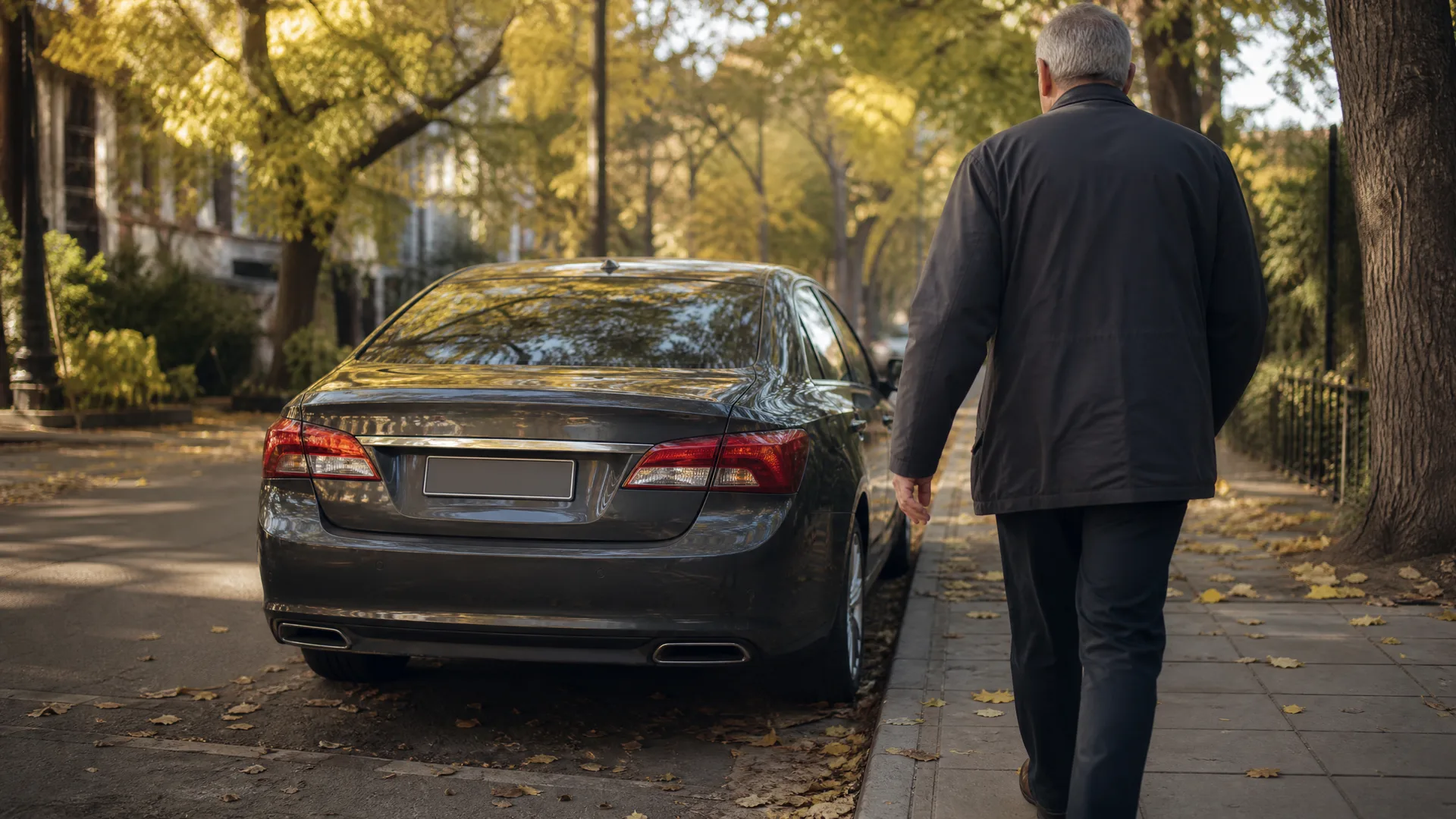
Your eyes and your windshield matter more as you get older
Glare sensitivity increases with age. Changes in the eye that come with getting older, including cataracts, scatter light more than a younger eye would, which makes low sun feel brighter and more disorienting. This is the real reason widow fog gets mentioned more often in conversations about older drivers.
A dirty or pitted windshield makes this much worse. Scratches and road grime scatter light the same way an aging lens does, so a windshield that looks fine most of the day can turn into a wall of glare at sunrise or sunset. Keeping the glass clean inside and out, and replacing a windshield with deep scratches or pitting, cuts down on this a real amount.
If you've noticed glare bothering you more than it used to, or more than it bothers people you're driving with, it's worth mentioning at your next eye exam. Some of what causes it, like cataracts, is treatable.
Questions people ask about this
Can I get a ticket for driving too slowly because of glare?
Most states allow drivers to slow down for conditions that reduce visibility, and sun glare qualifies. Driving unreasonably slowly for the road and traffic around you can still draw attention from an officer, so if the glare is bad enough to need a crawl, pulling over is usually the safer and more defensible choice than staying on the road.
Do polarized sunglasses help with sun glare while driving?
They help with glare off wet roads and other cars but not with the sun itself, since polarized lenses are built to cut reflected light, not direct light. Some drivers find polarized lenses actually make a low sun harder to judge through a tinted windshield, so test a pair before relying on them.
Why does the glare seem worse through my windshield than through my glasses?
A windshield that has small chips, scratches, or a buildup of haze from cleaning products will scatter sunlight in a way clear glass won't. This can make the glare noticeably worse than what you'd experience looking at the same sun through a clean pair of glasses, which is a sign the windshield itself needs attention.
Does my car insurance cover a crash caused by sun glare?
Whether a glare related crash is covered depends on the type of coverage you carry and the details of the crash, the same as any other accident. Fault is usually still assessed based on whether you were driving reasonably for the conditions, so check with your insurer about how glare related claims are typically handled.
Should I stop driving during sunrise and sunset hours as I get older?
Not necessarily, but it's worth noticing whether glare at those hours consistently makes it hard for you to see clearly. If it does, adjusting your routine to avoid driving directly into a low sun, rather than giving up those hours of driving altogether, is usually enough.
If glare has you thinking about your coverage, it's worth seeing what other insurers would charge for the same policy.
Get your eyes checked if glare has been bothering you more than it used to, since some causes are treatable. Have your windshield inspected for scratches or pitting, especially if you drive toward the sun regularly, and have it replaced if it's in bad shape. Pay attention to which parts of your regular drive put the sun directly ahead, and see if leaving earlier or later avoids it. Keep sunglasses and a clean visor in the car, and treat sustained glare the way you'd treat fog or heavy rain by slowing down and pulling over if you can't see clearly. If you're ever unsure whether a glare related incident would be covered, ask your insurer directly rather than assume.